
As your child transitions into the active world of preschool and early grade school, their nutritional requirements shift. Choosing the right powdered milk to support this stage can feel overwhelming with options like Nido Kinder 5 Plus, NAN Optipro, and Enfagrow A+ lining the shelves. The most suitable choice for your five-year-old does not depend on finding a universally perfect brand, but rather on matching a milk’s specific formulation to your child’s unique dietary gaps, taste preferences, and your household budget. While these brands are all designed to support school-age development, they approach nutrition, ingredients, and pricing differently. If your child has specific medical conditions, food allergies, or severe picky eating habits, it is always best to consult a pediatrician before introducing a new milk brand to their daily routine.
Quick Guide: Matching the Milk to Your Child's Needs
To help you narrow down your choices, it is helpful to look at the general positioning of each brand. Nido Kinder 5 Plus is widely recognized as an accessible option designed for growing children, often emphasizing immune support and overall growth. NAN Optipro is frequently selected by parents who prioritize digestive comfort and optimized protein quality, utilizing specialized manufacturing processes to make the milk easier on young tummies. Enfagrow A+, on the other hand, is heavily marketed around cognitive development, featuring higher levels of key brain-support nutrients like DHA. By identifying whether your child needs more support with digestive ease, cognitive development, or general immune defense, you can quickly establish an initial shortlist that aligns with your parenting priorities.
Comparing Nutritional Labels for School-Age Children
When standing in the milk aisle of a supermarket, the most reliable tool at your disposal is the nutrition information panel on the back of the packaging. Rather than relying on front-of-pack marketing claims, turning the tin or box around allows you to perform a direct, objective comparison of what your child is actually consuming.
Products mentioned in this guide
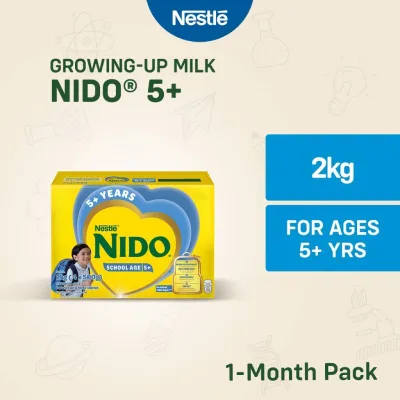
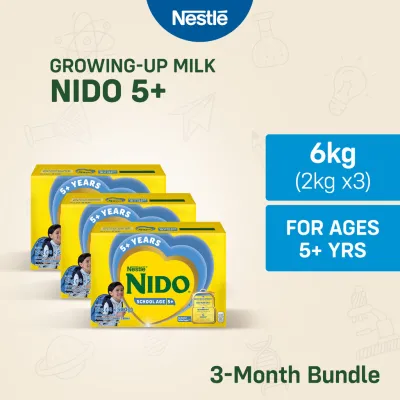
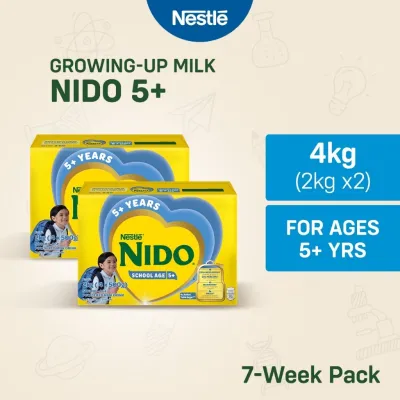
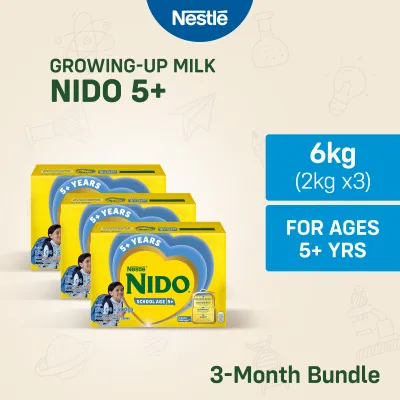
Prices are valid at publication and may change. Please refer to the product page for the latest price.

First, look closely at the bone-supporting nutrients, specifically calcium and vitamin D. At five years old, children experience rapid bone elongation and dental development, making these two nutrients critical. Check the percentage of the Recommended Energy and Nutrient Intakes (RENI) met per serving to see how much each glass contributes to their daily needs.
Next, evaluate the cognitive and immune support components. Look for the exact milligram measurements of Docosahexaenoic Acid (DHA), an omega-3 fatty acid that plays a vital role in brain development. Compare this alongside iron, zinc, and vitamins A, C, and E, which are essential for maintaining a strong immune barrier as your child interacts with peers at school.
One of the most critical steps in label reading is examining the sugar content and carbohydrate sources. Look at the ingredient list to identify added sugars such as sucrose, corn syrup solids, or maltodextrin. While lactose is the natural sugar found in milk, added sugars are often used to enhance flavor but can contribute to unnecessary caloric intake and dental cavities. Compare the total sugar grams per serving across Nido Kinder 5 Plus, NAN Optipro, and Enfagrow A+ to manage your child’s daily sugar consumption.
Finally, always verify the exact age range and step designation printed on the label. Formulations are carefully calibrated for specific developmental stages, and a “Step 4” or “5+” designation is specifically balanced for the metabolic and nutritional needs of school-age children. Because manufacturers update their recipes periodically, checking the label during every purchase ensures you are always aware of any changes in nutrient concentrations.
Taste, Texture, and Preparation Expectations
Even the most nutritionally complete milk is of no use if your child refuses to drink it. The sensory experience—encompassing taste, sweetness, and texture—varies significantly between full-cream milk powder bases and specialized growing-up milk formulas.
Full-cream milk bases tend to have a richer, creamier, and more traditional dairy flavor that many children find naturally appealing. Specialized growing-up formulas, which often contain added vitamins, minerals, and fish-oil-derived DHA, may have a slightly different flavor profile. Some brands use natural or artificial flavors, such as vanilla, to mask the metallic taste of iron or the distinct notes of DHA, which can make the milk taste sweeter.
Texture and solubility are also influenced by the formulation. To ensure a smooth, clump-free drink, you must carefully follow the manufacturer’s preparation instructions. Pay close attention to the recommended water temperature; using water that is too hot can denature proteins and destroy heat-sensitive vitamins or active cultures, while water that is too cold may cause the powder to clump at the bottom of the glass.
Because children’s taste preferences are highly subjective, committing to a large, multi-kilogram box or tin right away can lead to waste. A practical approach is to purchase the smallest available box or sachet pack first. This allows your child to test the taste and mouthfeel over a few days before you invest in bulk packaging.
Evaluating Price per Serving and Value
For many families in the Philippines, budget is a major deciding factor. However, comparing the price of a 900-gram tin of one brand directly to a 900-gram box of another can be highly misleading. To find the true cost, you must calculate the price per serving.
To perform this calculation, look at the nutrition label to find the “Servings per Pack” or “Servings per Container.” Next, take the retail price of the package and divide it by this number of servings. For example, if a box of milk costs ₱500 and contains 20 servings, the cost per serving is ₱25. If another brand costs ₱600 but provides 30 servings, its cost per serving is ₱20, making it the more economical choice despite the higher upfront price.
Keep in mind that prices fluctuate based on where you shop and the packaging format you choose. In physical supermarkets and online marketplaces, buying in bulk or purchasing multi-pack bundles generally yields a lower cost per serving than buying individual small boxes. Conversely, single-use sachets, while convenient for travel or testing, typically carry the highest cost per gram.
When comparing Nido Kinder 5 Plus, NAN Optipro, and Enfagrow A+, you will likely find that they occupy different price tiers. Nido is generally positioned as a highly accessible, mainstream option, while NAN Optipro and Enfagrow A+ often sit at premium price points due to their specialized ingredient profiles and manufacturing technologies. Weighing these price differences against your child’s actual dietary needs will help you determine which brand offers the best value for your household.
Final Decision Framework: Which Brand to Choose?
To finalize your decision, it helps to map your child’s specific needs to the unique characteristics of each brand using a structured framework.
- Choose Nido Kinder 5 Plus if you are looking for a highly accessible, budget-friendly option that provides solid everyday nutrition, immune-supporting nutrients, and a taste profile that is generally well-accepted by school-age children.
- Choose NAN Optipro if your child has a sensitive digestive system and you want to prioritize optimized, easy-to-digest proteins and supportive gut nutrients, and you are comfortable paying a premium price.
- Choose Enfagrow A+ if your primary focus is on supporting cognitive development and school readiness with higher levels of DHA, and your budget accommodates a premium-tier milk formula.
Verify first if your child has a known or suspected lactose sensitivity, cow’s milk protein allergy, or other specific pediatric dietary restrictions. In these cases, standard powdered milks may cause discomfort or adverse reactions, and you must consult your pediatrician for specialized, hypoallergenic, or lactose-free alternatives.
Ultimately, remember that by the age of five, powdered milk is meant to be a supplement to a diverse, balanced diet of solid foods. It should not be used as a complete meal replacement or allowed to crowd out regular meals, as solid foods are the primary source of nutrition for your growing school-age child.
Frequently Asked Questions (FAQ)
How do I safely transition my 5-year-old to a new powdered milk brand?
To prevent digestive upset and minimize the risk of taste rejection, introduce the new milk brand gradually over a period of five to seven days. Start on days one and two by mixing 25% of the new milk powder with 75% of the old milk powder in a single serving. On days three and four, adjust the ratio to a 50/50 mix. By days five and six, use 75% of the new milk and 25% of the old milk, before transitioning completely to 100% of the new brand on day seven. During this transition, closely monitor your child for any observable signs of intolerance, such as prolonged bloating, loose stools, constipation, vomiting, or skin rashes. If any of these symptoms occur, stop using the new milk immediately and consult your pediatrician.
How should I store opened powdered milk to maintain its quality?
In the warm and humid tropical climate of the Philippines, proper storage is essential to prevent spoilage, clumping, and insect infestation. Once a tin or box of powdered milk is opened, store it in a cool, dry pantry away from direct sunlight, heat sources, and moisture. If the milk comes in a bag-in-box format, keep the bag tightly sealed with a clip or transfer the powder into a clean, dry, airtight glass or food-grade plastic container. Always check the product label for the manufacturer’s recommended timeframe for consumption after opening, which is typically within three to four weeks. Never store opened powdered milk in the refrigerator, as the temperature fluctuations when taking it in and out of the fridge can create condensation inside the container, leading to clumping, mold growth, and rapid spoilage.
Community discussion
Share your experience or ask a question. Comments are reviewed before publication.