
Choosing the right Stage 3 powdered milk for your growing toddler is a major decision for parents in the Philippines. With several prominent brands on supermarket shelves, finding the option that aligns with your child’s digestive system, nutritional needs, and your household budget requires careful comparison.
There is no single universal winner among Nido 3+, NAN 3, and Enfagrow A+. The optimal choice depends entirely on your toddler’s individual digestive tolerance, specific nutritional gaps, and your family’s monthly budget. If your priority is a widely accessible, budget-friendly option focused on daily immune support, Nido 3+ is a popular choice. If your pediatrician recommends a formula with specific probiotic strains for digestive comfort, NAN 3 is designed with that focus. If you want to prioritize higher levels of DHA for brain development as highlighted on the packaging, Enfagrow A+ is a premium option to consider.
Before making any changes to your toddler’s diet, consult your pediatrician. Always inspect the physical packaging in your local store, as manufacturers frequently update their formulations, ingredients, and preparation instructions.
Products mentioned in this guide
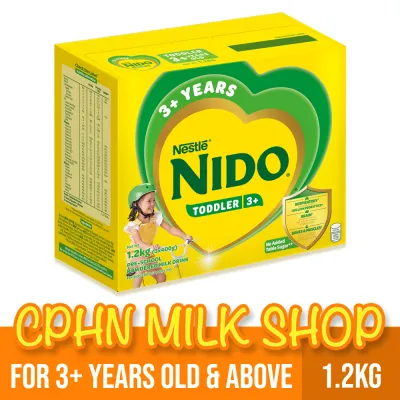
Prices are valid at publication and may change. Please refer to the product page for the latest price.
What to Look for in Stage 3 Powdered Milk
Stage 3 powdered milk, often referred to as growing-up milk, is formulated specifically for toddlers aged 1 to 3 years. It is crucial to understand that these products are designed to be nutritional supplements to a diverse solid food diet, not complete replacements for daily meals. At this developmental stage, your toddler should be getting the majority of their daily calories and nutrients from wholesome, solid foods.
When evaluating any Stage 3 milk, you must carefully examine the nutrition information panel on the back of the packaging. Standard pediatric dietary guidelines emphasize several key nutrients during these formative years:
- Iron: Essential for healthy cognitive development and preventing iron-deficiency anemia, which can occur as toddlers transition away from iron-fortified infant formulas.
- Calcium and Vitamin D: These work synergistically to support rapid bone development and dental health as your toddler becomes more physically active.
- DHA (Docosahexaenoic Acid): An omega-3 fatty acid that plays a vital role in brain and visual development.
- Vitamins A, C, and E, plus Zinc: These micronutrients are fundamental for supporting a healthy immune system.
Beyond beneficial nutrients, parents must also check the ingredient list for added sugars, artificial flavorings, or bulking agents like maltodextrin. Ingredients are listed in descending order of weight, meaning the first few ingredients make up the majority of the product. In the hot and humid tropical climate of the Philippines, high-sugar powders can attract moisture more easily, leading to clumping and faster spoilage if the container is not sealed airtight. Choosing a product with minimal added sugars is generally better for your toddler’s long-term dental health and dietary habits.
Comparing the Labels: Nido 3+, NAN 3, and Enfagrow A+
To make an informed choice, you must systematically compare the physical packaging of Nido 3+, NAN 3, and Enfagrow A+. Start by verifying the exact recommended age range printed on the front panel and the standard serving size listed on the nutrition facts table. Serving sizes and scoop weights vary significantly between these brands, which directly impacts how long a single tin will last.

Each brand approaches toddler development with distinct marketing claims and ingredient highlights on their labels:
- Nido 3+ typically highlights its immune-support blend, often featuring vitamins A, C, and zinc, alongside specific prebiotic fibers or cultures designed to support gut health. It is positioned as an affordable, everyday option for active toddlers.
- NAN 3 often emphasizes digestive comfort and gentle protein technology. Its packaging frequently highlights specific probiotic strains, such as Bifidobacterium lactis, aimed at supporting a balanced gut microbiota and smooth digestion.
- Enfagrow A+ generally focuses its marketing on brain development, highlighting higher levels of DHA and other brain-support nutrients like choline and iron. It is positioned as a premium formulation for parents prioritizing cognitive development support.
Preparation requirements also differ across these brands. You must pay close attention to the manufacturer’s instructions regarding water temperature and scoop-to-water ratios. Some formulas require lukewarm water to preserve the viability of live probiotics, while others dissolve better in slightly warmer water.
Always use the exact scoop provided inside each specific tin. Never swap scoops between different brands. Over-diluting the milk by adding too much water deprives your toddler of essential nutrients, while under-diluting by adding too much powder can strain their developing kidneys and cause dehydration, especially during hot summer months.
To help you organize your findings during your next store visit, use the following comparison table structure to fill in the exact values from the physical tins available on the shelves:
| Nutrient or Feature | Nido 3+ | NAN 3 | Enfagrow A+ | Where to Verify on Label |
|---|---|---|---|---|
| Recommended Age | Verify on front | Verify on front | Verify on front | Front panel of the packaging |
| Serving Size (g) | Check scoop weight | Check scoop weight | Check scoop weight | Nutrition Information panel |
| DHA per Serving | Verify mg amount | Verify mg amount | Verify mg amount | Nutrition Information panel |
| Probiotic Strains | Identify cultures | Identify cultures | Identify cultures | Ingredient list / Front claims |
| Added Sugars | Check for sucrose | Check for sucrose | Check for sucrose | Ingredient list |
| Calcium (% RENI) | Verify percentage | Verify percentage | Verify percentage | Nutrition Information panel |
Calculating Cost and Value for Your Budget
The upfront retail price of a tin of milk can be highly misleading. A larger tin might seem expensive at first glance but could actually offer a lower cost per serving than a smaller, cheaper box. To find the true economic value, you should calculate the exact cost in ₱ per serving using a simple formula.
First, identify the net weight of the tin in grams (for example, 1.2 kg is 1200 grams). Next, look at the preparation instructions to find the weight of a single scoop in grams and the number of scoops required for one serving. Multiply the scoop weight by the number of scoops to find the total grams of powder used per serving.
Once you have these numbers, use this step-by-step calculation:
- Total Servings per Tin = Net Weight of Tin (g) ÷ Grams of Powder per Serving (g)
- Cost per Serving (₱) = Retail Price of Tin (₱) ÷ Total Servings per Tin
By comparing the cost per serving rather than the price of the tin, you can accurately assess how each brand fits into your monthly household budget.
Keep in mind that environmental factors in the Philippines, such as high humidity, affect long-term value. While buying massive bulk tins generally reduces the cost per serving, most manufacturers mandate that the powder be discarded 3 to 4 weeks after opening the foil seal. If your toddler only drinks milk occasionally, a massive tin might spoil or clump before you can finish it, resulting in wasted money. In such cases, smaller tins or box packs may offer better practical value.
To ensure product safety and authenticity, always purchase your powdered milk from authorized local supermarkets, reputable pharmacies, or official online flagship stores on major ecommerce platforms. Avoid buying from unauthorized third-party online sellers, as improper storage in hot warehouses can degrade the nutrients and compromise the safety of the milk.
Decision Framework: How to Make Your Final Choice
To finalize your decision, use this condition-based framework to match the milk to your toddler’s specific needs and your family’s situation.
Choose Nido 3+ if:
- You are looking for a highly accessible, budget-friendly option that is widely available in local supermarkets and neighborhood grocery stores across the Philippines.
- Your toddler has a strong appetite, tolerates standard cow's milk well, and enjoys the specific taste profile of this brand.
- Your primary goal is to support daily immune health with standard vitamins and minerals without paying a premium price.
Choose NAN 3 if:
- Your toddler has a sensitive stomach, experiences occasional mild digestive discomfort, or is prone to constipation.
- Your pediatrician recommends a formula containing specific probiotic strains to support gut health and gentle digestion.
- You are comfortable paying a moderate premium for advanced digestive-support technology.
Choose Enfagrow A+ if:
- You want to prioritize higher levels of dietary DHA and other brain-development nutrients as highlighted on the product label.
- Your toddler tolerates the formulation well without any signs of digestive distress or allergic reactions.
- Your household budget comfortably accommodates a premium-tier powdered milk product.
Verify first if:
- Your toddler has a known dairy sensitivity, a family history of food allergies, or any underlying medical conditions. Always consult your pediatrician before introducing or switching standard cow's milk-based formulas.
Neither may fit if:
- Your toddler has been diagnosed with a cow's milk protein allergy (CMPA) or severe lactose intolerance. Standard Stage 3 powdered milks are entirely unsuitable for these conditions. In these cases, you must consult your pediatrician, who will prescribe a specialized hypoallergenic, soy-based, or lactose-free therapeutic formula.
Frequently Asked Questions (FAQ)
How do I safely transition my toddler to a new Stage 3 milk?
To minimize the risk of digestive upset, transition your toddler to a new brand gradually over a period of 7 to 10 days. Begin by mixing 25% of the new milk with 75% of the old milk for the first three days. If your toddler tolerates this well, move to a 50/50 mixture for the next three days, followed by a mixture of 75% new milk and 25% old milk for another three days. By the tenth day, you can transition fully to the new milk.
During this transition, closely monitor your toddler for any signs of intolerance. Watch for loose stools, constipation, excessive gas, vomiting, skin rashes, or unusual fussiness. If you observe any of these adverse reactions, stop the transition immediately and consult your pediatrician for guidance.
Can I mix different brands of powdered milk in the same bottle?
You should never mix different brands or stages of powdered milk together in the same bottle. Each manufacturer designs their product with a specific scoop size, powder density, and nutritional concentration.
Mixing different powders in one bottle makes it nearly impossible to measure the water-to-powder ratio accurately. This can easily lead to accidental over-concentration or under-dilution. Over-concentration can strain your toddler’s developing kidneys and cause dehydration, while under-dilution can lead to nutritional deficiencies over time. Always prepare each brand separately in strict accordance with the manufacturer’s instructions, using only the scoop provided in that specific container.
Community discussion
Share your experience or ask a question. Comments are reviewed before publication.