
In the landscape of modern parenting, choosing the right tools to monitor your infant’s safety and sleep patterns has become a major decision. For parents in the Philippines, premium baby monitors represent a significant investment aimed at providing peace of mind, especially when balancing remote work, household management, and childcare. Among these high-end options, Nanit has established itself as a prominent contender, known for its advanced tracking technology and sleek hardware.
This guide compares Nanit with other premium, Wi-Fi-enabled baby monitors available in the Philippines to help you determine which system offers the best value for your nursery. Nanit is highly suitable for parents who prioritize data-driven sleep analytics, automated milestone tracking, and a secure overhead camera angle. However, it requires an ongoing paid subscription to unlock its full analytical potential and depends heavily on a stable, high-speed home internet connection. If you prefer a system with zero monthly fees, local video storage, or physical wearable health sensors, alternative premium brands may better suit your household. Because pricing, regional feature availability, and local distribution can change, always verify the latest costs and warranty terms on official brand websites or authorized online retailers before making your purchase.
Core Features: Sleep Tracking and Video Performance
Sleep Analytics and Breathing Monitoring
Nanit takes a unique, non-invasive approach to monitoring an infant’s breathing and sleep patterns. Instead of attaching electronic sensors directly to the baby’s skin, the system utilizes a high-definition overhead camera combined with advanced computer vision algorithms. By tracking the custom-printed, high-contrast geometric patterns on specialized Nanit Breathing Wear—such as swaddles, chest bands, and sleeping bags—the camera detects the subtle physical rise and fall of the baby’s chest. This design eliminates the risk of battery heat, sensor displacement, or skin irritation from wearable electronics.
Products mentioned in this guide
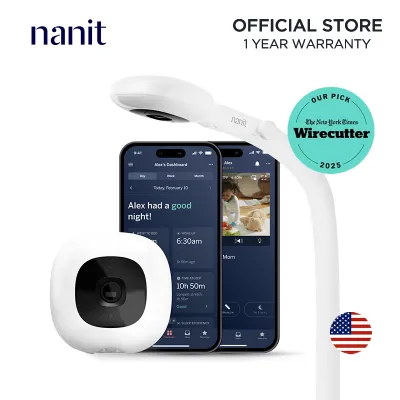
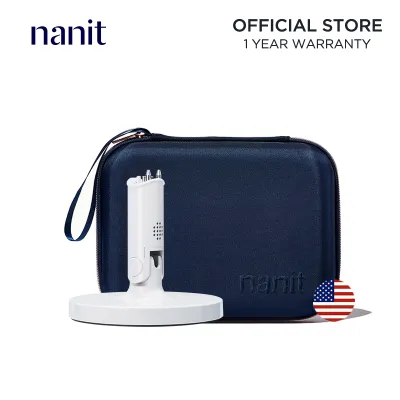
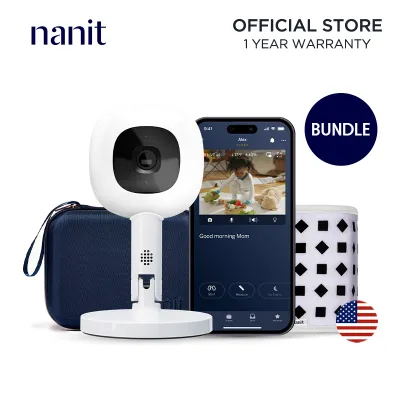
Prices are valid at publication and may change. Please refer to the product page for the latest price.
In contrast, other premium baby monitors on the market employ different tracking methodologies. Some brands utilize wearable smart socks that use pulse oximetry to measure heart rate and oxygen saturation levels directly from the baby’s foot. Other systems rely on pressure-sensitive mattress pads placed beneath the crib sheet to detect movement. Standard high-end monitors may not offer advanced breathing tracking at all, focusing instead on basic sound and motion alerts.
When evaluating these tracking options, caregivers must consult the manufacturer’s specific documentation to verify age, weight, and developmental stage limits for any wearable bands, swaddles, or accessories. For example, swaddles must be discontinued as soon as an infant shows signs of attempting to roll over, and breathing bands must be positioned precisely according to safety instructions to function correctly.
It is vital to remember that consumer baby monitors and breathing sensors are assistive parenting tools and are not medical devices. They are not designed to prevent, diagnose, or monitor medical conditions, nor can they prevent Sudden Infant Death Syndrome (SIDS). Parents should always consult a qualified pediatrician for any health or developmental concerns and strictly adhere to recommended safe sleep guidelines.
Video Clarity and Night Vision Capabilities
High-definition video performance is a cornerstone of any premium baby monitor, allowing parents to clearly observe their baby’s movements, facial expressions, and sleep state in real time. Most premium monitors offer 1080p HD resolution, but image clarity is also heavily influenced by the camera’s lens quality, sensor size, and the compression algorithms used to stream video over your home network. Parents should verify the specific camera resolutions, field of view (FOV) angles, and low-light performance specifications on the official product packaging or manufacturer spec sheets.
Night vision is particularly critical, as nurseries are kept dark to encourage healthy sleep cycles. Premium monitors typically use infrared light-emitting diodes (LEDs) to illuminate the crib. When comparing models, check whether the infrared LEDs emit a visible red glow (often using 850nm wavelengths) or are completely invisible to the human eye (using 940nm wavelengths). Invisible infrared light is highly preferred, as it ensures the camera does not create a visual distraction that could wake or startle a sensitive infant.
Another key distinction lies in how the camera lens moves. Some premium monitors utilize a fixed, wide-angle lens designed to capture the entire crib from a static position, relying on digital zoom via an app to get a closer look. While digital zoom can sometimes result in a pixelated image, it has no moving parts that could make noise. Other premium systems feature physical pan, tilt, and zoom (PTZ) capabilities, allowing parents to remotely rotate the camera head via their smartphone or a dedicated parent unit to scan the entire nursery room. Physical PTZ offers greater environmental coverage but requires careful placement to ensure the mechanical movement does not disturb a sleeping child.
Nursery Setup: Wall-Mounted vs. Freestanding Hardware
Mounting Options and Physical Footprint
Nanit’s system is built around achieving a precise, top-down view of the sleep surface. To support this, the brand offers signature setup options including a secure wall mount and a sturdy multi-stand or floor stand. The overhead wall mount is designed to be installed directly above the center of the crib, providing the optimal 90-degree angle required for the computer vision software to accurately map the crib boundaries and monitor breathing motion.

Other premium monitors offer more varied, flexible hardware configurations. Many competitors rely on freestanding desktop bases, shelf mounts, or flexible, wrap-around silicone legs that can be wound around nearby furniture. While these freestanding designs are highly versatile and require no drilling, they often view the crib from an angled perspective, which may limit the effectiveness of certain automated tracking features.
Safety Boundaries and Installation Challenges
Physical installation of nursery hardware requires strict adherence to safety protocols to prevent accidents. Any camera mounted on a wall or stand must be positioned securely to eliminate the risk of the hardware falling into the crib. Caregivers must follow the manufacturer’s step-by-step installation instructions precisely and regularly check that all mounting brackets and screws remain tight over time.
Cable management is another critical safety boundary. Power cords and camera cables pose a severe strangulation hazard to infants and toddlers. All wires must be kept completely out of the baby’s reach—ideally at least 3 feet (approximately 0.9 meters) away from any part of the crib. Premium monitors designed for wall mounting typically include protective cable covers or channels to secure loose wires flat against the wall, preventing curious hands from pulling on them.
In the Philippines, residential construction heavily utilizes concrete hollow blocks (CHB), plaster, and solid concrete walls rather than drywall. This structural characteristic presents unique installation challenges. The standard plastic drywall anchors included in imported baby monitor boxes are generally unsuitable for concrete walls. To mount a camera securely in a typical Philippine home, parents will need to use a hammer drill, masonry drill bits, and appropriate concrete wall plugs (commonly referred to as “tox” plugs) or expansion anchors. Attempting to mount heavy camera hardware using simple adhesive strips or incorrect anchors on concrete surfaces can lead to adhesive failure under tropical humidity, risking a dangerous fall.
Portability and Room-to-Room Flexibility
The choice between a permanent overhead mount and a freestanding base involves a clear trade-off between tracking accuracy and portability. A permanent, wall-mounted overhead setup provides the most consistent, unobstructed view for sleep analytics, but it cannot be easily moved. If your family frequently travels, visits relatives, or transitions the baby between a nursery crib, a living room playpen, and a co-sleeper in the master bedroom, a highly portable monitor with a simple freestanding base or a travel stand is far more practical.
True Cost of Ownership: Hardware and Subscription Fees
The Subscription Model in Smart Monitors
When purchasing a premium smart baby monitor, the initial retail price is often only a portion of the long-term cost. Many high-end, app-connected monitors, including Nanit, operate on a subscription-based software model. While the initial hardware purchase typically includes a trial period of the brand’s premium software service (often 12 months), continuing to access advanced features after the trial expires requires an ongoing monthly or annual subscription fee.
These paid subscription tiers typically unlock critical software capabilities, such as:
- Detailed sleep history and overnight sleep pattern analysis
- Automated video clip creation for developmental milestones or sleep disturbances
- Cloud-based video storage and playback history
- Advanced breathing motion alerts and temperature history tracking
- Multi-user access permissions for extended family members or nannies
If you choose to cancel the subscription, the monitor generally reverts to a basic live-view camera. Parents can still see and hear their baby in real time through the app, but they lose access to historical data, automated tracking, and sleep coaching insights.
Alternative Storage and Feature Models
Not all premium baby monitors require recurring fees. Several high-end competitors adopt a traditional hardware-only model, where all built-in artificial intelligence features—such as crying detection, covered-face alerts, and auto-photo capture—are included in the upfront purchase price.
To handle video storage without subscription fees, some alternative monitors utilize local storage options, such as a physical microSD card inserted directly into the camera unit. This local storage model keeps your video data within your home network, eliminating cloud subscription costs and addressing privacy concerns regarding cloud-hosted video feeds. However, local storage means you cannot access historical video clips if the physical card is damaged or if you are away from your home network, unless the brand supports a secure, free remote access protocol.
Calculating the Total Cost of Ownership (TCO)
To make an informed financial decision, parents in the Philippines should calculate the Total Cost of Ownership (TCO) over the projected usage life of the monitor, which is typically at least 24 months.
To estimate your TCO, use the following formula:
TCO = Upfront Hardware Cost + (Monthly Subscription Fee × Number of Months Active After Trial)
Let us look at a realistic comparison using broad premium price bands in Philippine Pesos (₱):
- Scenario A (Subscription-Based Monitor): A premium smart monitor costs ₱18,000 upfront and includes a 12-month software trial. After the first year, the subscription costs approximately ₱350 per month. Over 24 months, the TCO is ₱18,000 + (₱350 × 12) = ₱22,200.
- Scenario B (No-Subscription Monitor): An alternative premium monitor with local storage or fully included AI features costs ₱20,000 upfront with zero recurring fees. Over 24 months, the TCO remains exactly ₱20,000.
Before purchasing, parents should visit the manufacturer’s official website or app store listing to verify current subscription pricing tiers, regional feature availability in the Philippines, multi-camera discount structures, and the exact list of functions that remain active on the free tier.
Final Verdict: Decision Framework for Your Nursery
To choose the best premium baby monitor for your family, evaluate your specific household needs, parenting style, and home infrastructure against the following decision framework:
Choose Nanit if:
- You prioritize data-driven insights: You want highly detailed, automated sleep analytics, night-by-night sleep summaries, and computer-vision-based milestone tracking.
- You prefer a non-wearable tracking design: You want to monitor your baby's breathing motion without attaching active electronic sensors, batteries, or Bluetooth transmitters to their skin.
- You want a dedicated overhead view: You are committed to installing a permanent, secure wall mount or floor stand directly over the center of the crib for an unobstructed, top-down perspective.
- You are comfortable with ongoing subscription fees: You are willing to budget for an annual or monthly app subscription to maintain access to historical data and advanced software features.
Choose an alternative premium monitor if:
- You want zero recurring costs: You prefer a single, upfront hardware investment with no ongoing monthly subscription fees to access the monitor's full feature set.
- You prioritize local data privacy: You prefer storing video clips locally on a physical microSD card rather than uploading video data to cloud servers.
- You need high portability: You require a lightweight, flexible camera setup that can be easily packed for travel, moved between rooms, or set up on a dresser without complex mounting hardware.
- You prefer direct physiological tracking: You want to monitor vital signs like heart rate and oxygen saturation using wearable, medical-grade sensors, subject to your pediatrician's professional guidance.
Neither option may fit if:
- Your home Wi-Fi is unreliable: Premium smart monitors rely heavily on stable, continuous internet connectivity. In areas of the Philippines where internet service provider (ISP) connections frequently drop or suffer from low bandwidth, a Wi-Fi-dependent monitor will repeatedly disconnect, resulting in missed alerts and a frustrating user experience. In these scenarios, a traditional closed-loop monitor that transmits video directly to a handheld parent unit via local radio frequency (without utilizing Wi-Fi) is a much safer and more reliable choice.
Verify first if:
- Your upload bandwidth is sufficient: Ensure your home internet plan provides adequate upload speeds—typically a minimum of 2 Mbps of dedicated upload bandwidth per active smart camera—to support continuous high-definition video streaming without slowing down your other home devices.
- Your pediatrician has specific recommendations: If your baby has specific health conditions, respiratory concerns, or developmental needs, consult your pediatrician first to determine if a consumer-grade monitor is appropriate or if specialized medical-grade monitoring equipment is required.
Ultimately, no baby monitor, regardless of its advanced features, price point, or software capabilities, can replace active parental supervision, regular physical checks, and the maintenance of a safe sleep environment.
Frequently Asked Questions (FAQ)
Does Nanit work without an active internet connection?
Wi-Fi-dependent premium baby monitors like Nanit require an active internet connection to stream video feeds to the cloud, process computer-vision sleep analytics, and send remote notifications to your smartphone when you are away from home. If your external internet connection goes down, you will lose remote viewing capabilities outside your home network, cloud-based event logging, and historical sleep tracking updates. However, some smart monitors support local network streaming, which allows you to view the live video feed on your smartphone as long as both the camera and your phone are connected to the exact same local Wi-Fi router, even if the external internet service is offline. Caregivers should check the manufacturer’s official technical specifications to confirm how the camera behaves during local network outages.
Can baby monitors replace safe sleep practices?
No baby monitor can replace safe sleep practices. Technology is designed to assist caregivers, not to serve as a safety guarantee or medical intervention. To maintain a safe sleep environment, always place your baby on their back to sleep on a firm, flat mattress covered only by a fitted sheet, with no loose blankets, pillows, bumper pads, or soft toys in the crib. If you use wearable accessories like breathing bands or smart socks, always follow the manufacturer’s exact placement instructions and age/weight guidelines. For any medical, breathing, or developmental concerns, consult a qualified healthcare professional.
Community discussion
Share your experience or ask a question. Comments are reviewed before publication.