
Managing baby eczema in a tropical climate like the Philippines requires a careful balance of hydration and barrier protection. High humidity, intense heat, and sudden transitions to air-conditioned rooms can trigger flare-ups on your baby’s delicate skin. To address these challenges, many parents turn to specialized skincare brands. Mustela offers a dedicated range of products designed specifically for eczema-prone and atopic skin, but finding the right match for your baby involves understanding their specific skin needs, reading product labels carefully, and knowing how to apply each formulation correctly.
The key to selecting the right Mustela product lies in identifying the Stelatopia range, which is formulated to replenish lipids and soothe itching associated with eczema. However, because every baby’s skin barrier reacts differently, you must evaluate each product’s texture, ingredients, and suitability for your child’s current skin condition. This guide provides a practical framework to help you choose the most appropriate Mustela products, establish a safe daily skincare routine, and recognize when professional medical intervention is necessary.
Understanding Mustela’s Eczema-Prone Skin Line
To navigate Mustela’s extensive catalog, you must first distinguish between their general baby care products and those formulated specifically for eczema-prone skin. Mustela categorizes its products by skin type, using distinct color-coded packaging and clear labeling to guide parents. While the standard blue-capped line is intended for normal baby skin, the Stelatopia line is specifically engineered for extremely dry, atopic, and eczema-prone skin.
Products mentioned in this guide
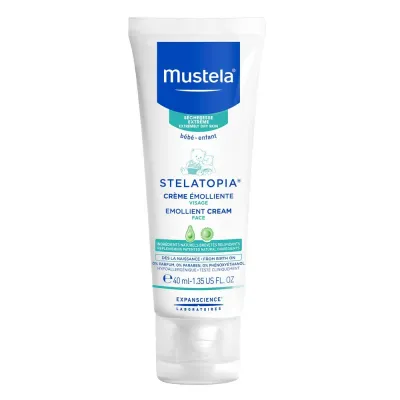
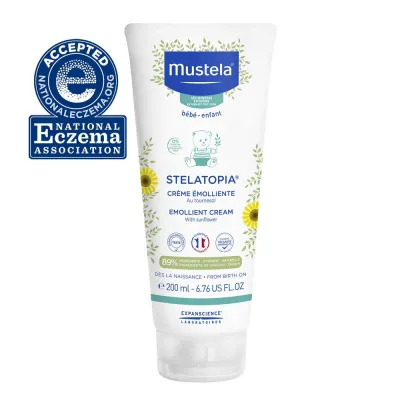
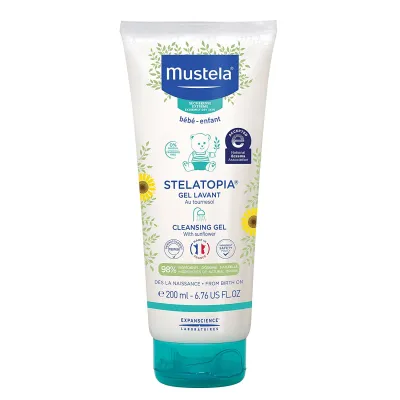
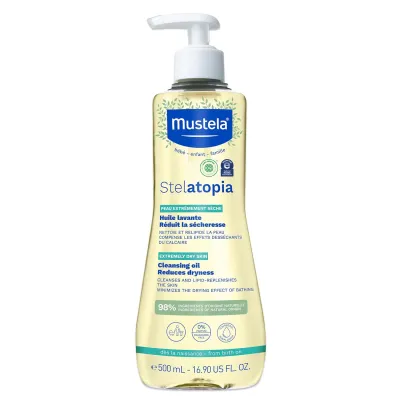
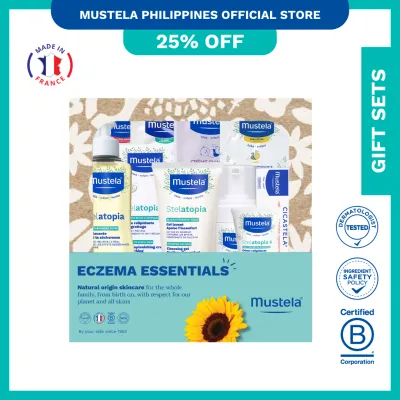
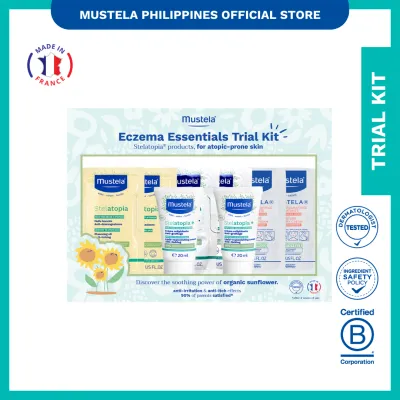
Prices are valid at publication and may change. Please refer to the product page for the latest price.
When shopping on local ecommerce platforms or in physical baby boutiques, look closely at the product packaging. The Stelatopia range typically features cream, white, or light blue packaging with prominent labeling indicating “atopic skin” or “extremely dry skin.” These products are formulated without added fragrances, which is a critical factor because synthetic perfumes can easily irritate a compromised skin barrier and trigger eczema flare-ups.
Before introducing any new product to your baby’s routine, always verify the manufacturer’s guidelines regarding the minimum age for application. Most Stelatopia products are formulated to be safe from birth, making them suitable for newborns, but you should always double-check the specific bottle or box for any age restrictions. Additionally, confirm the recommended application areas; while most emollients are safe for both the face and body, some specialized formulations may have specific instructions regarding use around the eye area or diaper zone.
It is also important to understand that “atopic-prone” and “normal” skin products should not be mixed indiscriminately. Using a highly fragranced normal-skin lotion on an active eczema patch can worsen irritation. Keeping your baby’s skincare routine consistent and limited to products designed specifically for barrier repair is the safest approach during periods of skin sensitivity.
Key Product Categories for Daily Eczema Management
Daily management of baby eczema relies on a consistent, multi-step routine that focuses on gentle cleansing and deep moisturization. Mustela’s eczema-prone line includes several product formats, such as cleansing oils, cream cleansers, emollient creams, and lipid-replenishing balms. Matching the right product texture to your baby’s current skin condition and the local weather is essential for achieving the best results.

The choice of packaging also plays a practical role in maintaining hygiene and ease of application. For daily use, pump bottles are highly recommended because they allow you to dispense the product with one hand while keeping your other hand on your active baby. Furthermore, pump dispensers minimize the risk of introducing bacteria into the product, which is a common issue with open tubs where fingers are repeatedly dipped into the cream. Keeping the product sterile is vital when dealing with eczema, as compromised skin is highly susceptible to secondary bacterial infections.
Cleansing Oils and Creams for Bath Time
Bath time can either support or severely damage an eczema-prone baby’s skin barrier. Standard soaps and foaming cleansers often strip away the natural lipids that keep the skin hydrated. Mustela offers specialized bath products, such as cleansing oils and cream cleansers, designed to clean the skin gently while leaving a protective moisture film behind.
When selecting a bath product, look for rinse-off cleansing oils or gentle cream washes that explicitly state they are formulated for atopic skin. These formulations work by dispersing in the bathwater or applying directly to wet skin, lifting away dirt without disrupting the skin’s natural pH. Some parents prefer no-rinse cleansing waters for quick clean-ups, but for a full bath, a dedicated rinse-off cleansing oil is generally more effective at preserving skin lipids.
Pay close attention to the water temperature and bath duration, as hot water and long baths can rapidly dry out sensitive skin. The manufacturer’s guidelines typically recommend using lukewarm water and limiting the bath to no more than five to ten minutes. After bathing, avoid rubbing your baby’s skin with a towel; instead, gently pat the skin dry with a soft, clean cotton towel, leaving it slightly damp to prepare for immediate moisturization.
Always verify that the bath product you choose carries a fragrance-free claim and displays labels indicating dermatological testing. In the tropical heat of the Philippines, sweat can accumulate in skin folds, making gentle daily cleansing necessary. However, over-cleansing can backfire, so monitoring how your baby’s skin feels immediately after a bath is the best way to gauge if the product and routine are suitable.
Emollients and Balms for Moisturizing
Moisturizing is the cornerstone of eczema management, and choosing the right texture depends heavily on the severity of your baby’s dryness and the environment they spend their time in. Mustela provides two primary moisturizing textures in its Stelatopia line: an emollient cream and a lipid-replenishing balm. Understanding the difference between these two formulations helps you adapt your baby’s skincare to changing daily conditions.
The emollient cream has a lighter, more fluid texture that absorbs quickly into the skin. This makes it highly suitable for daytime use in the warm, humid climate of the Philippines, as it provides essential hydration without leaving a heavy, sticky residue that can cause discomfort or heat rash. On the other hand, the lipid-replenishing balm has a much thicker, richer consistency. The balm is ideal for nighttime use, especially if your baby sleeps in an air-conditioned room where the dry air can rapidly deplete skin moisture, or during periods of intense dryness and flaking.
To maximize the benefits of these moisturizers, follow the recommended application frequency and timing. Manufacturers generally advise applying emollients at least twice a day, or more frequently if the skin appears dry. The most critical application window is immediately after bathing—ideally within three minutes of patting the skin dry—to lock in the moisture absorbed during the bath.
When purchasing these moisturizers, look for packaging features designed to protect the formula. Mustela utilizes specialized airless pump bottles for many of its emollients. This technology prevents air and contaminants from entering the bottle as the product is dispensed, ensuring that the preservative-free formula remains sterile and safe for your baby’s sensitive skin from the first pump to the last drop.
How to Read Labels and Verify Suitability
With numerous baby products available on the market, learning how to read labels and verify product suitability is a crucial skill for parents of eczema-prone babies. Do not rely solely on front-of-pack marketing claims; instead, take a systematic approach to evaluating the ingredient list, product safety markers, and suitability for your baby’s current skin state.
First, scan the ingredient list for any known personal allergens or common skin irritants. While Mustela’s Stelatopia line is formulated to minimize the risk of allergic reactions, individual babies can still have unique sensitivities to specific botanical ingredients, such as sunflower seed oil distillates or other plant-derived lipids. If your pediatrician has identified specific allergens for your child, cross-reference them carefully with the ingredient list before making a purchase.
Second, always confirm the product’s expiration date and batch code before buying or using it. Eczema-prone skin has a compromised barrier, making it highly sensitive to expired products or those that have degraded due to improper storage. When buying from online marketplaces, ensure you are purchasing from official brand stores or authorized distributors to guarantee that the products have been stored in temperature-controlled environments, which is especially important in hot, tropical climates.
Third, cross-reference the product’s intended use with your baby’s current skin status. Emollients and daily moisturizers are designed for intact, dry, or slightly irritated skin to help rebuild the skin barrier. They are not formulated for use on weeping, bleeding, cracked, or actively infected skin. Applying a thick cosmetic cream over broken skin can trap bacteria and worsen the condition, so always ensure the skin surface is intact before applying daily skincare products.
When to Stop Use and Consult a Pediatrician
While high-quality cosmetic skincare products play a vital role in daily skin maintenance, they have clear limitations. Knowing when to stop using over-the-counter products and seek professional medical advice is essential for your baby’s safety and comfort. Eczema can fluctuate in severity, and some phases require medical treatments that cosmetics simply cannot provide.
You must stop using all cosmetic skincare and consult a pediatrician or pediatric dermatologist immediately if you notice signs of skin infection or severe inflammation. These signs include weeping fluid, yellow crusting, pus-filled bumps, extreme redness, warmth to the touch, or if your baby seems in significant pain or is unable to sleep due to intense itching. These symptoms often indicate a secondary bacterial or viral infection that requires prescription medical treatment, such as topical or oral antibiotics.
It is crucial to understand that cosmetic emollients are designed to support and maintain the skin barrier; they are not active medical treatments and cannot cure an active, severe eczema flare-up. When your baby experiences a moderate to severe flare-up, a healthcare provider may prescribe topical anti-inflammatory treatments, such as low-potency topical corticosteroids or topical calcineurin inhibitors. During these times, follow your doctor’s instructions precisely, as these medical treatments must be applied correctly before or alongside your daily moisturizers.
To help your pediatrician make the most informed decision, keep a detailed record of your baby’s skin reactions. Note when you introduced new products, how often you applied them, and take clear photos of any sudden changes or flare-ups. This documentation provides valuable context for your doctor, helping them identify potential triggers and tailor a safe, effective treatment plan for your baby’s eczema.
Frequently Asked Questions (FAQ)
Can Mustela products cure baby eczema?
No, Mustela products cannot cure baby eczema. Eczema is a chronic, genetic skin condition characterized by a dysfunctional skin barrier and an overactive immune response, and there is currently no permanent cure. Instead, eczema is managed through a combination of trigger avoidance, daily barrier support, and medical treatments during flare-ups. Mustela’s Stelatopia products are formulated to soothe itching, reduce dryness, and help rebuild the skin’s natural lipid barrier, which can reduce the frequency and severity of flare-ups, but they do not eliminate the underlying condition.
How often should I apply Mustela emollients?
You should generally apply Mustela emollients at least twice daily, or as directed by your pediatrician. In the tropical climate of the Philippines, you may need to adjust the frequency and texture based on daily conditions. For instance, you might apply a lighter emollient cream in the morning to prevent stickiness during hot daytime hours, and a thicker balm in the evening before your baby sleeps in an air-conditioned room. The most important application is immediately after bathing, while the skin is still slightly damp, to lock in maximum hydration.

Community discussion
Share your experience or ask a question. Comments are reviewed before publication.