
Quick Answer: Is MooseGear the Right Choice for Sensitive Skin?
Moosegear wipes can be an excellent option for sensitive skin, but the definitive answer depends entirely on your baby’s specific skin triggers and the current state of their skin barrier. There is no single baby wipe that works universally for every child. While many parents in the Philippines seek out these wipes for their gentle formulations, determining if they are the absolute best choice for your child requires looking closely at the ingredients of the specific variant you choose and conducting a preliminary patch test.
In a tropical climate where high humidity and heat frequently contribute to diaper rash and skin irritation, choosing the right wipe is a critical daily decision. Moosegear offers several product lines designed to minimize skin irritation, but you must still verify the packaging for potential allergens. By understanding what goes into these formulations and how they interact with your baby’s skin, you can make an informed decision that prioritizes comfort and skin health.
Key Dimensions for Comparing Sensitive Skin Wipes
To make an objective comparison between different baby wipe brands, you must look past marketing slogans and focus on the physical and chemical properties of the product. Evaluating wipes across standardized dimensions allows you to assess their actual suitability for reactive skin.
Products mentioned in this guide
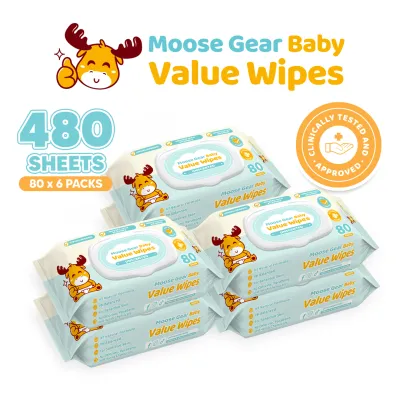
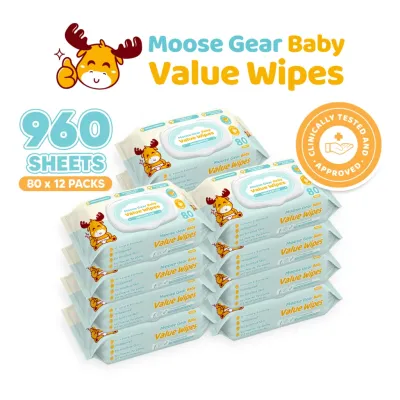
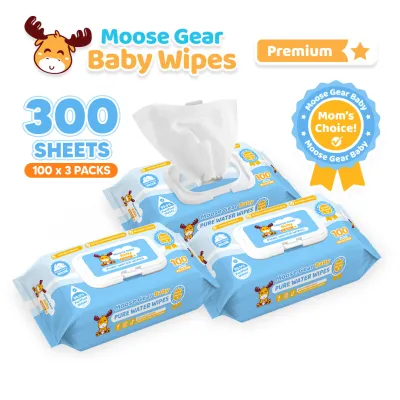
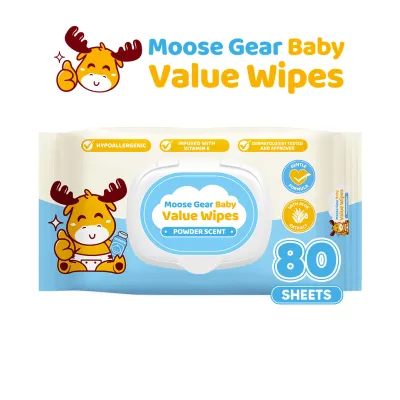

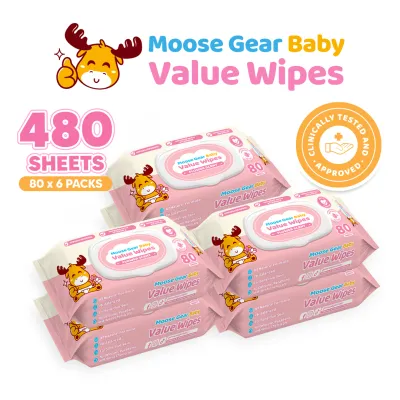


Prices are valid at publication and may change. Please refer to the product page for the latest price.

Ingredient Transparency and Irritants
When evaluating wipes for sensitive skin, the ingredient list—often referred to as the INCI (International Nomenclature of Cosmetic Ingredients) list—is your most reliable source of truth. Manufacturers are required to list ingredients in descending order of concentration, meaning the first few ingredients make up the vast majority of the liquid formula. For baby wipes, water is almost always the primary ingredient, but the secondary components, such as preservatives, surfactants, and conditioning agents, determine how gentle the product will be on reactive skin.
For babies with sensitive skin or conditions like eczema, several common ingredients should ideally be avoided. Alcohol, often listed as isopropyl alcohol or SD alcohol, is highly drying and can strip the skin of its natural lipids, leading to cracking and irritation. Parabens, which serve as preservatives, and harsh synthetic preservatives like Methylisothiazolinone (MIT) and Methylchloroisothiazolinone (CMIT) are known contact allergens that can trigger severe skin reactions. Additionally, generic terms like “fragrance” or “parfum” on a label can mask a complex mixture of dozens of individual chemicals, many of which are sensitizing to delicate skin.
Choosing products with shorter, simpler ingredient lists is a reliable strategy for minimizing risk. When a formula contains fewer chemical compounds, the statistical probability of your baby experiencing an allergic reaction or contact dermatitis decreases significantly. Minimalist formulas focus strictly on water, mild cleansing agents, and safe, low-hazard preservatives that keep the wipes free from mold and bacteria without irritating the skin barrier.
Moisture Level and pH Balance
An infant’s skin barrier is thinner and more permeable than adult skin, and its natural pH is slightly acidic, typically resting around 5.5. This acidic environment, often called the acid mantle, serves as a natural defense mechanism against harmful bacteria, fungi, and environmental irritants. Using wipes that are highly alkaline or poorly formulated can disrupt this delicate pH balance, weakening the skin barrier and leaving it vulnerable to infections and chronic dryness.
Moisture management is another critical factor in preventing mechanical skin damage. If a baby wipe is too dry, it will not glide smoothly across the skin, forcing you to apply more physical pressure and scrub repeatedly to clean away stool or urine. This repetitive friction causes micro-tears in the stratum corneum, the outermost layer of the skin, leading to redness and inflammation. Conversely, if a wipe is excessively wet, it can leave a pool of liquid on the skin that does not dry quickly.
In the warm and humid climate of the Philippines, excess moisture trapped inside a tight diaper creates a prime breeding ground for yeast infections, such as Candida albicans. A high-quality sensitive wipe must strike a precise balance, providing enough moisture to dissolve and lift waste smoothly while leaving the skin clean, comfortable, and dry within moments of use.
Fabric Texture and Thickness
The physical design of the wipe substrate is just as important as the liquid solution it carries. Most commercial baby wipes are made from non-woven fabrics, which are created by mechanically, thermally, or chemically bonding fibers together. The ratio of fibers used—typically a blend of polyester for strength and viscose or rayon for softness and absorbency—directly influences how the wipe feels and performs on your baby’s skin.
Fabric textures generally fall into three categories: smooth, cross-lace, or pearl-embossed. Smooth wipes are standard but can sometimes slip over stubborn waste, requiring more wipes and more friction to clean the area completely. Cross-lace and pearl-embossed textures feature raised patterns that physically trap and lift semi-solid stool with minimal effort. This textured design allows you to clean your baby thoroughly with fewer wipes, significantly reducing the amount of physical rubbing their skin must endure.
Sheet thickness, often measured in grams per square meter (GSM), determines the structural integrity of the wipe. Thicker wipes (typically above 50 GSM) provide a reliable physical barrier between your hand and the waste, preventing the wipe from tearing or folding over during use. They also retain moisture more evenly throughout the pack, ensuring that the last wipe in the container is just as saturated and effective as the first.
Evaluating MooseGear Wipes: What to Verify on the Packaging
When shopping for Moosegear wipes, you should not assume that all variants under the brand are identical. The brand offers different product lines, and you must inspect the specific packaging of the package you intend to purchase to ensure it aligns with your baby’s skin needs.
Start by identifying the exact variant, such as their pure water, aloe vera, or chamomile-infused options. If your baby has highly reactive skin, look for the variant with the simplest formulation, typically the one marketed as containing a high percentage of purified water. Turn the pack over and read the complete ingredient list to confirm that it does not contain added synthetic fragrances, alcohol, or parabens.
Next, look for details regarding the water purification process used during manufacturing. High-quality baby wipes often utilize water purified through Reverse Osmosis (RO) or Electrodeionization (EDI). These advanced filtration processes strip the water of dissolved solids, heavy metals, bacteria, and organic impurities, ensuring that the liquid base of the wipe is as pure and non-irritating as possible. If the packaging highlights RO or EDI water, it indicates a higher standard of manufacturing cleanliness.
Additionally, check for any dermatological testing statements or certifications printed on the label. While terms like “dermatologically tested” indicate that the product has been evaluated under professional supervision, they are not absolute guarantees against skin reactions. Finally, always locate the manufacturing and expiration dates stamped on the package. Mild, skin-safe preservatives have a limited shelf life, and their ability to prevent bacterial growth can degrade over time. In the tropical heat of the Philippines, storing wipes past their expiration date or in hot, unventilated areas can compromise both the preservative system and the structural integrity of the wipes, making them unsafe for sensitive skin.
How Leading Alternatives Compare in the Philippines
In the Philippine market, parents have access to a diverse selection of baby wipes, ranging from local supermarket staples to imported pharmacy brands and specialized organic options. Understanding how Moosegear compares to these alternatives requires looking at how different brands approach formulation and skin protection under local environmental conditions.
Living in the Philippines means dealing with constant heat and high humidity, which naturally increases sweating and the risk of heat rash (miliaria) and diaper dermatitis. When sweat mixes with urine and friction from a diaper, the skin barrier breaks down rapidly. This makes the choice of wipe ingredients incredibly consequential. Some local and international brands address this by offering ultra-minimalist “water wipes” that contain 99% to 99.9% pure water and a single, gentle preservative. These formulas are highly favored by pediatricians for newborns and infants with active eczema because they minimize the risk of chemical sensitization.
Other brands take a different approach, enriching their formulas with botanical extracts such as chamomile, aloe vera, calendula, or vitamin E. These ingredients are included for their anti-inflammatory and soothing properties, which can help calm mild skin redness. However, botanical extracts are complex organic mixtures that contain natural compounds. For a baby with healthy skin, these extracts can provide a pleasant, soothing effect; however, for a child with a compromised skin barrier or a history of contact allergies, these very same botanical ingredients can act as triggers for allergic contact dermatitis.
It is also important to recognize that marketing terms like “natural,” “organic,” or “hypoallergenic” are not strictly regulated by a single, legally binding standard in the cosmetics industry. A brand can label its product as “natural” even if it contains synthetic preservatives or potential allergens. Therefore, you should never rely solely on front-of-pack claims. When comparing Moosegear to other popular brands on supermarket shelves, always cross-reference the actual ingredient lists side-by-side to identify which brand offers the cleanest, most predictable formula for your child’s specific skin profile.
Decision Framework: Choosing the Right Wipe for Your Needs
To help you decide whether to purchase Moosegear wipes or opt for an alternative brand, use this structured, condition-based decision framework:
- Choose Moosegear if: The specific variant you verify on the packaging is completely free of any ingredients your baby is sensitive to, offers a comfortable balance of thickness and moisture that cleans effectively without leaving the skin dripping wet, and successfully passes a localized patch test. It is a highly practical choice for daily, routine cleaning of normal to mildly sensitive skin in a humid climate.
- Choose a Pharmacy or Alternative Brand if: Your baby has been diagnosed with moderate-to-severe atopic dermatitis (eczema), psoriasis, or highly reactive skin, and your pediatrician or dermatologist has recommended a specific clinically tested, therapeutic wipe or advised you to use plain water and sterile cotton balls. You should also choose an alternative if the only Moosegear variants available in your local store contain botanical extracts (like chamomile or aloe) that your child has previously reacted to.
- Verify First if: Your baby has a history of unexplained skin rashes, recurrent diaper dermatitis, or highly reactive skin, or if you cannot find a clear, transparent ingredient list on the packaging of the product you are considering. In these situations, you must consult a healthcare professional before introducing any new wipe brand to your baby's daily care routine.
Safe Usage and Patch Testing for Reactive Skin
Introducing any new skincare product to a baby with sensitive skin carries a small risk of reaction. To minimize this risk, you should always perform a localized patch test before using a new brand of wipes for full-body cleaning or diaper changes.
How to Perform a Safe Patch Test:
- Select a small, clean, and healthy patch of skin on your baby's inner arm or upper thigh where they cannot easily rub or scratch it.
- Take a single fresh wipe from the package and gently swipe it across the selected area once or twice.
- Allow the liquid to dry naturally on the skin without rinsing or wiping it off.
- Keep the area clean and dry, and monitor it closely over the next 24 to 48 hours for any changes in appearance or texture.
During the observation period, look for clear signs of an adverse skin reaction. These signs include localized redness, swelling, small raised bumps or papules, dry or flaky patches, or signs of physical discomfort, such as your baby scratching at the test site.
If you observe any of these symptoms, you must stop using the product immediately. Wash the affected area gently with cool, plain water to remove any remaining residue, pat it dry with a clean towel, and do not apply any medicated creams or ointments without consulting a doctor. If the irritation persists, spreads, or causes your baby significant distress, seek guidance from a pediatrician or pediatric dermatologist. Remember that changing wipe brands is a supportive hygiene measure, not a medical treatment for chronic or underlying skin conditions.

Community discussion
Share your experience or ask a question. Comments are reviewed before publication.