
Quick Answer: Is Moosegear the Right Choice for Your Baby?
Moosegear unscented baby wipes present a highly viable option for infants with sensitive skin due to their fragrance-free formulation. Synthetic fragrances are among the most common triggers for contact dermatitis and skin irritation in young children. By eliminating these artificial scents, this brand minimizes one of the primary risk factors associated with routine diaper changes and skin cleanups.
However, determining the absolute best wipe for your child is an individualized process that depends heavily on your baby’s unique skin chemistry and specific ingredient tolerances. While Moosegear avoids added scents, caregivers must still carefully examine the complete ingredient list on the packaging to check for any potential personal triggers. Comparing these ingredients against other leading pharmacy and supermarket brands available in the Philippines is a necessary step in finding the ideal match.
It is important to remember that no commercial baby wipe is universally hypoallergenic for every single infant. Even formulations designed for sensitive skin can occasionally cause unexpected reactions depending on the baby’s skin barrier health. For this reason, parents should always perform a localized patch test on a small, discreet area of the baby’s skin before fully integrating any new brand of wipes into their daily care routine.
Products mentioned in this guide

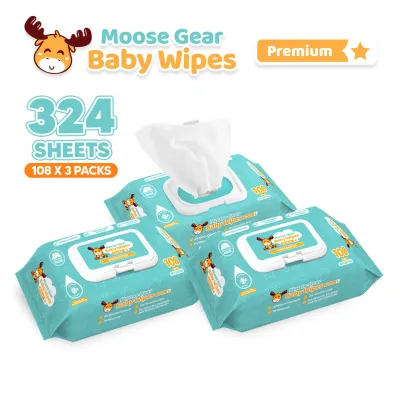
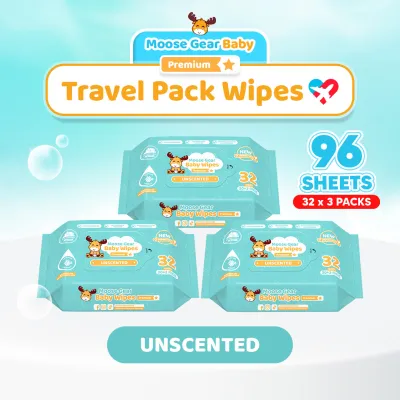
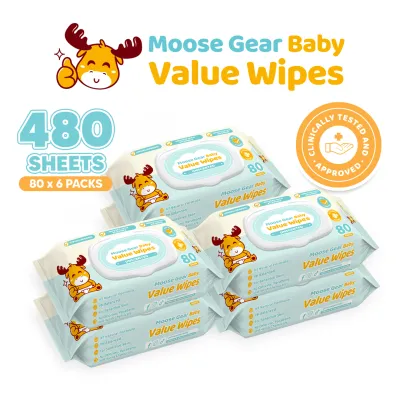
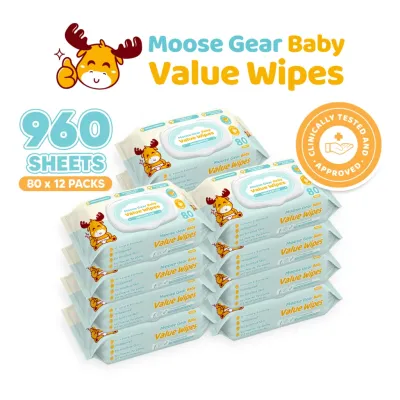

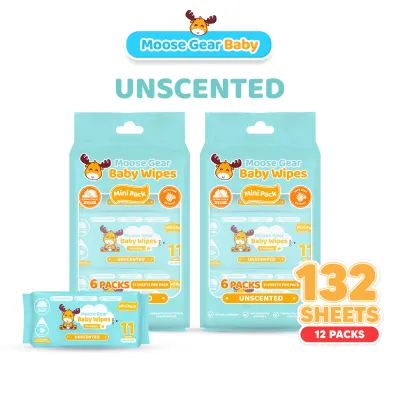

Prices are valid at publication and may change. Please refer to the product page for the latest price.
What Makes a Wipe Safe for Sensitive Skin?
An infant’s skin barrier is exceptionally delicate, measuring up to thirty percent thinner than adult skin. This thinness makes babies highly susceptible to environmental irritants, friction, and moisture imbalances. When evaluating whether a baby wipe is truly safe for sensitive skin, caregivers must look beyond front-of-package marketing claims and focus on three fundamental pillars: formulation, thickness, and moisture balance.

Formulation refers to the chemical composition of the liquid solution infused into the wipes. A safe formulation minimizes the presence of harsh synthetic chemicals, drying alcohols, and aggressive preservatives while emphasizing purified water and mild skin-conditioning agents. Many products labeled as gentle still contain compounds that can disrupt the skin’s natural pH, making a thorough label inspection essential.
Thickness plays a critical physical role in protecting sensitive skin from mechanical irritation. Thin, flimsy wipes tend to bunch up or tear during use, forcing caregivers to apply more localized pressure and perform multiple wiping passes. This repeated friction can cause micro-abrasions on the skin surface, weakening the epidermal barrier and paving the way for painful diaper rashes.
Moisture balance is the third critical pillar, particularly in warm, tropical climates. A wipe must carry enough liquid to dissolve and lift away acidic waste effectively without leaving the skin dripping wet. Excess residual moisture trapped inside a diaper creates a humid environment that promotes skin maceration and fungal growth, while an under-saturated wipe causes painful dragging and friction.
Formulation and Ingredients: Reading the Labels
To make an informed comparison between Moosegear and other prominent supermarket or pharmacy brands, caregivers must become proficient at reading back-of-pack ingredient decks. The primary ingredient in virtually all baby wipes is purified or deionized water, which typically constitutes over ninety-seven percent of the formula. The remaining percentage consists of preservatives, surfactants, and skin conditioners, which vary significantly from brand to brand.
Preservatives are absolutely necessary in water-based wipes to prevent the growth of harmful bacteria, mold, and yeast, especially when stored in warm, humid environments. However, certain preservatives are known sensitizers that caregivers should actively look to avoid. Methylisothiazolinone (MIT) and Methylchloroisothiazolinone (CMIT) are strong contact allergens that have been largely phased out of modern skincare but should still be verified as absent from budget brands.
Phenoxyethanol is another widely used preservative in the baby care industry. While generally considered safe in low concentrations, some infants with highly compromised skin barriers or severe eczema may experience mild irritation or redness when exposed to it. Comparing how different brands preserve their wipes—and where those preservatives sit on the ingredient list—helps identify which option is gentler for your baby.
Simple alcohols, such as ethanol or isopropyl alcohol, should be completely avoided in baby wipes as they strip away natural lipids and dry out the skin rapidly. It is important not to confuse these with fatty alcohols, like cetearyl alcohol, which act as emollients to help soften and protect the skin. Always check the label to ensure any alcohol present is of the non-drying, skin-conditioning variety.
Many brands incorporate botanical extracts like aloe vera, chamomile, or calendula, marketing them as natural soothing agents. While these ingredients can provide anti-inflammatory benefits for many infants, they can occasionally trigger allergic contact dermatitis in babies with specific plant sensitivities. Caregivers must monitor their child’s skin closely, keeping in mind that natural ingredients are not a guarantee against allergic reactions.
Because manufacturers frequently update their formulations to improve shelf life or comply with changing safety guidelines, online product descriptions may occasionally become outdated. The most reliable way to verify what goes onto your baby’s skin is to physically inspect the ingredient list printed on the package at the time of purchase. If the ingredients are not clearly listed on the packaging or the brand’s official channels, it is best to choose an alternative product with transparent labeling.
Thickness and Texture: Durability vs. Softness
The physical construction of a baby wipe is just as important as its liquid formulation when it comes to preventing skin irritation. The textile portion of a wipe is typically made from non-woven fabric, which is a blend of synthetic fibers like polyester and natural or semi-synthetic fibers like viscose or wood pulp. The ratio of these fibers determines how soft, absorbent, and durable the final product feels.
One of the primary metrics for evaluating wipe thickness is fabric weight, measured in grams per square meter (GSM). While manufacturers rarely print the exact GSM on retail packaging, caregivers can easily assess this physical property through a simple stretch and tear test. A premium, thick wipe will stretch uniformly when pulled from opposite corners and resist tearing, whereas a thin, low-cost supermarket wipe will instantly warp, develop holes, or rip apart.
Thicker wipes provide a physical cushion between the caregiver’s hand and the baby’s highly sensitive skin. This cushioning effect distributes pressure evenly across the diaper area, preventing localized friction points. Furthermore, a thicker sheet holds more cleaning solution and traps solid waste more efficiently within its fibers, allowing caregivers to clean up significant messes with fewer sheets and fewer wiping passes.
When shopping, look for structural terms on the packaging such as “cross-laid” or “embossed.” Cross-laid fibers are woven in a multidirectional pattern, which prevents the wipe from stretching out of shape or thinning out when pulled from the dispenser. Embossed textures feature raised patterns, such as honeycombs or small dots, which physically lift residue away from the skin with minimal dragging, offering a distinct advantage over flat, smooth sheets that can smear waste.
Moisture Level: Finding the Right Wetness Balance
Maintaining the correct moisture level in a baby wipe is a delicate balancing act that directly impacts skin health, particularly in the tropical climate of the Philippines. High ambient heat and humidity can accelerate skin irritation if moisture is not managed correctly. Caregivers must evaluate how wet a wipe feels and how quickly that moisture dries on the skin.
If a baby wipe is oversaturated, it leaves a pool of excess water in the deep skin folds of the groin, thighs, and buttocks. When a fresh diaper is fastened over this wet skin, the moisture cannot evaporate, leading to skin maceration. Macerated skin is structurally weak, highly susceptible to friction damage from diaper edges, and provides an ideal breeding ground for Candida yeast infections.
Conversely, wipes that are under-saturated or dry out quickly in the pack present a different set of hazards. A dry wipe lacks the necessary lubrication to dissolve dried fecal matter or sticky residue. This forces the caregiver to scrub the baby’s skin with increased force, causing painful micro-tears in the stratum corneum that can lead to immediate redness and discomfort.
To evaluate Moosegear and other leading brands at home, caregivers can perform a simple, practical squeeze test. Take a single wipe from the center of a newly opened pack and squeeze it firmly over a clean surface or sink. An optimally saturated wipe should release a few distinct drops of liquid under moderate pressure but should not produce a continuous stream of run-off water.
Local storage conditions can also significantly alter the moisture distribution within a pack of wipes. In warm environments, gravity causes the liquid preservative solution to pool at the bottom of the packaging over time, leaving the top wipes dry and the bottom wipes soaking wet. To maintain an even moisture balance, store your wipe packs upside down in a cool closet, and ensure the plastic resealable lid is clicked firmly shut after every single use.
Feature Comparison Checklist
This comparison checklist is designed to help you verify critical product features when shopping in local pharmacies, supermarkets, or browsing online marketplaces. Use these instructional prompts to evaluate how Moosegear Unscented compares to standard supermarket options.
| Feature | Moosegear Unscented (What to Verify) | Standard Brands (What to Verify) |
|---|---|---|
| Fragrance/Scent Status | Verify the "Unscented" label on the pack; check the ingredient list to ensure no "parfum" or "fragrance" is listed. | Check if labeled as "unscented" or "scented"; read the back panel to confirm the absence of synthetic masking scents. |
| Key Preservatives to Check | Read the label to confirm the absence of parabens and MIT/CMIT; note the presence or position of phenoxyethanol. | Check the ingredient deck for parabens, phenoxyethanol, benzyl alcohol, or MIT/CMIT preservatives. |
| Thickness & Texture Feel | Perform a physical stretch test; check if the fabric features an embossed pattern or a flat weave. | Pull the wipe to check for tearing; evaluate if the sheet feels thin, translucent, or rough against the skin. |
| Moisture Squeeze Test | Conduct a home squeeze test; verify that the wipe feels damp to the touch but does not drip excessively. | Check if the top sheets feel dry; squeeze a sheet to see if excessive liquid pools at the bottom of the pack. |
| Price per Wipe (PHP ₱) | Calculate by dividing the total pack price by the sheet count; compare value across different pack sizes. | Calculate the unit cost based on local retail prices; compare bulk package discounts against single packs. |
How to Decide: A Practical Buying Framework
Choosing the right baby wipe involves balancing your infant’s skin sensitivity, your household budget, and daily convenience. Use this practical framework to guide your next purchase decision:
- Choose Moosegear Unscented if: You prioritize a dedicated fragrance-free formulation, prefer a specific balance of thickness and moisture that you have personally tested, and have verified that the ingredient list contains no known triggers for your baby's skin.
- Choose a Leading Pharmacy/Supermarket Brand if: You require immediate, off-the-shelf availability at your local neighborhood store, prefer a brand with specific dermatologist-tested certifications that you already trust, or find a significantly lower price-per-wipe ratio that fits a high-volume household budget.
- Verify first if: Your baby has an active, diagnosed skin condition such as severe eczema, psoriasis, or open diaper rash lesions. In these situations, always consult a pediatrician or pediatric dermatologist before introducing any commercial wipe, as they may recommend using plain water and sterile cotton pads instead.
Regardless of which brand you choose to purchase, always perform a localized patch test on a small, clean area of your child’s skin before using the wipes for full-body cleaning or during diaper changes. Monitoring your baby’s skin reaction over twenty-four hours is the safest and most reliable way to prevent widespread contact irritation.
Frequently Asked Questions (FAQ)
How do I perform a safe patch test for a new baby wipe?
To perform a safe patch test, select a single wipe from the newly opened package. Gently swipe the wipe across a small, clean, and healthy area of your baby’s skin, such as the inner forearm or the upper thigh. Do not wash the area immediately after swiping, and allow it to dry naturally. Observe the tested spot closely over the next twenty-four hours for any signs of skin irritation, including redness, swelling, tiny raised bumps, dry patches, or signs of itching. If any reaction occurs, discontinue use of the brand immediately, rinse the skin with plain lukewarm water, and consult your pediatrician.
Can I use unscented baby wipes on a newborn’s face and hands?
A newborn infant’s facial skin is significantly thinner, more delicate, and more prone to dryness than the skin on their diaper area. Before using any baby wipe on your newborn’s face or hands, you must check the product packaging to ensure the manufacturer explicitly states it is safe for facial, hand, and eye-area use. If the label does not specifically clear the product for facial use, or if your newborn has highly sensitive skin, it is safest to avoid commercial wipes entirely for this purpose. Instead, use plain, lukewarm water and soft, sterile cotton pads to clean your baby’s delicate face and hands.
Community discussion
Share your experience or ask a question. Comments are reviewed before publication.