
When your baby transitions to extra-large (XL) diapers, finding the perfect balance between leak protection, skin comfort, and household budget becomes a primary focus. If you are comparing a moose gear diaper xl with established household names like Pampers, Huggies, and Equator, you will quickly discover that there is no single “best” choice for every household. The ideal option depends heavily on your baby’s unique body shape, skin sensitivity, and your specific financial priorities. At this developmental stage, toddlers are typically highly active, exploring their surroundings, and requiring diaper designs that support constant movement without shifting or leaking.
Caregivers must verify the recommended weight and size ranges on each manufacturer’s packaging, as these specifications can vary widely between brands. While one brand’s XL size might accommodate a child weighing 12 to 17 kilograms, another brand might have a slightly different range. Always supervise your baby during diaper changes and ensure that the diaper is applied correctly according to the manufacturer’s instructions. If your baby exhibits signs of severe diaper rash, persistent skin irritation, or allergic reactions, stop using the product immediately and consult a qualified pediatrician or dermatologist.
Generally, the market positioning of these four brands offers distinct advantages. Pampers is widely recognized for its slim-fit profiles and rapid wetness distribution. Huggies is highly regarded for its robust elastic waistbands and thick, protective leg cuffs designed for active play. Equator serves as an accessible, budget-friendly option tailored for frequent daytime changes. Meanwhile, Moose Gear has gained popularity in the local market as a highly competitive alternative, praised for its soft, cloth-like texture and ultra-thin design.
Products mentioned in this guide
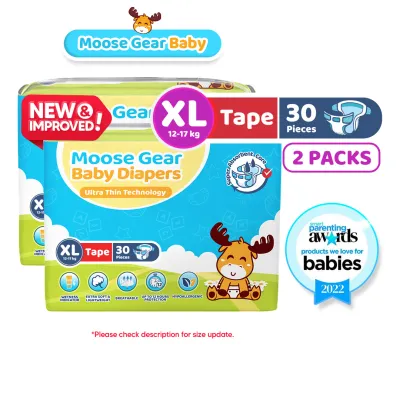

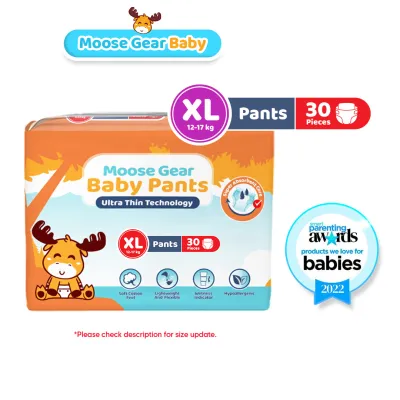
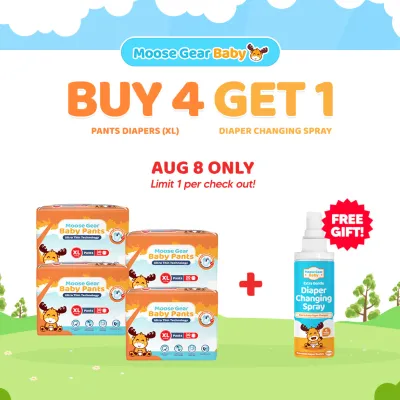
Prices are valid at publication and may change. Please refer to the product page for the latest price.
To help you make an informed decision, a quick conditional summary can guide your initial trial. Prioritize Pampers if your baby has highly sensitive skin and needs a rapid-dry lining for overnight wear. Choose Huggies if you have an active toddler with rounder thighs who requires strong, stretchy leak guards to prevent side leaks during vigorous play. Select Equator if you want a highly cost-effective solution for daytime use when you can change the diaper frequently. Opt for Moose Gear if you want a soft, ultra-thin diaper that balances modern comfort features with competitive pricing.
Comparing Absorbency and Leak Protection in Moose Gear Diaper XL and Competitors
Super Absorbent Polymer (SAP) technology is the foundation of modern disposable diapers, transforming liquid into a secure gel to keep your baby dry. When evaluating a moose gear diaper xl alongside Pampers, Huggies, and Equator, the distribution and quality of this SAP are critical factors. Some diaper designs incorporate structured channels that spread liquid evenly throughout the core, preventing the absorbent material from clumping or sagging in a single spot. Other brands rely on a traditional concentrated pad, which might feel thicker initially but can become heavy and misshapen after a single urination.
To check the quality and evenness of a diaper’s core, gently run your fingers along the interior lining of a dry diaper. A high-quality absorbent core should feel smooth, uniform, and free of large gaps or lumps. If the core feels uneven or lumpy before use, the absorbent material may shift or clump during wear, which can cause discomfort for your toddler and increase the risk of leaks. Thinness does not necessarily mean poor absorbency; modern manufacturing allows some brands to use a higher ratio of SAP to wood pulp, achieving a slim profile that still holds a significant volume of liquid.
Leak guard designs are especially vital for XL sizes, as toddlers are constantly walking, running, and climbing. Standing leg cuffs—the double-layered elastic ruffles around the leg openings—must stand upright to capture sudden bursts of moisture. A secure waist barrier or a pocket at the back of the diaper is also essential, particularly for active babies who sleep on their backs or move dynamically in their cribs. When comparing these brands, observe the height and elasticity of these leg cuffs to ensure they provide a snug barrier without binding.
Parents can perform several simple, observable checks at home to evaluate how well a diaper performs in real-world conditions:
- The Dryness Touch Test: After your baby has worn the diaper for three to four hours, gently press a clean, dry paper towel against the inner lining during a change. If the paper towel remains completely dry, the diaper is successfully wicking moisture away from the skin. If the towel feels damp, the surface material may not be wicking liquid efficiently, which can compromise skin health.
- The Sagging Check: Observe your toddler as they move around the house after the diaper has been wet. If the diaper sags heavily down toward their thighs after only one or two urinations, the core structure may lack the necessary support channels, which can pull the waistband down and create gaps.
- The Gel Bead Inspection: When changing your baby, check their skin for tiny, clear, gel-like particles. The presence of these beads indicates that the protective lining of the absorbent core has ruptured, allowing the wet SAP to escape. While these polymers are generally non-toxic, gel leakage is a sign of structural weakness in the diaper's construction.
It is important to remember that actual absorbency varies significantly based on your baby’s hydration levels, activity, and individual physical output. Always check the product packaging for specific weight limits and overnight performance claims rather than relying solely on generic marketing statements. Manufacturers often design distinct product lines, such as standard daytime diapers and premium overnight variants, to handle different volumes of liquid over extended periods.
Evaluating Fit, Elasticity, and Comfort for Growing Babies
As toddlers grow, their physical proportions change rapidly, and their bellies naturally expand and contract throughout the day, especially after meals. A diaper’s waistband must offer excellent elasticity to maintain a secure fit without digging into your baby’s delicate skin. When fastening the diaper, you should easily be able to slide two fingers comfortably between the waistband and your baby’s tummy. Check your baby’s skin during changes; if you notice deep, persistent red marks around the waist, the elastic may be too tight, or the diaper size may be too small for their current development stage.

Leg cuff flexibility is equally critical, as thick toddler thighs are highly prone to friction-induced chafing. The elastic bands around the legs must be soft, flexible, and capable of moving with your baby. If the leg cuffs are too stiff or have rough, plastic-y edges, the constant friction from walking and crawling can cause painful red raw spots. When applying an XL diaper, always run your finger around the inside of the leg cuffs to flare them outward, ensuring they sit flat against the skin rather than curling inward.
In the hot, humid tropical climate of the Philippines, material breathability is a crucial factor in preventing diaper rash. High humidity levels trap heat and moisture inside the diaper, creating an environment where bacteria and yeast can easily thrive. Parents should physically feel both the inner and outer linings of the diaper; a breathable diaper will feel soft and cloth-like, rather than stiff or plastic-y. Look for breathability indicators on the packaging, such as “micro-pores” or “breathable outer cover” claims, which allow hot air to escape while keeping liquid safely locked inside.
Sizing consistency is a common challenge for parents, as an “XL” designation is not uniform across all brands. An XL in a moose gear diaper xl may fit differently than an XL in Pampers, Huggies, or Equator. Some brands are cut narrower and longer, making them ideal for tall, slim toddlers, while others feature a wider cut that accommodates rounder bellies and thicker thighs. To avoid wasting money on ill-fitting diapers, measure your baby’s waist and thighs occasionally, and compare these measurements against the specific weight and sizing charts printed on each manufacturer’s packaging.
Additionally, look for dermatological certifications or hypoallergenic labels on the packaging, which indicate that the materials have undergone testing for skin safety. Because these certifications and testing standards are dynamic and subject to change, caregivers should verify these details directly on the manufacturer’s official website or product documentation. If your baby has highly sensitive skin, choosing a diaper free of added fragrances, latex, and elemental chlorine can help minimize the risk of contact dermatitis.
Assessing Value: Price per Diaper and Bulk Buying in the Philippines
When managing household expenses in the Philippines, comparing the total price of a diaper pack can be highly misleading. One brand’s XL pack might contain 30 diapers, while another contains 40, 54, or even more. To find the true value, always calculate the price per diaper. Take the total retail price of the package and divide it by the exact number of diapers inside. For example, if a pack costs ₱450 and contains 30 pieces, the cost is ₱15.00 per diaper. Keeping a running note on your phone to track these unit prices across different brands and retail outlets is an excellent habit.
Diaper availability and sourcing can also impact your overall budget:
- Official Brand Stores on E-commerce Platforms: Major e-commerce platforms host official flagship stores for Moose Gear, Pampers, and Huggies. Shopping during monthly double-day sales (such as 8.8 or 9.9) or pay-day promotions often yields the deepest discounts, bundle deals, and vouchers.
- Local Supermarkets and Hypermarkets: For immediate needs, local supermarkets offer reliable stock, though prices may be closer to standard retail. Some regional brands like Equator may have strong distribution in specific local grocery chains.
- Wholesale Clubs and Warehouse Outlets: Buying mega-packs or cases from wholesale clubs can significantly lower the price per diaper, making it an excellent option for families with storage space.
Several factors affect the overall value of your diaper purchase beyond the initial unit price. The frequency of changes is a major consideration; if a highly affordable diaper requires changing every two hours because it leaks or sags, you will use more diapers per day than if you used a slightly more expensive, high-absorbency diaper that lasts four to five hours. Furthermore, factor in the cost of diaper rash creams and potential medical consultations if a cheaper, less breathable material triggers skin irritation. True value is always a balance of unit price, diaper performance, and your baby’s skin health.
Proper storage is also essential when bulk buying in a humid climate. Diapers are highly absorbent by design, meaning they can absorb moisture from the surrounding air if left exposed. Store your bulk diaper supply in a cool, dry place, keeping them sealed in their original plastic packaging or airtight plastic containers. This prevents the absorbent polymers from degrading or losing their effectiveness before they are used, ensuring you get the full value out of every single diaper in the pack.
How to Choose: Decision Guide for Moose Gear, Pampers, Huggies, and Equator
To help you navigate these choices, use this straightforward, conditional decision framework tailored to your baby’s specific needs and your household circumstances:
- Choose Pampers if: Your baby has sensitive skin, prefers a slim and lightweight fit under clothing, and you prioritize rapid absorption to keep moisture away from the skin. It is also the ideal choice if you want a highly reliable brand that is easily found in almost any local supermarket or convenience store across the Philippines.
- Choose Huggies if: Your toddler is extremely active, has rounder thighs, and requires robust, highly stretchable leg cuffs and waistbands to prevent messy blowouts. It is excellent for heavy wetters who need a sturdy, structured core that maintains its shape even when fully loaded.
- Choose Equator if: You are looking for an economical, budget-friendly option to use primarily during the day. If you practice frequent diaper changes—such as every two hours or immediately after your baby soils the diaper—Equator offers a practical way to keep costs down without sacrificing basic protection.
- Choose Moose Gear if: You want to try a modern, ultra-soft, and remarkably thin diaper that offers competitive absorption at a highly reasonable price point. It is a fantastic option if you enjoy shopping during online e-commerce sales and want a stylish, comfortable diaper that feels gentle to the touch.
The “Verify First” Rule: Before purchasing a massive bulk box or a multi-pack case of any XL diaper, always buy a small trial pack first. Every baby’s body shape, skin chemistry, and movement patterns are entirely unique. Testing a small quantity allows you to observe how the diaper fits your baby’s waist and thighs, check for any skin redness or allergic reactions, and evaluate its real-world absorbency without making a major financial commitment. If you notice any persistent skin irritation, stop use immediately and consult a healthcare professional.
Frequently Asked Questions (FAQ)
When should I switch my baby from L to XL diapers?
While the weight ranges printed on diaper packaging serve as a helpful baseline, they are only general guidelines. Your baby’s unique body proportions—such as a rounder tummy or thicker thighs—often dictate when it is time to size up. You should transition from Large (L) to Extra Large (XL) if you observe persistent red elastic marks on your baby’s waist or thighs, experience sudden and frequent leaks despite proper fastening, or notice that the diaper looks visibly too small or sits too low on their waist. Another clear indicator is when the fastening tape tabs can no longer reach the center of the landing zone and must be secured far out near the hips.
Can I use different diaper brands for daytime and nighttime?
Yes, mixing and matching diaper brands is a highly effective, budget-friendly strategy used by many parents. During the day, when your baby is active and you can change their diaper every two to three hours, you can use a more economical option like Equator or Moose Gear. For overnight sleep, when you want to avoid waking your baby and need up to 12 hours of continuous leak protection, you can switch to a premium, high-absorbency variant from Pampers or Huggies. This hybrid approach ensures your baby stays dry and comfortable when it matters most while keeping your monthly diaper expenses manageable.

Community discussion
Share your experience or ask a question. Comments are reviewed before publication.