
Choosing the right baby gear is one of the most critical decisions you will make during your child’s first few months of life. Among the various soothing tools available on the market, Mastela has established itself as a prominent brand offering both baby bouncers and baby swings. Parents frequently find themselves choosing between these two options, wondering which investment will better suit their daily routines, household space, and baby’s unique temperament.
To make an informed choice, you must evaluate how each device operates, where it will sit in your home, and how your baby prefers to be comforted. A Mastela bouncer is generally the better choice for families living in compact spaces, those who need to move the gear frequently from room to room, and babies who respond well to self-generated or caregiver-assisted gentle bouncing. Conversely, a Mastela swing is typically the superior option for caregivers who require hands-free, automated soothing for longer periods, provided their home has adequate floor space to accommodate a larger device.
Ultimately, your decision will hinge on three primary dimensions: the physical footprint you can allocate, your preferred power source, and your baby’s specific sensory triggers. Because features, dimensions, and weight limits vary across different models, you should always verify the exact specifications of the specific model you intend to purchase from authorized online stores or local retailers.
Products mentioned in this guide
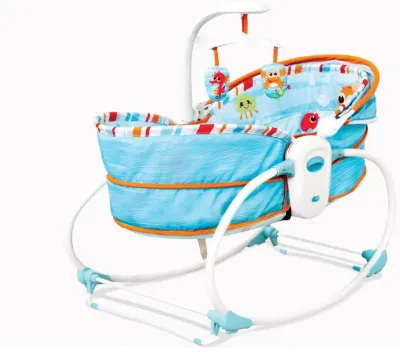
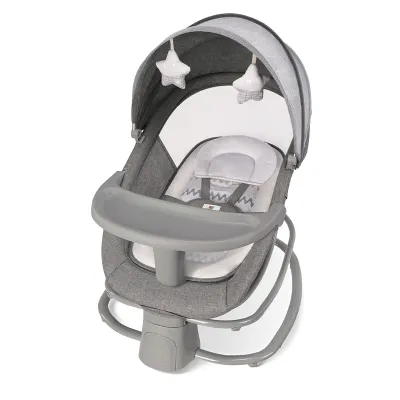
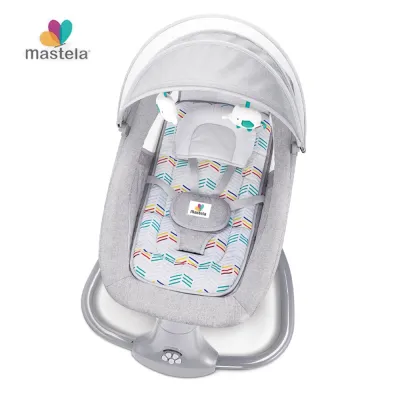
Prices are valid at publication and may change. Please refer to the product page for the latest price.
Functionality and Soothing Effectiveness Compared
Understanding the mechanical differences between a bouncer and a swing is essential to predicting which one your baby will prefer. While both devices aim to calm a fussy infant, they rely on entirely different physical principles and interactive designs to achieve this goal.
How Mastela Bouncers Soothe and Engage
Mastela bouncers operate on a low-tech, highly responsive mechanism that leverages gravity and your baby’s natural physical movements. When your baby kicks their legs or shifts their weight, the flexible frame of the bouncer responds by creating a gentle, up-and-down springy motion. Caregivers can also initiate this movement with a light touch of the hand or foot, making it a highly interactive experience between parent and child.
This responsive movement provides excellent proprioceptive input, helping infants develop an early awareness of their physical bodies and how their actions affect their immediate environment. Because the motion stops when the baby rests, bouncers encourage a natural cycle of activity and rest rather than keeping the baby in a state of continuous passive motion.
In addition to the physical movement, these bouncers typically feature overhead toy bars with plush or plastic hanging figures. These toys are positioned within the baby’s line of sight and reach, encouraging visual tracking, focus, and early motor skill development as they attempt to swat or grasp at the items.
This combination of self-initiated movement and visual stimulation makes the bouncer ideal for babies who enjoy an upright, socially engaged position. It is particularly useful during the baby’s active alert states, allowing them to watch family members go about their daily tasks from a safe, comfortable vantage point.
When choosing a bouncer, it is crucial to check the specific model’s seat recline options and the materials used in the seat cover. In a tropical climate characterized by high temperatures and humidity, selecting a model with breathable mesh fabrics is vital to prevent heat rash and keep your baby cool and comfortable.
How Mastela Swings Provide Comfort
Mastela swings utilize an automated, motorized system to deliver continuous, rhythmic motion without requiring active physical effort from the baby or the caregiver. These devices typically offer multiple speed settings, allowing you to choose between a gentle, barely-there sway and a more pronounced, calming swing to match your baby’s mood.
This continuous motion mimics the rhythmic, vestibular stimulation that infants experience while in the womb or when being rocked in a caregiver’s arms. For many babies, particularly those who are highly sensitive or prone to colic, this predictable, repetitive motion is highly effective at reducing crying and encouraging relaxation.
To enhance their soothing capabilities, many Mastela swings come equipped with integrated electronic consoles. These consoles often feature built-in lullabies, gentle nature sounds, or white noise, along with timer settings that automatically shut off the motion and sound after a designated period.
This automated functionality makes the swing an invaluable tool for caregivers who need a reliable, hands-free station to set the baby down. It allows parents to attend to immediate household responsibilities, prepare meals, or care for older siblings while knowing their infant is being gently comforted by a consistent rocking motion.
Before finalizing a swing purchase, you must verify the power source requirements of the specific model. Some models run exclusively on batteries, which can increase long-term operational costs, while others feature dual-power options, including an AC adapter or a USB cable that can be plugged into a wall outlet or a portable power bank.
Space Requirements and Portability for Your Home
The physical layout of your living environment plays a massive role in determining which baby gear is truly practical. A piece of gear that is highly effective but constantly blocks your walkways can quickly become a source of household frustration.

+-----------------------+--------------------------+--------------------------+
| Feature               | Mastela Baby Bouncer     | Mastela Baby Swing       |
+-----------------------+--------------------------+--------------------------+
| Physical Footprint    | Compact, low-profile     | Wide, requires clearance |
+-----------------------+--------------------------+--------------------------+
| Average Weight        | Lightweight (1.5–3 kg)   | Heavier (4–8 kg)         |
+-----------------------+--------------------------+--------------------------+
| Foldability           | Highly foldable, flat    | Limited or bulky fold    |
+-----------------------+--------------------------+--------------------------+
| Ideal Room Placement  | Any room, tight spaces   | Fixed spot, larger areas |
+-----------------------+--------------------------+--------------------------+
| Power Source          | None (manual/natural)    | AC adapter or batteries  |
+-----------------------+--------------------------+--------------------------+
Mastela bouncers feature a low-profile, highly streamlined design with a compact base that takes up minimal floor space. This small footprint allows you to place the bouncer easily in narrow hallways, tight kitchen corners, or small bathrooms while you complete your daily routines.
Furthermore, bouncers are exceptionally lightweight, usually weighing between 1.5 to 3 kilograms, and many models are designed to fold completely flat. This high level of portability means you can easily carry the bouncer with one hand from room to room, slide it under a sofa when not in use, or pack it into a car trunk for family visits.
Mastela swings, on the other hand, require a much larger and more permanent floor space allocation. To ensure stability and prevent tipping while the motor is running, swings are engineered with a broad, sturdy base and require a clear radius around the seat to swing freely without hitting walls or furniture.
Because they contain heavy motors, gearboxes, and structural steel frames, swings are significantly heavier and bulkier than bouncers. They are generally designed to remain in a semi-permanent, fixed location in your home, as moving them between rooms frequently can be physically taxing and may require partial disassembly.
These spatial characteristics are particularly important to consider within common housing configurations in the Philippines. In compact condominium units, studio apartments, or multi-generational households where space is shared among several family members, a bulky swing can easily clutter common walkways.
If you live in a smaller home, a bouncer offers the flexibility needed to maintain an organized living space. However, if you have a spacious living room or a dedicated nursery where a swing can sit permanently without obstructing foot traffic, the larger footprint of a swing is a manageable trade-off for its automated features.
To avoid purchasing errors, always measure the exact floor area where you plan to place the device. Compare these measurements against the product dimensions listed on the manufacturer’s website or the e-commerce platform before making your final transaction.
Safety Rules, Weight Limits, and Supervision
No matter which type of baby gear you choose, safety must remain your absolute priority. Both bouncers and swings are designed strictly as active, supervised lounging and entertainment stations, and understanding their safety boundaries is vital to protecting your child.
The most critical safety rule for both devices is that they are never approved for unsupervised or overnight sleep. When an infant falls asleep in a semi-reclined position, their relatively heavy head can tilt forward onto their chest, potentially compressing their soft trachea and causing positional asphyxiation.
Because positional asphyxiation can occur silently and without warning, you must monitor your baby closely while they are in the gear. If your baby falls asleep in a bouncer or swing, immediately transfer them to a firm, flat, and empty sleep surface, such as a safety-approved crib, cot, or bassinet.
Always secure your baby using the built-in restraint system every single time you place them in the gear, even if you only plan to leave them there for a few moments. Most Mastela models feature either a 3-point or a 5-point harness; ensure the straps are adjusted snugly against your baby’s body according to the manufacturer’s instructions.
You must also pay close attention to the developmental and physical limits of the gear. Every model has a specific maximum weight limit printed on its packaging or instruction manual that you must never exceed.
Beyond weight limits, you must discontinue use immediately if your baby reaches certain developmental milestones, such as learning to sit up unassisted, rolling over, or attempting to climb out of the seat. Once a baby gains this level of mobility, the risk of the device tipping over or the baby falling out increases dramatically.
Never add aftermarket accessories to your bouncer or swing, such as extra infant insert cushions, head positioners, or unapproved toy attachments. These items have not been safety-tested with the specific device and can introduce serious suffocation, entrapment, or strangulation hazards.
Finally, always place your bouncer or swing on a flat, stable, and level floor surface. Never place this gear on elevated surfaces like kitchen counters, dining tables, beds, or sofas, as the vibrations of the motor or the baby’s own movements can cause the device to slide off the edge, resulting in severe fall injuries.
Final Decision Checklist: Bouncer or Swing?
To help you finalize your purchase, use this straightforward, actionable decision framework to determine which Mastela product aligns with your household’s daily lifestyle and needs.
Choose a Mastela Bouncer if:
- Your living space is limited: You live in a studio apartment, a cozy condo, or a shared family home where floor space is at a premium.
- You need high portability: You want a lightweight device that you can easily carry from the kitchen to the bathroom with one hand, or fold flat to take on trips.
- You prefer a quiet, low-maintenance setup: You want to avoid the hum of electric motors, do not want to manage power cords or battery replacements, and prefer a device with fewer electronic parts that could malfunction.
- Your baby enjoys active engagement: Your infant is responsive, loves to look around, and enjoys using their own leg movements to create a gentle, self-regulated bounce.
Choose a Mastela Swing if:
- You have ample dedicated floor space: You have a spacious living room or nursery where the swing can remain in a fixed position without blocking walkways.
- You need hands-free soothing: You are a busy caregiver who needs a reliable, automated station to calm a fussy baby while you work from home, cook, or manage household chores.
- Your baby craves continuous, rhythmic motion: Your infant is easily startled, struggles to settle down without constant rocking, or responds exceptionally well to rhythmic movement and white noise.
- You want built-in sensory features: You value integrated electronic control panels, speed adjustments, timers, and pre-loaded lullabies to customize the soothing experience.
Neither may fit if:
- Your baby dislikes restraint: Your child strongly resists being buckled into a semi-reclined position and prefers lying flat on a play mat or being carried in a baby wrap.
- You are looking for a primary sleep solution: You need a place for your baby to sleep overnight or during long, unsupervised naps, in which case you must purchase a standard crib, cot, or bassinet.
Verify first if:
- You are purchasing second-hand: If buying from an online marketplace seller or accepting a hand-me-down, thoroughly inspect the frame for hairline cracks, check that all harness buckles click securely, confirm no parts are missing, and verify online that the specific model has not been subject to any safety recalls.
Before making your final purchase, take a few moments to read recent, verified user reviews on reputable local e-commerce platforms. Pay close attention to feedback regarding real-world durability, fabric washability, and the reliability of customer service channels within the Philippines to ensure a smooth ownership experience.
Frequently Asked Questions (FAQ)
Can my baby sleep overnight in a Mastela bouncer or swing?
No, neither a bouncer nor a swing is safe for overnight or unsupervised sleep. These devices hold babies at a semi-reclined angle, which can cause an infant’s heavy head to slump forward onto their chest, potentially compressing their airway and leading to silent positional asphyxiation. If your baby falls asleep while in a bouncer or swing, you must immediately transfer them to a firm, flat, and empty sleep surface, such as a safety-approved crib or bassinet, to ensure they can breathe safely.
At what age or weight should I stop using these baby gears?
The exact age and weight limits depend entirely on the specific Mastela model you own, so you must consult the manufacturer’s instruction manual or product label for precise figures. Generally, you must stop using a bouncer or swing immediately when your baby reaches the maximum weight capacity (often around 9 kilograms for standard models) or when they reach key developmental milestones. These milestones include learning to sit up unassisted, rolling over, or attempting to climb out of the seat, as these actions make the device unstable and increase the risk of falls.

Community discussion
Share your experience or ask a question. Comments are reviewed before publication.