
Quick Answer: Is There a Universal Winner for Absorbency and Comfort?
When comparing Makuku, Pampers, and Huggies, there is no single diaper brand that universally outperforms the others for every baby. Each infant possesses a unique body shape, activity level, and skin sensitivity that heavily influences how a diaper performs. A brand that keeps one baby dry overnight might cause leaks or skin irritation on another.
In the tropical climate of the Philippines, high humidity and heat make diaper selection even more personal. Instead of relying solely on brand reputation, parents must evaluate specific product lines, material specifications, and structural designs. Finding the right diaper requires matching these features to your baby’s current developmental stage and physical needs.
How to Evaluate Absorbency, Comfort, and Fit on the Packaging
Smart diaper shopping begins with understanding the technical features listed on the packaging. By learning how to read manufacturer specifications, you can make informed decisions and avoid the costly trial-and-error of buying bulk packs that do not suit your baby.
Products mentioned in this guide
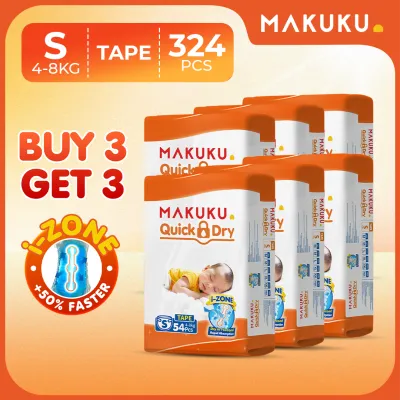
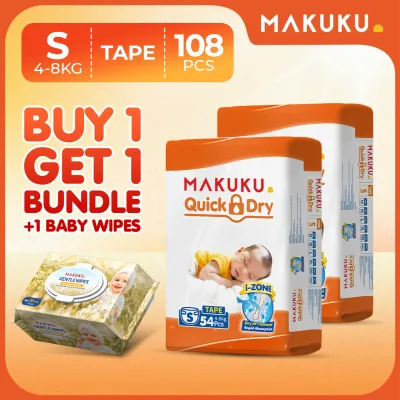
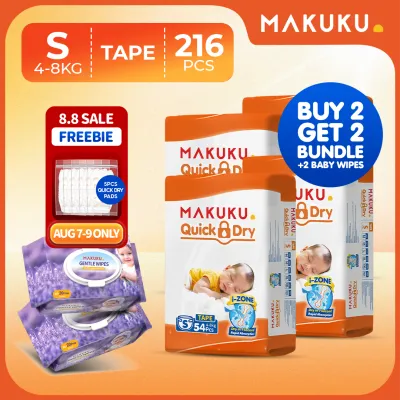
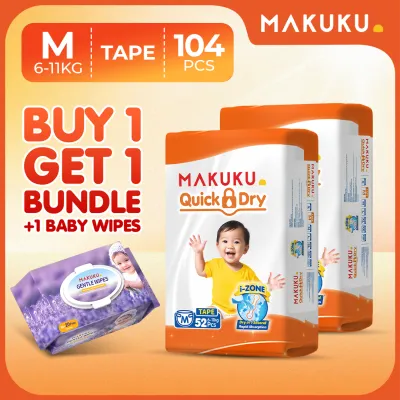
Prices are valid at publication and may change. Please refer to the product page for the latest price.

Evaluating Absorbency and Leak Protection
When examining diaper packaging, look closely for mentions of the absorbent core technology. Many modern diapers utilize Super Absorbent Polymer (SAP), a material designed to absorb multiple times its weight in liquid and lock it away as a gel. A high-quality SAP core helps prevent wetness from re-surfacing when your baby sits or rolls over.
Another essential feature to verify is the presence of a wetness indicator. This is usually a colored line on the outside of the diaper that changes hue when wet, allowing caregivers to monitor wetness without opening the diaper. This feature is highly practical for maintaining skin dryness throughout the day.
Additionally, inspect the design of the leg cuffs and leak guards. Look for double-layered, elasticized barriers that fit snugly around your baby’s thighs. Keep in mind that real-world leak protection depends heavily on proper sizing and changing frequency rather than just the brand name.
Assessing Comfort and Skin Sensitivity
To minimize friction and potential skin irritation, prioritize diapers with highly breathable back sheets. In humid environments, micro-porous outer layers are crucial because they allow heat and moisture vapor to escape while keeping liquid contained. This ventilation helps keep your baby’s skin cool and dry.
Carefully read the packaging for hypoallergenic, fragrance-free, or lotion-free claims. Added fragrances or chemical lotions can sometimes trigger reactions in babies with sensitive skin. A plain, soft inner lining with an embossed or textured surface is often ideal for reducing direct skin contact with wetness.
Regardless of manufacturer comfort claims, always monitor your baby’s skin for redness, chafing, or irritation. If you notice persistent redness around the waistband, thighs, or diaper area, treat this as a primary stop condition. Discontinue use of that specific diaper line and consult a pediatrician for guidance.
Verifying Fit and Sizing Guidelines
To ensure a secure fit, always cross-reference the weight ranges printed on the packaging with your baby’s current weight. Diaper sizes overlap significantly, so if your baby is near the upper limit of a size range, it is often wise to prepare for the next size up.
Look for diapers that feature highly stretchy waistbands and adjustable, re-fastenable tabs. A well-fitting diaper should sit snugly on your baby’s waist without leaving deep red marks. You should be able to slide two fingers easily between the waistband and your baby’s tummy.
Remember that weight ranges are only general guidelines because babies have different body shapes. An infant with chubby thighs or a rounder belly may require a larger size or a different cut than a slender baby of the exact same weight to prevent leaks and ensure comfort.
Navigating Product Lines: What to Verify for Each Brand
Comparing diaper brands requires looking at specific product tiers rather than the brand name as a whole. Each manufacturer offers standard and premium lines that differ significantly in materials, thickness, and price.
Makuku Product Lines
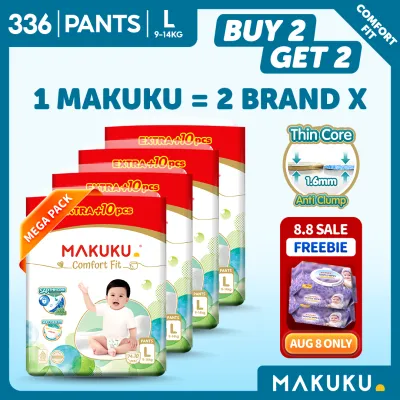
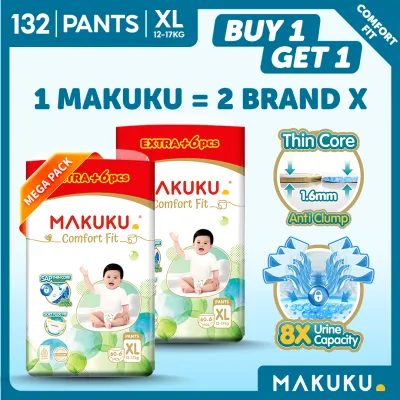
When browsing Makuku diapers in local physical stores or on e-commerce platforms, you will find several sub-lines, such as their Slim, Comfort, or Pro series. It is important to verify the packaging claims regarding core thickness and structure for each specific line.
Many Makuku lines emphasize an ultra-thin, full-SAP core design. This structure is engineered to resist clumping and breaking when wet, which helps maintain an even distribution of liquid. Check the manufacturer’s packaging to identify the recommended use cases, as some thin designs are optimized for daytime mobility while others are built for overnight absorbency.
Pampers Product Lines
Pampers offers a variety of options, ranging from their standard Baby-Dry line to premium tiers like Premium Care. Differentiate between these lines by checking the packaging for specific dryness technologies, such as magic gel channels or extra absorbing layers designed to distribute wetness quickly.
Premium lines often feature softer, cotton-like materials and more flexible side panels compared to standard lines. Always verify the stated weight ranges on the packaging, as the fit and structural design can vary slightly between their tape and pants formats across different tiers.
Huggies Product Lines
Huggies diapers are available in standard lines like Huggies Dry and premium options like Huggies Ultra or Nature Care. When comparing these lines, look for specific structural features such as pocketed waistbands, which are designed to help contain runny stools and prevent back leaks.
Verify the elastic strength and thickness of the leak guards on the packaging. Premium Huggies lines often incorporate specialized materials designed for enhanced breathability and softness. Ensure the chosen line matches your baby’s current mobility level, as some designs are tailored specifically for crawling or walking infants.
Calculating True Value and Price per Diaper
To determine which diaper brand fits your household budget, you must calculate the true cost per piece rather than comparing total package prices. Different brands and tiers package their diapers in varying quantities, making the upfront price misleading.
To find the unit cost, use this simple calculation:
- Price per Piece (₱) = Total Pack Price / Number of Diapers in the Pack
Once you have the price per piece, compare this unit cost against your baby’s typical daily changing frequency. For example, if your baby requires six changes per day, a small difference in the unit price can significantly impact your monthly expenses. Calculate your estimated monthly diaper budget to see if premium features justify the extra cost for your daily routine.
Buying in bulk or purchasing mega packs on e-commerce platforms often lowers the price per piece. However, bulk buying requires adequate, climate-appropriate storage space. In the Philippines, high humidity can degrade diaper adhesives and affect the integrity of the absorbent core over time. Always store bulk diapers in a cool, dry place, and keep them sealed in their original packaging until use.
Decision Framework: Choosing the Right Diaper for Your Baby's Needs
Selecting the right diaper involves balancing performance, comfort, and cost based on your baby’s current stage. Use this conditional framework to guide your starting point:
- For heavy overnight wetters: Choose a premium line from any of the three brands. Premium lines typically feature high-capacity SAP cores and advanced leak barriers that keep skin dry during long stretches of sleep.
- For frequent daytime changes: Choose a standard, budget-friendly line. Because daytime diapers are changed frequently to maintain hygiene, using a standard line during the day can significantly reduce your overall expenses.
- For highly active babies: Choose diaper pants rather than tape diapers. Pants feature 360-degree stretchy waistbands that accommodate constant movement and are much easier to put on an active toddler.
- Verify first if your baby has sensitive skin: Prioritize fragrance-free, hypoallergenic options. If your baby develops redness or a rash, stop using the diaper immediately and consult a pediatrician before trying a different brand.
Before committing to a large bulk purchase, always buy small trial packs or travel sizes first. Testing a small quantity allows you to observe how the diaper fits your baby’s unique shape, how well it absorbs, and whether it causes any skin reactions under real-world conditions.
Frequently Asked Questions (FAQ)
How often should I change my baby's diaper regardless of the brand?
Standard pediatric guidelines recommend changing a newborn’s diaper every 2 to 3 hours, or as soon as it becomes wet or soiled. Older babies can typically go 3 to 4 hours between changes during the day. Regardless of any manufacturer’s long-lasting dryness claims, you must change the diaper immediately after your baby has a bowel movement. Leaving stool in contact with the skin is the primary cause of diaper rash and skin irritation.
Can I mix different diaper brands during the day and night?
Yes, mixing different diaper brands and product lines is a highly practical and cost-effective strategy. Many parents use highly absorbent, premium diapers for overnight sleep to ensure uninterrupted rest, while utilizing standard, more affordable diapers for frequent daytime changes. When introducing any new diaper line into your routine, monitor your baby’s skin closely for signs of friction or redness, and ensure both brands fit correctly to prevent leaks.

Community discussion
Share your experience or ask a question. Comments are reviewed before publication.