
When baby-proofing your home, securing cabinets is one of the most critical steps to protect curious toddlers from household hazards. Two primary options dominate the market: magnetic child locks and strap child locks. Neither mechanism is universally superior; the right choice depends on your cabinet material, handle configuration, and daily convenience preferences.
Magnetic locks are ideal for maintaining a clean, uninterrupted aesthetic because they are installed entirely inside the cabinet. They work exceptionally well on handle-less cabinets and modern, minimalist furniture. Because they remain hidden from view, they do not tempt toddlers to pull or play with them.
Strap locks, on the other hand, offer unmatched versatility. These external locks can wrap around corners, secure double doors, and adhere to various appliances like refrigerators, microwaves, and trash cans. They are highly visible but incredibly easy to install on almost any surface without requiring internal clearance.
Products mentioned in this guide
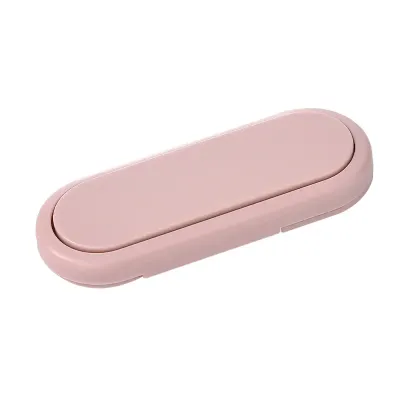
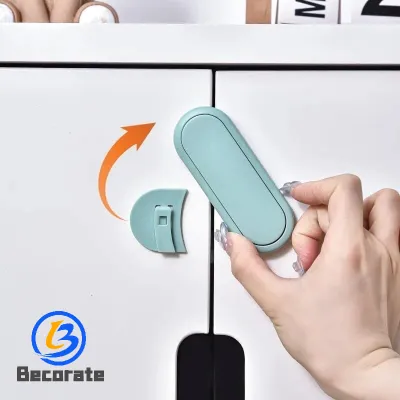
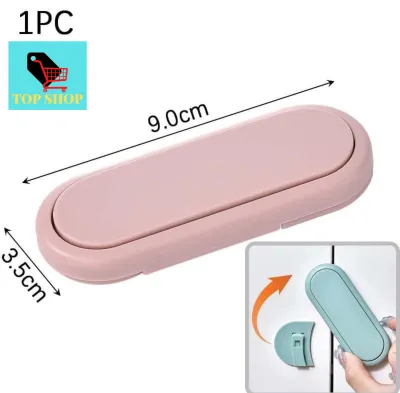
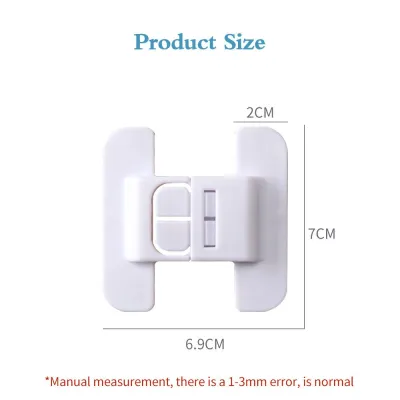
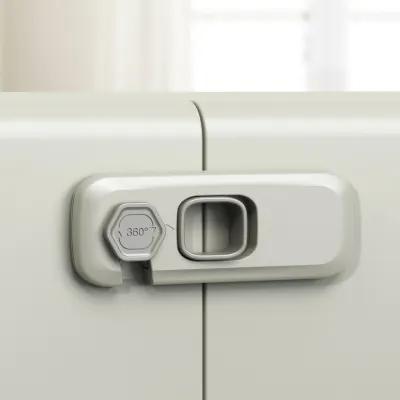
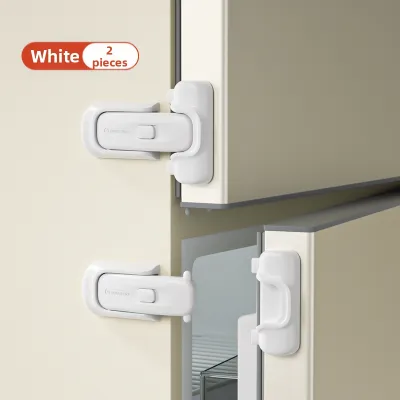
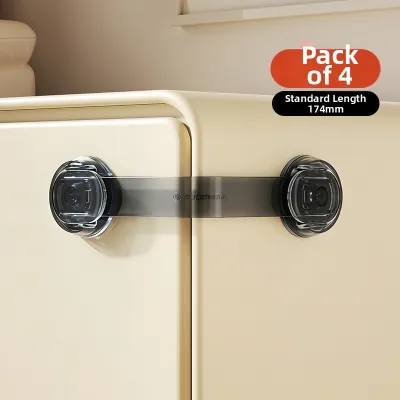
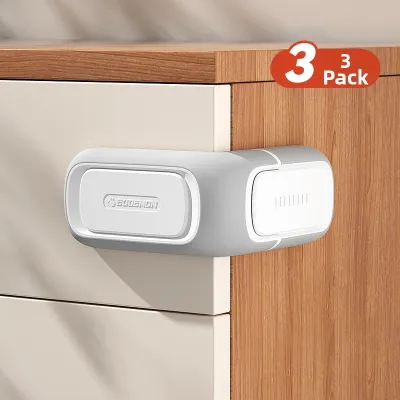
Prices are valid at publication and may change. Please refer to the product page for the latest price.
How Magnetic and Strap Child Locks Work
Understanding the physical mechanics of each lock type helps you determine which system fits your existing cabinetry. Magnetic child locks rely on a split-system design consisting of an internal latch and a matching magnetic key. The latch is mounted inside the cabinet drawer or door, catching on a strike plate installed on the frame. To open the cabinet, you must place the external magnetic key on the outside of the door directly opposite the internal latch, which pulls the spring-loaded mechanism down and releases the lock.
This design requires a precise installation footprint. You must have enough flat, internal clearance on both the door and the cabinet frame to mount the latch and strike plate. If your cabinets have thick wood doors, the magnetic field of the key must be strong enough to penetrate the material, which is a specification you should verify on the product packaging before purchasing.
Strap child locks utilize a completely external mechanism. They consist of a flexible plastic or fabric strap anchored by two adhesive-backed plastic mounts. One mount is fixed to the stationary frame or side of the cabinet, while the other is attached to the moving door or drawer. To open the cabinet, an adult must press a release button or slide a buckle on one of the anchor points to detach the strap.
Because strap locks are mounted externally, they do not require any internal cabinet clearance or specific frame structures. However, they do require sufficient flat, clean external surface area for the adhesive pads to bond securely. This makes them highly adaptable to curved surfaces, corners, and overlapping doors where internal locks cannot physically fit.
Security and Toddler Resistance
When evaluating security, toddler behavior and physical design play massive roles. Magnetic locks offer superior security against toddler curiosity simply because they are invisible. Toddlers are highly visual learners who investigate objects they can see and touch. Because a magnetic lock leaves the cabinet exterior completely unchanged, children do not realize a locking mechanism is present, preventing them from pulling, chewing, or attempting to bypass the lock.

Furthermore, even if a toddler pulls on a cabinet door secured by a magnetic lock, the door will only budge a fraction of an inch, if at all. This minimal play prevents small fingers from getting pinched in the gap. It also prevents the child from gaining enough leverage to yank the door open with force.
Strap locks are highly visible, which can inadvertently attract a toddler’s attention. A determined child may pull on the flexible strap, hang on it, or attempt to mimic adults by pressing the release buttons. While quality strap locks feature multi-step release mechanisms designed to baffle young children, older or more persistent toddlers may eventually figure out how to slide or press the buckle.
Additionally, the security of both lock types—especially adhesive-mounted versions—depends heavily on the strength of the bond. In tropical climates with high humidity, such as the Philippines, standard adhesives can degrade or soften over time. Caregivers must regularly inspect the adhesive pads to ensure they have not become loose or brittle. Always verify the weight-bearing limits and adhesive specifications on the product packaging, and remember that no lock replaces active adult supervision.
Adult Ease of Use and Daily Convenience
Securing your home should not make your daily household tasks frustrating. Magnetic locks offer a seamless look, but they introduce a specific type of daily friction: key management. To open any secured cabinet, you must have the magnetic key in hand. If you misplace the key, you cannot access your items without using a backup key or temporarily disabling the lock.
To mitigate this, many magnetic lock systems include adhesive magnetic key docks that you can mount high on a nearby wall or refrigerator. Additionally, many models feature a manual bypass switch. This allows you to flip a lever on the internal latch to keep the lock disengaged when children are asleep or out of the house, restoring normal cabinet function during heavy cooking sessions.
Strap locks do not require a key, which eliminates the risk of getting locked out of your cabinets. However, they require manual physical operation every single time you open the door. You must unlatch the strap, open the cabinet, and then re-secure the strap when closing it. This process can become cumbersome when your hands are full of groceries or cooking utensils.
For households with multiple caregivers, such as grandparents or nannies, strap locks are generally more intuitive because their operation is visually obvious. Magnetic locks may require a brief learning curve for visitors who do not know where the internal latches are positioned or how to align the key correctly.
Durability, Installation, and Cabinet Compatibility
Matching the lock type to your cabinet materials and hardware is essential to prevent permanent damage to your furniture. Magnetic locks often offer two installation methods: heavy-duty adhesive tape or screws. Screwing the latches into the cabinet frame provides the most durable hold, but it leaves permanent holes. If you choose the adhesive method, you must ensure the internal cabinet surfaces are thoroughly cleaned and completely dry before mounting.
Furthermore, magnetic locks are incompatible with certain cabinet designs. If your cabinets have shallow drawers, internal wire baskets, or thick middle shelves that block the upper frame, there may not be enough physical space to mount the internal latch. Always measure your internal clearance before purchasing a magnetic system.
Strap locks rely almost exclusively on external adhesives. While this means no drilling is required, it poses a risk to your furniture’s finish. When subjected to constant pulling by a toddler, or during the eventual removal process, strong adhesives can strip away wood finishes, paint, laminates, or veneers. This is a critical consideration for renters who need to return the property undamaged.
Before buying any adhesive-based lock, assess the porosity of your cabinet surfaces. Highly textured wood, unfinished surfaces, or recently painted cabinets do not bond well with standard adhesives, leading to premature failure. In contrast, smooth surfaces like laminate, glass, metal, and plastic provide an excellent bond for strap lock adhesives.
Decision Framework: Choosing the Right Child Lock
To finalize your baby-proofing plan, use this practical checklist to match the right lock to your specific home environment.
Choose magnetic locks if:
- Your cabinets have a modern, handle-less design or recessed grips.
- You want to preserve the aesthetic appeal of your kitchen or bathroom cabinetry.
- You have sufficient internal clearance (typically at least 1.5 to 2 inches of flat space) behind the cabinet doors.
- You are comfortable managing a magnetic key and mounting key docks out of reach.
Choose strap locks if:
- Your cabinets have prominent external knobs, handles, or unique double-door configurations.
- You need to secure appliances, trash cans, or curved furniture corners.
- You are renting and prefer an installation that does not require drilling into cabinet frames.
- You want an intuitive system that multiple caregivers can operate easily without a key.
Before purchasing any lock, verify these conditions:
- Surface Condition: Ensure the mounting surface is clean, dry, and free of grease or wax.
- Climate Factors: If living in high-humidity areas, look for locks featuring moisture-resistant adhesive pads.
- Product Specifications: Check the manufacturer's packaging for age recommendations, weight limits, and specific surface compatibility warnings.
Frequently Asked Questions (FAQ)
Can I use strap locks on cabinets without handles?
Yes, you can use strap locks on cabinets without handles, provided there is enough flat surface area on the exterior of the doors and adjacent frames to mount the adhesive pads. Unlike slide locks that physically loop around double handles, strap locks rely entirely on adhesive anchors. You can mount one anchor pad on the side of the cabinet frame and the other on the front of the handle-less door, allowing the flexible strap to bridge the gap and keep the door closed.
However, if your handle-less cabinets utilize a push-to-open mechanism, strap locks may not be the most practical choice. The slight compression required to open push-to-open doors can put constant tension on the strap, potentially weakening the adhesive over time. In these cases, internal magnetic locks or internal adhesive spring latches are generally more effective.
How do I remove adhesive child locks without damaging wood?
To remove adhesive child locks safely, always consult the manufacturer’s specific removal instructions on the product packaging first. If no specific instructions are provided, you can use a safe, gradual method to soften the adhesive bond. Start by using a hairdryer on a low or medium heat setting to gently warm the adhesive pad for one to two minutes. The heat helps soften the glue, making it pliable.
Once the adhesive is warm, take a piece of dental floss or strong thread, slide it behind the plastic mount, and use a gentle sawing motion to slice through the foam tape. Avoid using sharp metal scrapers, screwdrivers, or harsh chemical solvents, as these can easily scratch paint, melt plastic laminates, or strip away delicate wood finishes. Any remaining adhesive residue can usually be rubbed away with your fingers or cleaned with a mild soap and water solution.
Community discussion
Share your experience or ask a question. Comments are reviewed before publication.