
Determining whether Klix Syrup Vitamins are safe for your baby requires a careful look at the product’s specific formulation, your child’s exact age and weight, and a professional medical recommendation. In tropical climates, where high heat and humidity can affect the stability of liquid supplements, parents must be exceptionally vigilant about how they select, store, and administer vitamins. No single multivitamin is universally safe or necessary for every infant, as their developmental needs and organ systems are highly individualized.
Before introducing any liquid supplement to your baby’s daily routine, it is essential to understand that an infant’s body processes nutrients very differently than an adult’s or even a toddler’s. Their kidneys and liver are still maturing, meaning they cannot easily filter out excesses of certain vitamins or synthetic additives. Consequently, what might be a harmless daily supplement for an older child could pose serious health risks to a young infant. This guide outlines the critical safety checks, ingredient evaluations, and administration practices every parent must follow to protect their baby’s health.
Checking Age Appropriateness and Dosage Requirements
The first and most crucial step in evaluating any vitamin syrup is to verify the minimum age requirement explicitly printed on the manufacturer’s label. Many liquid vitamins are formulated specifically for toddlers aged one year and older, containing concentrations of nutrients and additives that are entirely inappropriate for younger infants. Giving a product designed for older children to a baby can lead to accidental nutrient toxicity or digestive strain.
Products mentioned in this guide


Prices are valid at publication and may change. Please refer to the product page for the latest price.
It is also vital to understand that infant dosing is typically weight-based rather than strictly age-based. Because babies grow at highly variable rates, two infants of the exact same age may require completely different dosages of a supplement to remain within a safe therapeutic range. A pediatrician will calculate the correct dosage in milliliters based on your baby’s most recent weight measurement, ensuring the dose is both effective and safe.
Never attempt to adjust a supplement’s dose based on your own assumptions, adult proportions, or online dosage calculators. Scaling down an adult dose or guessing the correct amount for an infant is highly dangerous and can easily result in a severe overdose. Always rely on the precise, written instructions provided by a qualified healthcare professional who is familiar with your baby’s medical history and growth trajectory.
Evaluating the Ingredient List and Additives
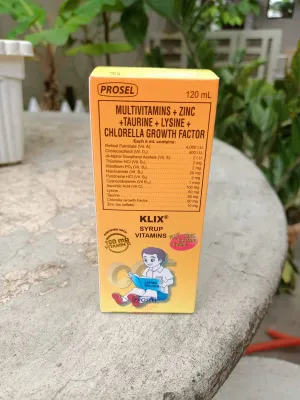
When examining a bottle of Klix Syrup Vitamins, the ingredient list on the back of the packaging is just as important as the vitamin percentages. Parents must carefully check for common allergens, artificial colors, or chemical preservatives that might trigger sensitivities or allergic reactions in young babies. Ingredients like soy, dairy derivatives, gluten, or specific benzoate preservatives are frequently used in liquid formulations but can cause adverse reactions in sensitive infant digestive tracts.

Additionally, you must compare the vitamin concentrations listed on the supplement facts panel against the standard daily recommended intakes for infants. Pay close attention to fat-soluble vitamins, such as Vitamin A, Vitamin D, and Vitamin E. Unlike water-soluble vitamins (like Vitamin C and B-complex vitamins) which are easily excreted in urine when consumed in excess, fat-soluble vitamins accumulate in the baby’s body tissues and liver. Over time, even a slight daily excess of these vitamins can build up to toxic levels, leading to serious health complications.
You should also look out for unnecessary herbal blends, botanical extracts, extra sugars, or active ingredients that are not typically required for basic infant nutrition. Many commercial syrups include sweetening agents like high-fructose corn syrup, sucrose, or artificial sweeteners to mask the metallic taste of vitamins. These sugars are not only unnecessary for an infant’s diet but can also contribute to early tooth decay and establish a preference for overly sweet flavors.
Monitoring for Side Effects and Intolerance
Whenever you introduce a new supplement or medication to your baby, it is critical to monitor them closely for any physical or behavioral changes. Introduce only one new product at a time, keeping all other aspects of their diet and routine constant for at least three to five days. This isolation makes it much easier to identify the exact cause if your baby experiences an adverse reaction.
Watch closely for mild gastrointestinal changes, which are often the first signs of intolerance to a liquid vitamin. These can include a sudden increase in spitting up, excess abdominal gas, bloating, frequent crying due to stomach cramps, or noticeable changes in stool consistency and color. While some minor digestive adjustments can occur, persistent discomfort or diarrhea indicates that the supplement may not be suitable for your baby’s digestive system.
Monitor your baby’s skin in a well-lit room for any new rashes, hives, or localized redness. Allergic reactions to active ingredients, flavorings, or preservatives can manifest as itchy red patches, raised bumps, or swelling around the face and mouth. If you notice any sudden skin changes shortly after administering the syrup, stop giving the product immediately and seek medical advice.
Finally, take note of any unusual changes in your baby’s sleep patterns, unexplained irritability, or sudden shifts in feeding behavior. A baby who suddenly becomes hyperactive, has difficulty settling down to sleep, or begins refusing breast milk or formula may be reacting to a component in the syrup, such as high sugar content or synthetic additives.
Safe Administration and Storage Practices
Accurate measurement is paramount when giving liquid vitamins to an infant. Always use the specific dropper, syringe, or dosing cup provided in the product packaging. These measuring tools are calibrated specifically for the viscosity and concentration of that particular syrup. Never substitute a dropper from a different medication, and never use standard household spoons, which are highly inaccurate and can lead to dangerous dosing errors.
In tropical regions where high temperatures and humidity are common, proper storage is essential to maintain the product’s chemical stability and prevent bacterial contamination. Carefully read the manufacturer’s storage instructions on the label. Some liquid vitamins must be refrigerated immediately after opening, while others should be stored in a cool, dry place away from direct sunlight. Keep the bottle tightly closed and stored out of reach of children to prevent accidental ingestion.
When administering the syrup, avoid mixing it into a full bottle of formula or breast milk. If your baby does not finish the entire bottle, they will not receive the full intended dose, making it impossible to track their actual nutrient intake. Instead, gently place the dropper or syringe toward the inside of your baby’s cheek and slowly dispense the liquid, allowing them to swallow naturally. This technique helps prevent choking and ensures the entire dose is consumed safely.
When to Stop Use and Seek Medical Advice
As a parent, knowing when to discontinue a supplement is just as important as knowing how to give it. Stop administering the vitamin syrup immediately if your baby exhibits any signs of an allergic reaction, severe digestive intolerance, or persistent behavioral distress. Your baby’s safety should always take priority over completing a bottle of vitamins.
Before combining Klix Syrup with any other medications, drops, or dietary supplements, consult a pediatrician. Many infant products, such as fortified formulas, iron drops, or colic remedies, contain overlapping vitamins and minerals. Combining these products without professional oversight can easily lead to accidental double-dosing of specific nutrients, putting your baby’s health at risk.
Lastly, remember to schedule regular pediatric check-ups to reassess your baby’s nutritional needs. As infants grow and begin consuming a wider variety of solid foods, their reliance on liquid supplements typically decreases. A doctor can help you determine if your baby still requires vitamin supplementation or if they are now obtaining all necessary nutrients from their daily diet.
Frequently Asked Questions (FAQ)
Can I give Klix Syrup Vitamins to a newborn?
Newborns under one month of age have highly delicate, immature digestive, hepatic, and renal systems that are not equipped to process complex multivitamin syrups. Their nutritional requirements are met entirely through breast milk or infant formula, which are specifically designed to provide the ideal balance of nutrients. You should never give any multivitamin supplement, including Klix Syrup, to a newborn unless a pediatrician has explicitly prescribed it for a specific medical condition.
What should I do if I accidentally give my baby an extra dose?
If you accidentally administer an extra dose of vitamin syrup, keep the product packaging immediately at hand so you can reference the exact ingredient concentrations. Contact your pediatrician, a local hospital, or a poison control center right away, providing them with your baby’s weight, the estimated amount of syrup swallowed, and the specific ingredients listed on the bottle. Do not wait for physical symptoms of toxicity to appear before seeking professional medical guidance.
Do exclusively breastfed babies need liquid vitamin supplements?
Pediatric health organizations generally recommend that exclusively breastfed infants receive a daily, single-ingredient Vitamin D supplement starting shortly after birth, as breast milk typically does not contain sufficient levels of this nutrient. However, a broad multivitamin syrup like Klix is usually unnecessary for healthy, breastfed babies unless a pediatrician diagnoses a specific nutritional deficiency. Always consult your doctor before starting any multi-nutrient supplement.
Community discussion
Share your experience or ask a question. Comments are reviewed before publication.