
Selecting a foldable mat for baby that transitions seamlessly from a living room floor to a humid park lawn or a family gathering requires a careful look at portability, material safety, and ease of maintenance. When traveling or enjoying outdoor outings in tropical climates, a standard play mat often proves too bulky, difficult to clean, or prone to trapping heat and moisture. The ideal travel mat must balance cushioning that protects your little one during developmental milestones with a lightweight, compact design that fits alongside your daily essentials. By focusing on verifiable manufacturer specifications, structural safety, and weather-resistant materials, you can find a versatile surface that keeps your baby comfortable and secure wherever your journey leads.
Assessing Portability and Weight for On-the-Go Use
When packing for an outing, every square inch of storage space and every gram of weight matters. Before purchasing a foldable mat for baby, measure its folded dimensions against the storage compartments of your stroller, the interior of your diaper bag, or the trunk of your car. A mat that seems compact in a store display might become a logistical challenge when you are trying to fit it alongside milk bottles, spare clothes, diapers, and portable fans. Opting for a design that folds down into a neat, flat rectangle rather than a bulky roll will make it much easier to slide into tight spaces.
Carrying weight is another critical factor that directly impacts your comfort during long walks or transit. Consider the total load of your baby gear; adding a heavy, dense foam mat can quickly make your stroller basket sag or strain your shoulders. Look for lightweight materials like expanded polyethylene (EPE) or specialized light foams that offer structural integrity without excessive weight. Many travel-friendly models weigh under two kilograms, making them manageable to carry over long distances.
Products mentioned in this guide
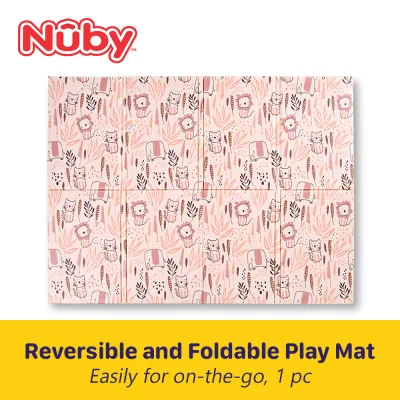
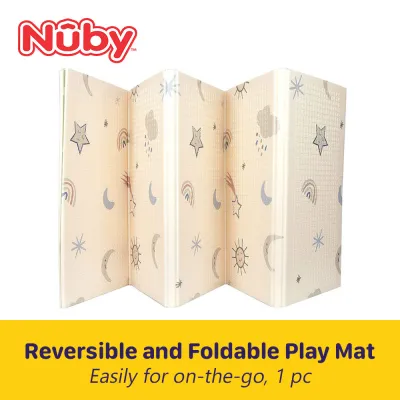
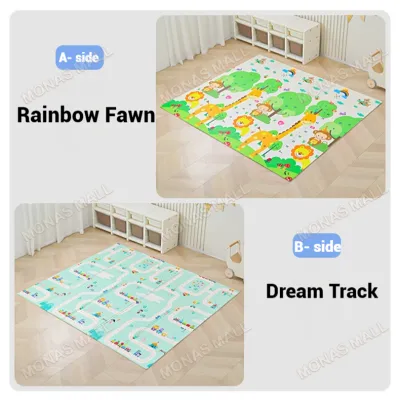
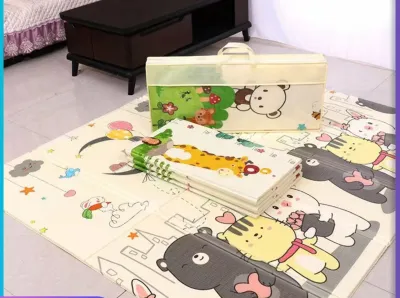
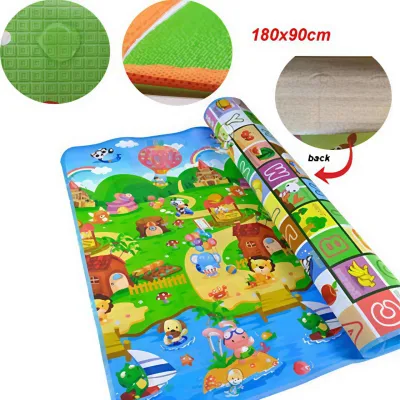
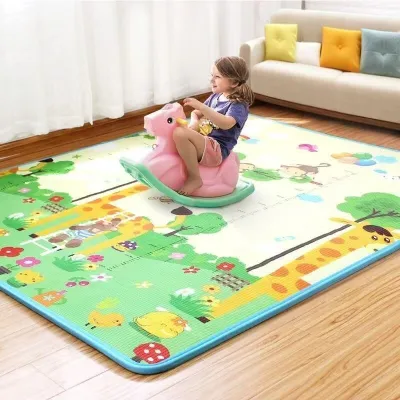
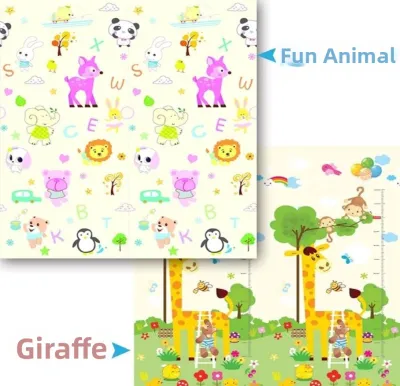
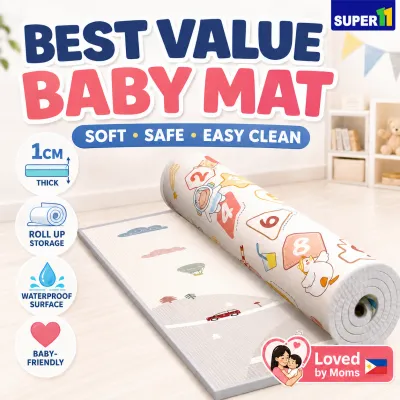
Prices are valid at publication and may change. Please refer to the product page for the latest price.
To simplify transport, check the product specifications for integrated carrying features. Built-in fabric handles, adjustable shoulder straps, or an included travel bag with a drawstring can make a significant difference when your hands are full. A dedicated travel bag not only makes carrying easier but also protects the clean play surface of the mat from dust, dirt, and moisture during transit. Ensure these straps and handles are securely stitched to the mat’s borders to prevent tearing after repeated use.
Evaluating Padding, Thickness, and Surface Material
The ideal thickness of your foldable mat for baby depends heavily on your child’s current developmental stage and the surfaces you expect to encounter. For younger infants practicing tummy time, a thinner, firmer mat of around one centimeter may suffice, especially when placed on flat, grassy park lawns. However, if your baby is learning to sit up, crawl, or stand, they will benefit from thicker padding—typically between 1.5 to 2 centimeters—to cushion inevitable tumbles on hard hotel tiles or concrete patio floors. Always check the manufacturer’s age and developmental guidelines to ensure the foam density supports your baby’s active movements safely.

Outdoor environments introduce dirt, damp grass, spilled milk, and sticky tropical humidity, making the mat’s surface material a top priority. Verify that the outer layer is fully waterproof and stain-resistant rather than merely water-resistant. A high-quality polyurethane (PU) or treated thermoplastic polyurethane (TPU) coating allows you to wipe away mud, grass stains, and spills instantly with a standard baby wipe or damp cloth. Avoid fabric-heavy surfaces that absorb liquids, as high humidity can trap moisture within the fibers, leading to unpleasant odors and hygiene issues.
Because your baby’s bare skin will have direct contact with the mat, verifying material safety is non-negotiable. Inspect the product packaging or manufacturer website for clear labels indicating the absence of harmful substances such as bisphenol A (BPA), phthalates, lead, and formaldehyde. Look for recognized safety standards and certifications relevant to baby products, which indicate the material has undergone rigorous testing. Since you cannot verify chemical compositions visually, relying on these official manufacturer declarations is the safest way to protect your child from hidden toxins.
Checking Size, Layout, and Safety Boundaries
An effective travel mat must provide a generous play area while remaining practical for the spaces you visit. Compare the fully expanded dimensions of the mat with the typical footprints of hotel rooms, park picnic spots, or the living rooms of relatives. A mat that is too large may fold up against walls or furniture, creating uneven surfaces, while a mat that is too small will limit your baby’s movement and quickly lead to them crawling onto dirty ground. A square or rectangular layout of approximately 150 by 180 centimeters often provides an optimal balance for active babies.
The folding mechanism itself requires close inspection to prevent minor injuries. Examine the hinges, seams, and creases where the mat bends; these areas should lay completely flat when the mat is fully unfolded. Gaps or loose seams can trap dirt, pinch delicate fingers, or create tripping hazards for toddlers who are just finding their footing. High-quality mats use heat-sealed seams rather than loose fabric stitching, which keeps the panels tightly aligned and prevents moisture from seeping into the inner foam core.
Stability on smooth surfaces is another essential safety feature to verify before use. When placed on polished indoor floors, such as marble, tile, or laminate, a lightweight mat can easily slide when a baby pushes off to crawl. Check the product description for a non-slip backing, often textured with silicone dots or a cross-hatch pattern, which grips the floor securely. For outdoor use on windy days, some travel mats feature weighted corners or loops where you can insert ground pegs to keep the mat from lifting or shifting on the grass.
Verifying Durability and Weather Resistance
Outdoor exposure can quickly degrade low-quality plastics and foams, making durability a key consideration for travel gear. If you plan to use the mat frequently in sunny parks or beaches, look for manufacturer specifications regarding UV resistance. Prolonged exposure to direct sunlight can cause non-UV-treated materials to become brittle, crack, or fade, reducing the lifespan of the mat. A UV-resistant outer layer ensures the mat remains supple and safe for your baby over multiple seasons of outdoor play.
The structural integrity of the folding joints is the most common failure point for travel mats. Because these joints are compressed and stretched every time you pack and unpack, they must withstand significant wear and tear. Check user manuals or product specifications to see if the joints are reinforced with durable fabric tape or double-welded seams. Avoid mats that show immediate creasing or thinning along the fold lines, as these areas will eventually tear, exposing the inner foam to moisture and dirt.
Finally, review the manufacturer’s care instructions for specific environmental limitations. Some materials may warp or lose their cushioning properties if exposed to extreme heat, such as being left in a hot car trunk during peak afternoon hours. Additionally, check if the mat is rated for damp ground; while the top surface might be waterproof, the bottom must also prevent ground moisture from seeping upward. Understanding these thresholds helps you maintain the mat’s structural integrity and ensures it remains a safe, dry haven for your baby.
Balancing Features for Multi-Scenario Use
Deciding whether to buy a single versatile mat or separate products for home and travel depends on your lifestyle and budget. An ultra-lightweight, thin travel mat is highly portable and affordable, often costing under ₱1,500, but it may lack the thick cushioning required for daily indoor use on hard tile floors. Conversely, a premium, thick home play mat offers superior comfort but is often too heavy and bulky to transport easily. If you travel frequently, investing in a dedicated, compact travel mat alongside a sturdier home model often provides the best balance of comfort and convenience.
If you prefer a single multi-scenario mat, look for a medium-thickness model (around 1.5 centimeters) that strikes a compromise between comfort and portability. This option must transition quickly between outdoor dirt and clean indoor spaces. Consider the time required for thorough cleaning and drying; a mat that requires hours of air-drying after a wash is impractical if you need to use it indoors later that same day. A quick-drying, wipe-clean surface ensures you can sanitize the mat immediately after an outdoor excursion and lay it back down in your living room without delay.
Frequently Asked Questions (FAQ)
Can I use a regular indoor foldable mat for outdoor picnics?
While it is tempting to bring your everyday indoor mat to the park, most indoor-specific mats lack the necessary protective features for outdoor terrain. Indoor mats often do not have reinforced, puncture-resistant bottom layers, leaving them vulnerable to tears from sharp twigs, dry grass, or small pebbles. Furthermore, they may lack a robust moisture barrier, allowing dampness from the ground to seep through to your baby. Always check the manufacturer’s label to confirm if the product is rated for outdoor use before placing it on natural ground.
How do I clean and dry a foldable mat after outdoor use?
To prevent mold, mildew, and material degradation, clean your foldable mat immediately after returning from an outdoor outing. Wipe down both sides with a mild, baby-safe soap and warm water, avoiding harsh chemical cleaners or bleach that can break down the waterproof coating. Pay close attention to the folding crevices and seams where dirt and moisture tend to accumulate. Allow the mat to air-dry completely in a well-ventilated, shaded area before folding and storing it; trapping moisture inside the folded panels in a humid environment will quickly lead to mold growth.
Community discussion
Share your experience or ask a question. Comments are reviewed before publication.