
Determining if your baby is ready for an activity jumper involves looking closely at their physical milestones rather than relying solely on their age in months. Most babies reach the necessary developmental stage between four and six months of age, but the true test lies in their physical strength. Your baby must demonstrate complete, independent head control, sufficient core stability to sit upright with minimal support, and the ability to bear weight on their legs when held upright. Before introducing this active play gear, you must also cross-reference these physical signs with the specific weight, height, and age limits detailed in your product’s instruction manual.
Physical and Developmental Milestones to Observe
Before placing your baby in an upright activity center, you must carefully evaluate their physical readiness. The most critical milestone is complete head and neck control. Your baby must hold their head up steadily and independently, without any wobbling, for extended periods. You can observe this during daily routines, such as when holding them upright against your shoulder or during tummy time. If their head still flops forward or to the side when tired, their neck muscles are not yet strong enough to handle the bouncing forces of a jumper.
Core and trunk stability represent the next essential developmental checkpoint. When placed in a jumperoo, a baby’s torso is supported by a fabric seat, but they must still maintain an upright posture using their own abdominal and back muscles. If your baby slumps forward, leans heavily to one side, or cannot keep their chest upright, they lack the trunk strength required. Placing a baby with weak core muscles in an upright jumper can restrict their airway or place unnatural strain on their developing spine. You can gauge their trunk strength by observing how they sit with minimal support on a play mat or in your lap.
Products mentioned in this guide
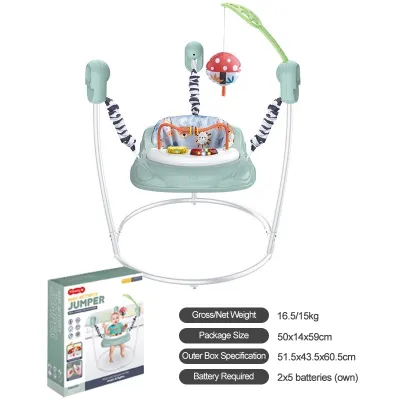
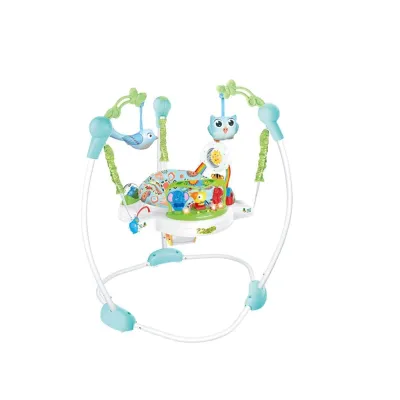



Prices are valid at publication and may change. Please refer to the product page for the latest price.
Finally, your baby must show a natural willingness and ability to bear weight on their legs. When you hold your baby upright under their armpits and lower them so their feet touch a flat surface, they should actively push down with their legs. They should not let their knees immediately collapse, nor should they rigidly lock their joints. This leg-bearing reflex is a foundational motor skill that prepares them for the bouncing motion of the jumper. If their legs fold instantly or if they show discomfort when their feet touch the floor, they are not yet ready for this type of activity.
Checking Manufacturer Age, Weight, and Height Limits
While physical milestones are the primary indicator of readiness, you must always verify the manufacturer’s specific guidelines before assembly and use. Most activity jumpers list a minimum age of four months, but this is a general baseline rather than a guarantee of safety. Every baby develops at their own pace, meaning a five-month-old baby who still struggles with head control is not yet ready, despite meeting the age requirement. Use the age recommendation as a starting point, but let your baby’s physical abilities make the final decision.

Weight capacities are strict safety thresholds designed to prevent structural failure of the jumper’s frame, springs, or straps. You must locate the product label or consult the user manual to find both the minimum and maximum weight limits. Placing a baby who is too light in the seat may prevent the bouncing mechanism from working correctly, while exceeding the maximum weight limit poses a severe risk of the equipment collapsing or tipping over. Regularly weigh your baby, especially during rapid growth sprints, to ensure they remain safely within the manufacturer’s specified range.
Height and torso length are equally critical for proper positioning and joint safety. When your baby is seated in the jumperoo, their feet must touch the floor according to the manufacturer’s exact specifications. Typically, manufacturers recommend that the balls of the baby’s feet touch the floor with a slight, comfortable bend in the knees, rather than having the feet flat on the ground or dangling completely in the air. If your baby can only touch the floor with the very tips of their toes, or if their legs are bent at an extreme angle, you must adjust the seat height or delay using the device until they grow.
Safety Setup and Supervision Rules for Jumperoos
Creating a safe environment is vital to prevent accidents and injuries while your baby enjoys their play session. Always place the jumperoo on a flat, level, and stable floor surface. In tropical climates like the Philippines, homes often feature tiled, marble, or polished concrete floors, which can become slippery. Ensure the floor area beneath and around the jumperoo is completely dry and free of loose rugs or debris that could cause the base to slide. Keep the device far away from hazards such as stairs, open doorways, balconies, hot appliances, and dangling cords from window blinds.
Proper ventilation and temperature control are also essential for your baby’s comfort during active play. Bouncing is a physical workout, and babies can quickly overheat in warm, humid weather. Dress your baby in lightweight, breathable clothing and set up the jumperoo in a well-ventilated room. If you use an electric stand fan to keep the air moving, position it far enough away so that the fan blades, housing, and power cords are completely out of the baby’s reach and well beyond the movement radius of the jumperoo.
To protect your baby’s developing hips and joints, you must establish strict time limits for each session. Pediatricians and pediatric physical therapists generally recommend limiting jumperoo use to 10 to 15 minutes per session, up to twice a day. Prolonged upright bouncing can place excessive pressure on a baby’s hip joints and encourage toe-walking habits. Think of the jumperoo as a brief, fun activity rather than a long-term babysitter or a place for extended naps.
Active, line-of-sight supervision is non-negotiable whenever your baby is in the jumperoo. You must remain in the same room, keeping your baby within arm’s reach at all times. Even a sturdy, well-designed jumperoo can present unexpected risks if a baby leans too far, drops a toy, or becomes distressed. Never leave the room to attend to chores, and never allow older siblings or pets to play near the jumperoo while the baby is using it.
When to Stop Using the Jumperoo
Knowing when to retire the jumperoo is just as important as knowing when to start. You must stop using the device immediately once your baby reaches any of the manufacturer’s maximum limits for weight or height. Additionally, if your baby reaches the developmental milestone of sitting up completely unassisted, crawling, or pulling themselves up to stand, it is time to transition away from the jumperoo. At this stage, their physical strength and curiosity make the device a tipping hazard, as they may attempt to climb out of the seat.
Pay close attention to behavioral shifts that indicate your baby has outgrown the gear. If your baby begins to show frustration, cries when placed in the seat, or constantly tries to turn around and escape, they are signaling a need for more independent movement. A baby who is learning to crawl or walk will naturally find the restricted space of a jumperoo frustrating, as they prefer to explore their environment freely on the floor.
You should also monitor your baby’s posture and movement patterns both inside and outside the jumperoo. If you notice your baby consistently slouching, leaning heavily to one side, or showing signs of fatigue during play, discontinue use. Furthermore, if your baby begins to walk on their toes even when they are out of the jumperoo, this could indicate that the bouncing motion is overstimulating their calf muscles. If you observe persistent toe-walking or any unusual posture changes, stop using the jumperoo and consult your pediatrician for guidance.
Frequently Asked Questions (FAQ)
Can a jumperoo delay my baby's walking milestones?
While moderate, supervised use of a jumperoo is generally safe, excessive reliance on the device can potentially delay motor milestones like crawling and walking. When a baby spends too much time in an upright jumper, they miss out on the essential floor play that builds the muscles needed for independent movement. Floor play allows babies to practice rolling, crawling, and pulling themselves up, which are critical precursors to walking. To support healthy motor development, balance brief jumperoo sessions with plenty of unrestricted floor time throughout the day.
What are safe alternatives if my baby is not ready for a jumperoo?
If your baby has not yet met the physical milestones for a jumperoo, there are several developmentally appropriate alternatives to help them build strength. Daily tummy time sessions remain the gold standard for developing the neck, shoulder, and upper body strength required for upright posture. You can also use a padded play mat or an activity gym with hanging toys to encourage reaching, rolling, and kicking. These floor-based activities allow your baby to move naturally and safely explore their physical capabilities at their own pace.
Community discussion
Share your experience or ask a question. Comments are reviewed before publication.