
When choosing an oral care routine for your little one, the tenderoo toothpaste with toothbrush set can be a highly practical option, but its safety is not a blanket guarantee. The safety of any baby oral care bundle depends entirely on verifying that the specific product’s age recommendations, ingredient labels, and physical design align with your baby’s current developmental stage. Infant oral care sets are generally designed with safety in mind, but parents must actively verify the manufacturer’s guidelines before introducing them to a child.
There are two primary safety pillars you must evaluate: the chemical safety of the toothpaste ingredients and the physical safety of the toothbrush design. It is crucial to verify that the toothpaste is formulated with swallow-safe ingredients and that the toothbrush features physical safety measures, such as an anti-choke barrier, to prevent accidental injury. In the Philippines, these sets are widely available across various price bands, typically ranging from ₱150 for basic local brands to over ₱500 for premium imported options. In our humid tropical climate, where moisture can easily trap bacteria, understanding how to select, use, and maintain these tools is essential for keeping your baby’s mouth healthy and safe.
Toothpaste Safety: Checking Ingredients and Swallow Risks
Evaluating the toothpaste component of the tenderoo toothpaste with toothbrush set requires a close look at the ingredient list. Because infants and young toddlers have not yet developed the motor skills to spit out toothpaste, they will inevitably swallow a significant portion of whatever you put on their brush. This makes the chemical composition of the paste a critical safety consideration for parents.
Products mentioned in this guide
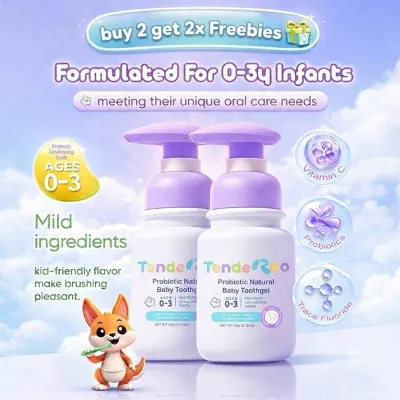
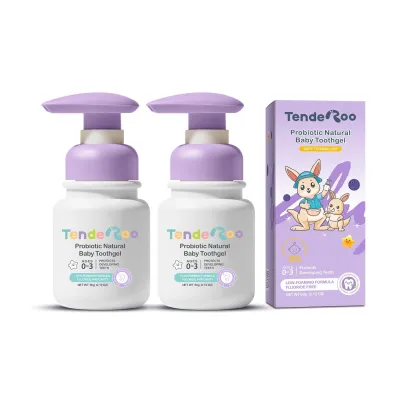
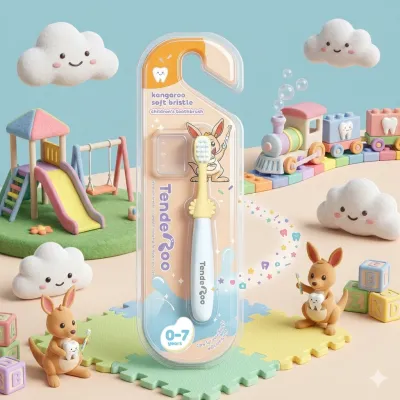
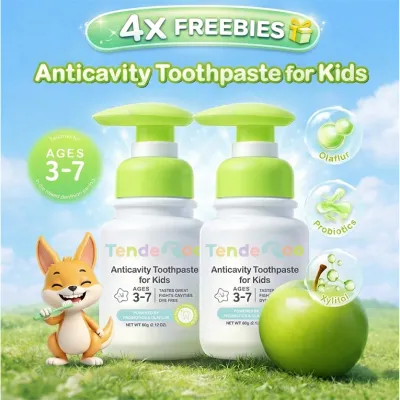
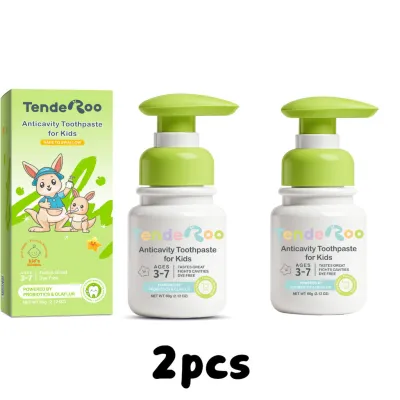
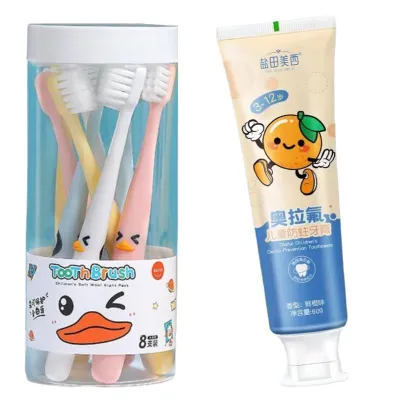
Prices are valid at publication and may change. Please refer to the product page for the latest price.
Fluoride vs. Fluoride-Free Guidelines
The decision to use fluoride or fluoride-free toothpaste depends heavily on your baby’s age, swallowing ability, and individual risk of tooth decay. Pediatric dental guidelines generally recommend using a tiny, grain-of-rice-sized smear of fluoride toothpaste once the first tooth erupts, but this advice can vary based on your local water supply. In many regions of the Philippines, municipal water fluoridation levels are inconsistent, and many households rely on bottled or purified water that lacks fluoride entirely.
Before using the toothpaste in your set, examine the packaging to verify its fluoride content. Many training toothpastes are formulated to be completely fluoride-free, making them safe for babies who swallow the entire amount. If the toothpaste does contain fluoride, ensure it is designed specifically for infants with a low fluoride concentration, and consult your pediatrician or a pediatric dentist to determine the best approach for your child’s specific oral health needs.
Checking for Swallow-Safe and Hypoallergenic Formulas
A truly swallow-safe baby toothpaste should be formulated without harsh chemicals, detergents, or strong additives. When reviewing the ingredient list on your packaging, check for the absence of Sodium Lauryl Sulfate (SLS). SLS is a common foaming agent used in adult toothpastes that can cause oral irritation, dryness, or painful mouth sores in sensitive infants.
Additionally, look for formulas that are free from artificial dyes, parabens, and synthetic preservatives. Because babies have highly sensitive digestive systems, the toothpaste should rely on gentle, food-grade ingredients. Be cautious with strong artificial flavorings; while a mild, natural fruit flavor can make brushing more appealing to your baby, overly sweet or heavily artificial flavors can encourage them to swallow the paste as a treat rather than learning to brush, and may occasionally cause mild digestive upset or localized allergic reactions.
Toothbrush Design: Preventing Choking and Gum Irritation
The physical safety of the toothbrush in the tenderoo toothpaste with toothbrush bundle is just as important as the toothpaste formula. An improperly designed toothbrush can pose a serious choking hazard or cause physical damage to your baby’s delicate oral tissues.

Anti-Choke Barriers and Ergonomic Grips
An anti-choke barrier is one of the most critical safety features of an infant toothbrush. This is typically a wide, protective shield or collar situated just below the brush head, or a bulky, rounded handle design that physically prevents the brush from being pushed too far back into your baby’s throat. When evaluating the toothbrush in your set, verify whether it includes this protective barrier and check that it is structurally secure so it cannot detach and become a choking hazard itself.
Ergonomics also play a vital role in safe brushing. The handle should feature a non-slip, rubberized grip that allows you to maintain firm control while brushing your baby’s teeth. In the warm, tropical climate of the Philippines, hands can quickly become sweaty or slippery during bath time, making a secure grip even more essential to prevent accidental slips that could bruise your baby’s gums or palate.
Bristle Softness and Age-Appropriate Head Size
The materials used for the bristles must be exceptionally gentle on your baby’s developing gums and emerging teeth. Infant toothbrushes generally use either food-grade silicone or extra-soft nylon bristles. Silicone bristles are highly flexible and serve as an excellent tool for massaging sore gums during the early teething phases, while ultra-soft nylon bristles are more effective at sweeping away plaque once multiple teeth have fully erupted.
You must also visually assess the size of the brush head. A baby’s mouth is incredibly small, and a brush head that is too large or bulky will crowd their oral cavity, making maneuvering difficult and easily triggering a gag reflex. Check the manufacturer’s packaging to ensure the brush head is specifically sized for your baby’s age range, allowing you to clean all sides of their teeth comfortably without causing discomfort or resistance.
Developmental Readiness: When to Introduce the Set
Introducing oral care tools at the right developmental milestone is key to establishing healthy habits without risking your baby’s safety. Before any teeth break through the gums, oral care should focus on simple gum hygiene. You can gently wipe your baby’s gums with a clean, damp cloth or a soft silicone finger brush after feedings to remove milk residue and keep the oral cavity clean.
The transition to a structured toothbrush and toothpaste, like the tenderoo toothpaste with toothbrush set, should generally begin when your baby’s first primary tooth erupts, which often occurs around six months of age. However, chronological age is less important than physical readiness. You must check the specific age range printed on the packaging of your set; a bundle designed for toddlers aged two to three years will have physical characteristics and ingredients that are entirely inappropriate—and potentially unsafe—for a six-month-old infant.
Do not introduce complex brushing tools too early if your baby lacks the necessary physical stability. If your baby does not yet have stable neck control, cannot sit upright with support, or exhibits a highly sensitive gag reflex, forcing a toothbrush into their mouth can cause distress and build a negative association with oral care. Always move at your baby’s individual developmental pace, and prioritize comfort and safety over strict timelines.
Safe Brushing Habits and When to Seek Professional Advice
Establishing safe habits is the final, crucial step in ensuring your baby’s oral care routine remains hazard-free. First and foremost, never leave your baby unattended with a toothbrush. Toddlers and infants love to mimic adults, but they lack the coordination to use these tools safely on their own; a baby walking or crawling with a toothbrush in their mouth can suffer severe throat or mouth injuries if they fall.
Proper hygiene and storage of the oral care set are especially important in humid environments. In the Philippines, high humidity levels can cause damp toothbrushes to harbor mold and bacteria if they are not dried properly. After every brushing session, rinse the toothbrush thoroughly under clean, running water, shake off any excess moisture, and store it upright in an open, well-ventilated area to air-dry. Avoid storing the brush in closed plastic containers or damp travel pouches where mold can easily thrive.
As a parent, you must remain vigilant for any signs that indicate you should stop using the set and seek professional guidance. If your baby shows signs of oral irritation, redness, swelling, or a rash around their mouth, stop using the toothpaste immediately, as these could be symptoms of an allergic reaction. Inspect the toothbrush regularly; if you notice the bristles are starting to fray, splay, or shed, or if any part of the plastic or silicone handle shows signs of cracking, discard the brush immediately. If your baby experiences persistent bleeding gums or severe discomfort during brushing, consult a pediatric dentist or your pediatrician to rule out underlying issues and ensure your baby’s oral health is on the right track.
Frequently Asked Questions (FAQ)
Can I use regular family toothpaste if the baby toothpaste runs out?
No, you should not use regular family toothpaste for infants or young toddlers. Adult toothpastes often contain high concentrations of fluoride that are unsafe if swallowed in large quantities, along with harsh abrasives that can wear down delicate baby tooth enamel. They also frequently contain strong mint flavors and foaming agents like SLS that can irritate or burn your baby’s sensitive mouth.
How often should I replace my baby's toothbrush?
You should replace your baby’s toothbrush every two to three months, or sooner if you notice the bristles are splaying, fraying, or showing signs of wear. Additionally, it is highly recommended to replace the toothbrush immediately after your baby recovers from an illness, such as a cold, flu, or viral infection, to prevent the reintroduction of bacteria or viruses to their mouth.

Community discussion
Share your experience or ask a question. Comments are reviewed before publication.