
Introducing your baby to a daily oral hygiene routine is a major milestone, but it often brings up critical questions about safety. If you are considering san fluo toothpaste for your little one, you might wonder whether it is entirely safe for a developing child. The short answer is that the safety of any infant toothpaste depends on its active ingredients, specifically its fluoride concentration, and your child’s developmental stage.
Fluoride is highly effective at preventing tooth decay, but babies and young toddlers lack the physical ability to spit out excess paste. This inability to spit means they are highly likely to swallow whatever you put on their brush. Consequently, using a product with the wrong fluoride level can lead to unwanted systemic ingestion. To keep your baby safe, you must carefully match the toothpaste formulation to their exact age and brushing capabilities.
Before introducing any new oral care product to your baby, always check the manufacturer’s packaging for specific age recommendations and warnings. Because every child develops at a different pace, consulting a pediatric dentist in the Philippines is the most reliable way to establish a safe, personalized brushing routine.
Products mentioned in this guide
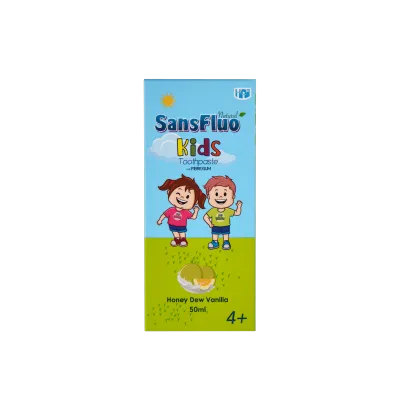
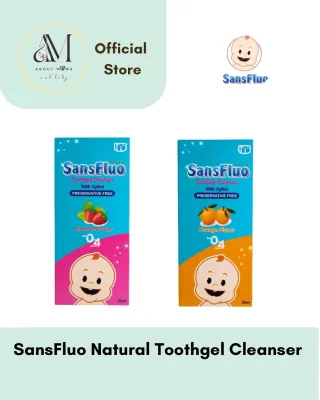
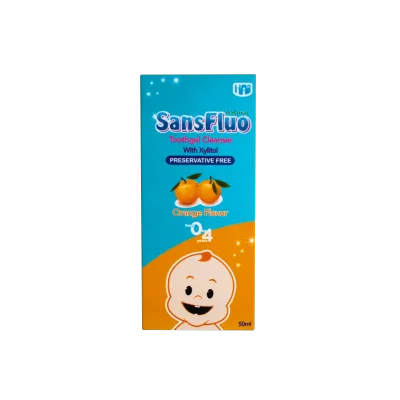
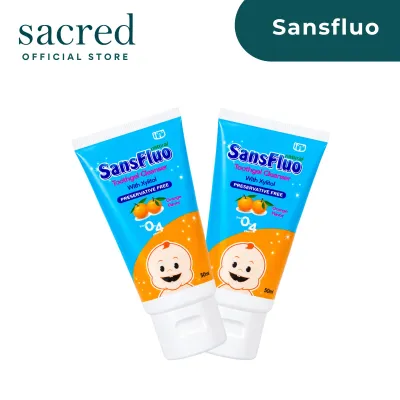
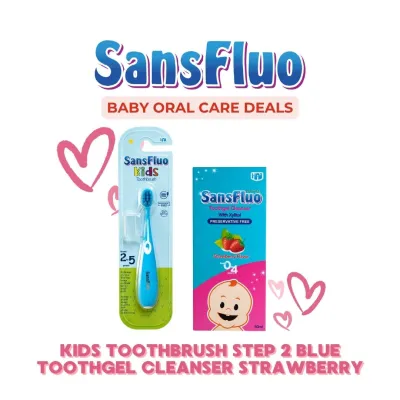
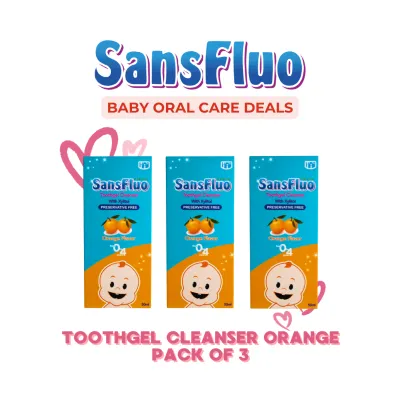
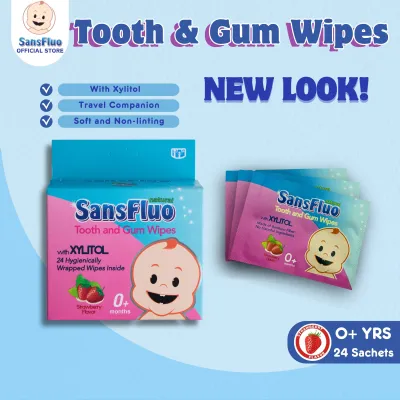
Prices are valid at publication and may change. Please refer to the product page for the latest price.
Is San Fluo Toothpaste Safe for Your Baby?
Determining whether san fluo toothpaste is safe for your baby requires looking closely at the specific tube you hold in your hand. The brand offers different formulations designed for different age groups, meaning one tube might be perfectly safe for a toddler while another is inappropriate for an infant. Safety is never a blanket designation; it is always conditional on the product’s formulation and how it is used.
For very young infants who are just cutting their first teeth, pediatric dental guidelines generally favor fluoride-free training toothpastes or simply cleaning the gums with a clean, damp cloth. If a toothpaste contains fluoride, even in low amounts, it requires strict portion control to prevent your baby from swallowing too much. Swallowing fluoridated paste repeatedly over time can lead to mild cosmetic issues in developing permanent teeth.
To ensure you are making a safe choice, you must verify the active ingredients list on the packaging. Never rely solely on appealing packaging designs, sweet fruit flavors, or generic marketing terms like “baby-friendly” or “natural.” A quick consultation with your pediatrician or a pediatric dentist will help you confirm whether a specific formulation matches your baby’s current developmental stage.
Understanding Fluoride and Baby Oral Health
To make informed decisions about your baby’s oral care, it helps to understand how fluoride works and why it is a subject of careful guidance. Fluoride is a naturally occurring mineral that plays a vital role in strengthening tooth enamel. When applied topically to the teeth, it helps rebuild weakened enamel and reverses the early stages of tooth decay, which is particularly important for preventing early childhood caries, often referred to as baby bottle tooth decay.

In tropical environments like the Philippines, where sweet beverages, juices, and starchy snacks are common parts of family diets, protecting baby teeth from decay is a high priority. Baby teeth serve as essential placeholders for permanent teeth, guiding them into the correct positions. If baby teeth decay and must be removed early, it can lead to alignment issues and speech development challenges later in childhood.
However, the primary risk associated with fluoride exposure in infants and toddlers is a condition called dental fluorosis. This cosmetic condition occurs when young children ingest too much fluoride while their permanent teeth are still forming deep under their gums. Dental fluorosis typically manifests as faint white lines, streaks, or spots on the enamel of the permanent teeth once they finally erupt.
It is important to distinguish between systemic fluoride and topical fluoride. Systemic fluoride is ingested through drinking water or dietary supplements, working from the inside out. Topical fluoride, which is found in toothpaste, is meant to work strictly on the surface of the teeth. Because babies swallow almost everything placed in their mouths, topical toothpaste effectively becomes systemic when swallowed, which is why parents must strictly control the amount of toothpaste used.
Age-Based Toothpaste and Fluoride Guidelines
As your child grows, their oral hygiene needs and physical capabilities change rapidly. Dental professionals recommend adjusting your choice of toothpaste and the amount used based on specific age brackets to balance cavity prevention with safety.
Under 2 Years Old (Infants and Toddlers)
For infants and toddlers under the age of two, the primary goal of oral care is to clean the teeth mechanically and establish a comfortable brushing routine. If your pediatric dentist advises using a fluoridated toothpaste due to a high risk of cavities, you must use an extremely small amount. This is commonly described as a “smear” or a portion no larger than a single grain of uncooked rice.
For most babies in this age group who are still learning to swallow on command, many parents and dentists prefer to start with a fluoride-free training toothpaste. These formulations allow babies to practice brushing and enjoy mild flavors without any risk of fluoride ingestion. Alternatively, you can clean your infant’s newly erupted teeth using a soft-bristled baby toothbrush moistened only with clean water.
Ages 2 to 3 Years
Between the ages of two and three, toddlers begin to develop better oral motor skills, though most still struggle to spit out toothpaste reliably. During this transition phase, you can gradually introduce a low-fluoride toothpaste if you have not already done so, but you must strictly limit the portion size. The recommended amount at this stage is a small, pea-sized dollop.
Active parental supervision is absolutely mandatory during every brushing session. You should apply the toothpaste to the brush yourself and keep the tube safely out of your toddler’s reach. Gently instruct your child to spit out the excess paste after brushing, even if they only succeed occasionally, to help them build the necessary muscle memory.
When to Switch to Regular Toothpaste
Standard adult toothpastes are formulated with much higher concentrations of fluoride, often reaching 1,450 parts per million (ppm) or more. This concentration is highly effective for mature enamel but poses a significant fluorosis risk to babies and young toddlers who frequently swallow their toothpaste. Introducing adult toothpaste too early can easily lead to chronic over-ingestion of fluoride.
Most dental organizations recommend waiting until your child is at least six years old before transitioning them to standard family or adult toothpaste. By this age, children have typically mastered the ability to spit thoroughly and swallow very little, if any, toothpaste during brushing. Always verify that your child can reliably spit before making this switch.
How to Evaluate Toothpaste Labels for Infant Safety
When shopping for baby oral care products in local supermarkets or online marketplaces, you should never make a purchase based on brand popularity alone. Instead, develop the habit of reading the fine print on the back of the carton or tube to verify its suitability for your baby’s age.
First, locate the active ingredients list and search for the fluoride concentration, which is usually measured in parts per million (ppm). Baby-safe fluoridated toothpastes typically contain lower concentrations, often around 500 ppm, while training toothpastes will explicitly state that they contain 0 ppm or are “fluoride-free.” If the packaging does not clearly state the fluoride concentration, consider choosing a different product that offers full transparency.
Next, look for explicit age recommendations printed by the manufacturer, such as “0-2 years” or “3+ years.” These guidelines are calibrated to the average developmental milestones of children in those age brackets. Additionally, look for safety seals or official recognition from trusted national or international dental associations, which indicate that the product has met specific safety and quality standards.
Finally, remember that appealing marketing claims like “all-natural,” “organic,” or “gentle” do not automatically mean a product is safe for an infant to swallow. A toothpaste can be completely organic but still contain levels of fluoride or other ingredients that are inappropriate for a baby who cannot spit. Always prioritize the concrete chemical facts on the ingredient label over creative marketing designs.
Safe Brushing Habits to Minimize Swallowing Risks
Establishing safe brushing habits is just as important as choosing the right toothpaste. By using proper physical techniques and storage habits, you can dramatically reduce the amount of toothpaste your baby swallows while ensuring their mouth stays clean.
To maintain maximum control and visibility during brushing, try cradling your baby in your arms, similar to a feeding position, or sitting directly behind your toddler while they look up slightly. This positioning allows you to see all surfaces of their tiny teeth clearly and prevents them from sudden movements that could cause them to swallow excess paste.
Because infants cannot spit into a sink, you should practice the “spit and wipe” method. After gently brushing their teeth with a tiny smear of toothpaste, use a clean, damp washcloth or a piece of sterile gauze wrapped around your finger to gently wipe away the excess paste and saliva from their gums and teeth. This simple step removes the majority of the topical fluoride before it can be swallowed.
It is also vital to manage how toothpaste is stored in your home. Many children’s toothpastes, including various formulations of san fluo toothpaste, feature sweet, fruity flavors designed to make brushing enjoyable. While these flavors are helpful for cooperative brushing, they also make the toothpaste taste like candy to a toddler. Always store all toothpaste tubes in a high cabinet or a locked drawer where your child cannot access them independently.
In the event that your baby manages to locate a tube and swallows a large, accidental amount of fluoridated toothpaste, remain calm but act quickly. Immediately give your child a small glass of milk or a serving of yogurt if they are old enough to consume dairy. The calcium in dairy products binds to fluoride in the stomach, significantly reducing its absorption into the body.
After offering dairy, check the product label for specific first-aid instructions and contact your pediatrician, a local poison control center, or emergency medical services immediately for professional guidance. Do not attempt to induce vomiting unless explicitly instructed to do so by a medical professional.
Frequently Asked Questions (FAQ)
Can I use adult toothpaste for my baby in an emergency?
No, you should avoid using adult toothpaste for your baby even in temporary or emergency situations. Adult toothpastes contain highly concentrated levels of fluoride that can easily cause stomach upset or contribute to dental fluorosis if swallowed by an infant. If you run out of baby-safe toothpaste, it is much safer to brush your baby’s teeth using a soft, clean toothbrush dampened with plain water, or to gently wipe their teeth and gums with a clean, wet washcloth until you can purchase an appropriate infant product.
What are the early signs of dental fluorosis in babies?
Because dental fluorosis only affects teeth that are still developing beneath the gums, you will not see any signs of it on your baby’s current primary teeth. The signs will only become visible once their permanent teeth begin to erupt, usually around age six. Mild fluorosis appears as very faint, pearly white lacy markings, lines, or spots on the enamel surface, which are often so subtle that only a trained dentist can identify them. Severe fluorosis, which causes brown stains or physical pitting of the enamel, is highly uncommon and easily preventable by following standard age-based dosage guidelines.
Is fluoride-free toothpaste effective at preventing cavities?
Fluoride-free toothpaste does not provide the chemical remineralization and enamel-strengthening benefits that fluoride offers to actively combat decay. However, it remains highly effective for infants because its primary purpose is to assist in the mechanical removal of food particles and plaque when combined with the physical action of brushing. Using a fluoride-free training paste also helps your baby get used to the physical sensation of brushing, establishes a healthy daily routine, and freshens their breath safely without any risk of systemic chemical ingestion.
Community discussion
Share your experience or ask a question. Comments are reviewed before publication.