
When you are expecting or nursing, every choice you make regarding your diet and supplementation directly impacts your baby. If you are considering taking pure and young malunggay—whether as a fresh ingredient or a concentrated supplement—the safety profile changes significantly depending on whether you are currently pregnant or breastfeeding.
During pregnancy, taking high-dose malunggay (moringa) supplements is generally advised against by medical professionals. While eating fresh, young malunggay leaves cooked in traditional Filipino dishes like tinola is considered safe and highly nutritious, concentrated capsules, powders, or extracts carry potential risks. There is a lack of robust clinical safety data regarding high-dose moringa during pregnancy, and certain compounds in the plant may stimulate uterine activity. Therefore, you should avoid these concentrated supplements while pregnant.
In contrast, during breastfeeding, malunggay is celebrated across the Philippines as a traditional galactagogue to help boost breast milk supply. While food-grade consumption is highly encouraged, starting a concentrated malunggay supplement still requires professional medical supervision to ensure the dosage is appropriate and safe for both you and your baby.
Products mentioned in this guide
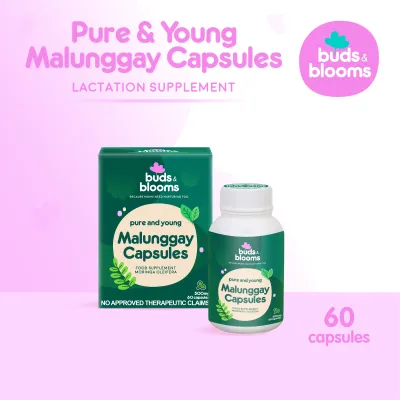
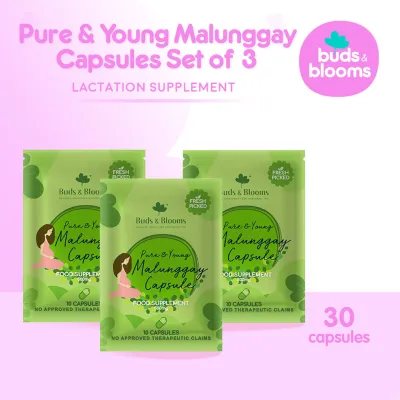
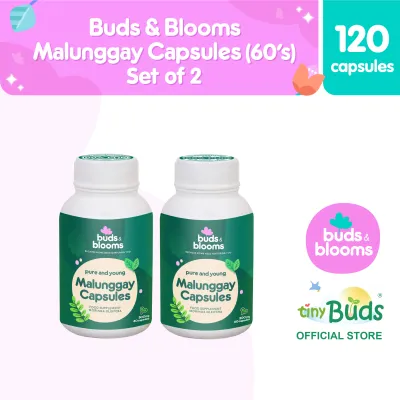

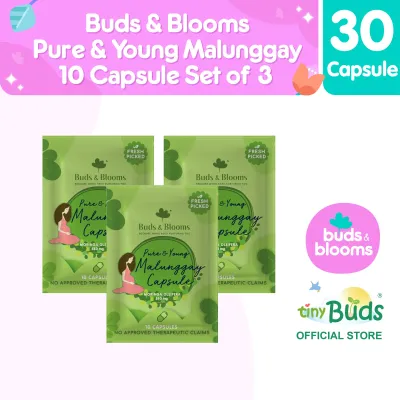

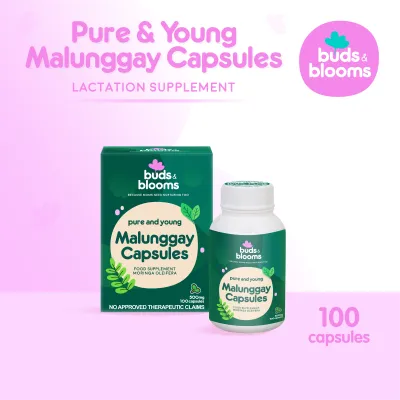

Prices are valid at publication and may change. Please refer to the product page for the latest price.
The term “pure and young” typically refers to the harvesting of tender, young moringa leaves, which are often marketed as being more nutrient-dense. However, whether you are looking at a specific brand or simply high-quality young leaves, the fundamental medical precautions for Moringa oleifera remain the same. Always consult your obstetrician or pediatrician before introducing any new supplement into your routine, as this guide is for informational purposes and cannot replace professional medical advice.
Malunggay During Pregnancy: Risks and Medical Precautions
Understanding the distinction between culinary use and therapeutic supplementation is vital when managing your prenatal health. In a typical Filipino household, fresh malunggay leaves are a staple in everyday meals. When cooked thoroughly in standard culinary amounts, these leaves provide essential vitamins and minerals without posing a threat. The cooking process and the relatively low concentration of the plant’s active compounds in a bowl of soup make food-grade consumption safe for expecting mothers.
Concentrated supplements, such as capsules, powders, and liquid extracts, are a completely different matter. These products deliver a highly potent dose of Moringa oleifera that far exceeds what you would naturally consume at dinner. Clinical research on the safety of high-dose moringa leaf extracts during the first and second trimesters remains extremely limited. Without large-scale, peer-reviewed human trials, medical experts cannot guarantee that these concentrated doses will not interfere with a developing pregnancy.
Furthermore, different parts of the moringa plant carry varying chemical profiles. While the leaves are the most commonly consumed part, some commercial supplements or traditional preparations may inadvertently include extracts from the roots, bark, or flowers. These specific parts of the plant contain compounds, such as certain alkaloids, that have been shown in laboratory settings to cause uterine contractions or act as abortifacients. Because it is difficult to verify the absolute purity and isolation of leaf-only ingredients in every commercial supplement, avoiding concentrated preparations is the safest path.
Rather than relying on herbal supplements to meet your increased nutritional needs during pregnancy, you should focus on a structured prenatal care plan. Your obstetrician can prescribe standard, regulated prenatal vitamins that contain precise amounts of folic acid, iron, calcium, and other essential nutrients. If you feel your diet is lacking, discuss safe, whole-food alternatives with your physician instead of self-prescribing concentrated herbal powders or capsules.
Malunggay While Breastfeeding: Lactation Support and Safety
Once your baby is born, your nutritional focus shifts to recovery and supporting your milk supply. In the Philippines, malunggay is deeply woven into postpartum care. It is widely recognized for its rich profile of vitamins A, C, and E, as well as essential minerals like iron and calcium. Many lactation consultants and doctors recommend incorporating fresh malunggay into your daily meals to support overall maternal health and encourage healthy lactation.

While eating malunggay-rich dishes is highly beneficial, migrating to concentrated “pure and young” malunggay supplements requires a cautious approach. Active compounds from what you consume can pass through your breast milk to your nursing infant. Because a newborn’s digestive and metabolic systems are still developing, they can be highly sensitive to concentrated herbs. You must consult your pediatrician or a lactation specialist before taking high-dose capsules to determine a safe and effective starting point.
When you begin taking a malunggay supplement, you must closely monitor your baby for any physical or behavioral changes. Look out for signs of digestive discomfort, such as a sudden increase in gas, loose watery stools, unusual fussiness during or after feeding, or unexplained skin rashes. If you notice any of these symptoms, stop taking the supplement immediately and seek advice from your pediatrician.
It is also important to remember that herbal galactagogues are meant to be supportive aids, not primary solutions. The fundamental drivers of breast milk production are frequent and effective milk removal, which signals your body to produce more milk. Ensuring your baby has a deep latch, nursing or pumping on a consistent schedule, staying well-hydrated, and consuming adequate daily calories are far more critical to maintaining your supply than any single supplement. To truly understand if a supplement is helping, try to track your baseline milk output for a few days before introducing the malunggay, keeping all other nursing variables constant.
How to Evaluate "Pure and Young" Malunggay Supplements
If you and your healthcare provider decide that a malunggay supplement is appropriate for your postpartum journey, you must know how to select a high-quality product. The phrase “pure and young” on a label generally indicates that the manufacturer has harvested the tender, young leaves of the Moringa oleifera tree. These younger leaves are typically less fibrous and contain a higher concentration of key nutrients compared to older, mature leaves. However, because supplement labeling is not always standardized, you must look past marketing claims and examine the product details.
Begin by checking the ingredient list carefully. A high-quality supplement should list 100% pure Moringa oleifera leaf powder as the sole active ingredient. Avoid products that contain unnecessary fillers, artificial binders, preservatives, or undisclosed proprietary herbal blends. These additional ingredients can introduce unnecessary risks, especially when you are breastfeeding and passing compounds to your child.
Malunggay supplements are available in several forms, including loose powders, tea bags, and capsules. Loose powders and teas offer flexibility but can vary in potency depending on how they are prepared. Capsules provide a pre-measured, standardized dose, making it easier to track your daily intake. However, because organic leaf powders are highly sensitive to moisture, they can degrade quickly in the humid, tropical climate of the Philippines. Look for products that are packaged in airtight, light-resistant containers or individual blister packs to prevent mold and spoilage.
Always verify that the product has undergone proper regulatory screening. In the Philippines, look for a valid registration mark from the Food and Drug Administration (FDA). This registration indicates that the manufacturer has complied with basic safety, sanitation, and quality control standards. Additionally, check for clearly printed manufacturing and expiration dates, and prioritize brands that provide transparency regarding third-party testing for heavy metals and microbial contaminants.
Side Effects and When to Stop Use Immediately
Even natural, organic supplements can cause adverse reactions, particularly when consumed in concentrated doses. Malunggay is naturally high in fiber and contains mild laxative properties. Consequently, some mothers may experience mild digestive upset, bloating, abdominal gas, or mild diarrhea when first introducing the supplement. While these symptoms are often temporary, they can be highly uncomfortable and may indicate that the dosage is too high for your system.
For pregnant individuals, the safety threshold is much stricter. If you have been taking any form of malunggay supplement and experience abdominal cramping, pelvic pressure, lower back pain, or any vaginal spotting or bleeding, you must stop taking the product immediately. These symptoms can be warning signs of uterine stimulation or other pregnancy complications, requiring immediate emergency medical evaluation.
For breastfeeding mothers, the stop-conditions extend to both you and your baby. You should immediately discontinue the supplement if you develop severe gastrointestinal distress, or if your breastfed baby shows signs of an allergic reaction, severe colic, extreme fussiness, or abnormal, watery stools. Your baby’s pediatric health must always take priority over attempts to increase milk volume.
As a general rule, any new, unusual, or worsening symptom that coincides with the introduction of a new herbal product warrants immediate cessation. Do not wait for symptoms to escalate. Stop using the supplement and schedule a consultation with your obstetrician, pediatrician, or lactation specialist to discuss safer alternatives.
Frequently Asked Questions (FAQ)
Can I drink malunggay tea instead of taking capsules during pregnancy?
While a warm cup of malunggay tea might seem milder than swallowing a concentrated capsule, you should still exercise caution during pregnancy. Brewed teas can vary significantly in strength depending on the amount of loose leaves used and the steeping time. Although an occasional, weak cup of tea is closer to culinary exposure than a high-dose capsule, the lack of standardized safety data means that any regular herbal tea intake should be cleared by your OB-GYN first. To minimize risks of uterine stimulation, it is generally safer to stick to fresh leaves cooked in meals or standard prenatal fluids like water and pasteurized milk.
How long does it take for malunggay to increase breast milk supply?
There is no universal timeline for how quickly malunggay will impact your milk supply, as individual physiological responses vary widely. Some mothers report noticing a modest increase in their milk volume within 24 to 72 hours of consistent use, while others may not see a noticeable change for a week or more. It is crucial to understand that malunggay supplements do not work in isolation; they are only effective when paired with frequent and thorough milk removal through nursing or pumping. If you are struggling with low milk supply or latching issues, do not rely solely on supplements—reach out to a certified lactation consultant or your pediatrician as soon as possible to address the root cause.
Community discussion
Share your experience or ask a question. Comments are reviewed before publication.