
Quick Answer: Is Pentavite Safe for Your Baby?
When evaluating whether a pentavite multivitamin is safe for your infant, the short answer is that safety depends entirely on choosing the correct formulation and administering it under professional medical supervision. Pentavite manufactures several distinct products, ranging from infant liquid drops to formulations designed for older toddlers and children. Giving a formulation intended for older children to an infant can lead to severe nutrient overdoses.
While infant-specific drops are formulated to support early development, they are not a mandatory requirement for every healthy baby. They should only be introduced under the direct guidance of a pediatrician who can assess your baby’s specific nutritional status.
Please note that the information provided here is for educational purposes only. It does not replace professional medical advice, diagnosis, or treatment. Always consult a licensed pediatrician before introducing any new supplement to your baby’s diet.
Products mentioned in this guide
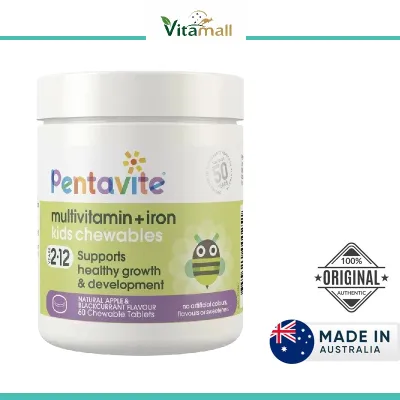
![Pentavite Multivitamin + Iron Kids 60 Chewable Tablets Australia [EXP 01/2027]](https://img.lazcdn.com/g/p/ec9c13b963d63b6066b7a1cdaa011630.jpg_400x400q80.jpg_.webp)
![Pentavite Multivitamin + Iron Kids 60 Chewable Tablets Australia [EXP 01/2027]](https://img.lazcdn.com/g/p/947c4770c0942b94e71b09accc7196eb.jpg_400x400q80.jpg_.webp)
![Pentavite Gold Multivitamin + Iron Liquid For Kids 200ml Australia [EXP 07/2027]](https://img.lazcdn.com/g/p/90639b91f61174f90532e676e1d12373.jpg_400x400q80.jpg_.webp)
![Pentavite Gold Multivitamin + Iron Liquid For Kids 200ml Australia [EXP07/2027]](https://img.lazcdn.com/g/p/a00db3d9fc20843eb74154ee2ab569fb.jpg_400x400q80.jpg_.webp)
Prices are valid at publication and may change. Please refer to the product page for the latest price.
Key Ingredients to Check on the Label
Understanding what goes into your baby’s body requires a careful examination of the product label. Infant multivitamin drops typically contain a blend of essential vitamins, including Vitamin A, Vitamin C, Vitamin D, and various B-complex vitamins. However, because formulations can change and vary by region or batch, you must inspect the exact packaging of the product you purchase to verify the specific concentrations.

The primary safety concern with multivitamins lies in the distinction between water-soluble and fat-soluble vitamins. Water-soluble vitamins, like Vitamin C and the B-complex group, are generally excreted in the urine if consumed in excess. In contrast, fat-soluble vitamins—specifically Vitamin A and Vitamin D—are stored in the body’s fat tissues and liver. If an infant regularly receives more than the recommended daily allowance of these fat-soluble nutrients, they can accumulate to toxic levels, a condition known as hypervitaminosis.
To prevent this, you must evaluate the supplement in the context of your baby’s daily feeding routine. Breastfed infants often require a direct Vitamin D supplement because breast milk naturally contains low levels of this nutrient. However, commercial infant formulas sold in the Philippines are already heavily fortified with a precise balance of vitamins and minerals, including Vitamin D and Vitamin A. If your baby is primarily formula-fed, adding a daily multivitamin like Pentavite may cause them to exceed the safe upper intake limits. Always calculate the total daily intake from all dietary sources before introducing a supplement.
Potential Side Effects and When to Stop
While many infants tolerate pediatric multivitamin drops well when given the correct dose, some may experience mild, temporary side effects. These low-risk reactions are often digestive, such as mild stomach discomfort, slight changes in stool consistency, or a temporary shift in stool color. Additionally, you might notice that your baby’s urine appears a brighter yellow than usual; this is a completely harmless effect caused by the excretion of excess riboflavin (Vitamin B2).
However, parents must remain highly vigilant for signs of adverse reactions, allergic responses, or acute vitamin toxicity. If your infant develops unexplained skin rashes, hives, persistent vomiting, unusual lethargy, extreme irritability, or swelling of the face, lips, or tongue, you must stop administering the supplement immediately. These symptoms require urgent medical evaluation from a healthcare professional.
It is also critical to understand that the absence of immediate side effects does not guarantee that a high dose is safe. Chronic vitamin toxicity can develop silently over weeks or months without showing sudden, dramatic symptoms. Never assume that if your baby seems fine, you can safely increase the dosage or give the supplement more frequently than directed. Adhering strictly to the recommended or prescribed dose is the only way to minimize long-term health risks.
Safe Usage Guidelines and Precautions for Parents
Administering a liquid supplement to a squirming infant requires precision and care. You should always use the exact measuring syringe, dropper, or spoon supplied in the product packaging. These instruments are specifically calibrated to deliver the correct volume of liquid for that particular product. Avoid using standard household kitchen spoons, which vary widely in size and can easily lead to under-dosing or dangerous over-dosing.
Given the warm and highly humid tropical climate of the Philippines, proper storage of liquid vitamins is essential to prevent spoilage, bacterial growth, and nutrient degradation. Keep the bottle tightly sealed and store it in a cool, dry place away from direct sunlight, ideally below 25°C. In many tropical homes, this may mean placing the bottle in a designated, secure section of the refrigerator, especially after opening. Always check the manufacturer’s storage instructions on the label. Keep all supplements completely out of sight and reach of older children, who might mistake the sweet liquid or chewable variants for candy.
Before starting your baby on any multivitamin, you must consult a pediatrician if your baby falls into any of the following categories:
- Premature birth: Preterm infants have unique nutritional needs and immature organ systems that require customized medical management.
- Underlying medical conditions: Babies with kidney, liver, or metabolic disorders may not process supplemental vitamins safely.
- Concurrent medications: Certain treatments or other prescribed supplements can interact negatively with multivitamin ingredients.
- Poor weight gain or feeding difficulties: If an infant is struggling to grow, a pediatrician must diagnose the root cause rather than relying on an over-the-counter multivitamin to fix the issue.
Finally, make it a habit to inspect the liquid before every single use. Check the expiration date printed on the box or bottle. If you notice any unusual changes in the liquid’s color, odor, or consistency, or if you see sediment that does not disperse after a gentle shake, discard the bottle immediately and consult a pharmacist or pediatrician.
Frequently Asked Questions (FAQ)
Can I give Pentavite to a newborn?
A newborn baby, defined as an infant in their first 28 days of life, has highly delicate, developing digestive and renal systems. During this critical stage, healthy newborns obtain all their necessary hydration and nutrition from breastmilk or properly prepared infant formula. You should never give a newborn any over-the-counter multivitamin, including Pentavite, unless a pediatrician has specifically evaluated your baby and written a prescription for a targeted nutrient, such as Vitamin D drops. Introducing complex multivitamins prematurely can strain a newborn’s kidneys and liver.
Does Pentavite interact with breastmilk or formula?
There are no known chemical reactions that make breastmilk or infant formula dangerous when combined with a multivitamin. However, the primary concern is nutritional duplication. Because commercial infant formulas are already fortified with essential vitamins and minerals, adding a daily multivitamin can easily push your baby’s total intake past the safe daily limits. If your baby is breastfed, they may only need a single-nutrient supplement like Vitamin D, rather than a broad multivitamin. To prevent accidental over-supplementation, share the exact nutritional panels of both your baby’s formula and the multivitamin with your pediatrician to ensure the combined intake is safe.
Community discussion
Share your experience or ask a question. Comments are reviewed before publication.