
Quick Answer: Is Hand Sanitizer Safe for Infants and Toddlers?
When keeping your little one clean on the go, you might wonder if a quick pump of hand sanitizer is safe for their delicate hands. The short answer is that washing with mild baby soap and clean water is always the primary and safest recommendation for infants and toddlers. Hand sanitizers, including baby-specific options like Tiny Buds sanitizer, should only serve as temporary alternatives when washing facilities are completely unavailable.
Whether a sanitizer is safe for your baby depends heavily on their age, current skin condition, and the specific formulation detailed on the product label. Because babies frequently put their hands in their mouths, any sanitizer use requires strict adult supervision and careful application. You must never allow an infant or toddler to handle sanitizer bottles or apply the product themselves.
Age Guidelines: When Can Babies Start Using Hand Sanitizer?
Determining when to introduce hand sanitizer to your child’s routine requires understanding how infant skin differs from adult skin. General pediatric consensus advises against using alcohol-based hand sanitizers on newborns and young infants. Most healthcare professionals recommend waiting until a child is at least toddler-aged, or when they can reliably follow instructions not to put wet hands in their mouths, before making sanitizer a regular part of their hygiene routine.
Products mentioned in this guide
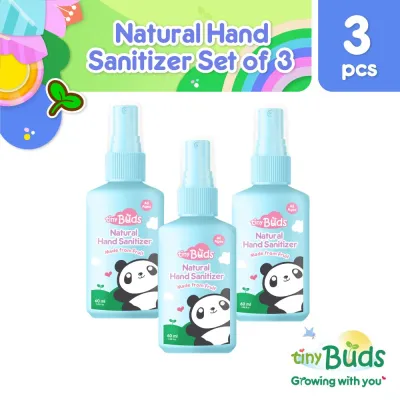
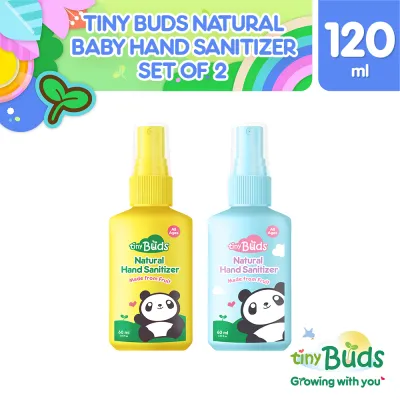
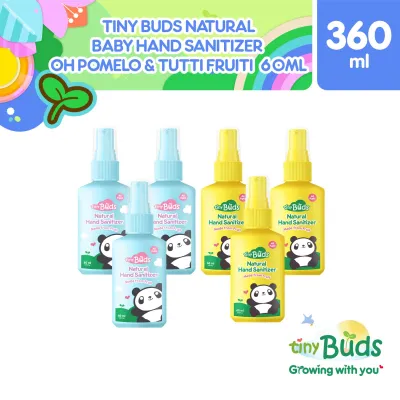
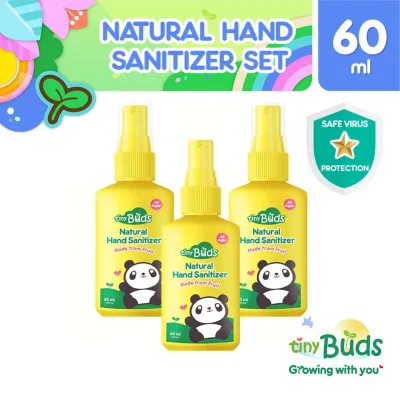
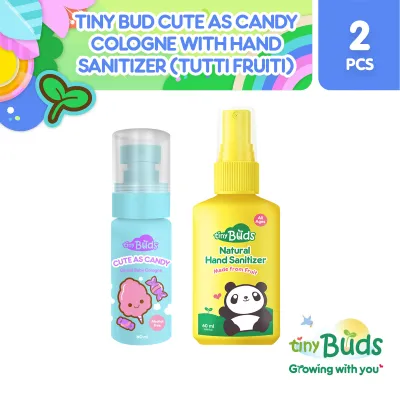
Prices are valid at publication and may change. Please refer to the product page for the latest price.

Before applying any product, parents must explicitly check the age recommendations, warnings, and ingredient lists on the Tiny Buds sanitizer packaging or the brand’s official guidelines. Baby-specific brands often formulate their products with milder ingredients, but these still carry specific age-related instructions that must be followed to ensure safety.
The biological reasons for these age limits are critical for parents to understand. A newborn’s skin barrier is still developing, making it significantly thinner and more permeable than older children’s skin. This delicate barrier allows topical substances to be absorbed into the bloodstream much more easily.
Additionally, infants have a high surface area-to-weight ratio. This means that any chemical absorbed through their skin represents a much larger dose relative to their small body mass than it would for an adult. Combined with the natural developmental habit of constant hand-to-mouth exploration, the risk of accidental chemical ingestion or absorption is exceptionally high in the first year of life.
Safety Risks and Side Effects of Sanitizer on Baby Skin
Using hand sanitizers on babies carries several distinct risks that require careful management. The most prominent concern with alcohol-based products is the risk of systemic absorption through the skin. Because an infant’s skin barrier is highly permeable, frequent application of alcohol-based formulas can lead to unwanted absorption, even without oral ingestion.
Local skin reactions are also common when sensitive baby skin is exposed to sanitizing agents. Alcohol and other active antimicrobial ingredients strip away the natural oils that protect the skin. In tropical climates like the Philippines, where high humidity and sweat already make babies prone to heat rash and skin fold irritation, adding drying chemicals can quickly lead to severe dryness, redness, peeling, and contact dermatitis.
Beyond skin irritation, the danger of accidental ingestion is a constant worry for parents. Babies explore their world sensory-first, meaning their hands are almost always wet with saliva or heading straight for their mouths. If a baby licks their hands before the sanitizer has completely evaporated, they can ingest the active chemicals, which can cause immediate irritation to their digestive tract.
Furthermore, accidental contact with mucous membranes poses a painful hazard. If a baby rubs their eyes, nose, or mouth with hands that still have wet sanitizer on them, it can cause intense stinging, redness, and temporary chemical irritation. Ensuring the product is completely dry before letting your baby move their hands is vital to preventing these painful accidents.
How to Safely Use Tiny Buds and Other Baby Sanitizers
When you are away from home—perhaps enjoying a family day at a local park, traveling in a vehicle, or visiting a busy shopping center—and soap and water are genuinely unavailable, you can use baby-safe sanitizers by following strict safety protocols. The first rule of application is that an adult must always control the product. Never let a baby or toddler pump the sanitizer or hold the bottle, as this can lead to accidental eye splashes or ingestion.
To apply the sanitizer safely, dispense a small, pea-sized amount onto your own palm first. Rub your hands together slightly to distribute the product, then thoroughly rub it onto your baby’s hands. Be sure to cover the palms, the backs of their hands, and the spaces between their fingers.
Continue rubbing your baby’s hands gently until the sanitizer is completely dry. You must physically hold or distract your baby during this process to prevent them from putting their hands in their mouth or rubbing their eyes while the liquid is still wet. The sanitizing effect occurs as the product evaporates, so letting it air-dry completely is both a safety and efficacy requirement.
There are several conditions under which you should skip sanitizer entirely. If your baby’s hands are visibly dirty, muddy, or covered in food residue, hand sanitizer will not be effective, as dirt and grease shield bacteria from the active ingredients. In these cases, wiping the hands with a clean, damp cloth or baby wipe is a much better first step. Additionally, never apply sanitizer if your baby has open scratches, eczema flare-ups, or irritated skin, as the formula will cause intense stinging and further damage the compromised skin barrier.
What to Do If Your Baby Ingests Sanitizer or Has a Reaction
Even with the most careful precautions, accidents can happen. If you notice your baby developing a localized skin reaction, such as sudden redness, hives, or dry patches after using a sanitizer, act quickly. Immediately wash their hands with cool, plain water to remove any remaining product residue, and discontinue using that specific brand. Keep the skin clean and dry, and consult your pediatrician if the irritation does not subside within a day or two.
If your baby licks their hands while the sanitizer is still wet, the immediate risk is usually low but requires quick action. Wipe the inside of their mouth with a clean, cool, damp cloth to remove any residual liquid. Offer them a few sips of water, breastmilk, or formula to help rinse their mouth and dilute any swallowed trace amounts, then monitor them closely for any unusual behavior.
In cases where a baby manages to access a bottle and ingests a larger, measurable amount of hand sanitizer, do not attempt to induce vomiting, as this can cause the liquid to enter their lungs. Instead, immediately contact your pediatrician, call a local poison control center, or head to the nearest emergency medical facility.
When seeking medical help, always bring the exact sanitizer bottle with you. This allows healthcare professionals to inspect the ingredient list, check the alcohol concentration, and determine the most appropriate treatment plan for your child’s specific exposure.
Frequently Asked Questions (FAQ)
Can I use adult hand sanitizer on my baby in an emergency?
Adult hand sanitizers are generally not recommended for babies because they contain high concentrations of alcohol, typically ranging from 60% to 80%, along with strong artificial fragrances, colorants, and denaturants. These harsh formulations can rapidly dry out and damage a baby’s delicate skin barrier, and they pose a much higher risk of toxicity if accidentally ingested.
If you face an absolute emergency where your baby’s hands must be cleaned and no baby-specific product or washing facility is available, you may use a minimal amount of adult sanitizer. Apply a tiny drop, rub it until completely dry, and then wipe your baby’s hands with a damp cloth or baby wipe as soon as possible to remove any chemical residue before they touch their face.
Is alcohol-free sanitizer safer for newborns?
Alcohol-free sanitizers often use alternative active ingredients, such as benzalkonium chloride, to eliminate germs without the intense drying effect of alcohol. While these formulas are gentler on the skin barrier and do not carry the same inhalation or rapid absorption risks as alcohol, they are still not considered entirely safe for newborns.
A newborn’s skin is exceptionally delicate, and even non-alcohol active ingredients can trigger contact sensitivity, rashes, or allergic reactions. For newborns under one month old, you should avoid all sanitizing chemicals entirely. Stick strictly to warm water and mild baby soap for cleaning, and always consult your pediatrician before introducing any over-the-counter sanitizing products to your infant’s daily care routine.

Community discussion
Share your experience or ask a question. Comments are reviewed before publication.