
Deciding on the right diaper for your baby often involves balancing performance, skin health, and household expenses. In the Philippines, where high humidity and warm tropical temperatures require frequent diaper changes to prevent discomfort, diaper costs can quickly become a significant portion of your monthly budget. While premium brands like Pampers, Equator, and Huggies are widely recognized for their advanced features and reliable leak protection, budget-friendly alternatives like Beybiko have gained popularity among caregivers looking to optimize their spending.
Evaluating whether a lower-priced diaper can deliver comparable quality for daily use requires looking beyond the price tag to examine physical design, absorbency, and fit. A diaper that costs less per piece in ₱ is only truly economical if it keeps your baby dry, fits securely, and does not cause skin irritation. By understanding the typical trade-offs of budget diapers, comparing physical features directly, and monitoring your baby’s skin reaction, you can make an informed decision that protects both your baby’s comfort and your family budget.
What to Expect When Switching to a Budget Diaper
Managing diaper costs is a practical priority for many families, especially when navigating the daily demands of infant care. When transitioning from premium brands to a budget-friendly option like Beybiko, understanding the typical design trade-offs helps set realistic expectations for daily performance. The primary performance metrics for any daily diaper are absorbency speed, leak protection, and breathability, all of which contribute directly to keeping your baby’s skin dry and healthy.
Products mentioned in this guide
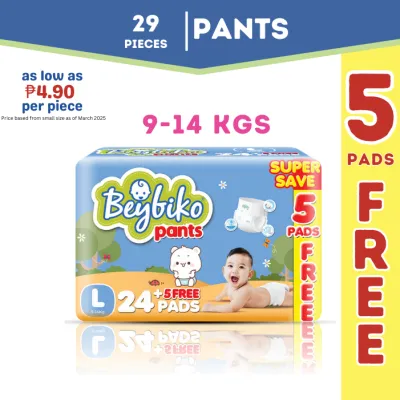
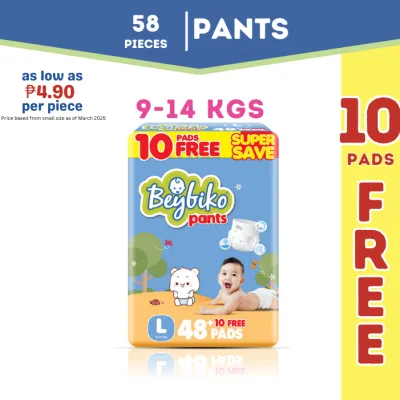
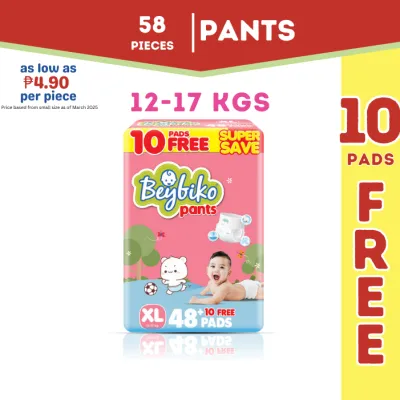
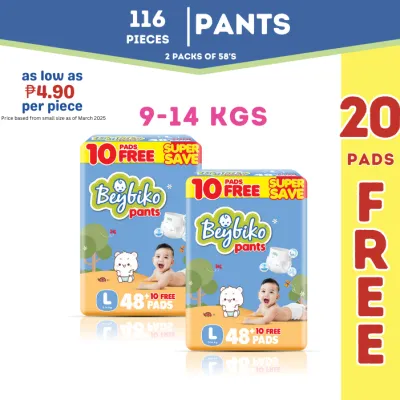
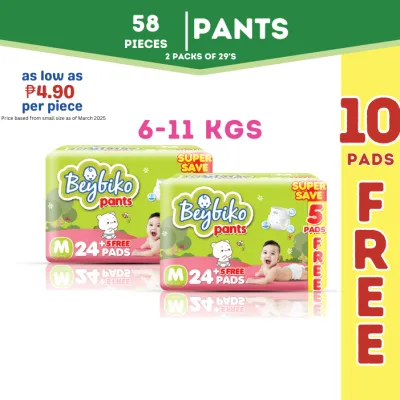
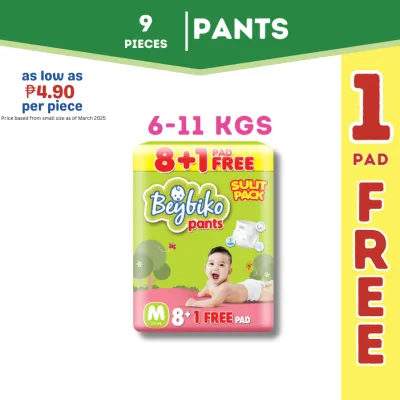
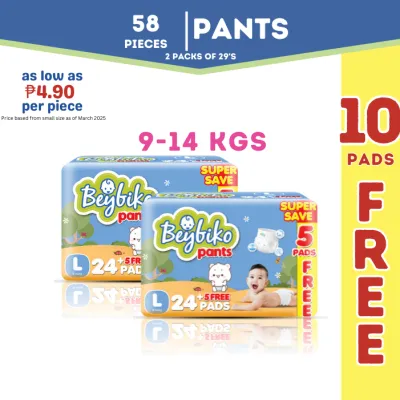
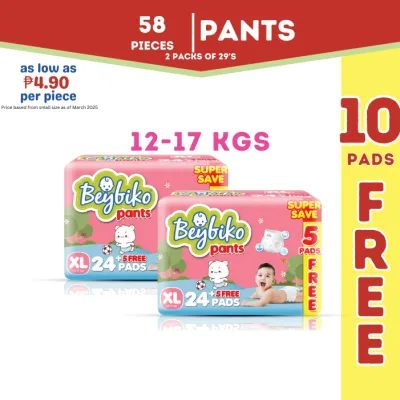
Prices are valid at publication and may change. Please refer to the product page for the latest price.
Premium diapers often invest heavily in proprietary absorbent channels, ultra-thin materials, and highly flexible elastics that stretch smoothly around a baby’s waist and thighs. In contrast, budget-friendly alternatives may feature slightly thicker materials, simpler elastic bands, or omit convenient features like wetness indicators to keep production costs low. These differences do not necessarily mean a budget diaper will fail, but they do change how the diaper performs under active daily use and how frequently it must be changed.
Before purchasing a large pack of any new diaper brand, caregivers should carefully inspect the product packaging for specific size charts, recommended weight ranges, and material claims. Because sizing standards can vary significantly between manufacturers, relying on your baby’s current weight rather than just the size label (such as Medium or Large) is crucial for preventing leaks. Checking the packaging also helps you verify if the materials used are hypoallergenic or breathable, which is essential for maintaining skin health in warm climates.
Comparing Beybiko with Pampers, Equator, and Huggies
Evaluating a budget diaper like Beybiko against established mid-tier and premium options like Pampers, Equator, and Huggies requires a hands-on comparison of physical features. Rather than relying on brand reputation alone, caregivers can assess several key design dimensions to determine if a budget option meets their baby’s daily needs. The first dimension is the core absorbency technology, which dictates how quickly moisture is pulled away from the skin and locked inside the diaper.

Premium brands often utilize advanced superabsorbent polymers distributed in thin, structured channels, whereas budget diapers may use a more traditional, concentrated pulp core that feels thicker when dry and sags more when wet. The second dimension is the leg cuff design, which serves as the primary barrier against side leaks, especially during active play or sudden bowel movements. Caregivers should inspect the height and elasticity of these double-layered barriers to ensure they fit snugly in the groin creases without digging into the skin.
Waistband elasticity and surface softness are also critical; a stiff waistband or a rough inner lining can cause friction and discomfort in hot, humid weather. When switching from Pampers, Equator, or Huggies, physically compare a fresh Beybiko diaper side-by-side with your current brand to note differences in weight, thickness, and stretch. While the lower price per piece in ₱ is the primary reason to consider Beybiko, you must verify if the financial savings hold up in practice.
If a budget diaper requires more frequent changes due to slower absorption or minor leaks, the total daily cost may end up matching or exceeding that of a slightly more expensive diaper. To help you evaluate these differences during your trial, use the following inspection framework to compare features directly on the diapers you purchase.
| Feature to Inspect | Premium/Mid-Tier (Pampers, Equator, Huggies) | Budget Alternative (Beybiko) |
|---|---|---|
| Core Thickness | Often ultra-thin with structured channels | May feel thicker or use traditional pulp cores |
| Waistband Stretch | Highly elastic, multi-strand stretch bands | Simpler elastic bands; check for snugness |
| Leg Cuffs | Double-layered, high-barrier elastic cuffs | Inspect height and flexibility of the cuffs |
| Wetness Indicator | Commonly present on most product lines | Check packaging to verify presence or absence |
| Fastening Style | Sturdy tape or highly flexible pant styles | Inspect tape grip or pant waistband softness |
How to Monitor for Leaks and Skin Reactions
Introducing any new diaper brand requires a careful monitoring period to ensure your baby’s skin remains healthy and dry. Because every baby has a unique body shape, skin sensitivity, and urine output, a diaper that works well for one family might cause issues for another. During the first few days of testing Beybiko, closely observe how the diaper fits and behaves during regular daily activities.
Look for clear signs of poor fit or inadequate absorbency, such as red marks or indentations on your baby’s thighs and waist, which indicate the diaper is too tight or the elastic is too stiff. Frequent side leaks or heavy sagging immediately after a single wetness event suggest that the diaper’s core is saturated or the leg cuffs are not sealing properly. Skin health is the most critical factor when evaluating a budget diaper, particularly in warm tropical climates where trapped moisture quickly leads to irritation.
Perform thorough skin checks during every diaper change, looking for localized redness, small bumps, or chafing along the waistband and leg elastic. If you notice persistent diaper rash, severe redness, or signs of skin irritation that do not resolve with standard barrier creams, stop using the diaper immediately and consult a pediatrician. Remember that manufacturer guidelines and general brand claims cannot replace direct, daily observation of your baby’s comfort and skin condition.
Strategic Use: Mixing Budget and Premium Diapers
You do not have to commit exclusively to one diaper brand; many experienced caregivers use a hybrid strategy to balance their budget and their baby’s comfort. A highly effective approach is to use budget-friendly diapers like Beybiko for frequent daytime changes when you can monitor and replace the diaper every few hours. Because babies are changed more often during the day, a budget diaper’s slightly lower absorbency capacity is rarely a drawback, allowing you to maximize your savings in ₱.
For extended overnight wear or long outings where changes are less convenient, you can evaluate premium options like Pampers or Huggies to provide maximum dryness and leak protection. If you find that the budget diaper reaches its absorbency limit faster than expected during the day, try adjusting the changing frequency or moving up one size to increase the core capacity. Ultimately, the most successful diapering routine depends entirely on your baby’s individual output, activity level, and skin tolerance.
By adapting your choices based on daily observations, you can successfully integrate budget diapers into your household routine without compromising your baby’s comfort.
Frequently Asked Questions (FAQ)
Does Beybiko have a wetness indicator like Pampers or Huggies?
To determine if a specific Beybiko diaper line includes a wetness indicator, check the product packaging or the official product description on the online marketplace where you purchase them. If the diaper does not feature a color-changing wetness indicator line, you can easily monitor wetness by gently feeling the weight and thickness of the diaper core from the outside. A heavy, swollen core indicates it is time for a change, even without a visual cue.
Can I use Beybiko for overnight sleep?
Whether a budget diaper like Beybiko is suitable for overnight sleep depends on your baby’s age, sleeping habits, and individual urine volume. To test its overnight performance safely, try using the diaper during a daytime nap first to observe how well it handles a single sleep cycle without leaking or sagging excessively. If the diaper remains dry and comfortable during naps, you can consider testing it overnight, keeping a premium diaper on hand as a backup if leaks occur.

Community discussion
Share your experience or ask a question. Comments are reviewed before publication.