
Using petroleum jelly on a newborn’s delicate skin is a common practice, but determining if Babyflo petroleum jelly is safe for your baby requires understanding its ingredients, your baby’s specific skin type, and proper application methods. Generally, pure petroleum jelly is considered safe for newborns and infants with sensitive skin because it is hypoallergenic and free from active sensitizers. However, safety is never absolute; it depends heavily on verifying the product’s purity, observing your baby’s individual skin tolerance, and applying it correctly under suitable environmental conditions.
To understand how petroleum jelly protects infant skin, it helps to look at its mechanism of action. Petroleum jelly is an occlusive agent, meaning it forms a physical barrier on the surface of the skin. Instead of actively absorbing into the skin cells like a water-based moisturizer, it sits on top of the stratum corneum to lock in existing moisture and prevent transepidermal water loss. This barrier also shields the skin from external irritants, such as wetness from diapers, acidic stool, and friction from clothing.
From a general dermatological perspective, pure petroleum jelly is highly recommended for newborns because their skin barrier is still developing. A newborn’s skin is thinner, loses moisture more rapidly, and is more susceptible to environmental irritants than adult skin. Because pure petroleum jelly contains no water, it does not require added chemical preservatives or parabens to prevent bacterial growth, making it less likely to trigger allergic contact dermatitis compared to complex creams.
Products mentioned in this guide
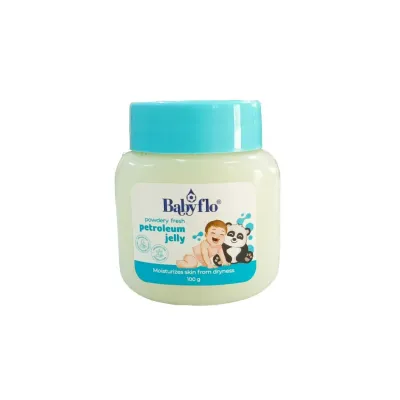
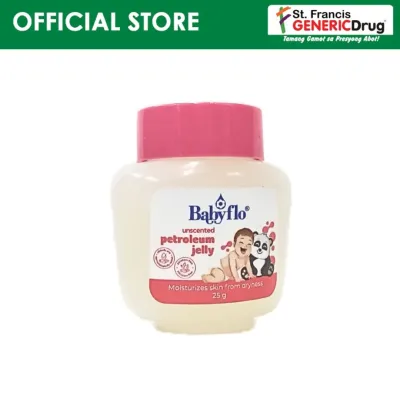
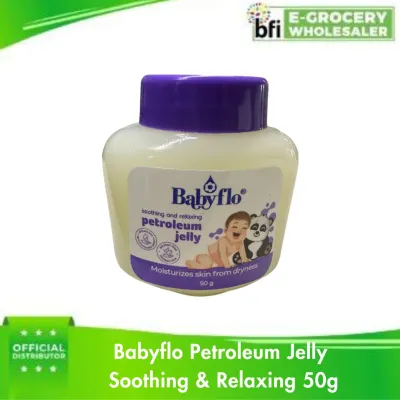
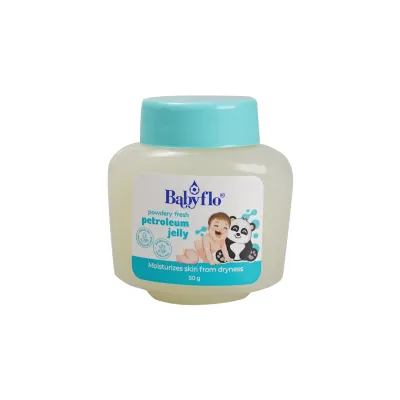
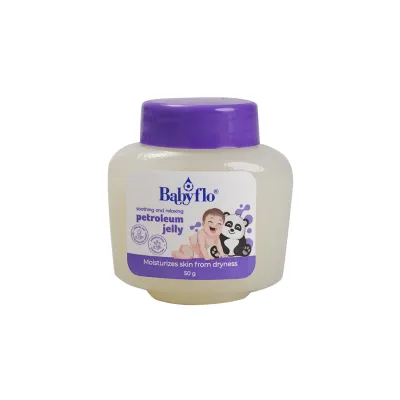
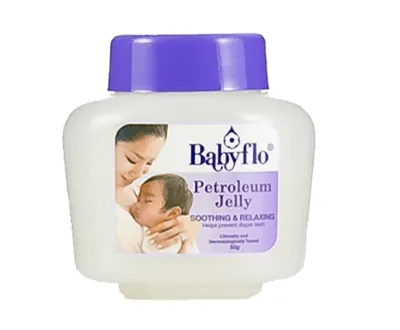
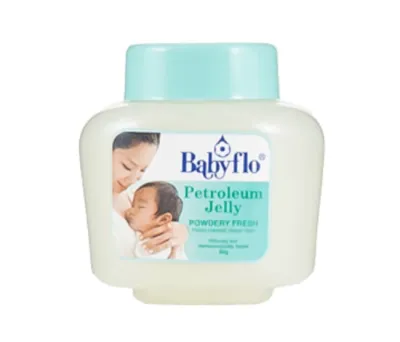
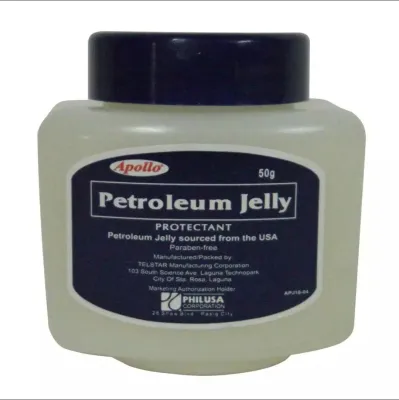
Prices are valid at publication and may change. Please refer to the product page for the latest price.
However, caregivers must distinguish between pure petroleum jelly and formulated baby lotions or creams that contain petroleum jelly as an ingredient. Formulated lotions often blend petroleum jelly with water, emulsifiers, fragrances, and botanical extracts. While these lotions are easier to spread, the added ingredients can sometimes irritate sensitive or eczema-prone skin. When evaluating Babyflo products, always check whether you are using their pure petroleum jelly variant or a formulated lotion, as the safety profile for sensitive skin changes significantly when fragrances and preservatives are introduced.
What to Check on the Babyflo Product Label
Before applying any skincare product to a newborn, parents must carefully inspect the packaging to verify its formulation and suitability. The first step is to read the ingredient list on the back of the Babyflo container. For newborns and infants with highly sensitive or eczema-prone skin, the ideal ingredient list should contain only one item: 100% pure white petrolatum. If the label lists added fragrances, parfum, colorants, or botanical oils, exercise caution, as these additives are common triggers for skin sensitization and allergic reactions in young babies.
Next, look for specific quality and safety designations printed on the label. Manufacturers of baby products often subject their formulations to dermatological testing. Look for labels indicating the product is “hypoallergenic,” “pediatrician-tested,” or “clinically proven mild.” While these terms indicate the product has undergone standard safety screenings, they do not guarantee a complete absence of reactions, so they should always be paired with a home patch test on a small area of your baby’s skin.
Caregivers should also verify the manufacturing and expiration details before purchase or use. Locate the batch number, manufacturing date, and expiration date, which are typically stamped on the bottom or side of the container. Using expired petroleum jelly is not recommended, as the product’s consistency can degrade over time, and contamination can occur if the container has been opened for a long period. Additionally, ensure the label provides clear manufacturer contact details or a consumer hotline, which allows you to report adverse reactions or ask specific formulation questions.
Finally, review the manufacturer’s official instructions and warnings printed on the packaging. Some petroleum jelly products may include specific guidelines regarding age limits, application areas, or warnings against applying the product to deep puncture wounds or serious burns. Adhering to these official instructions ensures you are using the product within its tested safety boundaries and prevents misuse on delicate newborn skin. As an affordable skincare option often costing under ₱150 in local drugstores, verifying these details on the physical packaging is the best way to ensure a safe purchase.
Safe Application for Newborns and Sensitive Skin
Applying petroleum jelly safely to a newborn requires a clean environment and proper skin preparation. Before touching the product or your baby’s skin, wash your hands thoroughly with soap and water to avoid introducing bacteria into the container. The baby’s skin should be gently cleansed with a mild, fragrance-free baby wash and patted dry with a soft towel. Because petroleum jelly locks in whatever is currently on the skin, applying it over dirty or damp, unwashed skin can trap bacteria, sweat, and irritants against the skin barrier.

There are several key target areas where petroleum jelly is highly effective for infant skincare. One of the most common uses is diaper rash prevention; applying a thin layer over the diaper area during changes creates a protective shield against moisture and acidic waste. It is also highly beneficial for soothing dry patches on the elbows and knees, as well as protecting the chin and cheeks from drool rash caused by teething. The occlusive barrier prevents saliva from chafing the delicate facial skin.
When applying the jelly, caregivers should adjust the amount and frequency based on the baby’s individual skin response and the local climate. In warm, humid tropical environments like the Philippines, a very thin layer is usually sufficient. Applying too thick a layer in hot weather can trap heat and sweat, leading to discomfort or skin irritation. Start with a tiny, pea-sized amount, warm it between your fingertips to make it easier to spread, and gently smooth it over the target areas without rubbing vigorously.
It is critical to observe strict boundaries regarding where not to apply petroleum jelly. Never apply the product to infected, weeping, bleeding, or severely broken skin. Because petroleum jelly is highly occlusive, applying it over an active skin infection can trap bacteria or fungi, potentially worsening the condition. If your baby has open sores, oozing eczema patches, or blistered skin, keep the area clean and dry, and consult a healthcare professional for appropriate medical treatments rather than applying an occlusive barrier.
Signs of Irritation and When to Stop Use
Although pure petroleum jelly is generally hypoallergenic, caregivers must remain vigilant for signs of skin irritation or adverse reactions. One common issue, particularly in warm and humid climates, is the development of heat rash, also known as prickly heat. This occurs when the heavy, occlusive layer of petroleum jelly blocks the sweat ducts, trapping perspiration beneath the skin. If you notice tiny, itchy red bumps appearing in the skin folds, neck, or chest after application, this is a sign to reduce the amount used or temporarily stop application.
Caregivers must also learn to differentiate between a localized reaction to the product and an underlying skin condition like an eczema flare-up. A reaction to the product typically manifests as sudden redness, swelling, or a new rash directly where the jelly was applied. In contrast, eczema flare-ups often present as dry, scaly, and intensely itchy patches that may appear in typical eczema locations, such as the cheeks, outer joints, or behind the knees, regardless of product application. If you suspect the product is causing the reaction, discontinue use immediately.
If you observe any signs of irritation, take immediate steps to soothe your baby’s skin. Gently wash the area with lukewarm water and a mild, soap-free cleanser to remove all traces of the petroleum jelly. Pat the skin dry with a clean, soft cloth and avoid applying any other creams, lotions, or home remedies to the irritated area. Allowing the skin to breathe in a cool, well-ventilated room can help soothe heat-related rashes and minor irritation.
Knowing when to seek professional medical advice is essential for your baby’s safety. You should consult a pediatrician or a pediatric dermatologist if the skin irritation does not improve within a few days of stopping the product, or if the rash spreads to other parts of the body. Seek immediate medical attention if you notice signs of infection, such as yellow crusting, pus, increased warmth, swelling, or if your baby develops a fever. A healthcare professional can provide an accurate diagnosis and recommend safe, targeted treatments for your baby’s sensitive skin.
Frequently Asked Questions (FAQ)
Can I use Babyflo petroleum jelly on my baby's face and lips?
Yes, pure petroleum jelly is generally safe for use on an infant’s face and lips to protect against dry skin and drool rash. However, you must apply it sparingly and avoid the immediate area around the eyes and nostrils. Ensure your baby does not ingest the product; apply only a very thin layer on the outer lips and monitor your baby to prevent them from wiping the jelly into their mouth or eyes.
Does petroleum jelly clog pores or cause baby acne?
Pure petroleum jelly is non-comedogenic, meaning its molecules are too large to penetrate and clog pores directly. However, because it is highly occlusive, it can trap dirt, dead skin cells, sebum, and sweat on the skin’s surface if applied to unwashed skin. In warm, humid conditions, this trapping effect can mimic or worsen baby acne and heat rash, so always cleanse the skin before application.
How should I store Babyflo petroleum jelly to maintain its quality?
To maintain the quality and safety of the product, store the container in a cool, dry place away from direct sunlight and heat sources, which can cause the jelly to liquefy or separate. Always close the lid tightly after each use to prevent dust and airborne contaminants from entering. To avoid introducing bacteria into the jar, wash your hands thoroughly before scooping the product, or use a clean, sanitized plastic spatula.

Community discussion
Share your experience or ask a question. Comments are reviewed before publication.