
The Short Answer: Is a Hip Seat Safe for Development?
A hip seat carrier can be a safe, highly convenient tool for transporting your baby, but its safety depends entirely on your child’s developmental stage and how the carrier is positioned. When used correctly once your baby has achieved the necessary physical milestones, a well-designed hip seat supports natural posture and helps distribute their weight evenly. However, premature use or improper positioning can place dangerous stress on a baby’s rapidly developing joints, particularly the hips and spine.
Because every infant develops at an individual pace, the information in this guide is for general educational purposes. Parents should always consult a pediatrician or a pediatric orthopedist for personalized medical advice regarding their baby’s specific skeletal development and physical readiness. If your baby has any pre-existing musculoskeletal conditions, professional medical clearance is essential before using any structured carrier.
How Hip Seats Affect Hip Joint Health and Positioning
To understand how a hip seat interacts with your baby’s body, it is helpful to look at the anatomy of an infant’s hip joint. At birth, a baby’s hip socket (the acetabulum) is composed of soft, flexible cartilage rather than hard bone. Over the first year of life, this cartilage gradually ossifies into a secure, deep socket. If the baby’s legs are repeatedly forced into an unnatural, straight position during this critical developmental window, the ball of the joint (the femoral head) can easily slip out of its shallow socket, significantly increasing the risk of Developmental Dysplasia of the Hip (DDH).
Products mentioned in this guide
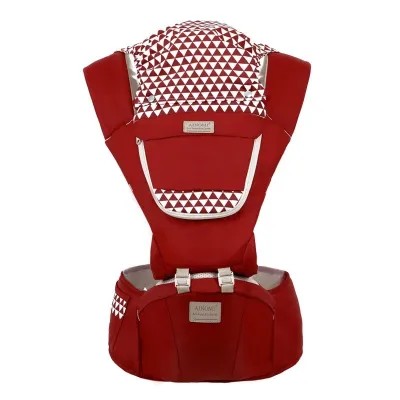
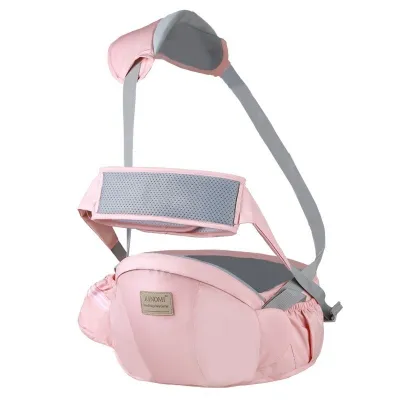
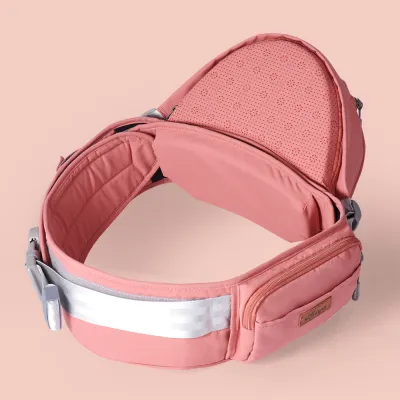
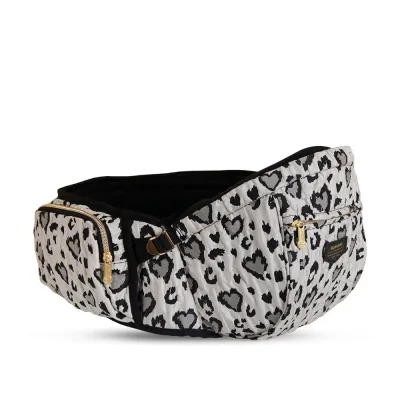
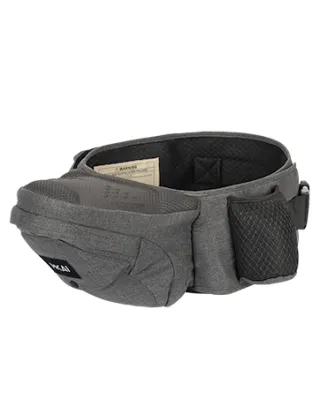
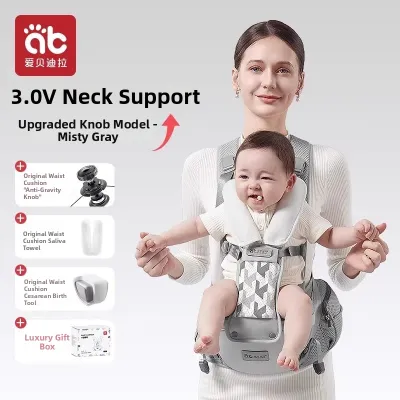
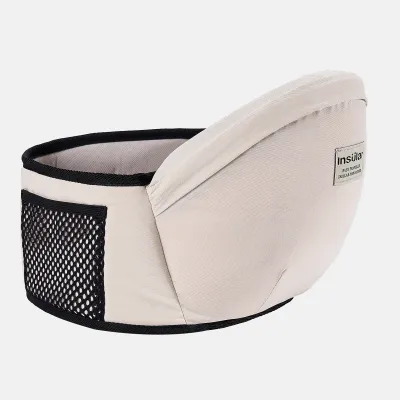
Prices are valid at publication and may change. Please refer to the product page for the latest price.

To protect against joint strain, pediatric orthopedists recommend carrying infants in a “hip-healthy” position, commonly referred to as the M-shape or frog position. In this posture, the baby’s hips are flexed, their knees are elevated higher than their bottom, and their thighs spread wide around the parent’s torso. This positioning ensures that the forces of gravity and weight are distributed evenly across the thigh bones and pelvis, rather than pulling directly on the hip joints.
A well-designed hip seat features a wide, structured platform that naturally facilitates this M-shape. The seat should support the baby’s thighs from knee to knee, keeping the legs spread wide and the knees bent at a natural angle. Conversely, narrow-based carriers or poorly designed hip seats that only support the crotch allow the legs to dangle straight down. This dangling posture pulls the femoral head downward, exerting leverage that can strain the joint capsule and increase DDH risks.
When evaluating a hip seat carrier, do not rely solely on the product name or generic marketing claims. Parents must actively verify the manufacturer’s physical dimensions and structural design. Look for products that explicitly state they support the entire thigh-to-knee area. In the Philippines, high-quality carriers typically range from ₱1,500 to ₱5,000 or more; prioritize those that provide clear, illustrated instructions demonstrating how the seat maintains the M-shape across different growth stages.
Understanding the Impact on Spinal Alignment
An infant’s spine undergoes a dramatic structural transformation during their first year of life. A newborn is born with a continuous, C-shaped spinal curve, which reflects their curled position in the womb. As the baby develops neck strength and begins lifting their head, the upper spine begins to curve inward (the cervical lordosis). Later, as they learn to sit, crawl, and eventually walk, the lower spine develops its secondary curve, gradually forming the resilient, S-shaped alignment characteristic of adult spines.
Because young infants lack the core muscle strength and skeletal maturity to support an upright posture, placing them on a rigid hip seat too early forces their spine into a collapsed, slumped position. This slumping can compress the vertebrae, strain the delicate spinal ligaments, and even compromise the baby’s airway by forcing their chin down toward their chest. A hip seat should only be introduced when the baby’s muscles are strong enough to maintain a natural spinal curve without slouching.
Once your baby has met the necessary physical milestones, the hip seat carrier should work in tandem with their natural posture. A model with a supportive, attachable back panel will gently cradle the baby’s back, preventing lateral slumping while allowing the spine to rest in its natural curve. Avoid rigid, overly tight carrier structures that force the baby’s back into an artificially straight or hyperextended position before their muscles are ready to support it.
Parental ergonomics also play a direct role in the baby’s spinal safety. A wide, heavily padded waistband is essential for distributing the baby’s weight evenly across your hips and pelvis. In warm, humid tropical conditions, carrying a heavy baby can quickly cause physical fatigue. If the waistband is too thin, poorly fitted, or worn too low, you may unconsciously lean backward or slouch to balance the load. This posture shift changes the angle of the hip seat platform, which in turn forces your baby’s spine into an awkward, unsafe alignment. Selecting a carrier with breathable, lightweight materials helps you maintain a straight, healthy posture, directly protecting your baby’s alignment.
Developmental Milestones: When to Start Using a Hip Seat
Chronological age is an unreliable indicator of physical readiness; safety depends entirely on your baby’s individual developmental milestones. While many product packages suggest a general starting age, such as six months, you must carefully evaluate your baby’s physical capabilities before introducing a hip seat carrier.
Before using a hip seat, your baby must consistently demonstrate the following physical milestones:
- Complete head and neck control: The baby must be able to hold their head upright steadily without any wobbling or tilting, even when their body is gently moved.
- Unassisted sitting: The baby should be able to sit upright on the floor without leaning on their hands or requiring external support from pillows or caregivers.
- Sufficient core strength: The baby must be able to maintain an upright torso without slumping forward or to the side when placed on a flat surface.
These milestones typically emerge between six and eight months of age, though timelines vary widely. Always cross-reference your baby’s current developmental stage and physical weight with the manufacturer’s official specifications on the product label. Using a standard hip seat for a newborn or a young infant who cannot yet hold their head up steadily is highly dangerous and must be avoided, as these carriers lack the upper-body and lateral support required to keep a small baby safe and upright.
Safe Usage Guidelines to Protect Your Baby
Even after your baby has met all developmental milestones, safe usage practices are essential to mitigate physical strain and prevent injury. Adhering to structured guidelines ensures both baby and parent remain safe during daily carry sessions.
- Limit continuous carrying time: Avoid keeping your baby in a hip seat for prolonged, uninterrupted periods. Limit continuous sessions to 30 to 45 minutes. This prevents excessive pressure on the baby's pelvic floor and spine, while ensuring they receive ample floor time to crawl, stretch, and develop their motor skills.
- Conduct regular positioning checks: Every time you place your baby in the carrier, perform a quick safety check. Ensure their airway is completely clear, with their chin off their chest and at least two fingers of space beneath their chin. Confirm that their hips are resting in the M-shape, with their knees elevated higher than their bottom and their thighs fully supported by the seat platform.
- Monitor for physical discomfort: Regularly observe your baby's skin and behavior. Look for signs of chafing, red marks, or deep indentations on their inner thighs, which indicate the seat edge is rubbing or restricting circulation. In hot, humid climates, sweat can accumulate quickly in the friction zones between the baby's legs and the carrier. If you notice heat rash, skin irritation, or if the baby becomes fussy, stop using the carrier immediately, remove the baby, and allow their skin to cool down. Consult a professional if skin irritation persists.
- Protect parental posture: To prevent uneven strain on your own back and shoulders, avoid carrying your baby on a single hip for extended periods without support. Use a dual-shoulder carrier attachment whenever possible to distribute weight symmetrically. If you use a single-strap or seat-only model, alternate carrying sides frequently to prevent leaning, which can compromise both your spinal health and your baby's safety.
Frequently Asked Questions (FAQ)
Can a hip seat cause bowlegs?
No, properly designed and correctly used hip seats do not cause bowlegs. Bowlegs are typically a normal developmental phase in infants and toddlers that resolves naturally as they grow. The primary orthopedic concern with baby carriers is hip joint stability and the prevention of DDH, not the shaping of the leg bones. As long as the hip seat supports the thighs from knee to knee in a healthy M-shape, it will not cause or worsen bowlegs.
Are hip seats safe for babies with hip dysplasia?
Babies who have been diagnosed with or are at high risk for Developmental Dysplasia of the Hip (DDH) should not use standard commercial hip seats without direct medical clearance. These infants require specialized, medically supervised positioning to ensure proper joint development. If your baby is undergoing treatment or monitoring for hip dysplasia, only use carrying devices or orthoses that have been explicitly approved by your pediatric orthopedist.
Does the parent's back pain affect the baby's safety?
Yes, parental back pain can directly compromise a baby’s safety. When a parent experiences discomfort or muscle fatigue, they naturally shift their posture, often leaning to one side or slouching to compensate for the weight. This postural shift alters the angle of the hip seat, causing the baby to slump, which can compress the baby’s spine and restrict their airway. If you experience pain while carrying, stop use, take a break, or switch to a highly supportive dual-shoulder carrier.
Community discussion
Share your experience or ask a question. Comments are reviewed before publication.