
Wearing a baby carrier offers an incredible way to bond with your little one while keeping your hands free for daily tasks. However, achieving a secure, ergonomic fit requires different adjustments as your child transitions from a delicate newborn to an active, heavier older baby. Properly adjusting your Momcozy carrier ensures that your baby’s airway remains clear, their spine and hips are supported in a healthy position, and your own back and shoulders are protected from strain. By understanding how to modify the seat width, panel height, and strap tension, you can safely use your carrier through every early developmental stage.
Preparing Your Momcozy Carrier and Baby
Before placing your baby into the Momcozy carrier, a thorough pre-wear inspection is essential for safety. Examine the fabric for any signs of wear, such as frayed seams, loose stitching, or worn-out elastic loops. Check all plastic buckles, adjusters, and fasteners to ensure they click securely into place and do not slip under tension. If you notice any damage or structural weakness, refrain from using the carrier and contact the manufacturer.
Your baby’s comfort also depends heavily on how they are dressed. In warm, humid tropical climates like the Philippines, overheating is a significant concern when babywearing. Choose lightweight, breathable clothing made of natural fibers like cotton for both yourself and your baby. Keep in mind that the carrier itself acts as an extra layer of clothing, so minimal layers are often best to prevent heat rash and discomfort.
Products mentioned in this guide
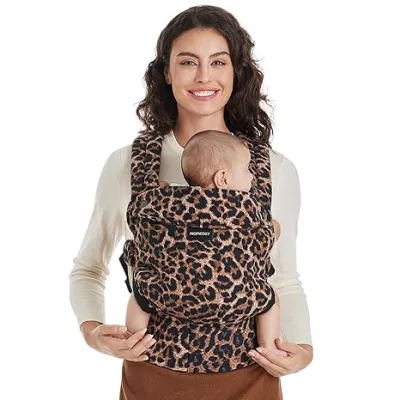
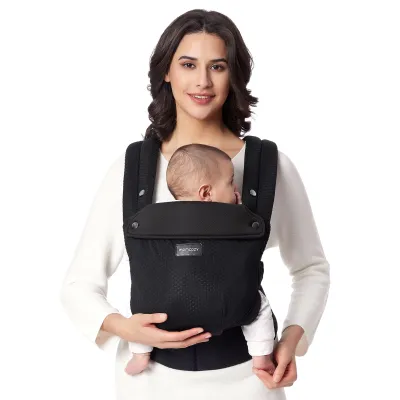

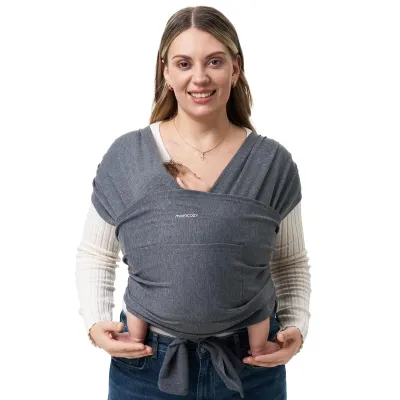
Prices are valid at publication and may change. Please refer to the product page for the latest price.
Finally, always consult the product manual to verify the specific weight limits and developmental milestones required for your exact model. Do not rely on general age guidelines alone; your baby’s current weight and physical development must align with the manufacturer’s safety specifications before their first ride.
Step-by-Step Wearing Guide for Newborns
Carrying a newborn requires precise adjustments to protect their developing spine and keep their delicate airway completely unobstructed. The golden rule of babywearing is to keep your baby close enough to kiss. To achieve this, fasten the carrier’s waistband high on your torso, typically right under your bust. When you place your newborn inside, their head should rest comfortably on your chest, allowing you to easily tilt your head forward and kiss the top of their head without straining.

Maintaining a clear airway is the most critical safety step for newborns, who lack the neck strength to lift their heads if their breathing is compromised. Ensure your baby’s face is always visible and completely clear of the carrier fabric. Their chin must never sag down onto their chest; instead, keep a space of at least two fingers’ width between their chin and chest to ensure open, unrestricted breathing.
Next, focus on the seat width. A newborn’s hips are highly flexible and vulnerable to joint strain if forced into an unnatural position. Adjust the carrier’s seat base to its narrowest setting, following your specific model’s instructions—often utilizing adjustable velcro tabs, buttons, or sliders. The seat should support your baby from knee to knee, allowing their legs to spread naturally in a gentle “M” shape, where their knees sit slightly higher than their bottom. Never force a newborn’s legs to spread wider than is comfortable or natural for their size.
Lastly, secure the neck and head support. Newborns cannot support their own heads, so the upper panel of the carrier must be adjusted to cradle the back of their neck. Use the built-in support cushion, folding or buttoning it according to the manual’s newborn guidelines. The support should be snug enough to prevent their head from wobbling or tilting backward, yet loose enough that it does not press their face forward into your chest.
Adjusting the Carrier as Your Baby Grows
As your baby grows, their physical proportions, weight, and curiosity will change, requiring you to systematically adjust the carrier’s settings. The narrow seat setting that kept your newborn comfortable will eventually become too small. When you notice that the fabric no longer extends all the way to the back of your baby’s knees, it is time to widen the seat base. Adjust the seat panel outward so that it continues to support the thighs from knee-to-knee, preventing the legs from dangling straight down.
The height of the back panel must also be adjusted as your baby’s torso lengthens. For older babies who have developed strong head and neck control, you can lower the back panel slightly to allow them to look around and move their arms more freely. However, if your baby is prone to falling asleep in the carrier, ensure the panel can still be raised or the head support secured to keep their head stable when they drift off.
Transitioning to alternative carrying positions, such as front-facing outward or back carrying, is a major milestone. You must only attempt these positions if your specific Momcozy model officially supports them and your baby meets all the manufacturer’s prerequisites. Generally, front-facing outward requires complete head and neck control and a specific weight range, while back carrying is reserved for older, heavier babies who can sit up independently. Always verify these developmental milestones in your manual before changing positions.
As your baby gains weight, proper weight distribution becomes vital to prevent caregiver fatigue. Adjust the shoulder straps and waistband to ensure the baby’s weight is carried primarily on your hips rather than pulling down on your shoulders. Tighten the shoulder straps evenly so the baby remains close to your center of gravity, preventing them from leaning outward and straining your lower back.
Essential Safety Checks and Hip-Healthy Positioning
Every time you secure your baby in the Momcozy carrier, perform a quick visual checklist to verify safety and hip health. The International Hip Dysplasia Institute emphasizes the importance of the “M” position for healthy hip development. In this position, the baby’s thighs are spread around the caregiver’s torso, with the hips bent and the knees supported higher than the buttocks. This ergonomic alignment keeps the hip joint secure and reduces the risk of hip dysplasia.
In addition to hip positioning, conduct a visual check of your baby’s face and airway. The fabric of the carrier should never cover your baby’s nose or mouth. Ensure that no loose clothing, blankets, or carrier straps block their breathing. You should be able to see your baby’s face simply by looking down, without needing to move any fabric aside.
Be vigilant for stop-use conditions. If your baby shows signs of distress, such as fussiness, crying, or unusual quietness, remove them from the carrier immediately to check their comfort and temperature. Watch for signs of restricted breathing, such as rapid chest movement, grunting, or blue-tinted lips. Finally, once your baby reaches the maximum weight limit specified on your carrier’s safety label, stop using the carrier to prevent structural failure or injury.
Troubleshooting Common Fit and Comfort Issues
Even with careful preparation, you may occasionally encounter fit or comfort issues. If you notice your baby slipping or sagging down in the carrier, the culprit is usually a loose waistband or improperly adjusted shoulder straps. To fix this, take the baby out, raise the waistband higher on your torso, and fasten it more snugly. When you replace the baby, tighten the shoulder straps evenly until the baby’s body is held securely against your chest without any sagging.
If you experience shoulder or lower back pain, the carrier’s weight distribution is likely off. Ensure the waistband is resting flat against your hips and is tightened sufficiently to bear the bulk of the weight. If your Momcozy carrier features crossable shoulder straps, crossing them in an “X” shape across your back can help distribute weight more evenly across your upper body. For “H” style straps, adjust the chest clip so it sits comfortably in the middle of your shoulder blades, preventing the straps from slipping off your shoulders.
Red marks on your baby’s legs indicate that the seat fabric is cutting into their skin. This can happen if the seat is adjusted too wide for their current size, forcing their legs to stretch too far, or if the fabric has bunched up under their thighs. To resolve this, slightly narrow the seat width and ensure the padded edges of the leg openings lie flat against your baby’s thighs, distributing pressure evenly.
Frequently Asked Questions (FAQ)
Can I use the Momcozy carrier for a premature or low-birth-weight baby?
Before using any baby carrier for a premature infant or a baby with a low birth weight, you must check the manufacturer’s minimum weight and age requirements printed on the product label or manual. Many standard carriers are designed for babies starting at a specific weight threshold. Because premature infants may have compromised airways or unique developmental needs, it is critical to consult your pediatrician or a certified infant carrying specialist before attempting to use the carrier. They can provide personalized guidance to ensure your baby’s safety.
How do I know if the carrier is too tight or too loose?
You can evaluate the tension of your carrier using simple, observable checks. To determine if the straps are adjusted correctly, perform the two-finger test: you should be able to slide two fingers flat between the shoulder straps and your body, as well as between the carrier fabric and your baby’s back. If you cannot fit your fingers, the carrier is likely too tight, which can restrict your baby’s breathing or cause discomfort. Conversely, if your baby sags, slumps, or leans away from your body when you move, the carrier is too loose. A loose fit compromises airway safety and places unnecessary strain on your back and shoulders.
Community discussion
Share your experience or ask a question. Comments are reviewed before publication.