
To correctly position a newborn in a basket-style baby carrier, you must ensure their airway remains completely unobstructed, their head and neck are fully supported, and their spine and hips rest in a natural, tension-free alignment. This process requires careful preparation, a step-by-step loading technique, and continuous observation. In warm, humid environments like the Philippines, managing airflow and temperature inside the carrier is also essential to keep your baby safe and comfortable. By understanding the mechanics of proper infant positioning, you can confidently use your carrier while protecting your baby’s physical development.
Pre-Use Safety Checks and Preparation
Before you even lift your baby, you must verify that the carrier is safe for their current size. Check the manufacturer’s documentation for the exact minimum weight, age, and developmental milestones required for your specific basket-style model. Never assume a carrier is suitable for a newborn simply because of its name or design; some models require a specific infant insert to safely accommodate smaller babies.
Inspect the physical integrity of the carrier before every use. Examine the fabric, seams, and inner lining for any signs of fraying, tearing, or loose stitching. Test all buckles, snaps, and adjustable straps to ensure they lock securely and do not slip under tension. If your basket carrier features a carrying handle, verify that the hinge mechanisms lock firmly into place.
Products mentioned in this guide
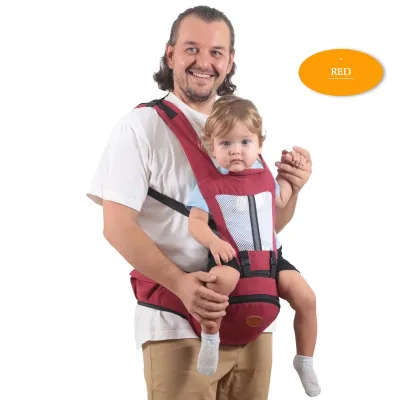


Prices are valid at publication and may change. Please refer to the product page for the latest price.
In humid tropical climates, storage conditions can affect gear. Inspect the carrier’s lining and padding for any signs of dampness, musty odors, or mold before use. Clean and dry the carrier thoroughly according to the manufacturer’s instructions if it has been stored in a humid room or closet.
Gather only manufacturer-approved accessories. If your specific model requires a newborn insert, head support pillow, or wedge, ensure you have the exact version designed for that model. Never substitute these with rolled-up household towels, standard pillows, or aftermarket cushions, as these can easily shift and compromise your baby’s airway.
Step-by-Step Guide to Placing Your Newborn
Prepare the carrier by placing it on a stable, flat, and low surface, such as a clean floor or a wide bed. Ensure all harness straps are fully loosened and moved to the sides so they do not get trapped underneath your baby. If the carrier has a canopy, fold it back completely to give yourself maximum visibility and physical access.

Lift your newborn gently, keeping one hand securely behind their head and neck and the other supporting their bottom. Your baby does not yet have the muscle strength to support their own head, so continuous manual support is vital during this transition. Lower them slowly into the carrier, keeping their body close to yours until they are fully seated.
Guide your baby’s bottom into the deepest part of the carrier seat. Their back should rest naturally against the rear support panel or insert, without slumping to one side. Ensure their legs are positioned symmetrically, with their knees slightly bent and spread in a relaxed, age-appropriate position that does not force their joints.
Thread your baby’s arms through the harness straps carefully. Bring the buckle components together and secure them until you hear a distinct click. Gently pull the adjustment straps to tighten the harness. The straps should be snug enough to prevent your baby from slumping or shifting, yet loose enough that you can easily slip two flat fingers between the strap and your baby’s collarbone.
Position the chest clip, if your carrier has one, at armpit level. Placing it too high can cause irritation or press against the throat, while placing it too low can allow the shoulder straps to slip off your baby’s shoulders. Double-check that the harness does not pinch your baby’s delicate skin, especially around the thighs and neck.
Adjust the integrated headrest or neck support panel. It should cushion the back of the head and the sides of the neck without pushing the head forward. The baby’s face must remain completely visible to you at all times, with no fabric, canopy, or toy bar blocking your view.
Verifying Head, Neck, Spine, and Hip Alignment
Once your baby is secured, perform a systematic visual and physical check of their alignment. Start with the head and neck. The baby’s chin must be tilted slightly upward, completely off their chest. A simple rule of thumb is to ensure there is at least a two-finger gap between their chin and chest to keep their airway fully open.
Observe the natural curve of your baby’s spine. A newborn’s spine naturally curves in a gentle C-shape. The carrier or infant insert should support this curve without forcing the back into a perfectly straight or hyperextended position. If the baby is slumping to the side or their chin is pressed down, loosen the harness slightly, reposition their bottom deeper into the seat, and re-snug the straps.
Examine the hip and leg positioning. For newborns, the hips should rest in a natural state of flexion and moderate abduction, often referred to as the “M-position” or “frog-leg” position, depending on the specific carrier design. Ensure the carrier does not force the legs to stretch straight down or pull the knees too far apart. Refer to your product manual to verify the approved leg positioning for your baby’s exact weight.
Monitor your baby’s breathing and comfort continuously, especially during the first few minutes of use. Watch the rise and fall of their chest and listen for clear, unobstructed breathing. In warm climates, check their temperature by feeling the back of their neck or chest; if they feel hot, sweaty, or show flushed skin, they may be overheating. Ensure the carrier is placed in a well-ventilated area and dress your baby in light, breathable clothing.
Common Positioning Mistakes and Warning Signs
One of the most common and dangerous mistakes is adding unapproved padding to the carrier. While it may be tempting to use a soft household blanket or a plush pillow to fill empty space, these items can easily compress, shift, or block your baby’s nose and mouth. Only use accessories that have been explicitly tested and approved by the carrier’s manufacturer for your specific model.
Never allow your baby’s face to be covered by blankets, sunshades, or loose clothing. If you are using a light muslin cloth to shield your baby from the tropical sun, ensure it is draped loosely over the handle or canopy frame, leaving a wide, open path for fresh air to circulate. Never drape a cloth directly over the carrier opening or your baby’s face.
Pay close attention to slumping. If your baby’s torso curves sideways or their head falls forward repeatedly, stop using the carrier immediately. This slumping can restrict their breathing even if they do not appear to be in distress. Take the baby out, check their posture, and adjust the carrier or insert according to the manual before attempting to use it again.
Discontinue use of the newborn insert or the carrier itself if your baby shows persistent signs of physical discomfort, or if they exceed the manufacturer’s specified weight or height limits. If you are unsure whether your baby is positioning correctly or if they seem to struggle with breathing or comfort, consult a pediatrician or a certified babywearing consultant for professional guidance.
Frequently Asked Questions (FAQ)
How long can a newborn stay in a basket-style carrier at one time?
The safe duration for a newborn to remain in a basket-style carrier depends heavily on the specific product design, your baby’s developmental stage, and the manufacturer’s guidelines. Generally, pediatric experts recommend limiting continuous time in structured carriers or infant seats to short intervals, often suggesting a maximum of two hours at a time. Always consult your product manual for the manufacturer’s specific time recommendations. Taking regular breaks is essential; remove your baby from the carrier periodically to let them stretch, move freely on a flat surface, and change their physical position.
Is it safe for a newborn to sleep in a basket-style baby carrier?
While babies frequently fall asleep while being carried, basket-style carriers are not recommended for unsupervised or prolonged sleep. When a baby sleeps in a semi-upright or seated position, their heavy head can easily fall forward, potentially compressing their airway and leading to positional asphyxia. If your newborn falls asleep in the carrier, you must maintain constant visual and physical supervision to ensure their chin remains off their chest and their airway stays clear. For safe, unsupervised sleep, always transfer your baby to a firm, flat, and independent sleep surface, such as a crib or bassinet, as soon as possible.
Community discussion
Share your experience or ask a question. Comments are reviewed before publication.