
To wear an iAngel baby carrier safely, you must secure the structured waist belt high and snug around your natural waist, position your baby in an ergonomic “M-shape” where their knees are higher than their bottom, and ensure their spine maintains its natural “C-shape” curve. Proper adjustment distributes your baby’s weight evenly across your hips and shoulders, preventing caregiver back strain while protecting your baby’s developing joints. While structured carriers offer excellent support, achieving the correct fit requires careful attention to harness adjustment, baby positioning, and environmental factors.
Preparing for Safe Use: Checking Weight Limits and Carrier Condition
Before placing your child in any baby carrier, you must establish a baseline of safety by verifying that the gear is appropriate for your baby’s current developmental stage. The iAngel baby carrier line includes several models, such as hip seat carriers and traditional soft-structured carriers, each designed with specific physical limitations in mind. Always consult the manufacturer’s manual or the product label to confirm the minimum and maximum weight limits. Do not assume that because your baby has reached a certain age, they are automatically ready for a specific carrier; physical milestones, such as the ability to maintain independent head and neck control, are much more critical indicators of readiness.
Conducting a thorough physical inspection of the carrier before every use is an essential habit that prevents sudden mechanical failures. Carefully examine all high-stress areas, including the plastic buckles, heavy-duty zippers, safety snaps, and reinforced stitching along the shoulder straps and waist belt. If your iAngel model features a removable hip seat, verify that the connection zippers are fully zipped and that the secondary safety fasteners or snaps are completely engaged. If you discover any frayed threads, cracked buckles, torn fabric, or malfunctioning zippers, suspend use immediately and contact the manufacturer for guidance or replacement parts.
Products mentioned in this guide
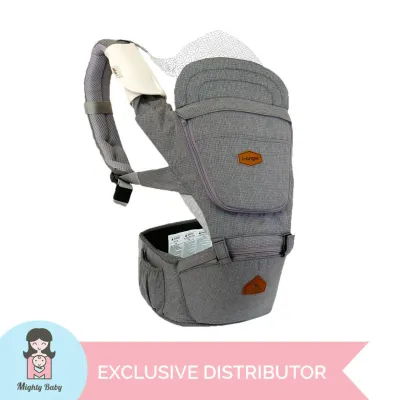
Prices are valid at publication and may change. Please refer to the product page for the latest price.
In the warm and humid climate of the Philippines, managing thermal comfort is a critical safety consideration when babywearing. Because a structured carrier acts as an extra layer of insulating fabric around your baby’s body, overheating can occur rapidly, especially during outdoor activities or walks in non-air-conditioned spaces. Dress your baby in lightweight, breathable, and single-layer cotton clothing to facilitate natural cooling. Caregivers should also opt for light clothing, as mutual body heat transfers quickly and can cause discomfort or heat stress for both parties.
Securing the Harness: Adjusting the Waist Belt and Shoulder Straps
Achieving a comfortable and safe babywearing experience relies heavily on how you secure the carrier’s harness to your own body before loading your baby. The foundation of any iAngel hip seat carrier is the wide, structured waist belt, which is engineered to distribute the baby’s weight away from your shoulders and onto your hips. To position the waist belt correctly, place it high on your natural waist, well above your hips, rather than letting it sit low on your pelvis. Positioning the belt higher ensures that the integrated hip seat remains level and does not tilt forward under the baby’s weight, which would otherwise strain your lower back.

Once the waist belt is positioned at the correct height, you must secure it tightly to prevent it from slipping down during movement. Most iAngel carriers utilize a wide hook-and-loop fastening system paired with a heavy-duty safety buckle. Wrap the belt snugly around your waist, smoothing out the velcro to ensure maximum surface contact, and then fasten the plastic safety buckle until you hear a distinct click. Pull the adjustment webbing to tighten the belt further; it should feel very firm and supportive, almost like a wide weightlifting belt, but still allow you to breathe comfortably.
With the waist belt secured, you can proceed to adjust the shoulder straps to accommodate your body frame. Depending on your specific iAngel model, the shoulder straps may be configured in a classic H-style or a cross-back style. Slip the padded straps over your shoulders and locate the adjustment webbing near your ribs or under your arms. Pull the straps downward or forward until they sit snugly against your shoulders without digging into your neck. A reliable way to verify the tension is to slide two fingers underneath the shoulder padding; if you can easily fit more than two fingers, the straps are too loose, and if you cannot slide two fingers at all, they are too tight.
The chest strap—or back strap, depending on whether you are carrying your baby on your front or back—plays a vital role in keeping the shoulder straps from sliding off your shoulders. Slide the chest strap connector up or down along its tracking rails so that it rests at mid-back level, roughly parallel to your armpits. Fasten the buckle and tighten the strap until the shoulder straps sit parallel and secure on your collarbones. Correct placement of this strap prevents the shoulder straps from shifting outward, maintaining a stable and balanced center of gravity as you walk.
Positioning Your Baby: Ensuring Proper Hip and Spine Support
Properly positioning your baby within the carrier is fundamental to supporting their physical development and protecting their fragile joints. When placing your baby into the carrier, ensure that their bottom is fully seated in the center of the fabric base or directly on the non-slip surface of the iAngel hip seat. The fabric panel or seat must support the baby’s thighs all the way from one knee crease to the other. If the seat is too narrow, the baby’s thighs will dangle straight down, placing excessive pressure on the hip joints; if the seat is too wide, it may force the baby’s lower legs outward at an unnatural angle.
To support healthy hip joint development, you must guide your baby’s legs into the widely recommended “M-shape” or froggy position. In this ergonomic posture, the baby’s knees are bent and positioned slightly higher than, or at least level with, their bottom, while their thighs spread wide around the caregiver’s torso. This positioning keeps the head of the femur securely inside the hip socket, minimizing the risk of hip dysplasia. Regularly look down during use to verify that your baby’s legs are symmetrically curved and that their lower legs hang freely below the knees.
In addition to hip alignment, you must pay close attention to the natural curvature of your baby’s spine. A young baby’s spine naturally curves outward in a gentle “C-shape,” and the carrier’s back panel should support this curve rather than force it straight. Avoid over-tightening the horizontal adjustment straps or the main panel straps, as excessive pressure can flatten the baby’s back into an unnaturally rigid posture. The fabric should hold the baby snugly against your chest to prevent slumping, but it must remain flexible enough to conform to their natural, relaxed spinal curve.
Choosing the correct facing direction is another critical decision that depends entirely on your baby’s age and physical readiness. Inward-facing positioning is the safest and most supportive option for infants, as it provides optimal head, neck, hip, and spine support. Forward-facing positioning should only be attempted once your baby has achieved complete, independent head and neck control, and meets the specific age and weight requirements outlined in your iAngel manual. If your baby falls asleep while forward-facing, or if they show signs of overstimulation, immediately return them to the inward-facing position to protect their airway and allow them to rest comfortably.
Final Safety Checks: Airway Clearance and Comfort Verification
Before you begin your daily activities, you must perform a series of quick, systematic safety checks to ensure your baby’s airway is completely clear and their body is secure. Start by inspecting your baby’s face to confirm that it is fully visible, uncovered by fabric, and free from any obstructions. Apply the standard “close enough to kiss” rule: you should be able to easily kiss the top of your baby’s head or forehead simply by tipping your chin downward. If your baby is positioned too low on your torso, loosen the shoulder straps slightly, raise the waist belt higher on your waist, and re-tighten the system.
Monitoring your baby’s breathing and head position is a continuous responsibility while babywearing. Ensure that there is always a gap of at least one finger’s width between your baby’s chin and their chest to keep their airway open. If a baby’s head slumps forward so that their chin presses tightly against their chest, it can restrict their breathing, a hazard known as positional asphyxiation. If you notice your baby’s head slumping, gently adjust their position, support their head, and tighten the carrier straps to provide better upper-body support.
In the tropical environment of the Philippines, vigilant temperature monitoring is essential to prevent heat-related complications. Because infants cannot regulate their body temperature as efficiently as adults, they are highly susceptible to overheating. Periodically slip your hand inside the carrier to feel the back of your baby’s neck or their upper back. If the skin feels hot, damp, or sweaty, or if you notice heat rash developing, find a cool or air-conditioned area, remove your baby from the carrier, and allow them to cool down while offering hydration.
Knowing when to stop using the baby carrier is just as important as knowing how to wear it correctly. You must immediately remove your baby from the carrier and seek professional medical advice if your baby displays any signs of respiratory distress, such as rapid or labored breathing, grunting, or flaring nostrils. Additionally, if your baby cries persistently and cannot be comforted, or if you experience severe back, hip, or shoulder pain while wearing the carrier, discontinue use. These symptoms indicate that either the positioning is incorrect, the carrier is not adjusted properly for your body, or your baby requires a different method of support.
Frequently Asked Questions (FAQ)
Can I use an iAngel baby carrier for a newborn?
Most structured iAngel hip seat carriers are not suitable for newborns, as they are designed for older infants who have developed sufficient head control and trunk stability. Using a hip seat carrier too early can put undue pressure on a newborn’s developing spine and hips. Always check the manufacturer’s documentation for the specific minimum weight and age requirements of your model. If you wish to use an iAngel carrier from birth, you must verify if your specific model is compatible with an approved newborn insert or if it is a specialized multi-functional model designed to accommodate infants from day one.
How long can my baby stay in the carrier at one time?
While there is no single, universally mandated time limit for babywearing, pediatric experts generally recommend taking your baby out of the carrier every 30 to 45 minutes for a short break. These regular intervals allow you to stretch your own back, check your baby’s diaper, monitor their skin for signs of chafing or overheating, and let them stretch their limbs. Continuous, prolonged periods in any carrier can lead to physical fatigue for the caregiver and may cause discomfort or heat buildup for the baby, especially in humid conditions.
Is it safe to breastfeed or bottle-feed while wearing the carrier?
It is possible to feed your baby while wearing a carrier, but it requires extreme caution, active supervision, and temporary adjustments. If you choose to nurse, you must loosen the shoulder straps slightly to lower your baby to breast level, ensuring their head is fully supported by your hand and their airway remains completely unobstructed. Never cover your baby’s face with heavy blankets or fabric panels while feeding, as this prevents you from monitoring their breathing. Immediately after feeding, you must readjust the carrier straps to return your baby to the upright, snug, and ergonomically correct carrying position high on your chest.
Community discussion
Share your experience or ask a question. Comments are reviewed before publication.