
Carrying a growing baby can quickly take a toll on your body, often resulting in persistent lower back ache and shoulder tension. A hipseat carrier is designed to alleviate this strain by redistributing your baby’s weight away from your upper body and down toward your hips. However, simply strapping on the carrier is not enough; achieving true ergonomic relief requires precise positioning of both the seat and your baby.
By securing the waistband tightly around your pelvic bones, ensuring your baby sits in a natural, supported position, and maintaining an upright posture, you can carry your child comfortably while protecting your spine. This guide outlines the essential steps to optimize your hipseat setup for daily use.
Prepare and Fit the Hipseat to Transfer Weight to Your Hips
The foundation of pain-free babywearing starts long before you place your baby on the seat. To effectively transfer your baby’s weight to your lower skeletal structure, you must position the waist belt correctly. Many parents make the mistake of fastening the belt around their soft waist or lower abdomen, which causes the lower back to arch and strain.
Products mentioned in this guide
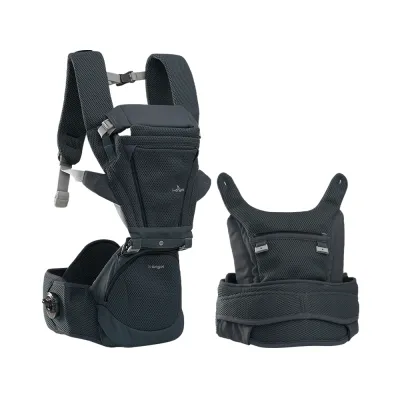
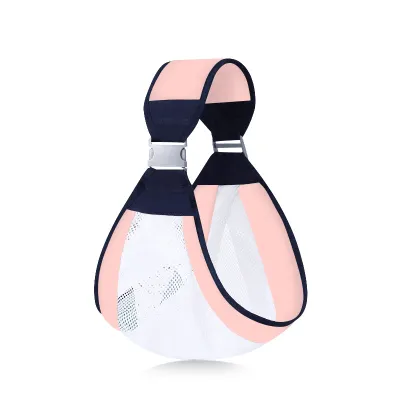


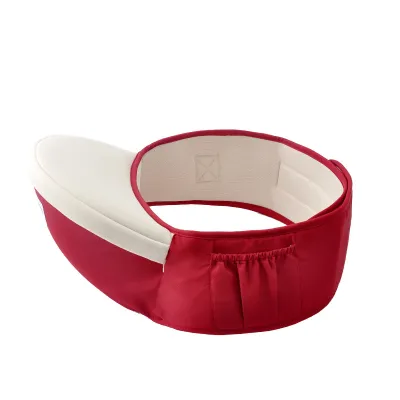
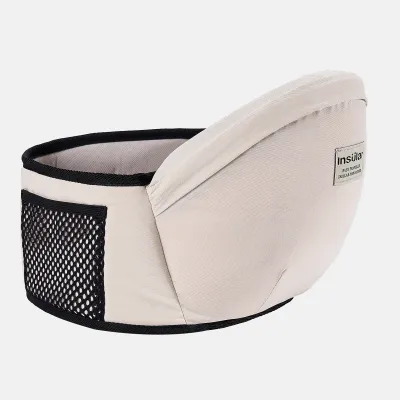
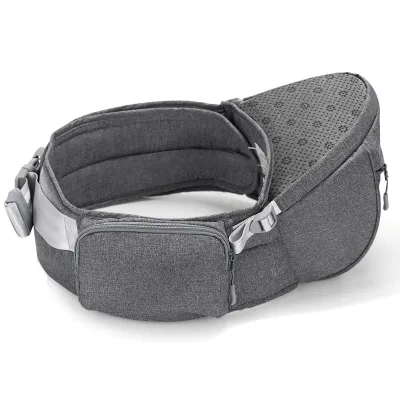
Prices are valid at publication and may change. Please refer to the product page for the latest price.
Instead, refer to your manufacturer’s manual to locate the optimal placement, which is typically high on your hips, resting securely over your pelvic bones. This solid bony structure is designed to carry heavy loads, unlike the soft tissues of your lower back and waist. Positioning the belt here ensures the weight is distributed evenly across your pelvis.
Once the belt is positioned, pull it as snugly as comfortably possible before fastening the hook-and-loop closures and safety buckles. In warm, humid climates like the Philippines, you might be tempted to keep the belt loose to allow airflow and reduce sweat. However, a loose belt is the primary cause of back strain.
When the belt is loose, the baby’s weight pulls the front of the seat downward, causing the top of the belt to dig into your abdomen and forcing your lower back to arch excessively to compensate. The belt should feel firm and supportive, remaining level all the way around your torso without tilting forward.
If your hipseat model includes supportive shoulder straps or a full carrier attachment, these must be adjusted only after the waist belt is fully secured. Put on the straps and adjust the tension so they sit flat against your shoulders without digging into your neck. The chest or back clip should rest comfortably between your shoulder blades to distribute the pull evenly.
Remember, these straps are meant to keep the baby close to your chest, not to bear the brunt of the weight. The vast majority of the load should still rest firmly on your hips. If you feel excessive pressure on your shoulders, loosen the shoulder straps slightly and retighten the waist belt.
Step-by-Step Guide to Positioning Your Baby on the Seat
Placing your baby onto the hipseat requires a deliberate, step-by-step approach to ensure their safety and maintain your physical balance. Begin by standing in a clear space with stable footing. Hold your baby securely against your chest, supporting their back and neck with one hand while using your other hand to guide their bottom onto the center of the hipseat platform.

Never let go of your baby during this transition. Keep at least one hand firmly on their torso at all times until all safety features are fully engaged. This prevents accidental slips if the baby makes a sudden, unexpected movement.
As your baby settles onto the platform, pay close attention to the positioning of their legs and hips. Their thighs should spread naturally around your torso, with their knees bent and positioned slightly higher than their bottom. This creates a healthy spread-squat posture, which supports proper hip joint development.
Check your specific product’s guidelines to verify how the seat platform supports the thighs. The seat should not force the baby’s legs to hang straight down, as this places undue pressure on their developing hip sockets. A wide, supportive base is essential for maintaining this ergonomic position.
Once the baby is centered on the seat, pull the carrier panel or safety harness up over their back. If your model uses a double-connection system—such as a zipper combined with safety buckles—ensure both are fully engaged and locked. Fasten any safety straps or tethers according to the manufacturer’s instructions.
These straps keep the baby’s center of gravity close to your body, which is crucial for preventing back strain. The further away the baby sits from your chest, the harder your back muscles must work to keep you upright. A snug fit minimizes this leverage effect.
Before you remove your supporting hands, perform a quick visual check. Ensure your baby’s face is fully visible, their chin is off their chest, and their airway is completely clear. In warm tropical weather, ensure their clothing is lightweight and breathable so they do not overheat while pressed against your body.
Once you are certain the safety harness is secure and the baby is stable, you can gradually release your hands, keeping them nearby to react to any sudden movements. Regularly check the tension of the straps during use to ensure nothing has loosened.
Adjust Your Posture and Lifting Technique to Protect Your Spine
Even with a properly fitted hipseat, your daily movement patterns dictate how much strain your spine experiences. When carrying a baby, there is a natural tendency to lean backward or thrust your hips forward to create a shelf for the seat. This posture compresses the lumbar vertebrae and strains the lower back muscles.
To counteract this, consciously engage your core muscles by pulling your belly button slightly toward your spine. Keep your shoulders relaxed, rolled back, and aligned directly over your hips, maintaining a straight, neutral spine. This alignment allows your skeletal structure, rather than your muscles, to support the weight.
Your lifting and bending techniques must also adapt while wearing the carrier. If you need to pick up an item from the floor or tend to another child, never bend forward from the waist. Bending at the waist while carrying a front load places immense, concentrated pressure on your lower back discs.
Instead, keep your back straight, widen your stance, and bend at your knees and hips to lower yourself. Use the strength of your leg muscles to push yourself back up to a standing position, keeping the baby’s weight centered over your feet. This simple adjustment dramatically reduces spinal compression.
Avoid twisting your torso while the hipseat is loaded. If you need to turn around, pivot your entire body by moving your feet rather than twisting at the waist. Twisting under load is a common cause of acute muscle strains and disc injuries.
Unilateral strain is another common issue, especially if you use a single-shoulder or side-carrying hipseat configuration. To prevent muscle imbalances, alternate the side on which you carry the baby if your product manual permits it. Regardless of how comfortable you feel, schedule regular breaks to take the carrier off, stretch your hips and back, and let your muscles recover from the continuous load.
Verify Comfort and Know When to Stop or Adjust
Continuous monitoring is essential for a safe and comfortable carrying experience. Periodically observe your baby’s posture while they are in the seat. If you notice them slouching, leaning heavily to one side, or if their chin begins to rest on their chest, immediately adjust their position.
Slouching can compromise their airway and put unnecessary pressure on their spine. If the baby seems restless, fussy, or shows signs of physical discomfort, it may be time to take them out of the carrier for a stretch. Never ignore signs of distress or discomfort from your baby.
You must also listen to your own body’s signals. Mild muscle fatigue is normal when adapting to a new carrying method, but sharp pain, persistent lower back aches, shoulder tension, or bruising on your hip bones indicate that something is wrong.
Often, these issues stem from a loose waist belt or improper weight distribution. If adjusting the tightness and position of the belt does not resolve the discomfort, stop using the carrier immediately and evaluate the fit. Continuing to wear a poorly fitted carrier can lead to chronic muscle strain.
There are clear conditions under which you should stop using the hipseat altogether. Always check the product label for the manufacturer’s specific weight and age limits, and do not exceed them. These limits are established to ensure the structural integrity of the carrier and the safety of your child.
Additionally, pay attention to your baby’s developmental milestones. If your baby grows too tall or active, their shifting center of gravity may make the hipseat unstable, or they may outgrow the physical support the seat platform provides. When carrying no longer feels secure or comfortable for either of you, transition to an alternative carrying method or a stroller.
Frequently Asked Questions (FAQ)
Can I use a hipseat if I already have lower back pain?
If you have pre-existing lower back pain, spinal issues, or are recovering from childbirth, it is essential to consult a doctor or a physical therapist before using a hipseat carrier. While a hipseat is designed to shift weight from your shoulders to your pelvis, it does not eliminate the physical load on your body.
Carrying a baby still requires significant core stability and spinal strength. A healthcare professional can evaluate whether your body is ready for this type of physical load and suggest specific exercises to strengthen your core and back muscles. Always prioritize professional medical advice over general product recommendations.
At what age or weight should I stop using the hipseat?
You should always refer to the specific manufacturer’s guidelines printed on your product’s label or instruction manual, as weight and age limits vary significantly between brands. Generally, hipseats are designed for babies who have achieved full head and neck control and can sit unassisted.
Stop using the carrier immediately if your baby exceeds the maximum weight limit specified by the manufacturer. Additionally, monitor your baby’s physical development; if they become highly active or too tall to be safely supported by the carrier’s panel, it is time to transition to another carrying method to prevent balance issues and back strain.
Community discussion
Share your experience or ask a question. Comments are reviewed before publication.