
Starting your baby’s culinary journey is an exciting milestone for any household. As your little one approaches the middle of their first year, transitioning from an exclusive milk diet to solid foods introduces them to a world of new flavors, colors, and textures. Preparing your own baby food purees at home using a standard kitchen blender is highly cost-effective and gives you complete control over the quality and safety of the ingredients. By preparing these meals yourself, you can ensure that no hidden preservatives, excess sodium, or artificial sugars make their way into your child’s delicate digestive system.
Using a household blender allows you to customize the consistency of each meal, adjusting the texture as your baby grows more confident in their swallowing abilities. It also allows you to introduce local, nutrient-dense ingredients that are readily available in your neighborhood market. With a few basic food safety rules, the right preparation steps, and a reliable blending technique, you can easily whip up batches of safe, smooth, and delicious starter purees that set a healthy foundation for your baby’s lifelong relationship with food.
Recognizing Readiness and Core Safety Rules
Before you plug in your blender, you must verify that your baby is developmentally ready to handle solid foods. While many parents look forward to the six-month mark, age is not the sole indicator of readiness. You should observe your baby for specific physical milestones that signal their digestive tract and motor skills are mature enough for solids.
Products mentioned in this guide
Prices are valid at publication and may change. Please refer to the product page for the latest price.
First, your baby must be able to sit up with minimal support, maintaining a steady, upright posture in a high chair. Good head and neck control are absolutely critical, as a floppy head significantly increases the risk of choking. Additionally, watch for the disappearance of the tongue-thrust reflex, which is the natural infant instinct to push solid objects out of the mouth with the tongue. If your baby automatically pushes purees back out of their mouth with their tongue, they are not yet ready to swallow solids. Another positive sign is a keen interest in food, such as reaching for your plate or watching you intensely while you eat.
It is vital to remember that breast milk or infant formula remains the primary source of nutrition during this initial transition. Solid foods at this stage are purely complementary, intended to introduce new textures, practice oral motor skills, and supplement iron intake. Do not expect your baby to consume large volumes of purees immediately; a few teaspoons per session are more than enough to start.
When preparing these very first meals, strict safety boundaries must be maintained. Never add salt, sugar, honey, soy sauce, or artificial seasonings to your baby’s purees. An infant’s kidneys are not fully developed and cannot process added sodium, while added sugars can foster an early preference for overly sweet foods. Honey is particularly dangerous for infants under twelve months of age due to the risk of infant botulism, a rare but serious form of food poisoning.
Always maintain direct, uninterrupted supervision while your baby is eating. Choking can be silent, and you must be close enough to intervene immediately if your baby experiences difficulty. Finally, always consult your pediatrician before introducing solid foods, especially if your baby was born prematurely, has developmental delays, or has a family history of severe food allergies or eczema.
Essential Equipment and Safe Starter Ingredients
You do not need to purchase expensive, single-purpose baby food makers to prepare high-quality purees at home. A standard kitchen blender or a food processor is entirely sufficient to achieve the ultra-smooth consistency required for beginners. If you are using a blender that is also used for adult meals, cleanliness is paramount. Thoroughly wash and sanitize the blender jar, collar, gasket, and blades before preparing infant food to eliminate any residues of spicy, acidic, or highly seasoned adult meals.

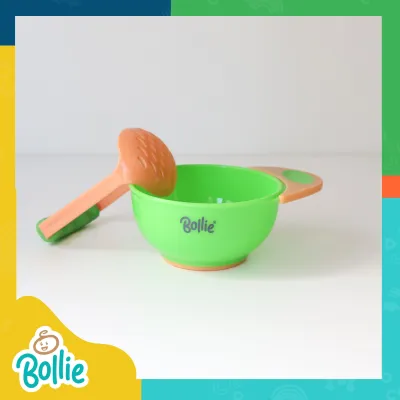
When setting up your baby’s feeding station, having the right accessories on hand makes the experience much smoother. Using reliable, baby-friendly gear—such as a soft silicone spoon and a suction bowl from the popular bollie baby range—helps protect sensitive gums and keeps the meal securely on the high chair tray.
Choosing the right starter ingredients is key to a successful transition. For your baby’s first purees, select single-ingredient foods that are easily digestible, low-allergen, and naturally soft once cooked. Excellent local options include:
- Kalabasa (Squash): Naturally sweet, rich in beta-carotene, and blends into a exceptionally smooth, velvety cream.
- Kamote (Sweet Potato): Packed with fiber and vitamins, it becomes incredibly soft when baked or steamed.
- Sayote (Chayote): A mild, watery vegetable that is highly digestible and perfect for a very light, low-density puree.
- Ripe Avocado: Requires no cooking at all; simply mash or blend with a little breast milk or formula for a nutrient-dense, healthy fat-filled meal.
- Ripe Bananas or Papaya: Excellent fruit starters that can be blended raw, though they should be served immediately to prevent browning.
Avoid starting with highly allergenic foods (like shellfish or egg whites) as your very first single-ingredient trials unless explicitly guided by your pediatrician. Similarly, steer clear of highly fibrous or stringy vegetables, such as celery or certain local leafy greens, until your baby has mastered swallowing, as these can easily form dangerous lumps if your blender cannot pulverize them completely.
Gathering a few supplementary tools before you begin will streamline your preparation workflow:
- Steamer basket: Fits inside your regular cooking pots to cook vegetables gently while retaining maximum nutrients.
- Fine-mesh sieve: Essential for pressing your finished puree through to catch any stubborn fibers, seeds, or unblended skin.
- Airtight storage containers: Small, BPA-free plastic jars or food-grade silicone trays with tight-fitting lids for freezing or refrigerating portions.
Step-by-Step Guide to Preparing and Blending Purees
Creating a batch of safe, smooth baby food requires a systematic approach from the moment you handle the raw ingredients to the final consistency check.
Preparing and Cooking the Ingredients
Begin by establishing a clean workspace. Wash your hands thoroughly with warm water and soap for at least 20 seconds. Clean and sanitize your cutting boards, knives, countertops, and any utensils you plan to use. This step is critical, as infants have developing immune systems that are highly susceptible to foodborne bacteria.
Next, thoroughly rinse all fresh produce under clean, running water. Even if you plan to peel the vegetable, washing the skin first prevents dirt and bacteria from transferring from the knife blade to the flesh inside. Once washed, peel the ingredients deeply to remove all outer skins, which are tough to digest and can cause choking. Carefully excise any seeds, cores, pits, or woody stems. Cut the vegetables or fruits into uniform, small cubes (about one inch thick) to ensure they cook evenly.
To cook the ingredients, steaming is the preferred method because it preserves the water-soluble vitamins and minerals that can otherwise leach out into boiling water. Place your vegetable cubes in a steamer basket over boiling water, cover tightly, and steam until they are completely fork-tender. If you do not have a steamer, you can boil the ingredients in a small amount of water, or bake them in the oven.
Test the tenderness by pressing a cube against the side of the pot with a fork; it should mash effortlessly with zero resistance. Undercooked vegetables will not blend into a completely smooth, liquid-like consistency, leaving dangerous micro-lumps that can cause your baby to gag. If you steam or boil the food, always reserve the cooking water in a clean bowl. This liquid is packed with nutrients and is the ideal medium for thinning out your puree.
Blending, Thinning, and Testing Consistency
Allow the cooked ingredients to cool slightly for a few minutes before transferring them to your blender jar. Placing boiling-hot food into a sealed blender can cause steam pressure to build up, potentially blowing the lid off and causing serious burns. Fill the blender jar no more than halfway to ensure the blades can circulate the food efficiently.
Secure the lid firmly. Start the blender on its lowest speed or pulse setting to break down the large chunks of cooked food. Once the mixture begins to move fluidly, gradually increase the speed to high. Blend continuously for one to two minutes. If the mixture gets stuck or climbs up the sides of the jar, turn off and unplug the blender, then use a clean silicone spatula to scrape down the sides before resuming.
At this stage, the puree will likely be too thick and dry for a beginner. To adjust the consistency, add small splashes of your reserved cooking water, breast milk, or prepared infant formula through the lid opening while blending on low. Add the liquid in tiny increments—about one tablespoon at a time—until the mixture reaches a smooth, runny, and easily pourable texture. For a baby’s very first tastes, the puree should slide off a spoon easily and resemble the consistency of thin yogurt or heavy cream.
Before serving, you must perform two essential quality checks:
- The Texture Check: Wash your hands thoroughly, scoop up a small dab of the cooled puree, and rub it between your thumb and index finger. Feel closely for any graininess, tiny seeds, fibers, or hard lumps. If you detect any uneven texture, blend the mixture again on high, or press the entire batch through a clean, fine-mesh sieve into a bowl.
- The Temperature Check: Stir the puree thoroughly to distribute any residual heat. Drop a small amount onto the inside of your wrist. It should feel comfortably lukewarm or cool. Never feed your baby puree directly from the blender without checking the temperature first.
Safe Storage and Reheating in a Humid Climate
Managing food safety requires extra vigilance in tropical, high-humidity environments like the Philippines. The combination of high ambient temperatures and moisture creates the perfect environment for rapid bacterial growth. Leaving freshly prepared purees sitting on the kitchen counter for even an hour can allow harmful pathogens to multiply to unsafe levels.
As soon as your puree is blended and tested, portion it immediately. If you plan to serve a portion right away, transfer it to a clean baby bowl. The remaining puree must be cooled quickly and placed in the refrigerator or freezer. To speed up the cooling process of a large batch, you can place your storage containers in an ice bath for a few minutes before sealing them and putting them in the fridge.
When storing purees, adhere to these strict food safety timelines:
- Refrigeration: Store purees in clean, airtight containers in the coldest part of your refrigerator (typically the back of the middle shelf, not the door) for no more than 48 hours. Vegetable and fruit purees are best consumed within 24 to 48 hours; if they contain cooked meats or fish, limit refrigeration to 24 hours.
- Freezing: Pour excess puree into sanitized silicone ice cube trays. Once the cubes are frozen solid, pop them out and store them in a heavy-duty, airtight freezer bag. Clearly label the bag with the ingredient name and the preparation date. Frozen purees are safe for up to two months.
To thaw frozen puree cubes safely, transfer the required number of cubes to a clean container and let them thaw overnight in the refrigerator. Never leave frozen purees on the kitchen counter or in a bowl of warm water to thaw at room temperature, as the outer edges of the food will reach the bacterial “danger zone” long before the frozen center melts.
When reheating the thawed puree, heat only the portion your baby will consume during that specific meal. Warm the puree in a small saucepan over low heat or in a heat-safe glass bowl over a pot of simmering water until it is steaming hot. Steaming-hot reheating ensures that any bacteria introduced during storage are destroyed.
Stir the puree vigorously with a clean spoon to eliminate any dangerous hot spots, which are pockets of intense heat that can burn your baby’s mouth. Allow the food to cool down to a safe, lukewarm feeding temperature before serving.
Any puree left in your baby’s serving bowl at the end of a meal must be discarded immediately. During feeding, saliva from your baby’s mouth travels up the spoon and into the bowl, introducing enzymes and bacteria that quickly break down the food and cause spoilage. Never re-refrigerate or reheat half-eaten leftovers for another meal.
Common Blending Mistakes and When to Pause
Even experienced home cooks can make simple errors when transitioning to baby food preparation. One of the most common mistakes is rushing the cooking process. If vegetables like sweet potatoes or squash are slightly firm in the center when they go into the blender, the blades will chop them into microscopic granules rather than a true puree. This results in a gritty texture that can trigger your baby’s gag reflex and cause them to reject the food.
Another frequent pitfall is using unsafe liquids to thin the mixture. Never use cow’s milk, sweetened fruit juices, or unboiled tap water to adjust the consistency of a beginner’s puree. Stick strictly to breast milk, prepared infant formula, or cooled, boiled water to protect your baby’s digestive tract.
Failing to thoroughly clean your blending equipment can also lead to contamination. Blender blade assemblies often have rubber gaskets and deep crevices that trap food residue. Over time, in a humid climate, these hidden areas can harbor mold and bacteria. Always disassemble your blender completely after every use, washing the jar, blades, and rubber rings in hot, soapy water, and allow them to air-dry completely in a well-ventilated space.
While achieving an ultra-smooth, runny texture is vital for the first few weeks of solids, do not keep your baby on thin purees for too long. Once your baby has mastered swallowing and no longer pushes food out with their tongue, gradually decrease the amount of liquid you add to the blender. Transitioning to thicker purees, mashed foods, and eventually soft finger foods is essential for your baby’s oral motor development, helping them build the jaw strength and tongue coordination needed for speech.
During feeding, pay close attention to your baby’s cues and know when to pause or stop entirely. Watch for these critical indicators:
- Allergic Reactions: Stop feeding immediately and seek urgent medical attention if you observe signs of an allergic reaction. These include hives, redness or swelling around the mouth, vomiting, diarrhea, coughing, wheezing, or difficulty breathing.
- Persistent Gagging: It is normal for babies to gag occasionally as they learn to manage solids; gagging is a protective reflex that moves food forward. However, if your baby gags persistently, struggles to swallow, or shows signs of distress, pause the feed. The puree may be too thick, or your baby may not be developmentally ready yet.
- Food Refusal: If your baby turns their head away, closes their mouth tightly, pushes the spoon away, or cries, do not force them to eat. Forcing food can create negative associations with mealtime. Respect their fullness or lack of interest, clean them up, and try again a day or two later.
Frequently Asked Questions (FAQ)
Can I use tap water to thin my baby's puree?
No, you should avoid using raw tap water to thin your baby’s purees. An infant’s immune system is still developing, and raw tap water can contain microscopic impurities, bacteria, or heavy metals that are unsafe for them. Instead, use previously boiled and cooled water, filtered water, or the nutrient-rich water reserved from steaming the vegetables. You can also use breast milk or prepared infant formula to add familiar flavor and extra nutrition.
Do I need to buy a specialized baby food blender?
You do not need to buy a specialized baby food blender; a standard household kitchen blender or food processor works perfectly well. However, because family blenders are often used to grind spicy, garlicky, or highly seasoned adult foods, meticulous cleaning is required. If you want to avoid any risk of flavor transfer or cross-contamination, you can dedicate a specific, smaller blender jar or use a compact, easily sanitized personal blender exclusively for your baby’s meals.
How do I know if the puree is too thick for a beginner?
You can easily assess the thickness of your baby’s puree using the spoon drip test. Scoop up a small amount of the cooled puree with a baby spoon and tilt it sideways. For a beginner, the puree should run or drip off the spoon easily, similar to warm gravy or heavy cream. If the puree holds its shape on the spoon, slides off in a single heavy clump, or clings stubbornly to the bowl, it is too thick. Simply stir in a tablespoon of breast milk, formula, or warm water to thin it out.
Community discussion
Share your experience or ask a question. Comments are reviewed before publication.