
To correctly dose and give Restime to your baby or toddler, calculate the exact dosage based on your child’s current weight rather than their age, carefully read the concentration details printed on your specific bottle, and administer the liquid slowly using a clean oral syringe or dropper directed toward the inside of the cheek.
Restime is a widely trusted brand in the Philippines, commonly used by parents to relieve the distressing symptoms of excess gas, infant colic, and abdominal bloating. When a baby experiences trapped gas, it can lead to intense crying spells, fussiness, and sleepless nights for the entire household.
However, administering any medication to an infant or toddler requires a high level of precision and caution. Because young bodies are still developing, their organs process medications differently than adults do, making them highly sensitive to even minor dosing errors. By mastering the correct calculation and delivery techniques, you can ensure your child receives the full therapeutic benefit of the medication without any unnecessary health risks.
Products mentioned in this guide
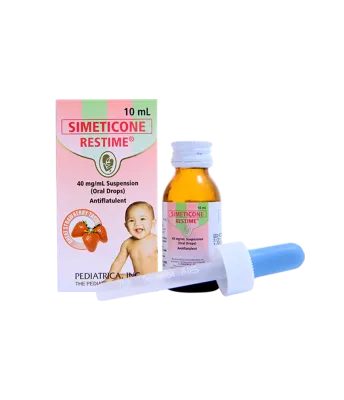
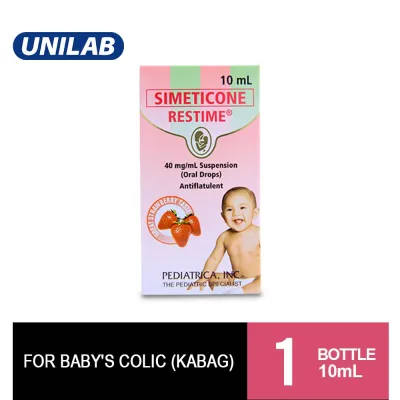

Prices are valid at publication and may change. Please refer to the product page for the latest price.
Understanding Restime and What to Prepare
The primary purpose of Restime is to alleviate discomfort caused by excess gas in the digestive tract. The active ingredient, simethicone, works by changing the surface tension of gas bubbles in the stomach and intestines, causing them to coalesce into larger bubbles that your baby can pass more easily through burping or flatulence. Always read and verify the specific product label on the bottle you have at home to confirm its intended use, active ingredients, and safety warnings.
It is crucial to recognize that pediatric medications, including Restime, are manufactured in different formulations and concentrations. For instance, infant drops are typically highly concentrated so that a small volume of liquid delivers the necessary dose, whereas formulations designed for older children may have a lower concentration requiring a larger volume. Never assume that two bottles of the same brand have the same strength; always check the packaging to verify the exact milligrams of active ingredient per milliliter of liquid (mg/mL) before proceeding.
Proper preparation is key to a smooth and safe dosing process. Before you attempt to give the medicine to your child, gather all the necessary items in a clean, well-lit area. You will need the correct, unexpired bottle of Restime, a dedicated pediatric dosing tool such as an oral syringe or the dropper that came with the packaging, and a reliable record of your child’s most recent weight.
Your child’s weight is the single most important piece of information required for safe dosing. Because infants and toddlers grow at rapid rates, a weight measurement from a doctor’s visit two months ago may no longer be accurate. If you do not have a recent weight, use a reliable home baby scale or weigh yourself holding the baby on a standard scale and subtract your own weight to get an up-to-date estimate.
Hygiene must be your top priority before handling any medication or feeding tool. Wash your hands thoroughly with soap and warm water for at least twenty seconds, paying close attention to the areas between your fingers and under your nails. Ensure that the dosing syringe or dropper is completely clean, free of any residue from previous uses, and has been washed in warm, soapy water and thoroughly rinsed.
How to Calculate the Correct Restime Dosage
Pediatricians and pediatric safety organizations universally recommend weight-based dosing over age-based dosing for babies and toddlers. Children of the exact same age can vary significantly in their physical development, body mass, and overall weight. Dosing based solely on age brackets can easily lead to under-dosing, which fails to relieve your child’s pain, or over-dosing, which can put unnecessary strain on their developing system.

To calculate the correct dose, start by locating the active ingredient concentration on the medicine label. This is usually expressed as a ratio, such as 40 milligrams per milliliter (40 mg/mL) or a similar specification. Once you have identified the concentration, locate the manufacturer’s dosing chart, which is typically printed on the outer cardboard box or the package insert. Find the weight bracket that matches your child’s current weight, and read across to find the corresponding volume in milliliters (mL) or drops.
Under no circumstances should you attempt to guess, estimate, or “eyeball” the dose. It can be tempting to fill a household kitchen spoon or a generic cup when you are in a hurry or dealing with a crying baby, but these household utensils are highly inaccurate and vary widely in capacity. A standard teaspoon can hold anywhere from 3 to 9 milliliters of liquid, making it impossible to measure a precise dose of 0.5 mL or 1 mL safely.
In addition to calculating the individual dose volume, you must pay close attention to the dosing intervals and maximum daily limits specified on the packaging. The manufacturer’s instructions will state the minimum number of hours that must pass before you can safely administer another dose, as well as the maximum number of doses allowed within a 24-hour period. Keeping track of these boundaries is essential to prevent the medication from accumulating to unsafe levels in your child’s body.
Knowing when to stop and seek professional advice is a critical component of safe medication administration. If the dosing chart on the packaging is torn, faded, or difficult to read, do not guess the dose. Furthermore, if your child’s weight falls directly between two weight brackets, or if your baby is under the minimum age or weight limit specified for over-the-counter use on the label, stop immediately. Do not administer any dose of Restime until you have spoken directly with your pediatrician to obtain a precise, medically approved dosage.
Step-by-Step Guide to Administering Restime Safely
Choosing the Right Dosing Tool
Utilizing the correct dosing tool is just as important as calculating the correct volume of medicine. Oral syringes are widely considered the gold standard for administering liquid medications to infants and toddlers because they offer unmatched accuracy and control. Unlike dosing cups, which can leave a significant amount of medicine coated on the plastic walls, an oral syringe ensures that the entire measured dose is delivered directly into the child’s mouth.
When selecting an oral syringe, ensure that its maximum capacity is appropriate for the dose you need to give. For example, if your baby’s calculated dose is 0.5 mL, using a small 1 mL or 3 mL syringe will allow you to see the measurement lines clearly and draw up the liquid with high precision. Using a large 10 mL syringe for a tiny infant dose makes it incredibly easy to overshoot or undershoot the target line by a dangerous margin.
Always inspect the dosing tool before use to ensure the printed measurement markings are bold, clear, and fully legible. If the numbers have started to rub off due to repeated washing, discard the tool and replace it with a new one. After every single administration, disassemble the syringe by pulling the plunger completely out of the barrel, wash both parts thoroughly with warm, soapy water, rinse them with clean water, and allow them to air-dry completely on a clean paper towel.
Positioning and Giving the Medicine
The physical positioning of your baby during medicine administration is a vital safety factor that directly affects their ability to swallow safely. Always hold your baby or toddler in an upright or semi-upright position, cradling their head and back securely in your arm. Never attempt to give liquid medication while your child is lying flat on their back or in a reclined position, as this significantly increases the risk of the liquid entering their windpipe, which can cause choking, gagging, or aspiration pneumonia.
To administer the medicine comfortably, gently place the tip of the oral syringe or dropper into your baby’s mouth, aiming it toward the inside pocket of their cheek. Avoid pointing the syringe directly toward the back of their throat or the roof of their mouth, as this is highly likely to trigger their gag reflex, causing them to cough, choke, or spit the medicine back out. The cheek pocket is a natural reservoir that allows the liquid to mix with saliva and flow naturally down the esophagus.
Dispense the liquid slowly and patiently, releasing only a few drops or a small fraction of a milliliter at a time. Pause after each small squirt to allow your baby to swallow naturally before you dispense more. If your toddler is fussy or resisting, rushing the process will only increase their anxiety and the risk of choking; taking a slow, calm approach helps keep the experience stress-free for both of you.
It is common for babies to spit out or vomit a portion of their medication, especially if they dislike the taste or are feeling highly distressed. If this happens, do not immediately administer another full dose to make up for what was lost, as it is impossible to know exactly how much medicine was actually absorbed. Administering a second dose blindly can easily lead to an accidental overdose; instead, check the product packaging for specific instructions on re-dosing, or contact your pediatrician or a healthcare professional for guidance.
Safety Rules, Storage, and When to Seek Medical Help
Storing medications properly is essential for maintaining their efficacy and safety, particularly in the tropical and highly humid climate of the Philippines. Restime should always be stored in a cool, dry place where the temperature remains stable, away from direct sunlight and moisture. While it might seem convenient to store medicine in the bathroom cabinet, the high humidity and temperature fluctuations from hot showers can rapidly degrade the active ingredients, rendering the medication ineffective or unsafe.
Always keep the medicine bottle completely out of the sight and reach of children. Toddlers are naturally curious and may be attracted to the colorful packaging or the sweet flavor of pediatric drops, leading to accidental ingestion. Store the bottle on a high shelf, in a locked cabinet, or inside a dedicated childproof medicine box immediately after each use, ensuring the child-resistant cap is tightly screwed back on.
To prevent dangerous medication errors, establish a reliable system for tracking each dose you administer. Keep a dedicated paper logbook or use a digital notes app on your smartphone to record the exact date, time, and volume of every dose given. This practice is especially critical when multiple caregivers, such as parents, grandparents, or nannies, are sharing the responsibility of looking after the child, as it eliminates the risk of accidental double-dosing.
Knowing when to stop administering Restime and seek professional medical intervention is a fundamental safety rule. If your child’s gas pain, bloating, or colic symptoms do not improve after the number of days recommended on the product label, or if their condition appears to worsen, stop the medication and consult your pediatrician. Additionally, seek immediate emergency medical care if your child exhibits any signs of an allergic reaction, such as a sudden skin rash, hives, swelling of the face, lips, or tongue, or any difficulty breathing.
Watch for other systemic red flags that indicate a more serious underlying health issue. If your baby becomes unusually lethargic, difficult to wake up, refuses to drink breastmilk, formula, or other fluids, or shows signs of severe dehydration like dry diapers or a lack of tears when crying, seek medical help immediately. Furthermore, if you realize that a dose was accidentally given to a child who is under the minimum age or weight limit specified on the packaging without prior medical clearance, contact a doctor right away.
Frequently Asked Questions (FAQ)
Can I mix Restime with milk or juice to make it taste better?
Mixing Restime with a full bottle of breastmilk, infant formula, or fruit juice is generally not recommended by pediatric experts. If your baby or toddler becomes full, loses interest, or refuses to finish the entire beverage, they will only receive a fraction of the required dose, making the treatment ineffective. This makes it incredibly difficult to track exactly how much active ingredient your child has actually ingested.
Furthermore, mixing medications with certain liquids can sometimes alter the chemical stability or absorption of the active ingredient, or cause the liquid to curdle. Always check the specific Restime product label or package insert for any mixing instructions, or consult a licensed pharmacist or your pediatrician to ask about safe, concentrated ways to administer the medicine if your child strongly dislikes the flavor.
What should I do if I accidentally give my child too much Restime?
If you suspect or confirm that your child has received an overdose of Restime, do not wait for physical symptoms or adverse reactions to manifest before taking action. Contact your pediatrician, a local poison control center, or emergency medical services immediately to seek professional guidance. Acting quickly is the safest approach to managing any potential medication error.
When you call or head to the medical facility, make sure to bring the exact bottle of Restime with you so you can provide the healthcare team with the precise concentration, the active ingredients, the approximate volume that was ingested, and your child’s current weight. Having this information readily available allows medical professionals to assess the situation accurately and provide the most effective treatment plan.
Community discussion
Share your experience or ask a question. Comments are reviewed before publication.