
Quick Answer: Core Principles for Matching Nursery Furniture
Creating a cohesive nursery does not require buying a matching showroom set. You can easily coordinate a wood crib, changing table, and dresser by focusing on three core design principles. First, match the underlying wood undertones rather than trying to find identical stains, which allows for a natural visual flow. Second, balance the visual weight of the room by keeping the furniture proportions, heights, and leg styles complementary. Finally, unify distinct pieces using consistent hardware, textiles, and accent colors to tie the entire space together seamlessly.
Define Your Nursery Style and Wood Finish Baseline
Before purchasing any furniture, it is essential to establish a foundational design direction and identify your preferred wood tones. Wood finishes generally fall into three categories: warm, cool, or neutral. Warm undertones feature hints of yellow, orange, or red, such as cherry, warm oak, or honey pine. Cool undertones have gray, ash, or driftwood casts, while neutral undertones present more muted, versatile shades like natural maple or mid-tone walnut. Mixing warm and cool undertones in the same room can create visual discord, so selecting one temperature baseline is key to a harmonious look.

In tropical climates like the Philippines, high humidity can affect how wood finishes age, wear, and expand over time. When selecting your baseline wood finish, prioritize high-quality, moisture-resistant sealants that protect the wood from warping or mold. Once you have chosen your primary wood tone, decide whether you prefer an exact matching furniture suite or a curated, intentionally mixed aesthetic. A curated mix is often highly practical, allowing you to repurpose individual pieces, like a classic dresser, as your child grows.
Products mentioned in this guide

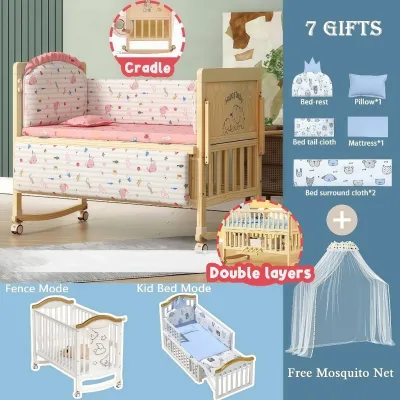

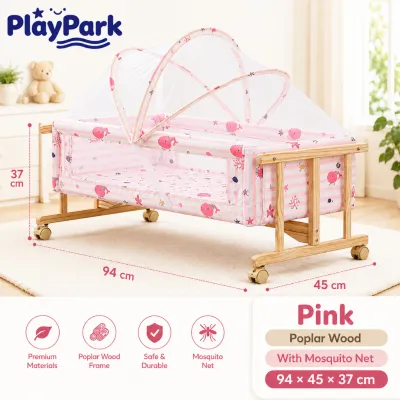
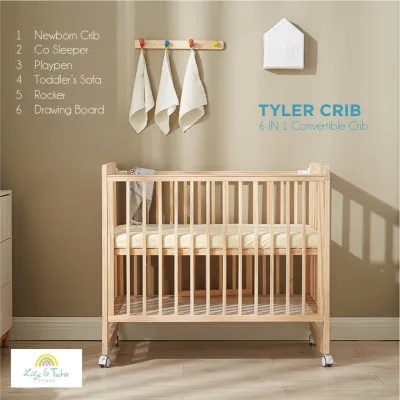
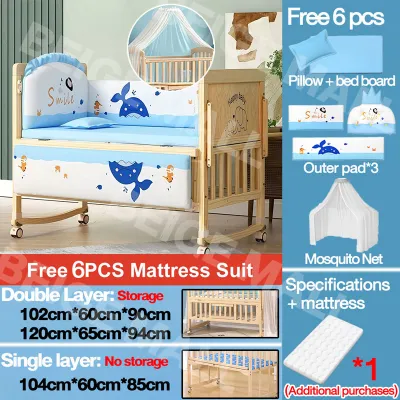
Prices are valid at publication and may change. Please refer to the product page for the latest price.
To keep a mixed-wood nursery looking intentional, apply the 80/20 rule. This design guideline suggests that roughly 80 percent of the wood surfaces in the room should feature your dominant wood finish, while the remaining 20 percent acts as an accent. For instance, if your wood crib and dresser share a light natural oak finish, you might choose a changing table in a painted white or a contrasting dark walnut to serve as the accent piece.
Select the Wood Crib as Your Design Anchor
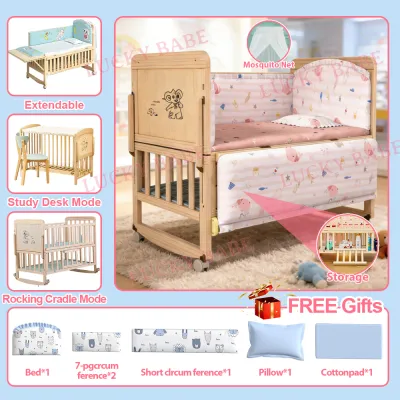
The wood crib is the undisputed focal point of the nursery, setting the design tone and serving as the primary safety item in the room. Because of its visual prominence, you should select the crib first and use its silhouette to guide your other furniture choices. A modern spindle crib offers an airy, light feel that works beautifully in smaller spaces, allowing light and air to circulate freely—a major advantage in warm, humid environments. A classic sleigh crib brings traditional elegance and heavier visual weight, while a minimalist panel crib offers clean, contemporary lines that adapt well to various decor styles.
Beyond aesthetics, prioritize long-term usability and safety when selecting your wood crib. Look for convertible models that transition from a crib to a toddler bed or daybed, ensuring the piece grows with your child. Check the manufacturer’s product documentation for specific weight limits, age recommendations, and mattress height adjustment guidelines. Always verify that the crib complies with current safety standards and carries non-toxic, lead-free finish certifications to ensure a safe sleeping environment.
When setting up the crib, always follow the manufacturer’s assembly instructions precisely and use only the hardware provided. To maintain a safe sleep environment, stop using the crib or adjust the mattress to its lowest setting as soon as your child shows signs of pulling up, sitting up, or standing. Regularly inspect the wood for any splinters, cracks, or loose joints, especially in humid regions where wood can naturally expand and contract.
Coordinate the Changing Table and Dresser Proportions
Once you have selected your wood crib, you can coordinate the secondary storage and care furniture without overwhelming the nursery. The key to pairing these pieces is balancing their visual weight. Visual weight is determined by a piece of furniture’s bulk, height, and leg style. If your wood crib features delicate, tapered mid-century legs, a heavy, solid-to-the-floor dresser might look unbalanced next to it. Try to choose a changing table and dresser that share similar leg profiles or overall silhouettes to create a subtle, cohesive link.
If you are mixing different wood finishes or brands, hardware is an excellent tool for unifying the set. Swapping out the generic knobs or drawer pulls on your dresser and changing table for matching hardware—such as matte black, brushed brass, or polished chrome—instantly bridges the gap between different wood tones. This simple modification makes mismatched furniture look like a custom, curated collection.
When selecting a changing table or a dresser with a removable changing topper, ensure the height is comfortable for caregivers to prevent back strain during frequent diaper changes. Always verify the manufacturer’s weight limits for the changing surface and ensure the safety straps are securely attached. Keep diapering essentials within arm’s reach so you never have to leave your baby unattended on the changing table.
Unify the Furniture Set with Textiles and Hardware
Non-furniture elements play a vital role in softening the hard surfaces of wooden furniture and bridging any gaps between different wood tones. Soft textiles help create a warm, inviting environment while introducing repeating colors that tie the room together. In tropical climates, opt for lightweight, breathable fabrics like organic cotton, bamboo, or muslin for crib sheets, changing pad covers, and window treatments to keep the nursery comfortable and well-ventilated.
Use area rugs, curtains, and wall decor to establish a cohesive color palette that echoes the undertones of your wood furniture. For example, if you have paired a warm honey-colored wood crib with a painted white dresser, a rug featuring warm cream, soft terracotta, and beige can beautifully unite the two distinct finishes. Introducing local natural fibers, such as a woven abaca storage basket or a rattan accent lamp, can also complement the natural warmth of a wood crib.
Upgrading generic drawer pulls to custom hardware that matches your nursery’s theme is another highly effective way to unify the space. Whether you choose sleek modern handles, vintage-inspired brass knobs, or whimsical ceramic pulls, keeping the hardware consistent across the dresser, changing table, and any nearby shelving creates a polished, professional look.
Pre-Purchase Checklist for Safety and Spatial Fit
Before finalizing your furniture purchases, perform a thorough spatial and safety audit to ensure the coordinated set fits your nursery and meets all safety requirements.
- Measure Room Dimensions: Map out the floor plan, keeping in mind door clearances, window placements, and air conditioning vents. Ensure there is at least a two-to-three-foot clear pathway around the wood crib and changing table for comfortable movement.
- Verify Safety Certifications: Check product labels and online retailer descriptions for weight limits, non-toxic finish certifications, and assembly requirements. Avoid purchasing vintage or second-hand cribs that may not meet current safety standards.
- Check for Recalls: Before buying, search official manufacturer websites and consumer safety databases to ensure none of the furniture pieces have been recalled.
- Review Return Policies: Because wood finishes can look different under showroom or computer screen lighting compared to the natural light of your home, review the retailer's return policies and warranty terms in case a piece does not match your expectations.
- Inspect Upon Delivery: Once the furniture arrives, inspect all wood components for splinters, cracks, or uneven finishes before beginning assembly. Ensure all hardware is present and follow the manufacturer's instructions step-by-step.
Frequently Asked Questions (FAQ)
Can I mix different wood tones in a nursery?
Yes, you can successfully mix different wood tones in a nursery by keeping the underlying undertones consistent. Pair warm woods with other warm finishes, and cool woods with cool finishes. To prevent visual clutter, establish one dominant wood tone for about 80 percent of the furniture and use the second tone as an accent. You can also separate contrasting wood pieces visually by placing textiles, such as a soft area rug, or painted walls between them.
Does the changing table have to match the crib exactly?
No, the changing table does not have to match the crib exactly. While purchasing an exact matching suite offers guaranteed coordination, a curated mix allows for a more personalized style and makes it easier to replace or repurpose individual pieces later. You can easily unify mismatched pieces by choosing furniture with similar leg styles, swapping out the drawer pulls for matching hardware, or using coordinated textiles throughout the room.
Community discussion
Share your experience or ask a question. Comments are reviewed before publication.