
Finding the ideal baby walker with music in the Philippines requires balancing sensory engagement with physical safety and developmental support. With a vast array of options available on local ecommerce platforms, parents must look beyond bright colors and catchy melodies to evaluate structural integrity, wheel design, and ergonomic comfort. This guide provides a practical framework to help you navigate these choices, ensuring your selection supports your baby’s physical milestones while keeping them safe on local flooring.
Selecting the right gear involves understanding how your child interacts with their environment. A musical walker can serve as an entertaining activity center, but its primary function should always be to provide a secure, stable environment for your baby to explore. By focusing on adjustable features, safety certifications, and practical design elements, you can find a high-quality product that fits your home and budget.
Understanding the Role of a Walker with Music in Early Development
Before purchasing a walker, it is essential to understand the distinct product types available on the market. Traditional sit-in activity walkers feature a suspended fabric seat within a rigid plastic frame, allowing babies who cannot yet stand on their own to sit and scoot around. In contrast, push-behind walking toys are designed for older infants who are already pulling themselves up to stand and require a stable bar to hold onto as they practice taking independent steps.
Products mentioned in this guide
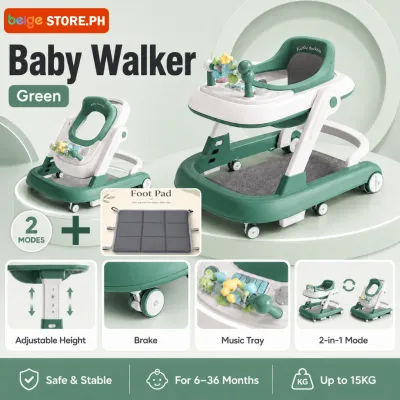
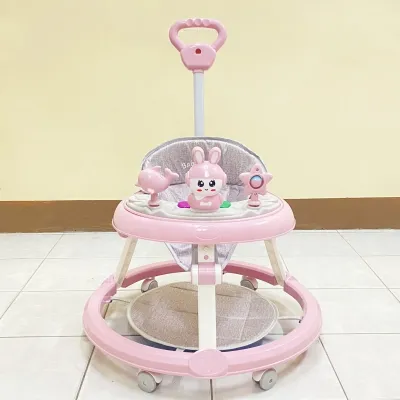
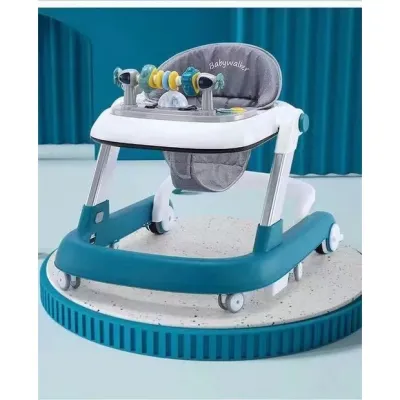
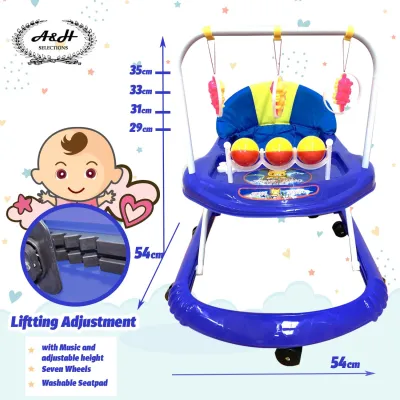
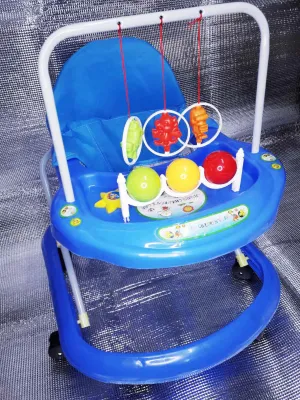
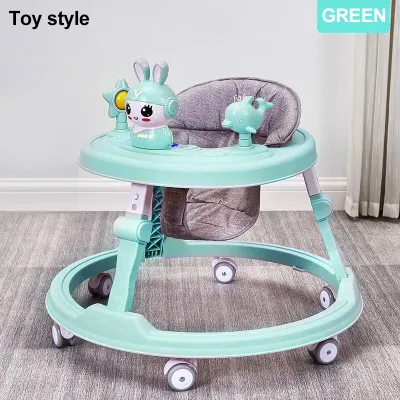
![[BABY WALKER] Training Walker for Babies 5-14 months old with Push Control Bar.. Music and Light-201](https://img.lazcdn.com/g/p/2a64f203adafdd05d3f71f178b85853c.jpg_400x400q80.jpg_.webp)
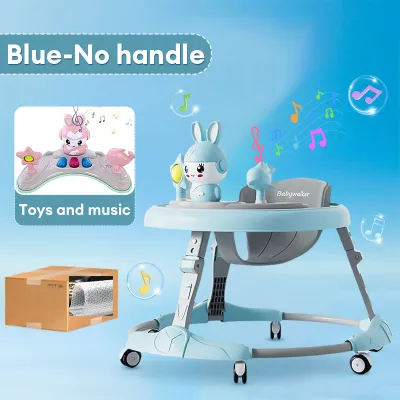
Prices are valid at publication and may change. Please refer to the product page for the latest price.
Integrating music and sensory toys into these walkers serves a specific developmental purpose. Interactive buttons, spinning gears, and musical keys encourage fine motor skills, hand-eye coordination, and cause-and-effect learning. However, parents should look for consoles that offer balanced sensory input; overly loud, repetitive, or flashing electronic toys can cause overstimulation, making the baby fussy or distracted rather than engaged.
Introducing a walker must always align with your baby’s physical milestones rather than a strict age guideline. For sit-in models, your baby must have complete head control and be able to sit upright unassisted, which typically occurs around six months of age. For push-behind models, the baby should already show a natural desire to stand and cruise along furniture. Introducing these toys too early can strain developing muscles and joints, so observing your baby’s readiness is key.
Essential Features to Evaluate for Comfort and Engagement
The seat design of a sit-in walker is critical for your baby’s physical comfort and posture. Look for a deep, padded seat that offers robust ergonomic support for the lower back and hips. Because the tropical climate in the Philippines can lead to quick heat buildup, prioritize breathable, moisture-wicking fabrics that prevent skin irritation. Ensure the seat cover is fully removable and machine-washable, as spills and diaper accidents are inevitable during playtime.

Height adjustability is another indispensable feature to look for during your search. A walker should have at least three height settings to accommodate your growing baby. When adjusted correctly, your baby’s feet should rest flat on the floor with a slight bend in the knees, allowing them to push off naturally. If only their tiptoes touch the ground, it can strain their calf muscles and encourage an unnatural walking gait.
The musical console should offer versatile play options to keep your baby entertained over time. Look for detachable toy trays that can be removed to reveal a clean flat surface for snack times or other toys. High-quality consoles feature adjustable volume controls, allowing you to set the sound to a lower level to protect your baby’s sensitive hearing. Check the battery requirements beforehand, ensuring the compartment is secured with a screw to prevent curious hands from accessing the batteries.
Mobility and wheel design directly impact how the walker performs on local household surfaces. Swivel wheels at the front allow for easy steering, while fixed rear wheels help maintain a straight path for beginners. If your home has smooth ceramic tiles or polished wood floors, look for wheels with rubberized grips or friction strips to prevent the walker from sliding too quickly. A wide, heavy base provides a lower center of gravity, significantly reducing the risk of tipping during sudden movements.
Safety Checks and Red Flags to Verify Before Purchase
Safety must be your absolute priority when selecting any baby gear. A sturdy, extra-wide base is the most critical structural feature of a sit-in walker. The base should always be wider than the top tray, acting as a physical bumper that keeps the baby’s fingers from getting pinched against walls and prevents the walker from tipping over if the baby leans heavily to one side.
Carefully inspect the product specifications and user images for potential physical hazards. Check for smooth, rounded edges on all plastic components and ensure there are no small, detachable parts on the toy tray that could present a choking hazard. The folding mechanism, which allows the walker to be stored flat, must feature a secure locking system that prevents the frame from collapsing accidentally while the baby is inside.
Always adhere to the manufacturer’s specified weight and height limits, which are typically detailed in the product manual. As a general rule, stop using a sit-in walker as soon as your baby can stand flat-footed with bent knees at the highest setting, reaches the maximum weight capacity (usually around 12 to 15 kilograms), or begins attempting to climb out of the seat. Continuing use past these milestones increases the risk of falls and structural failure.
Building Your Shortlist on E-commerce Platforms
When browsing online marketplaces in the Philippines, navigating the sheer volume of listings requires a strategic approach. Use precise search terms such as “adjustable baby walker with music” or “wooden push walker” to filter out generic toys. Prioritize listings from official brand stores or highly rated local distributors, as these sellers are more likely to provide genuine products with reliable customer service and return policies.
Customer reviews and uploaded videos are invaluable resources for assessing real-world performance. Look for feedback from local buyers regarding how easily the wheels roll on common Philippine flooring materials like concrete, tile, or vinyl. Pay close attention to comments discussing the durability of the plastic frame, the quality of the musical speaker, and how quickly the console drains batteries under daily use.
Price points for musical walkers vary widely, allowing you to find an option that fits your budget. Basic models typically range from ₱800 to ₱1,500, offering standard plastic frames and simple musical buttons. Mid-range options, priced between ₱1,800 and ₱3,500, often feature sturdier construction, better wheel traction, and more interactive toy consoles. Premium models exceeding ₱4,000 frequently offer multi-functional designs that convert from a sit-in walker to a push-behind toy, accompanied by extended warranties.
Best Practices for Setup and Supervised Use
Before placing your baby in the walker, you must thoroughly prepare the surrounding environment. Sweep the floor to remove small objects, dirt, or grit that could jam the wheels. Securely block off access to all hazards, including stairs, steps, raised thresholds, kitchens, and balconies, using sturdy baby gates. Keep electrical cords, tablecloths, and fragile items completely out of your baby’s reach, as the walker gives them a sudden boost in height.
Limit your baby’s daily walker sessions to short, supervised intervals of about 15 to 20 minutes. Overusing a sit-in walker can actually delay independent walking because it does not require the baby to balance their own torso or strengthen their ankle muscles naturally. Balancing walker play with plenty of floor-based tummy time, crawling, and assisted standing is essential for healthy motor development.
Never leave your baby unattended in a walker, even for a brief moment. Walkers allow infants to move remarkably fast, meaning they can reach potential dangers in the blink of an eye. Maintain constant visual contact and stay within arm’s reach at all times, ensuring that the walker is only used in flat, spacious, and fully enclosed indoor areas of your home.
Frequently Asked Questions (FAQ)
Do pediatricians recommend sit-in walkers with music?
Many pediatric associations worldwide advise against the use of traditional sit-in baby walkers. The primary concerns are the high risk of accidental falls, especially down stairs, and the potential for these devices to delay natural motor development by altering hip alignment and muscle usage. Push-behind walking toys are generally viewed more favorably because they require the baby to support their own weight and practice natural balance. It is highly recommended to consult your pediatrician to get personalized advice tailored to your baby’s unique physical development.
How do I clean the musical console and fabric seat?
To clean the fabric seat, detach it from the plastic frame and wash it according to the manufacturer’s care instructions, using a mild, hypoallergenic baby detergent to protect sensitive skin. For the electronic musical console, never submerge it in water or spray liquid cleaners directly onto the surface. Instead, wipe the plastic toys and buttons with a slightly damp microfiber cloth or a baby-safe sanitizing wipe, taking care to prevent moisture from entering the speaker grilles, battery compartment, or seam lines.
Community discussion
Share your experience or ask a question. Comments are reviewed before publication.