
Selecting the right hexagon foam tiles for your baby’s playpen requires balancing cushioning, stability, and safety. The ideal thickness and density depend heavily on your baby’s current developmental stage and the type of flooring in your home. By matching these specifications to your specific environment, you can create a secure, comfortable play area that protects your little one from tumbles while supporting their physical milestones.
Understand Your Baby's Developmental Stage and Mobility
Your baby’s physical abilities dictate the level of impact protection and surface stability required in the playpen. As infants grow, their movement patterns change, shifting the demands placed on the play space floor.
For newborns and non-mobile infants, the primary needs are basic comfort, thermal insulation, and a clean surface. At this stage, babies spend most of their time on their backs or tummies, making a soft, hygienic barrier against the floor the main priority. High impact absorption is less critical now, but a comfortable surface encourages essential tummy time and helps them build neck and shoulder strength.
Products mentioned in this guide
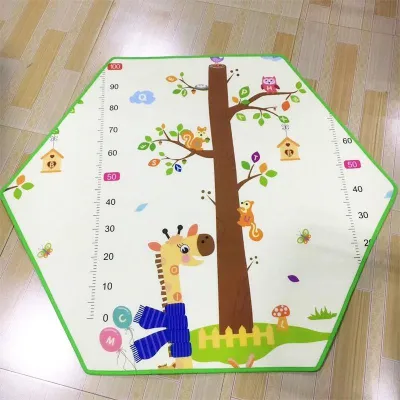
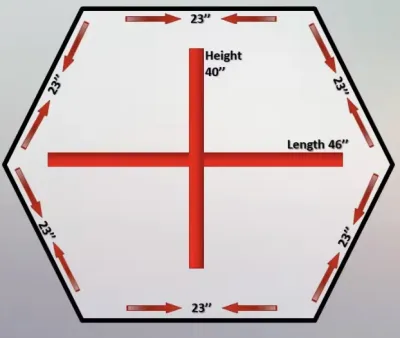
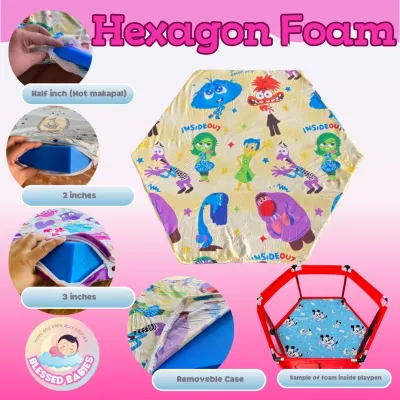
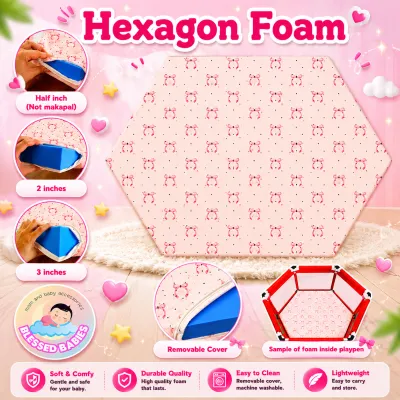
Prices are valid at publication and may change. Please refer to the product page for the latest price.
As babies transition to sitting up, they often lose their balance and fall backward or sideways. These sudden tumbles require a play mat that can absorb the impact of a baby’s head hitting the floor without bottoming out. A medium-density foam provides a supportive yet forgiving surface for these early milestones.
Once babies begin crawling and cruising along the playpen edges, the risk of sudden tumbles increases. During this active transition, the foam tiles must offer higher shock absorption to cushion falls on knees, hands, and heads. A surface with sufficient give prevents bruises while remaining firm enough to support their attempts to push up and balance.
For walking toddlers, the focus shifts toward stability and slip resistance. Active toddlers require a firmer surface that does not sink excessively under their weight, which could otherwise cause tripping or ankle strain. The foam must provide a reliable grip for busy feet while still offering a cushioned landing pad for the occasional high-energy fall.
Evaluate Your Floor Type and Subfloor Conditions
The existing floor beneath the playpen plays a major role in how the foam tiles perform. In tropical climates like the Philippines, residential floors are often made of hard materials designed to keep homes cool, which directly affects the required foam specifications.

Hard surfaces such as ceramic tile, polished concrete, or marble offer zero natural shock absorption and can feel quite cold or damp. If your playpen sits on these surfaces, you will need thicker, denser foam tiles to block the hardness and provide adequate thermal insulation. This prevents the chill of the floor from transferring to your baby while ensuring a soft landing.
In humid tropical environments, moisture can easily get trapped beneath the foam tiles, leading to mold or mildew growth on the subfloor. Periodically lifting the tiles to clean and thoroughly dry both the underside of the foam and the floor beneath it is essential. Choosing tiles that are easy to disassemble makes this regular maintenance much more manageable.
Wood, engineered laminate, or vinyl floors have a slight natural give and tend to retain less cold than stone or tile. For these subfloors, moderate thickness specifications are usually sufficient to achieve a comfortable balance. You can focus more on density to ensure the tiles do not slide around on the smooth wood finish and to protect your floors from scratches.
If you are placing the playpen over an existing carpeted area, the carpet itself already provides cushioning. However, carpet can create an unstable, uneven base for interlocking tiles, causing them to shift or separate. In this scenario, thinner and firmer foam tiles work best to maintain a flat, stable surface that resists buckling when your baby moves.
Decode Foam Thickness and Density Specifications
Understanding how to read product specifications on online marketplaces or packaging is key to making an informed purchase. Thickness and density are distinct measurements that work together to determine the foam’s overall performance.
Thickness refers to the physical depth of the tile, usually measured in millimeters or inches. This dimension dictates the maximum impact absorption capacity of the play mat. While thicker tiles generally offer more cushioning, thickness alone does not guarantee a safe or durable play surface.
Density measures how tightly packed the foam material is, which determines its firmness and structural durability. High-density foam resists compression, meaning it will not bottom out when weight is applied. It provides the necessary resistance for a baby to push against when learning to crawl or stand, and it prevents the tiles from warping over time.
To evaluate density when shopping, you can perform a simple physical check if a sample is available. Squeeze the foam between your thumb and forefinger; if you can easily pinch the tile and feel your fingers meet, the density is likely too low for active play, regardless of how thick the tile appears.
Balancing both metrics is essential for a safe playpen setup. Thicker foam with very low density can be dangerously soft, causing your baby’s feet or hands to sink deeply, which increases the risk of tripping or suffocation during tummy time. Conversely, a very thin tile with high density might feel too hard and fail to cushion falls adequately.
When shopping, always check the manufacturer’s product descriptions for exact measurements. Look for detailed specifications rather than generic descriptions like “extra thick” or “super soft.” Verifying these details helps ensure the product matches your specific floor type and baby’s developmental needs.
Check Safety Standards and Material Certifications
Because babies spend hours in direct contact with the playpen floor, material safety is just as important as physical cushioning. Foam products can sometimes contain chemical additives that require careful verification before purchase.
Ensure the hexagon foam tiles are explicitly labeled as free from harmful substances such as bisphenol A (BPA), phthalates, lead, and formamide. Formamide is sometimes used to make foam soft and pliable, but high-quality baby play mats should comply with strict chemical safety limits.
Look for recognized infant safety certifications on the product packaging or official store listings. These certifications indicate that the material has undergone independent testing for mechanical safety and chemical composition. Avoid purchasing unbranded foam tiles that lack clear safety labeling or manufacturer details.
Additionally, inspect the physical design of the interlocking tiles. The pieces should fit together tightly without leaving gaps where small fingers could get pinched. Ensure that any detachable border pieces or small corner segments do not pose a choking hazard if your baby manages to pull them apart.
Teething babies often explore textures with their mouths, and damaged foam can quickly become a choking hazard. Ensure the material is durable enough to resist tearing or crumbling under gentle pressure. Regularly inspecting the tiles for bite marks or loose pieces is a vital safety practice.
Plan the Layout and Calculate the Required Quantity
Hexagon tiles offer a visually appealing, modern look, but their geometric shape requires a bit more planning to fit perfectly inside a standard rectangular or circular playpen.
Start by measuring the interior dimensions of your playpen carefully. Because hexagon tiles have angled edges rather than straight sides, they do not align perfectly with straight playpen walls without modification. You will need to calculate the total square area and compare it to the coverage provided by a single pack of tiles.
Unlike square tiles, hexagons do not align in straight rows. They interlock in a staggered pattern, which means you will have triangular gaps along the edges of a rectangular playpen. You can either leave these gaps if the playpen walls hold the tiles securely, or you can trim the outer tiles with a utility knife to create a straight edge.
When calculating the quantity, always add a reasonable buffer to your purchase. This extra allowance accounts for the pieces you may need to trim to fit snugly against the playpen walls, as well as any future replacements for damaged tiles. Having a few spare tiles on hand is highly practical for long-term use.
Many hexagon tile sets include straight border pieces designed to create a clean, finished edge. Using these borders is highly recommended if the playpen has open sides, as they eliminate the jagged outer teeth of the hexagons. This creates a smooth transition to the surrounding floor, reducing tripping hazards for both you and your baby.
Inspect and Maintain the Foam Tiles After Setup
Once your hexagon foam tiles are installed, regular inspection and proper maintenance will keep the play area hygienic and safe for daily use.
Immediately after assembling the tiles, check all the interlocking seams by applying firm downward and outward pressure. The seams should remain tightly locked together without buckling or lifting. If any tiles slide apart easily, reconfigure the layout or replace the faulty pieces to prevent your baby from tripping on raised edges.
Establish a regular cleaning routine based strictly on the manufacturer’s care instructions. Wipe the surface with a damp cloth and a mild, baby-safe detergent. Avoid using harsh chemical cleaners, bleach, or abrasive scrubbing pads, which can degrade the foam material and strip away protective coatings.
Allow the tiles to air dry completely in a well-ventilated area away from direct sunlight before reassembling them. Direct sunlight can cause EVA foam to warp, shrink, or lose its vibrant color, which can ruin the interlocking fit of the tiles.
Inspect the tiles weekly for signs of wear and tear, such as permanent indentations, peeling top layers, or loose teeth. Promptly replace any worn or compromised tiles to maintain a continuous, safe surface.
Frequently Asked Questions (FAQ)
Can I use hexagon foam tiles outside the playpen?
Yes, hexagon foam tiles can be used in other areas of your home, provided the surface is flat, dry, and clean. They make excellent temporary play zones in living rooms or bedrooms. However, when using them in open spaces without playpen walls to contain them, always install the straight border pieces to prevent tripping on the interlocking edges. Ensure the subfloor is non-slip, as loose tiles on polished floors can slide when stepped on by adults.
How do I clean the foam tiles without damaging them?
To clean the tiles safely, always refer to the manufacturer’s specific care label. Generally, you should wipe the surface with a damp cloth and a mild, baby-safe detergent. Avoid using harsh chemical cleaners, bleach, or abrasive scrubbing pads, which can degrade the foam material and strip away protective coatings. Allow the tiles to air dry completely in a well-ventilated area away from direct sunlight before reassembling them, as trapped moisture can cause warping and mold.
Do I need a non-slip mat underneath the foam tiles?
Whether you need an underlay depends on your floor type and the weight of the tiles. On highly polished surfaces like ceramic tile or smooth hardwood, lightweight foam tiles may slide when your baby pushes against the playpen walls. If you notice the tiles shifting during use, placing a thin, rubberized non-slip rug pad underneath can provide the necessary grip. For carpeted floors or heavier, high-density foam setups, an additional non-slip mat is usually unnecessary.
Community discussion
Share your experience or ask a question. Comments are reviewed before publication.