
Choosing the right spoon and fork set for your child is a developmental milestone that directly impacts their self-feeding success. Instead of simply buying the most colorful set on an online marketplace, you must match the utensil’s physical dimensions—such as handle length, bowl depth, and grip design—to your child’s current motor skills. Observing how your child holds objects, rotates their wrist, and coordinates hand-to-mouth movements will guide you to the correct design.
While age guidelines on packaging offer a helpful starting point, every child develops at their own pace. A child who has mastered the pincer grasp will require a completely different utensil shape than a baby who is still using their entire palm to hold objects. By focusing on physical readiness rather than chronological age, you can select a set that minimizes mealtime frustration and fosters independent eating habits.
Assess Your Child's Feeding Stage and Motor Skills
Before browsing through various utensil designs, take a few days to observe your child’s natural hand movements during play and mealtime. The transition from a palmar grasp—where a baby uses their entire fist to clutch an object—to a pincer grasp, which involves using the thumb and index finger, is a primary indicator of readiness for self-feeding. If your baby still clutches toys with a full fist, they will struggle with long, thin handles and instead require short, bulbous grips that sit securely within their palm.
Products mentioned in this guide
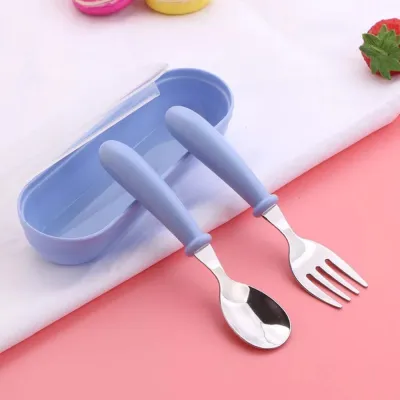
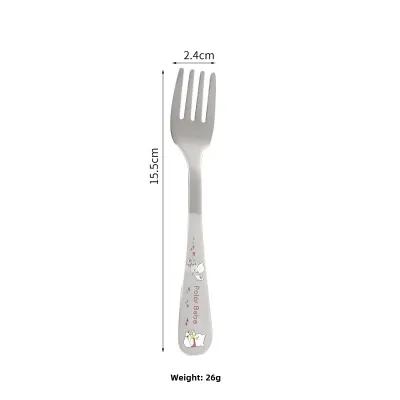
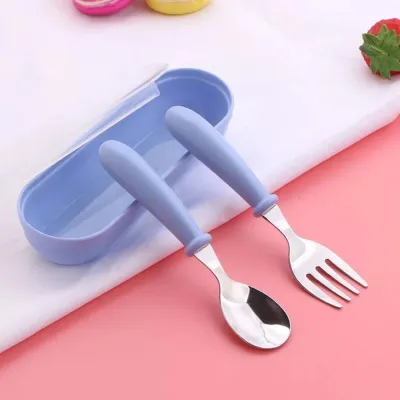
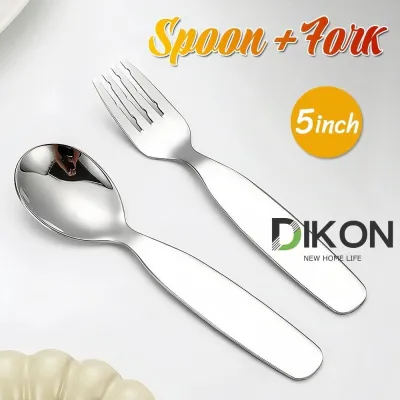

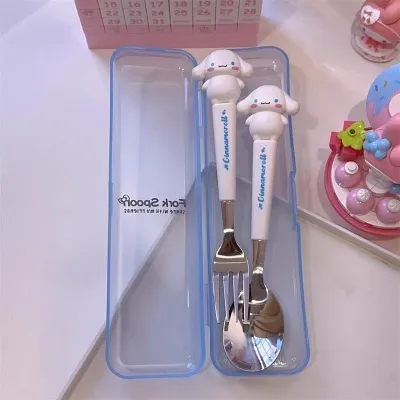
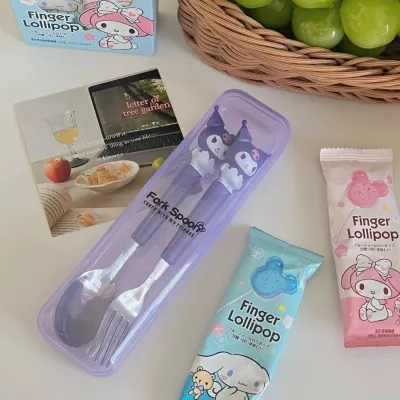
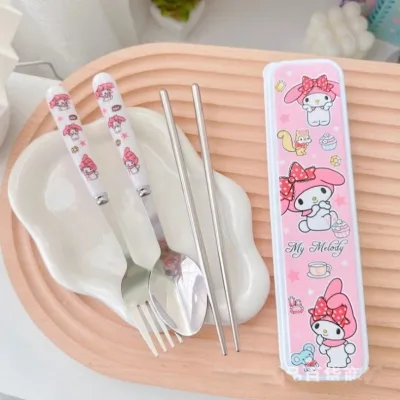
Prices are valid at publication and may change. Please refer to the product page for the latest price.
Motor skill development dictates the level of control a child has over a utensil. Early on, babies lack the wrist rotation necessary to keep a spoon level as it travels from the bowl to their mouth. This lack of coordination often results in spilled food and frustration. Recognizing this developmental stage helps you understand why a beginner needs a different utensil design than a toddler who can easily rotate their wrist to scoop up rice or soft vegetables.
Additionally, consider the functional differences between early weaning and advanced self-feeding. During the initial weaning stage, which typically begins around six months, the primary goal is introducing new textures like smooth purees and mashed local fruits. At this point, the utensil acts more as a tool for exploration and gumming. As your child progresses to advanced self-feeding, they will need to manage solid foods that require spearing with a fork or scooping denser textures, demanding a more robust and functional utensil set.
Evaluate Key Size and Design Features
When evaluating a spoon and fork set, the handle’s physical dimensions are the most critical factors for success. Shorter, chunkier handles are ideal for beginners because they reduce the distance between the child’s hand and their mouth, making the utensil easier to steer. As your child’s fine motor skills mature, you can gradually transition them to longer, slimmer handles that allow for more precise finger placement and mimic the way adults hold cutlery.

The design of the spoon bowl and fork tines also requires careful inspection. A beginner’s spoon should have a very shallow bowl. Deep spoon bowls make it difficult for a young child to clear all the food with their upper lip, leading to leftover food and messy faces. For forks, look for blunt, rounded tines that are sharp enough to pierce soft foods like boiled sweet potatoes or bananas, but dull enough to prevent accidental punctures to the tongue, lips, or gums.
Ergonomic grips and angled heads offer specialized support for children navigating early feeding challenges. Some sets feature curved or angled spoon heads that direct food straight toward the mouth even if the child cannot yet rotate their wrist. While these designs are highly beneficial for children with limited wrist mobility or specific motor delays, they can also serve as a helpful temporary bridge for typically developing infants who are eager to feed themselves but still lack full wrist control.
Verify Material Safety and Product Labels
Safety is paramount when selecting items that will repeatedly enter your child’s mouth. Always read product labels and packaging carefully to verify that the materials used are food-grade and free from harmful chemicals. Look for clear indicators such as “BPA-free,” “phthalate-free,” and “lead-free.” High-quality materials like food-grade silicone, 18/8 stainless steel, and wood are common choices, but each must be verified through the manufacturer’s official product documentation.
Perform a thorough physical inspection of any utensil set before introducing it to your child. Run your fingers along the edges of the spoon bowl and fork tines to ensure there are no sharp plastic seams or rough metal burrs from the manufacturing process. Check that any silicone or rubber grips are securely bonded to the core of the utensil; loose parts or detachable decorative toppers can easily become choking hazards during a meal.
Finally, always verify the manufacturer’s stated age recommendations and intended use cases on the packaging. A set designed for a two-year-old may feature metal tines that are too sharp or heavy for a nine-month-old baby. If the packaging lacks clear age guidelines, safety certifications, or manufacturer contact information, it is best to choose a different product from a reputable brand that prioritizes transparent labeling.
Match Utensils to Your Child's Developmental Stage
To simplify your decision-making process, match the physical traits of the utensil set to your child’s current developmental milestone.
For the early weaning and beginner stage, look for pre-loaded spoons or textured dippers. These unique utensils do not require a traditional scooping motion; instead, purees cling to the textured channels of the head, allowing the baby to feed themselves simply by dipping and tasting. The handles should be exceptionally short, thick, and covered in a non-slip material to accommodate a wet, slippery grip.
As your child enters the transitional stage and shows an improving grip, introduce a set with slightly longer handles and a standard shallow spoon bowl. This is also the appropriate time to introduce a beginner-safe fork. The fork tines should be wide, flat, and blunt, designed primarily to help the child practice the motion of spearing soft foods without any risk of injury.
Once your child reaches the advanced and independent stage, they can transition to standard kids’ sizes. These sets feature longer, slimmer handles that encourage a mature pencil-like grip. The spoon bowl can be slightly deeper to accommodate larger portions of rice, soups, or stews, and the fork tines can be made of durable, food-grade stainless steel to easily pierce a wider variety of food textures.
Regardless of the stage, always be prepared to stop and reassess. If your child shows persistent frustration, repeatedly drops the utensils, or refuses to use them altogether, it is a clear sign that the current design does not match their motor skills. Temporarily returning to finger foods or a simpler utensil style can prevent mealtime anxiety and allow their coordination to catch up naturally. Stop using the utensil and consult a pediatrician or pediatric occupational therapist if you suspect underlying motor delays.
Maintain the Set and Know When to Upgrade
Proper maintenance of your child’s spoon and fork set is essential for hygiene and longevity, especially in warm, humid tropical climates. High humidity can encourage mold and bacterial growth in hard-to-reach crevices, making thorough cleaning vital. Always follow the manufacturer’s specific cleaning instructions; while many silicone and stainless steel sets are dishwasher-safe, wooden or bamboo components usually require gentle hand-washing and immediate towel-drying to prevent warping.
Establish a routine of visually inspecting the utensils before every meal. Look closely for signs of wear and tear, such as deep scratches, bite marks, discoloration, or peeling coatings. Plastic and silicone utensils can degrade over time, creating rough surfaces that harbor bacteria or small fragments that could break off. If you notice any structural damage, split seams, or loose components, discard the item immediately.
Knowing when to upgrade is just as important as maintaining the current set. Watch for physical and behavioral signals that your child has outgrown their utensils. If their fingers look cramped around a short handle, or if they struggle to scoop up a satisfying bite because the spoon bowl is too small, it is time to transition to a larger size. Investing in a new set, which typically ranges from ₱150 to ₱500 depending on the materials, is a simple way to support their growing appetite and developing independence.
Frequently Asked Questions (FAQ)
Can I use regular adult spoons and forks for my toddler?
No, using adult utensils is not recommended for young children. Adult spoons and forks have long handles that act as levers, making them incredibly difficult for a toddler’s developing motor skills to control. Additionally, the deep bowls of adult spoons can cause gagging, while the sharp metal tines of adult forks pose a significant safety risk to a child’s delicate mouth and gums.
Are angled spoons necessary for all babies?
No, angled spoons are not necessary for every baby. They are specialized tools designed to assist infants who have limited wrist mobility or specific motor delays, allowing them to bring food to their mouth without needing to rotate their wrist. For typically developing children, standard straight-handled beginner spoons are perfectly suitable and help encourage the natural development of wrist rotation over time.
Community discussion
Share your experience or ask a question. Comments are reviewed before publication.