
To choose the right nursing pillow, you must match its shape to your preferred breastfeeding position and ensure its physical dimensions align with your unique body type. The primary goal of a nursing pillow is to bring your baby up to breast height, allowing you to feed comfortably without slouching, hunching, or straining your muscles. Selecting a pillow that fits your physical build and feeding style prevents chronic postpartum discomfort and helps secure a stable, deep latch for your baby.
Using an ill-fitting pillow often leads to a cascade of physical strains. When a pillow does not provide the correct height or support, caregivers naturally compensate by leaning forward or lifting their shoulders. This repetitive posture can cause severe tension in the neck, upper back, and lumbar region. Furthermore, if the baby constantly slides or sinks into a soft, unsupportive pillow, they cannot maintain a proper latch, which can result in nipple soreness, inefficient milk transfer, and frustrated feeding sessions.
Why Your Body Type and Feeding Position Matter
Breastfeeding is a repetitive, hours-long daily activity that places significant physical demands on a postpartum body. During the first few months of life, infants feed frequently, meaning you will spend several hours each day holding your baby in a feeding position. If your nursing pillow does not bridge the physical gap between your lap and your breast, your muscles must work overtime to support the baby’s weight. This lack of ergonomic support quickly translates into physical fatigue, muscle spasms, and long-term postural misalignment.
Products mentioned in this guide
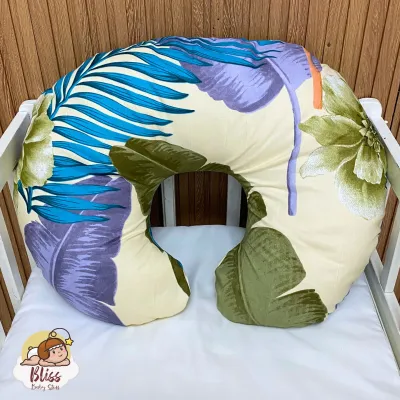
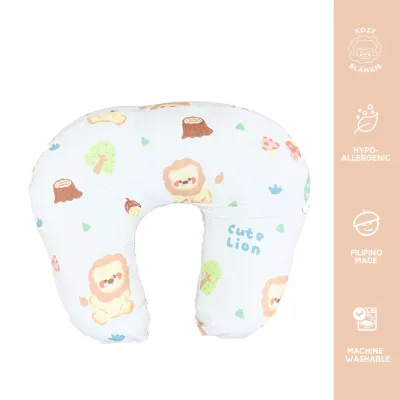
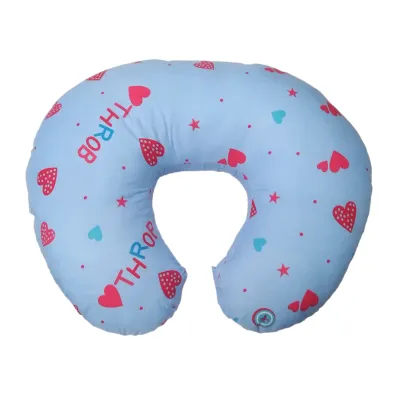
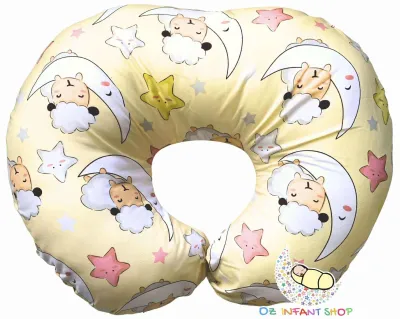
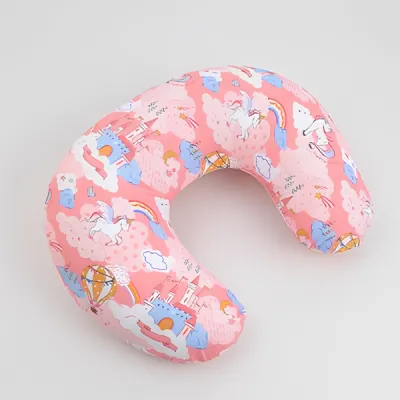
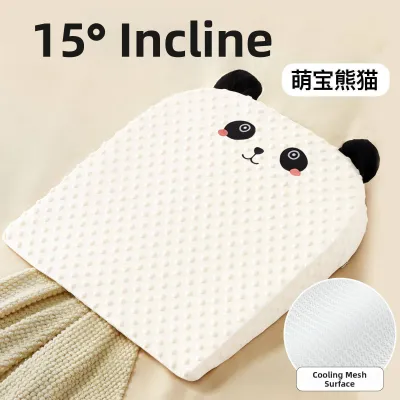

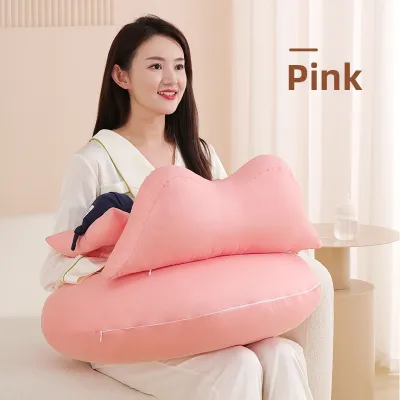
Prices are valid at publication and may change. Please refer to the product page for the latest price.
Because postpartum bodies vary widely in height, torso length, bust size, and recovery needs, a one-size-fits-all nursing pillow simply does not exist. A pillow that works perfectly for a friend might leave you hunching forward or shrugging your shoulders in discomfort. The ideal setup allows your shoulders to remain completely relaxed, your elbows to rest comfortably at your sides, and your baby to lie securely at nipple height. If you experience persistent back, neck, or shoulder pain despite adjusting your setup, it is highly recommended to consult a physical therapist or a certified lactation consultant for personalized guidance.
Additionally, the baby’s safety and comfort depend heavily on the stability of the feeding platform. A pillow that is too soft or poorly shaped can cause the baby to roll inward toward your body or outward away from the breast. This instability forces you to constantly reposition the baby, disrupting the feeding flow and placing extra strain on your wrists and forearms. Understanding how your physical build interacts with different pillow structures is the first step toward creating a pain-free feeding routine.
Match the Pillow Shape to Your Preferred Breastfeeding Positions
Nursing pillows come in several distinct shapes, including C-shape, U-shape, crescent, and wedge designs. Each of these configurations is engineered to support specific feeding angles and maternal postures. Before purchasing a pillow, consider which feeding positions you plan to use most frequently, as the shape of the pillow directly dictates how well it supports those specific holds.

Cradle and Cross-Cradle Holds
The cradle and cross-cradle holds are the most common front-facing positions, where the baby lies horizontally across your lap. For these traditional styles, C-shaped or classic U-shaped wrap-around pillows are highly effective because they provide a continuous, level front shelf.
- Best pillow shapes: C-shaped, U-shaped, or semi-circular wrap-around pillows.
- How it supports: These designs wrap snugly around your waist, creating a flat, stable platform that keeps the baby's body aligned horizontally with your breast. This prevents the baby from rolling away and supports their head, neck, and hips at a consistent height.
- Caregiver check: Always ensure the pillow sits tightly against your abdomen. Any gap between your body and the pillow can cause the baby to slip downward, straining your arms as you try to pull them back into position.
Football (Clutch) Hold
The football or clutch hold involves tucking your baby under your arm, similar to holding a football, with their feet pointing toward your back. This position is particularly beneficial for mothers recovering from a C-section, those with larger breasts, or mothers feeding twins.
- Best pillow shapes: Firm, contoured, asymmetrical, or wedge-shaped pillows.
- How it supports: These pillows offer targeted side support, filling the space between your lateral torso and the armrest of your chair. They keep the baby's head elevated and properly aligned with the breast while their body rests securely along your hip.
- Caregiver check: Verify that the side support is firm enough to prevent the baby's lower body from sagging. Always support the baby's head and neck with your hand to keep their airway fully open and clear.
Side-Lying Position
The side-lying position is a popular choice for nighttime feedings or when you need to rest while feeding. While you do not wrap a standard nursing pillow around your waist in this position, smaller, specialized pillows can still provide valuable support.
- Best pillow shapes: Small rectangular pillows, modular bolster pillows, or compact wedge pillows.
- How it supports: A small pillow can be placed behind your back to maintain spinal alignment and prevent you from rolling backward. Alternatively, a small, firm wedge can be placed behind the baby's back to keep them securely on their side.
- Caregiver check: Never place loose, soft pillows near your baby's face, and never use a nursing pillow as a sleep positioner. Ensure all pillows are positioned safely away from the baby's breathing space, and maintain active adult supervision throughout the feed.
Adjust for Your Body Type and Physical Needs
Your physical build dictates the required thickness, width, and firmness of your nursing pillow. To maintain proper ergonomic alignment, you must select a pillow that accommodates your height, torso length, bust size, and any specific physical recovery needs you have postpartum.
Bust Size and Arm Length
Your chest dimensions and arm reach significantly influence how far your baby needs to be lifted to reach the breast. Failing to account for these measurements can result in a pillow that is either too thick or too thin for comfortable feeding.
- For larger busts: If you have a larger bust, your breasts may sit lower on your chest. A very thick, high-loft pillow might push the baby too high, forcing them above the nipple line. Look for flatter, adjustable, or stackable pillows that allow you to customize the height so the baby aligns naturally with your breast without you having to lift your breast or slouch down.
- For shorter arms: Mothers with shorter arms often have to lift their shoulders or strain their wrists to support the baby's head. Choose a firm, high-density foam pillow that keeps the baby elevated and close to your body, reducing the need for your arms to carry the baby's weight.
Postpartum Recovery Considerations
The method of your baby’s delivery plays a critical role in determining which pillow design will feel most comfortable during your recovery period. Sensitivity around surgical incisions or pelvic trauma requires careful pillow placement.
- C-section recovery: If you are recovering from a Caesarean delivery, physical pressure on your lower abdomen can be highly painful. Standard U-shaped pillows that press directly against the waist are often uncomfortable. Instead, look for adjustable strap-on pillows that can be buckled higher up on your ribcage, keeping the baby's weight completely off your incision site. Firm wedge pillows that support a side-lying or reclined position can also minimize abdominal pressure.
- Vaginal delivery recovery: For mothers recovering from a vaginal delivery, standard wrap-around pillows are generally comfortable and easy to use. However, if you experience pelvic floor discomfort, look for a pillow that allows you to sit upright on a supportive cushion while the nursing pillow rests lightly on your lap without adding downward pressure.
Height and Torso Length
Your overall height and the length of your torso determine the vertical distance between your lap and your breasts. This distance must be bridged accurately to prevent spinal strain.
- For taller mothers: Taller mothers or those with long torsos have a wider gap to bridge. Standard, thin nursing pillows will force you to lean forward to reach the baby. Look for multi-layered stackable pillows, extra-thick designs, or pillows with adjustable height inserts to close the vertical gap and keep your spine neutral.
- For shorter mothers: Shorter mothers or those with short torsos need to avoid overly thick pillows. A pillow that is too high will push the baby up toward your collarbone, forcing you to shrug your shoulders to feed. Low-profile, contoured pillows are ideal for keeping your shoulders relaxed and down.
Evaluate Firmness, Height, and Material for Tropical Comfort
When choosing a nursing pillow, its physical properties must be evaluated alongside your local environment. In the humid, tropical climate of the Philippines, factors like heat retention, sweat, and moisture management are just as important as structural support.
Firmness
A high-quality nursing pillow must be firm enough to support your baby’s weight without compressing significantly. While soft, plush pillows may feel comfortable to the touch, they lack the structural integrity needed for feeding. Under the weight of a growing baby, a soft pillow will sink, forcing you to lean forward and defeating the ergonomic purpose of the pillow. Look for high-density foam or tightly packed hypoallergenic fiberfill that resists compression and bounces back quickly when pressed.
Height Adjustability
Your baby’s weight and size will change rapidly during their first year, meaning the ideal pillow height will also change. Adjustable nursing pillows—such as those with stackable fabric layers, removable foam inserts, or adjustable waist straps—offer excellent long-term value. These features allow you to lower the pillow’s height as your baby grows and gains head control, ensuring the pillow remains useful throughout your entire breastfeeding journey.
Materials and Covers
In hot and humid tropical conditions, feeding sessions can quickly become sweaty and uncomfortable for both you and your baby. Heat retention can cause skin irritation and fussiness. To ensure comfort, prioritize the following material features:
- Breathable fabrics: Choose removable covers made from natural, moisture-wicking fibers such as 100% cotton, organic cotton, or bamboo-derived rayon. These materials allow air to circulate, keeping you and your baby cool.
- Machine-washable covers: Milk spills, spit-up, and sweat are inevitable. Ensure the pillow cover features a high-quality, durable zipper and is fully machine washable. It is highly recommended to purchase at least one spare cover so you can continue using the pillow while one cover is in the wash.
- Washable inner core: Check the manufacturer's care label for the inner pillow. Some cores can be machine washed on a gentle cycle, while others must be spot-cleaned or aired out in a dry, well-ventilated space. Regular cleaning prevents the buildup of sweat, mold, and bacteria, which thrive in humid climates.
In the Philippine market, nursing pillows span broad price bands. Budget-friendly, standard fiberfill U-shaped pillows typically cost around ₱500 to ₱1,200. Premium, highly adjustable, ergonomic, or high-density foam models with specialized breathable covers generally range from ₱1,500 to over ₱3,500. Investing in a high-quality, durable option can significantly improve your daily comfort and support your feeding goals.
Step-by-Step Guide to Testing a Nursing Pillow
Whether you are testing a nursing pillow in a physical baby boutique or evaluating a purchase at home during an online retailer’s return window, follow these practical steps to verify the fit.
- Step 1: Position check: Sit in the chair you plan to use most frequently for feeding. Place the pillow on your lap and wrap it around your waist. Check if the inner curve of the pillow hugs your torso snugly. There should be no significant gaps at the front or sides where a baby could slip down.
- Step 2: Height and posture check: Rest your forearms on top of the pillow. Observe your posture in a mirror or ask a family member to check. Your shoulders should be relaxed and down, your neck should be straight, and your elbows should rest comfortably without being pushed upward or hanging unsupported.
- Step 3: Firmness check: Press down firmly on the center of the pillow with both hands, mimicking the weight of a baby (approximately 3 to 7 kilograms). The pillow should resist deep compression and maintain its shape. If your hands sink easily to your lap, the pillow is too soft to provide adequate long-term support.
- Step 4: Construction and cover check: Inspect the outer cover. Run your fingers over the fabric to ensure it feels soft and cool against the skin. Unzip the cover to check how easily it can be removed and put back on. Inspect the stitching and zipper quality to ensure it can withstand frequent washing.
Safety Warning: Nursing pillows are designed strictly as feeding supports for awake babies under active, constant adult supervision. They must never be used for unsupervised infant sleep, as a sleep positioner, or placed inside a crib, bassinet, or playpen. Allowing an infant to sleep on a nursing pillow poses a serious risk of positional asphyxiation or suffocation if their head rolls forward or if they turn face-down into the soft fabric. If your baby falls asleep during a feeding session, immediately transition them to a safe, flat, firm sleep surface approved by pediatric safety guidelines.
Frequently Asked Questions (FAQ)
Can I use a regular bed pillow instead of a nursing pillow?
While you can use a regular bed pillow in a pinch, it is generally not recommended for regular feeding sessions. Standard bed pillows are designed to compress easily under the weight of a head, meaning they lack the firm, structural support required to keep a baby elevated at breast height. Additionally, bed pillows do not wrap around your waist, causing them to shift, slide, or gap during use. This forces you to constantly adjust the pillow, leading to poor posture, arm fatigue, and an unstable platform that can disrupt your baby’s latch.
Do I need a nursing pillow for bottle feeding?
Yes, a nursing pillow can be highly beneficial for bottle feeding. Holding a baby and a bottle for multiple feeds a day can cause significant strain on your arms, shoulders, and wrists. A nursing pillow supports the baby’s weight and allows you to feed them at a comfortable, semi-upright angle, which is recommended to help reduce gas and reflux. While bottle-feeding parents may not need the exact breast-level precision required for breastfeeding, they still benefit greatly from the ergonomic support and muscle relief that a firm, well-fitted pillow provides.
Community discussion
Share your experience or ask a question. Comments are reviewed before publication.