
Feeding your baby while traveling or running errands requires careful preparation, especially when managing formula feeds. In the tropical climate of the Philippines, high humidity and warm temperatures can quickly compromise dry milk powder if it is not stored correctly. A dedicated milk powder container set simplifies on-the-go feeding by keeping pre-measured portions dry, organized, and ready to mix.
To choose the right container set, parents must look beyond aesthetics and focus on functional design. The ideal travel companion must feature an airtight seal to block moisture, consist of certified food-grade materials, offer appropriate portion capacities for your baby’s developmental stage, and provide a mess-free dispensing mechanism. Evaluating these key features beforehand ensures that your outdoor excursions remain stress-free and hygienic.
Quick Guide to Essential Milk Powder Container Features
When preparing for a day trip, convenience and food safety are your top priorities. A high-quality milk powder container set acts as a protective barrier against external contaminants, ensuring that each feed is as fresh as if it were prepared at home. Before making a purchase, there are several non-negotiable features you should verify to guarantee the product meets your daily needs.
Products mentioned in this guide
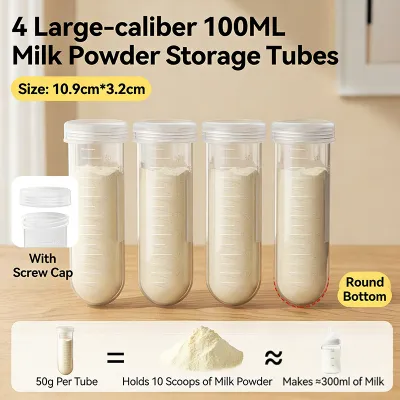
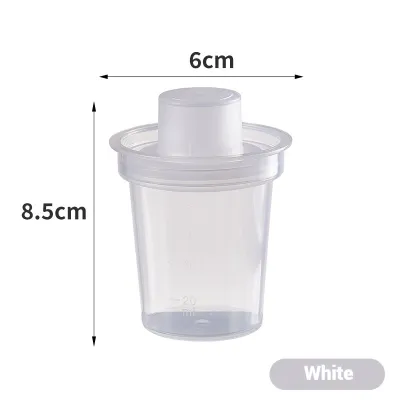
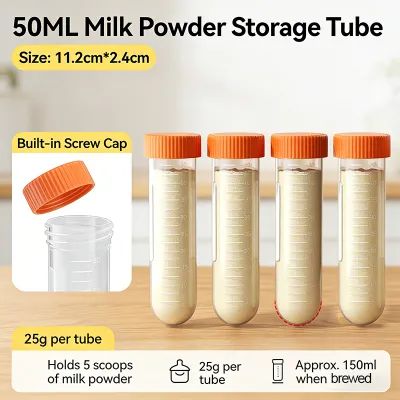
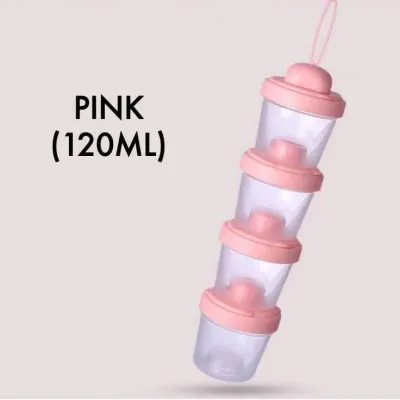
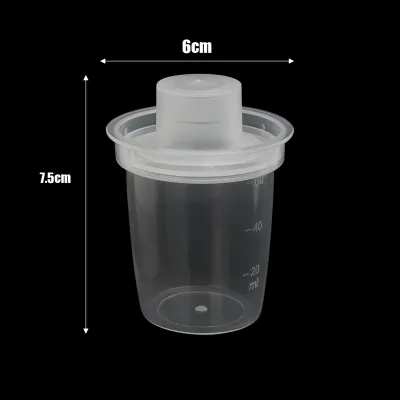
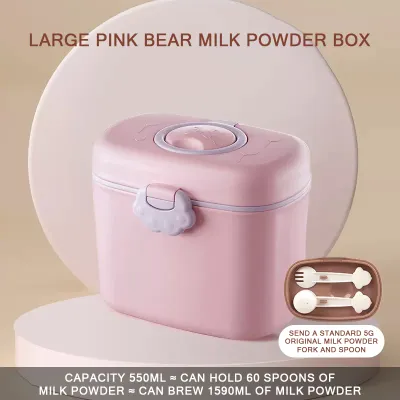
Prices are valid at publication and may change. Please refer to the product page for the latest price.
First, the container must offer an absolute airtight seal to prevent moisture ingress, which is the primary cause of powder clumping. Second, the materials must be completely food-safe, non-toxic, and capable of withstanding regular sterilization. Finally, the physical capacity of each compartment must align with your baby’s current feeding volume, allowing room for growth as their intake increases.
Parents generally choose between two primary designs: multi-tier stackable towers and single-serve independent pods. Stackable towers consolidate multiple feeds into a single, vertical unit, saving horizontal space in your diaper bag. In contrast, single-serve pods offer maximum flexibility, allowing you to carry only what you need for a quick trip without any extra bulk.
Evaluating Seal Quality and Moisture Protection
Moisture is the natural enemy of powdered infant formula. When exposed to humid air, milk powder absorbs water vapor rapidly, leading to clumping, localized spoilage, and difficulty in dispensing. In a tropical environment, a container with a weak seal can ruin an entire day’s supply of formula within hours of leaving the house.

To prevent this, manufacturers utilize various sealing mechanisms, each with its own advantages and potential failure points:
- Silicone Gaskets: These flexible rings sit inside the lid to create a tight, compression-based seal. While highly effective at blocking air, they can degrade, stretch, or trap moisture if not removed and dried thoroughly during cleaning.
- Snap-Lock Lids: Featuring side latches that clamp down onto the container rim, these lids provide a highly secure physical lock. However, if the plastic latches are thin or poorly molded, they can snap off or loosen over time.
- Screw-Thread Closures: These lids rely on interlocking threads to secure the top to the base. They are incredibly durable and highly resistant to popping open, but they require precise alignment to prevent cross-threading, which leaves a gap for air to enter.
To evaluate a container’s seal quality upon arrival, perform a simple physical inspection. Assemble the empty container, secure the lid tightly, and gently squeeze or shake it to see if air escapes. Check if the silicone ring is seated evenly without any twists, gaps, or loose edges that could compromise the airtight barrier during transit.
Matching Portion Size to Feeding Schedules
As babies grow, their nutritional requirements and feeding volumes change rapidly. A container set that is perfect for a newborn may quickly become too small for an active older infant. Therefore, matching the compartment volume to your baby’s specific feeding schedule is essential for long-term utility.
To determine the right size, you must translate standard formula scoops into physical volume. Most formula brands use a scoop that holds approximately 4.3 to 5 grams of powder, which is mixed with 30ml or 60ml of water. A newborn feeding 60ml to 90ml of formula only requires one to two scoops per compartment. However, an older infant consuming 240ml per feed will require four to five scoops. Ensure the container compartment can hold this maximum volume comfortably, leaving enough headspace so the powder does not spill over when you open the lid.
Fixed-capacity tiers feature compartments of identical size. They are highly predictable and easy to use, but they offer no flexibility if you need to pack different portion sizes for a mixed feeding schedule or if your baby’s intake increases significantly. Adjustable and modular sets allow you to connect as many or as few tiers as needed. Some modular sets even include interchangeable lids or varying compartment sizes, allowing you to pack a large portion for a main feed and a smaller portion for a snack or cereal mix.
It is also important to consider the type of formula you use. Specialized formulas, such as hypoallergenic, soy-based, or anti-reflux blends, often have different powder densities or larger scoop sizes. If your baby relies on these thicker formulas, standard compartment capacity ratings may not be accurate. Always measure the physical volume of your specific formula powder to ensure it fits comfortably within the container’s designated space.
Material Safety, Durability, and Cleaning
Because these containers directly hold your baby’s food, material safety is paramount. The plastic must be completely free from harmful chemicals and durable enough to withstand daily washing, sanitizing, and accidental drops.
When reading product labels and specifications, look for common food-safe materials such as Polypropylene (PP) and Polyphenylsulfone (PPSU). PP is the most common plastic used in baby products; it is lightweight, highly impact-resistant, BPA-free, and generally affordable. PP can typically withstand temperatures up to 100°C, making it safe for boiling water and standard steam sterilizers.
PPSU is a premium, medical-grade plastic known for its high durability and heat resistance. PPSU does not absorb odors or stains easily and can withstand temperatures up to 180°C. This makes it exceptionally compatible with UV sterilizers, steam units, and frequent boiling without degrading or clouding. Food-grade silicone is used primarily for sealing rings and soft dispensing spouts, ensuring a flexible, heat-resistant, and inert barrier.
Before sanitizing your container set, always consult the manufacturer’s user manual for specific temperature thresholds. While some plastics are dishwasher-safe, placing them on the bottom rack near the heating element can cause warping. Similarly, UV sterilization can accelerate the aging and discoloration of certain low-grade plastics.
To maintain optimal hygiene, pay close attention to the internal design of the compartments. Look for containers with smooth inner walls and rounded corners. Sharp angles and deep crevices can trap fine powder residue, which is difficult to clean and can become a breeding ground for bacteria in warm, humid conditions.
Stackability, Portability, and Dispensing Mechanics
The physical design of your container set directly impacts how easily it fits into your daily routine. When you are holding a hungry, crying baby in a public space, you need a container that is easy to retrieve, open, and pour with minimal effort.
Consider the spatial footprint of different designs within your diaper bag. Multi-tier stackable towers utilize vertical space, fitting perfectly into the side bottle pockets of most diaper bags. They keep multiple pre-measured portions organized in a single unit, reducing the risk of losing individual pieces. Single-serve independent pods can be scattered throughout your bag, fitting into small pockets or flat compartments. They are ideal for short trips where you only need a single feed, allowing you to travel light without carrying unnecessary empty compartments.
The dispensing mechanism is another critical factor. Look for sets that feature a funnel-shaped lid or a dedicated pouring spout. A wide opening is excellent for filling the container at home, but pouring powder from a wide rim into a narrow-neck baby bottle on a windy day or in a moving vehicle often results in spilled formula. A narrow, tapered spout ensures that every grain of powder lands safely inside the bottle.
Finally, evaluate the structural stability of the interlocking mechanism. If you choose a stackable tower, the connection between the tiers must be robust. Weak threads or loose snap-fits can fail if the container is dropped or subjected to the constant vibrations of travel, resulting in a diaper bag filled with loose formula powder.
Pre-Purchase Verification and Usage Boundaries
Before purchasing a milk powder container set from an online marketplace or local baby boutique, take the time to verify the product’s specifications. Cross-reference the seller’s descriptions with official user manuals or manufacturer websites to confirm sterilization limits, material composition, and care instructions.
It is vital to understand the safety boundaries of these storage systems. These containers are designed exclusively for dry powder storage. Never use them to store pre-mixed liquid formula for extended periods. Liquid formula is highly perishable and prone to rapid bacterial growth when kept at room temperature. Always store dry powder in the container, carry a separate thermos of warm water, and mix the bottle immediately before feeding.
Lastly, establish a routine inspection schedule for your container set. Over time, frequent washing and sterilization will cause materials to age. Inspect the plastic for fine scratches, cloudiness, or cracks, which can harbor bacteria and weaken the structure. Check the silicone gaskets for signs of stretching, mold, or tearing. If you notice any of these signs of wear, or if the container develops a persistent sour milk odor that cannot be removed, it is time to retire the set and replace it to ensure your baby’s continued safety.
Frequently Asked Questions (FAQ)
Can I use a milk powder container to store pre-mixed liquid formula?
No, standard milk powder containers are not designed to store pre-mixed liquid formula. These containers lack the thermal insulation required to keep liquid formula at a safe temperature, and they do not provide the hermetic, leak-proof seal needed to prevent liquid spills during transit. Liquid infant formula is highly susceptible to rapid bacterial contamination when left at room temperature, especially in warm climates. To ensure your baby’s safety, always store the dry powder in your container set and carry warm water in a separate, insulated thermos. Mix the powder and water together only when your baby is ready to feed, and discard any unfinished formula within the time frame recommended by the manufacturer.
How do I remove lingering milk odors from a plastic container set?
To remove stubborn milk odors from plastic containers, always start by reviewing the manufacturer’s cleaning guidelines to avoid damaging the material. If approved by the maker, you can disassemble the container completely and soak the parts in a mixture of warm water and mild dish soap. For persistent odors, a gentle paste made from baking soda and water can be applied to the inner walls, left to sit for a short period, and then rinsed thoroughly. Ensure all components, especially the silicone sealing rings, are completely dry before reassembling the set. Avoid using harsh chemical bleach or abrasive scrubbing pads, as these can scratch the plastic and create microscopic crevices where bacteria and odors can easily accumulate.
Are multi-tier stackable containers better than single-serve pods?
The choice between multi-tier stackable containers and single-serve pods depends on your travel habits and diaper bag organization. Multi-tier stackable towers are highly efficient for longer day trips, as they consolidate three to four pre-measured feeds into a single vertical unit that fits neatly into standard bottle pockets. This design keeps your feeding supplies organized and easy to locate. On the other hand, single-serve pods offer superior flexibility for quick errands or short outings where you only need one feed. They take up less space individually and can be tucked into small pockets or stroller organizers, allowing you to travel light without carrying unnecessary empty compartments.
Community discussion
Share your experience or ask a question. Comments are reviewed before publication.