
Selecting the right oral soothing accessory for your infant requires a careful balance of developmental observation, material safety verification, and age-appropriate sizing. While chronological age offers a helpful starting point, your baby’s unique physical milestones—such as the emergence of the first tooth buds or the strengthening of their manual grasp—should ultimately dictate whether a soother or a teether is the most appropriate choice.
In warm, humid environments like the Philippines, where moisture-related skin irritation and rapid bacterial growth are constant considerations, selecting high-quality, well-ventilated oral products becomes even more critical for your baby’s daily comfort and health.
Identifying Your Baby's Current Soothing or Teething Needs
To make an informed decision, it is essential to distinguish between two distinct physiological drives: the non-nutritive sucking reflex and the urge to chew. The sucking reflex is a natural, self-soothing mechanism present from birth that helps infants regulate their emotions, feel secure, and transition to sleep. A soother, or pacifier, is specifically designed to satisfy this non-nutritive sucking urge without introducing food.
Products mentioned in this guide
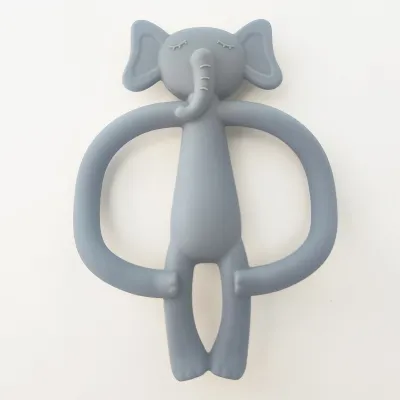
Prices are valid at publication and may change. Please refer to the product page for the latest price.
Conversely, the urge to chew arises later, typically around the middle of the first year, as a direct response to the discomfort of teeth pushing through the gums. Teethers are engineered to withstand active biting and chewing, providing firm counter-pressure that temporarily numbs and relieves sore gums.
Recognizing the behavioral cues of teething will help you determine when it is time to introduce a dedicated teething toy. Classic signs of teething include a sudden increase in drooling, frequent rubbing of the gums with fingers or toys, mild irritability, and a tendency to pull at the ears, which can be a sign of referred pain from the jaw. You may also notice your baby rejecting their usual soother in favor of harder objects, indicating that they require the firm resistance of a teether rather than the soft, yielding nipple of a pacifier.
In tropical climates, these teething symptoms can feel particularly intense for an infant. High humidity and heat can make drool-soaked skin highly susceptible to painful rashes around the chin, neck, and chest, which often compounds the baby’s general fussiness. Observing these environmental and behavioral factors together allows you to address the root cause of their discomfort more effectively.
Keep in mind that while developmental charts provide general age ranges for these milestones, individual pacing varies significantly from baby to baby. Some infants may show signs of teething as early as three months, while others might not cut their first tooth until after their first birthday. Rather than adhering strictly to a calendar, focus on your baby’s immediate behavioral signals and physical comfort levels to guide your choices.
Essential Safety and Design Checks for Hoshi Products
When evaluating Hoshi soothers and teethers, your primary focus should always be on verifying the safety, material composition, and structural integrity of each item. Before purchasing, carefully inspect the physical packaging for clear labels indicating that the product is made from food-grade, non-toxic materials. High-quality silicone and natural rubber are the industry standards for infant oral products because they are durable, flexible, and free from harmful chemicals such as bisphenol A (BPA), phthalates, and PVC. Checking these material specifications on the manufacturer’s label ensures that the item is safe for prolonged contact with your baby’s mouth.

The design of a soother’s shield is another critical safety factor that requires close inspection. A safe shield must be large enough to prevent the entire soother from being drawn into the baby’s mouth, eliminating the risk of accidental swallowing or choking. Additionally, the shield must feature prominent ventilation holes to allow air to circulate freely around the baby’s lips. In warm, humid regions, these ventilation ports are indispensable; they prevent saliva from pooling against the delicate skin, which significantly reduces the risk of friction-induced drool rash and fungal infections.
Structural integrity is equally vital, particularly for products subjected to constant biting and pulling. Look for one-piece molded constructions where the nipple and shield are integrated into a single, seamless unit, or verify that any multi-piece assemblies are exceptionally secure. Avoid products with small, decorative, or detachable parts that could break off under pressure, as these present severe choking hazards.
Finally, always cross-reference the product packaging for explicit age-grading labels, weight recommendations, and manufacturer warnings. These guidelines are established to match the structural strength of the product with the developing jaw power of the child. A soother designed for a newborn may not withstand the biting force of an older infant with emerging teeth, making it essential to transition to stronger, age-appropriate models as your baby grows.
Matching Hoshi Sizes and Textures to Developmental Stages
Selecting the correct size and texture of a Hoshi product is a dynamic process that must evolve alongside your baby’s physical growth and motor skills. During the newborn to three-month stage, an infant’s oral cavity is small, and their facial muscles are still developing. For this stage, prioritize lightweight soothers with small, orthodontic nipples that promote natural palate development without causing jaw fatigue. The shield should be contoured to fit comfortably beneath the nose, ensuring it does not obstruct breathing or press too firmly against the delicate facial skin.
As your baby transitions into the three-to-six-month window, their physical capabilities expand rapidly. This is the stage where hand-eye coordination begins to improve, and babies start reaching for and grasping objects. You can now transition to slightly larger soother shields to accommodate their growing facial structure. This is also an excellent time to introduce soft, lightweight teethers designed with easy-to-grip handles or loops, allowing your baby to practice bringing the toy to their mouth independently, which supports both sensory and motor development.
From six months and beyond, the focus shifts toward managing active tooth eruption. At this stage, babies require textured teethers with varying degrees of firmness to massage different areas of the gums. Look for designs that feature raised bumps, ridges, or varied surface patterns that can reach the back molars as they begin to emerge. Ensure that these teethers are large enough to prevent accidental swallowing while remaining light enough for an older infant to manipulate easily.
To ensure optimal safety and comfort, always prioritize your baby’s actual physical size and oral development over chronological age guidelines. If your baby is larger or smaller than average, or if their teeth are emerging earlier than expected, adjust your product selection accordingly. Regularly compare the physical dimensions of the soother or teether against your baby’s mouth to ensure a comfortable, secure fit that does not cause gagging or skin irritation.
Cleaning, Inspection, and Safe Replacement Practices
Maintaining strict hygiene and safety protocols is essential when managing any product that goes into your baby’s mouth. Always begin by thoroughly reading and following the manufacturer’s specific sterilization and cleaning instructions printed on the Hoshi packaging. While some silicone products can withstand high-temperature boiling or steam sterilization, natural rubber components often require gentler hand-washing with mild, baby-safe soap and warm water to prevent material degradation.
In tropical environments, the combination of high humidity and residual moisture creates an ideal breeding ground for mold and bacteria. After cleaning, it is crucial to dry all soothers and teethers completely in a well-ventilated area away from direct sunlight, which can warp or weaken the materials. Never store oral products while they are still damp, and regularly check hollow teethers or soothers for any trapped water inside the nipple, squeezing out any excess moisture immediately after washing.
A rigorous inspection routine should be performed before every single use. Take a moment to pull the nipple or teething surface firmly in all directions, checking for micro-tears, hairline cracks, stickiness, or changes in color. Natural rubber naturally degrades over time, becoming soft and sticky, while silicone can develop weak spots if bitten repeatedly. If you detect any signs of wear, structural weakness, or deformation, discard the product immediately to prevent pieces from breaking off during use.
Even in the absence of visible damage, establishing a routine replacement schedule is a fundamental safety practice. Soothers should generally be replaced every one to two months due to hygiene considerations and the natural wear of materials subjected to constant suction and moisture. Teethers should also be retired once your baby develops a full set of front teeth, as their sharp edges can easily slice through soft silicone or rubber.
Finally, never compromise on safety when securing these items to your baby. Avoid the temptation to attach soothers or teethers to long strings, ribbons, cords, or loose clothing, as these pose a severe risk of strangulation. Instead, utilize approved, short pacifier clips that feature safety breakaway mechanisms and comply with standard length regulations, ensuring the clip is only attached to your baby’s clothing under direct adult supervision.
Frequently Asked Questions (FAQ)
Can my baby use a soother and a teether at the same time?
Soothers and teethers serve entirely different developmental purposes and are designed for distinct oral actions, meaning they should not be used simultaneously in your baby’s mouth. A soother is engineered for gentle, non-nutritive sucking to calm and comfort your baby, whereas a teether is built to withstand active biting and chewing to relieve gum pressure. Offering both at once can confuse your baby’s natural oral reflexes and may lead to premature wear on the delicate nipple of the soother.
The most effective approach is to offer each item based on your baby’s immediate state and needs. Use a soother during quiet times, wind-down routines, or sleep transitions when your baby needs to relax and satisfy their sucking reflex. During active, awake periods when your baby is drooling, chewing on their hands, or showing signs of gum discomfort, swap the soother for a textured teether to provide targeted physical relief.
How do I know when it is time to wean my baby off the soother?
Deciding when to transition your baby away from a soother depends on their developmental milestones and oral health needs. Many pediatric professionals recommend beginning the weaning process between six months and one year of age. Initiating the transition during this window helps minimize the risk of middle ear infections and prevents potential long-term alignment issues with their developing teeth and jaw structure.
To make the transition as gentle as possible, start by gradually limiting soother use to specific times of the day, such as naptime and bedtime only. During the day, replace the comforting sensation of the soother with alternative soothing techniques, such as soft security blankets, gentle rocking, or interactive play. Phasing out the soother slowly allows your baby to develop independent self-soothing habits without causing unnecessary stress or disruption to their sleep routines.
Community discussion
Share your experience or ask a question. Comments are reviewed before publication.