
Choosing the right bouncing chair for your baby requires matching the device to your child’s current developmental stage, verifying robust physical safety features, and selecting breathable, easy-to-clean materials that suit your home. A bouncer provides a secure, angled spot for an infant to observe their surroundings, giving caregivers a hands-free moment to manage daily tasks. However, selecting the ideal model involves understanding how to evaluate structural integrity and operational limits to ensure your baby remains safe and comfortable.
While the market offers a wide array of designs, from simple, baby-powered frames to high-tech motorized swings, safety must always remain your primary consideration. By focusing on certified stability, secure harness systems, and appropriate developmental windows, you can confidently select a bouncer that supports your baby’s growth. This guide outlines the essential factors to evaluate before making your purchase, helping you find a model that fits both your lifestyle and your budget.
Quick Checklist: Evaluating a Bouncing Chair for Your Baby
Before purchasing a baby bouncer, run through this quick checklist to ensure the model meets basic safety and practical standards. Checking these details on the packaging or product tag will help you avoid models that are unsuitable for your baby’s size or your home layout.
Products mentioned in this guide
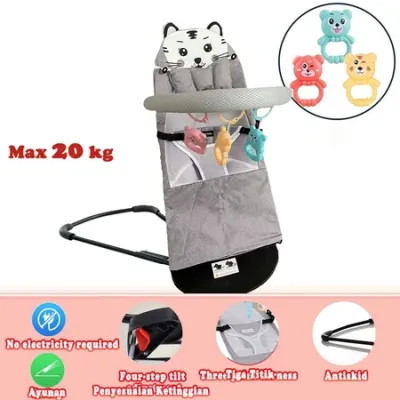
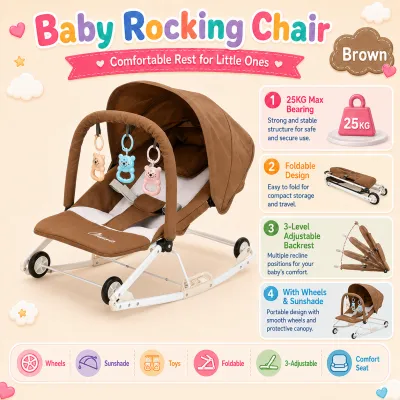
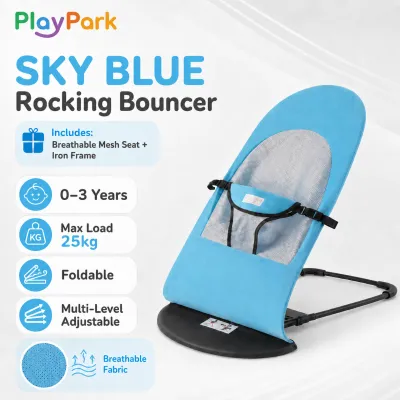
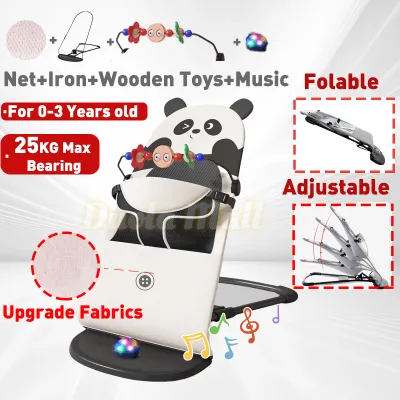
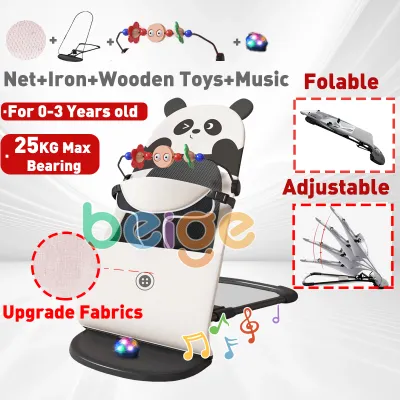
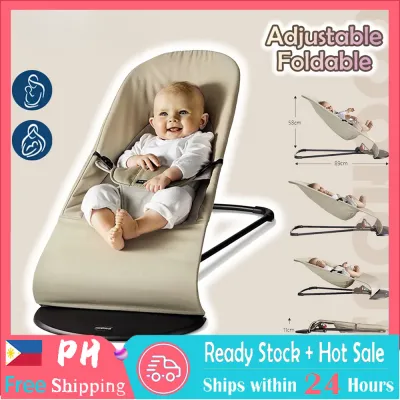
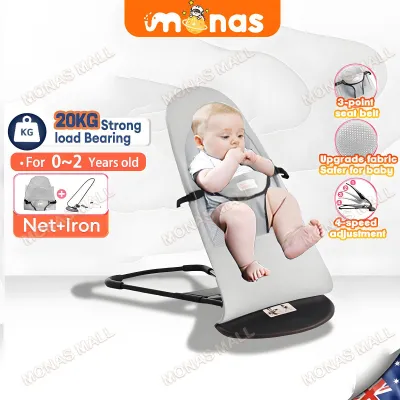
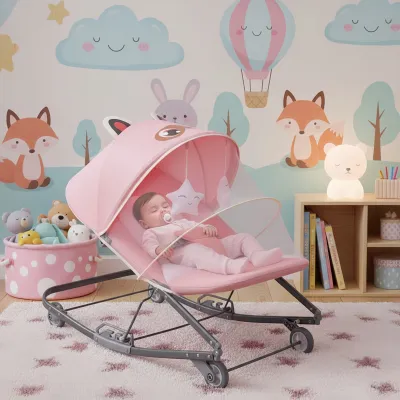
Prices are valid at publication and may change. Please refer to the product page for the latest price.
- Harness Security: Verify that the bouncer features a robust three-point or five-point harness with a secure, child-proof buckle.
- Weight and Age Limits: Locate the manufacturer's tag to check the minimum and maximum weight capacities, ensuring they align with your baby's current measurements.
- Stability Base: Look for a wide, low-profile base equipped with non-slip rubber grips to prevent sliding on smooth floors.
- Certification Marks: Confirm the presence of recognized safety standards printed on the frame, tag, or instruction manual.
- Portability: Evaluate whether the frame folds flat for easy storage under furniture or transport in a vehicle.
- Fabric Care: Ensure the seat cover is fully removable and machine-washable to handle inevitable spills and diaper leaks.
When to Start and Stop Using a Baby Bouncer
Introducing your baby to a bouncer requires careful attention to their physical development. Most manufacturers rate bouncers for use from birth, but you must observe your infant’s head and neck control before placing them in the seat. If a newborn’s head slumps forward, their airway can become restricted, meaning they are not yet ready for an inclined seat.

As your baby grows, you must remain vigilant for the developmental milestones that signal it is time to retire the bouncer. The most critical milestone is when your baby attempts to sit up unassisted, roll over, or grasp the sides of the frame to pull themselves upward. Once your baby can transition out of a reclined position on their own, the risk of the bouncer tipping over increases dramatically, making continued use unsafe.
Additionally, you must strictly adhere to the maximum weight limit specified by the manufacturer, which typically ranges from 9 kg to 13 kg depending on the model’s structural design. Exceeding this limit compromises the frame’s flexibility and support, posing a structural failure risk. Always prioritize your baby’s physical milestones over the age guidelines printed on the box, as individual growth rates vary widely.
To support healthy physical development, limit your baby’s continuous time in the bouncer to short sessions of 20 to 30 minutes. Prolonged periods in an inclined, restricted position can contribute to positional plagiocephaly, commonly known as flat head syndrome. It also limits the floor time your baby needs to practice rolling, reaching, and crawling, which are essential for building core muscle strength.
Essential Safety Features to Check Before Buying
When shopping for a bouncing chair, inspecting physical safety features is your most important task. Start by looking for recognized safety certifications and compliance marks on the product tag or manual, which indicate the model has undergone rigorous stability and structural testing. Avoid purchasing secondhand or unbranded models that lack clear certification labels or user manuals.
Next, evaluate the physical stability of the bouncer by examining the base width and frame material. A safe bouncer features a wide, heavy-duty metal or reinforced plastic base that sits low to the ground, preventing the unit from tipping sideways when the baby moves. Non-slip rubber feet on the bottom of the base are essential, especially on smooth tiled or polished wooden floors, to keep the bouncer firmly in place.
Inspect the harness system carefully, comparing three-point and five-point designs. A three-point harness secures the waist and crotch, which is generally sufficient for younger infants who cannot yet push themselves up. A five-point harness adds shoulder straps, offering superior security for active babies who tend to wiggle or lean forward. The buckle must require a firm, dual-action press to release, ensuring it cannot be accidentally undone by the baby or a young sibling.
Finally, check the bouncer for potential physical hazards that could cause injury. Run your fingers along the frame to ensure there are no sharp edges, exposed metal joints, or finger-pinch points where small hands could get caught. Inspect the toy bar to ensure it is securely attached but easily removable, and verify that any hanging toys are soft, free of small detachable parts that present choking hazards, and devoid of long cords that could pose a strangulation risk.
Comfort, Design, and Caregiver Convenience
While safety is paramount, balancing baby comfort with caregiver convenience will ensure the bouncer is a practical addition to your daily routine. Look for models that offer adjustable seat recline options. Younger infants require a flatter, more reclined angle to support their head and neck, while older babies who have gained head control often prefer a more upright position to observe their surroundings.
Fabric choice is another critical factor, particularly in warm, humid tropical climates. Heavy, synthetic fabrics can trap heat and moisture, causing your baby to sweat excessively and develop uncomfortable heat rashes. Opt for breathable mesh panels, cotton blends, or moisture-wicking fabrics that promote airflow. Ensure the entire fabric cover can be easily slipped off the frame and is machine-washable, as quick cleanup is essential for maintaining hygiene.
Consider the weight of the frame and how easily you can move it between rooms. A lightweight, travel-friendly design allows you to carry the bouncer from the living room to the kitchen, keeping your baby within sight while you complete household chores. However, remember that you must never lift or carry the bouncer while your baby is sitting inside it.
If you are considering a motorized bouncer that swings or vibrates automatically, evaluate the power source and operational noise. Some models run on standard batteries, which offer excellent portability but require regular replacement, while others feature a plug-in AC adapter for continuous power. Test the motor’s noise level before buying; a loud, mechanical hum can disturb a resting baby and quickly become a nuisance in a quiet home.
How to Match the Bouncer to Your Space and Needs
Selecting the right bouncer also depends on your living arrangements, space constraints, and budget. If you live in a compact apartment or condominium, a large, stationary multi-functional swing may overwhelm your living space. In this scenario, a compact, self-bouncing model that folds completely flat is highly practical, as it can be tucked away behind a door or under a bed when not in use.
For families looking for long-term value, multi-use functionality is an excellent feature to consider. Some modern bouncers are designed to convert from an infant bouncer to a soothing rocker, and eventually into a toddler chair as your child grows. While these convertible models often carry a higher initial price tag, ranging from ₱3,000 to ₱8,000 or more, their extended lifespan can make them a more cost-effective investment compared to single-use models.
When budgeting, distinguish between essential safety features and optional luxury add-ons. A sturdy frame, a secure harness, and breathable, washable fabric are non-negotiable features that are worth investing in. Electronic extras, such as automatic bouncing motions, built-in lullabies, white noise machines, and overhead light shows, are convenient but optional features that significantly increase the price without improving the core safety of the product.
Safe Setup and Daily Usage Rules at Home
Once you have purchased a bouncer, establishing strict daily usage rules is vital to prevent common household accidents. The most critical rule is the “floor only” policy. Never place the bouncer on an elevated surface, such as a table, kitchen counter, bed, or sofa. The baby’s natural bouncing motion, combined with smooth surfaces, can cause the bouncer to slide or tip over, leading to severe fall injuries.
Always buckle your baby into the harness securely, adjusting the straps to fit snugly against their body every single time you use the seat. Never leave your baby unattended in the bouncer, even for a brief moment. An adult must remain in the same room and keep the baby within active eyesight to respond immediately if the baby becomes uncomfortable or attempts to roll.
Position the bouncer away from potential household hazards to ensure a safe environment. Keep the unit clear of stairs, steps, open doorways, electric fans, space heaters, dangling cords from window blinds, and water sources. Additionally, ensure the surrounding area is free of low-hanging objects or items that could be knocked over onto the bouncer.
Regularly inspect the bouncer for signs of wear and tear, such as frayed harness straps, cracked plastic joints, bent metal frames, or loose screws. If you notice any structural damage, stop using the device immediately and contact the manufacturer for replacement parts or guidance. Taking these precautions ensures the bouncer remains a safe, helpful tool for your family.
Frequently Asked Questions (FAQ)
Can a baby sleep in a bouncing chair?
No, a baby should not sleep in a bouncing chair. Bouncers are designed exclusively for supervised, active wake time, not for sleep. The inclined position of a bouncer poses a significant risk of positional asphyxia, a dangerous condition where an infant’s heavy head can drop forward onto their chest, constricting their airway and limiting oxygen intake. If your baby falls asleep while in the bouncer, transfer them immediately to a flat, firm, and approved sleep surface, such as a crib, bassinet, or play yard, to ensure safe sleep.
How do I clean a baby bouncer safely?
To clean a baby bouncer safely, always start by checking the manufacturer’s care label attached to the fabric cover. Most fabric covers can be removed and machine-washed on a gentle cycle with cold water and a mild, baby-safe detergent to prevent skin irritation. Avoid using harsh bleach or fabric softeners, which can degrade the fabric fibers. For the metal or plastic frame, wipe it down with a damp cloth and a mild soap solution, taking care not to submerge any mechanical, electronic, or battery-operated components in water. Allow all parts, especially the fabric cover, to air dry completely before reassembling the bouncer to prevent the growth of mold and mildew, which can thrive in humid environments.
Community discussion
Share your experience or ask a question. Comments are reviewed before publication.