
Selecting the right bed fence requires matching the guardrail’s physical dimensions to your specific mattress thickness, bed frame structure, and your child’s developmental stage. A secure fit ensures there are no dangerous gaps where a child could become trapped, while the height must be sufficient to prevent accidental falls. By carefully measuring your sleeping setup and verifying the manufacturer’s specifications, you can create a secure sleeping environment that accommodates your daily caregiving routine.
Comparing Bed Fence Designs and Locking Mechanisms
When selecting a bed fence, the design you choose directly impacts how easily you can access the bed and care for your child. Fold-down bed fences are highly popular because they swing downward when unlocked, allowing you to change sheets, make the bed, or lift your child without reaching over a high barrier. Fixed bed fences, on the other hand, remain permanently upright, offering continuous structural rigidity but requiring caregivers to lift children over the top of the rail during every transition.
For families who travel frequently or visit relatives, travel bed fences offer a portable alternative. These models are typically lightweight, collapsible, and designed to fit temporary sleeping arrangements, though they may lack the heavy-duty anchoring systems found in permanent home models. When evaluating these designs, consider how often you will need to lower the rail and whether a permanent or temporary installation fits your lifestyle.
Products mentioned in this guide

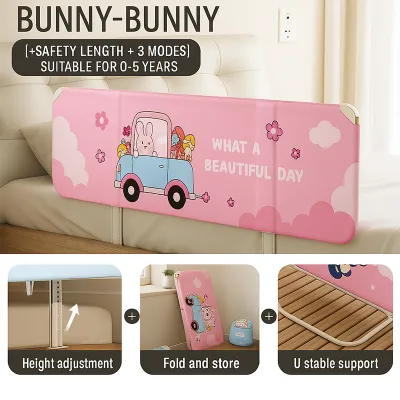
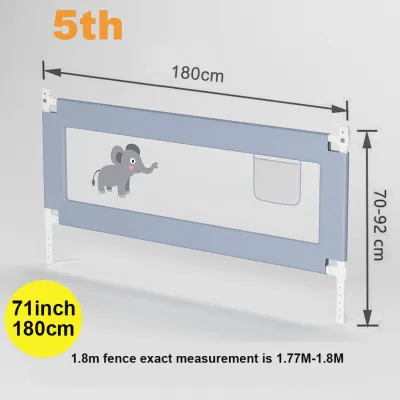
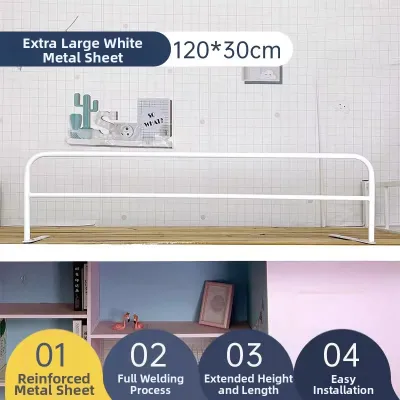
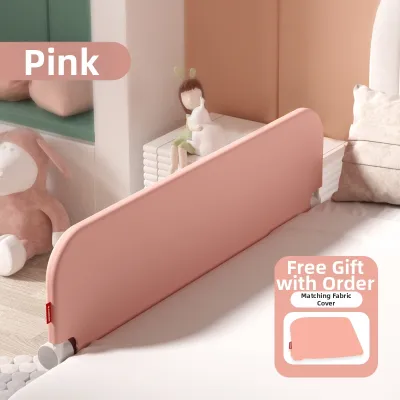
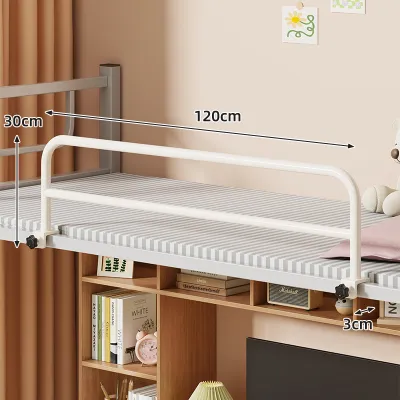
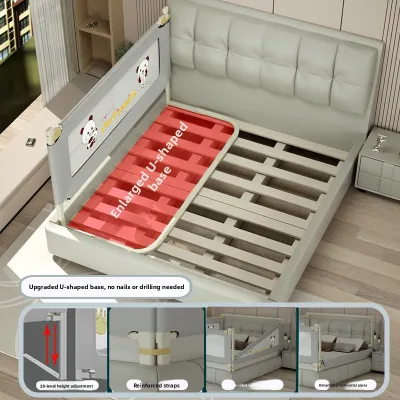
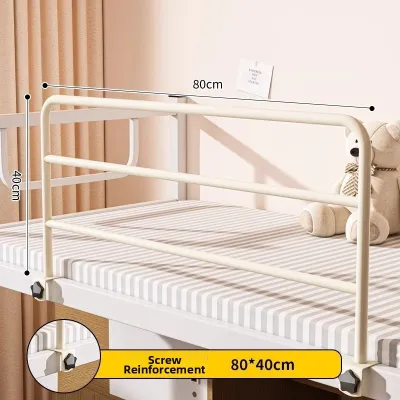
Prices are valid at publication and may change. Please refer to the product page for the latest price.
Another critical design element is the base support system, which generally falls into two categories: legged bases and legless under-mattress support bars. Legged bases extend down to the floor or anchor deeply under the mattress, distributing weight across a wider surface area to prevent the rail from tilting outward. Legless support bars rely entirely on the weight of the mattress and tension straps to stay in place, making them highly dependent on a heavy mattress for stability.
In humid tropical climates like the Philippines, where wooden bed frames and slatted bases are common, ensuring the support bars align properly with the slats is crucial to prevent slipping. If your bed base consists of wide gaps between wooden slats, legless support bars may slip through the openings, compromising the stability of the entire fence. Always check how the base of the fence will rest against your specific bed frame before finalizing your choice.
Locking mechanisms and hinge designs are the primary safety features that prevent accidental lowering of the rail. Look for double-lock systems that require two distinct physical actions to disengage, such as pressing a button while sliding a collar, which prevents curious toddlers from operating the mechanism. The hinges should be shielded or positioned away from the mattress surface to avoid pinching small fingers or snagging light cotton bedding.
Determining the Right Height and Gap Size for Safety
The effective height of a bed fence is the distance from the top of the mattress to the top of the rail. To determine what height you need, measure your mattress thickness and add the minimum safety height recommended by the manufacturer for your child’s developmental stage. If your mattress is exceptionally thick or includes a plush topper, a standard fence may not stand high enough to prevent a rolling child from tumbling over.

Using a fence that is too short for your mattress thickness creates a false sense of security. When a child stands up or rolls over in their sleep, a low rail can act as a pivot point, increasing the risk of a fall rather than preventing it. For thicker mattresses, look for extra-tall bed fences specifically designed to maintain a safe barrier height above the sleeping surface.
Similarly, the space between the bed fence and the side of the mattress must be virtually non-existent. Any gap can become an entrapment hazard where a child’s head, torso, or limbs can get wedged. When installing the rail, check that the mesh or fabric is pulled taut against the mattress edge, leaving no room for a child to slip between the two surfaces.
To prevent entrapment, the fence must fit snugly against the mattress along its entire length. Even a small gap of a few centimeters can be dangerous for a sleeping child who rolls against the edge. If the mattress is soft or easily compressed, the weight of the child can push the mattress away from the rail, creating a temporary gap that is just as hazardous as a permanent one.
Always read the product packaging or manual to verify the maximum mattress thickness the fence can safely accommodate. Using a fence on a mattress that exceeds this limit reduces the effective height of the barrier, rendering it ineffective and potentially unsafe. Manufacturers design their products to perform within specific thickness ranges, and exceeding these limits invalides the safety design of the guardrail.
Measuring Your Bed and Mattress for a Secure Fit
Before purchasing any safety gear, use a reliable measuring tape to record the exact dimensions of your mattress. Do not rely on standard size labels like single, double, or queen, as actual dimensions can vary slightly between manufacturers. Include the height of any mattress protectors, toppers, or fitted sheets in your final thickness measurement, as these additions can significantly alter how the fence sits against the bed.
Measure the length of the bed side where you plan to install the fence. Some fences are designed to cover the entire length of the bed, while others are shorter to allow space at the foot of the bed for easy entry and exit. Ensure the length of the fence you choose matches the straight edge of your mattress without overlapping any curved corners or decorative headboards.
For bed frames with wooden slats, measure the distance between the slats to ensure the under-mattress support bars will not fall through the gaps. If the slats are spaced too far apart, you may need to place a solid wooden board or bunkie board over the slats to provide a flat, stable surface for the fence supports. This step is particularly important for maintaining the structural integrity of the fence over time.
If your bed frame has a recessed lip where the mattress sits inside a wooden frame, measure the depth of this recess. A deep recess can block the folding mechanism of a fold-down fence or prevent the support bars from laying flat against the bed base. In such cases, you may need to select a fence specifically designed for recessed beds or adjust the mounting height accordingly.
Platform beds with flat, solid bases require anchor straps that wrap completely around the platform or screw directly into the wooden board. For box springs, the anchor straps must secure tightly around the entire box spring unit to prevent the fence from tilting outward under pressure. If your bed configuration does not allow for a flat, secure anchor, you may need to look for specialized mounting hardware approved by the manufacturer.
Verifying Safety Features and Manufacturer Specifications
When evaluating a bed fence, inspect the mesh panel to ensure it has high tension and does not sag when pressure is applied. The mesh should be breathable to allow proper airflow, which is especially important in warm, humid climates. The metal or plastic joints must be reinforced and free from sharp edges or rough seams that could cause scratches or cuts.
High-quality models often feature visual locking indicators, such as color-coded buttons that turn green when the rail is securely locked in the upright position. These indicators provide quick visual confirmation for caregivers, reducing the risk of leaving the fence partially unlocked. Avoid models with loose joints or flimsy locking mechanisms that feel unstable when shaken.
Every bed fence is designed with specific physical limits in mind. Carefully read the manufacturer’s documentation to verify the minimum and maximum age, weight, and height recommendations. Never use a bed fence for an infant who cannot yet sit up independently, as their physical capabilities and safety requirements differ significantly from those of older toddlers.
When budgeting for home baby-proofing, investing a few thousand ₱ in a high-quality, certified bed fence is a practical step to ensure long-term durability. Before purchasing a bed fence from an online marketplace or local baby store, check the packaging for compliance marks and safety standard labels. These labels indicate that the product has undergone structural testing to verify its stability and material safety.
If a product lacks clear manufacturer information, contact details, or safety labels, it is best to choose an alternative model with verifiable documentation. A reputable manufacturer will always provide clear installation instructions, safety warnings, and customer support contact information. Verifying these details beforehand helps ensure you are installing a reliable safety barrier in your home.
Installation Basics and Routine Safety Checks
Begin the installation by placing the support bars flat beneath the mattress, ensuring they are positioned according to the manual’s instructions. Use the provided anchor straps to secure the base of the fence to the opposite side of the bed frame or box spring. Tighten the straps until the vertical rail is pressed firmly against the side of the mattress, leaving absolutely no space between them.
If your fence uses screws to secure the base to a wooden platform, ensure the screws are driven straight and tight into the wood. For slatted beds, make sure the anchor straps are wrapped securely around individual slats to prevent lateral sliding. Once the installation is complete, test the stability of the fence by pushing firmly against the top rail to simulate a child rolling against it.
Before placing your child in bed, perform a quick physical check of the fence. Give the rail a firm shake to ensure the locking mechanism is fully engaged and the base has not shifted. Visually inspect the contact point between the mattress and the fence to confirm that no gaps have formed due to mattress movement or sheet changes.
Over time, daily use and mattress shifting can cause anchor straps to loosen. Make it a habit to check the tension of the straps weekly, tightening them as needed to maintain a snug fit. If you use fitted sheets, be careful not to pull the mattress away from the fence when changing the bedding, and always re-verify the fit after every sheet change.
If you notice any bent metal bars, torn mesh, cracked plastic joints, or loose anchor straps that can no longer be tightened securely, immediately stop using the bed fence. In humid environments, check metal components regularly for signs of rust or corrosion that could compromise structural integrity. If you cannot achieve a tight, gap-free fit with your current mattress and bed frame, discontinue use and consult the manufacturer or a professional installer for guidance.
Frequently Asked Questions (FAQ)
At what age or developmental stage should I stop using a bed fence?
Caregivers should transition away from using a bed fence when the child reaches the maximum weight or height limit specified by the manufacturer. Additionally, if your child begins to show signs of climbing over the rail, the fence becomes a climbing hazard rather than a safety feature, and its use should be discontinued immediately. At this stage, transitioning to a low toddler bed or placing the mattress directly on the floor is often a safer alternative.
Can I use a standard bed fence on a bunk bed or a toddler bed with existing rails?
Standard bed fences are generally not designed for use on bunk beds, loft beds, or any elevated sleeping surfaces, as a fall from that height carries a much higher risk of injury. Furthermore, mixing aftermarket bed fences with built-in toddler bed rails can create dangerous entrapment zones where a child’s head or limbs could become stuck. Always consult the user manuals for both your bed frame and the bed fence to verify explicit compatibility before attempting to combine them.
What should I do if my mattress shifts during the night and creates a gap?
If your mattress shifts and creates a gap, immediately remove your child from the bed and re-secure the anchor straps. Check if the straps have stretched or slipped, and tighten them until the fence is flush against the mattress again. To prevent future shifting, you can use a manufacturer-approved non-slip pad between the mattress and the bed base, or inspect the bed frame to ensure the mattress fits snugly within its boundaries. If the shifting cannot be permanently resolved, stop using the bed fence to avoid entrapment risks.
Community discussion
Share your experience or ask a question. Comments are reviewed before publication.