
Choosing the right Bebeta baby walker for your little one is not just a matter of looking at the age recommendation on the box. Instead, the ideal choice depends on your baby’s specific physical milestones: sit-in walkers are designed for babies who can sit upright with support but cannot yet stand, while push-behind walkers are meant for toddlers who are actively pulling themselves up to stand and trying to take their first steps. By matching the gear to your child’s developmental readiness and strictly adhering to safety guidelines, you can provide an engaging environment that supports their natural mobility.
Signs Your Baby Is Ready for a Walker
Determining when to introduce a baby walker requires careful observation of your child’s physical milestones rather than relying solely on the age ranges printed on commercial packaging. While many manufacturers suggest a starting age of around six months, every child develops at their own unique pace. Before placing your baby in any mobile gear, they must possess the physical strength and coordination to hold their head and neck upright completely unassisted for extended periods. Introducing a walker before these muscles are fully developed can place undue strain on your baby’s spine and joints.
Another critical milestone is the ability to sit upright independently without leaning on pillows or receiving hands-on support from a caregiver. This level of core strength indicates that your baby’s abdominal and back muscles are mature enough to handle the upright positioning of a sit-in walker. Additionally, look for signs of active curiosity and a desire for movement, such as your baby rolling toward toys, scooting on their tummy, or bouncing eagerly when held in a standing position. These behaviors demonstrate that their nervous system is ready to explore spatial relationships and coordinate leg movements.
Products mentioned in this guide
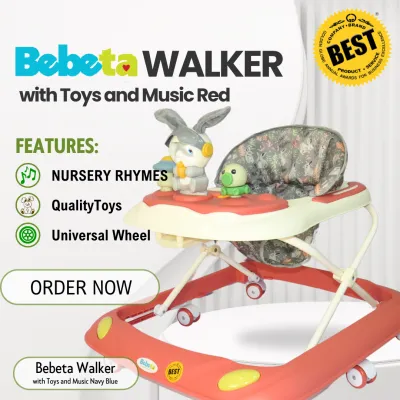
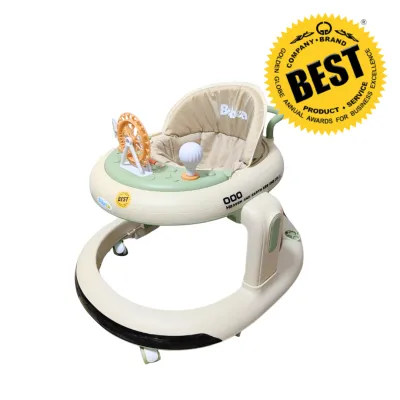
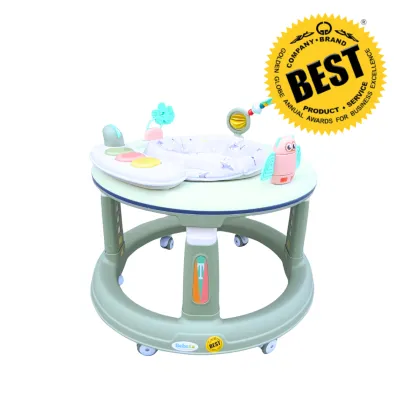
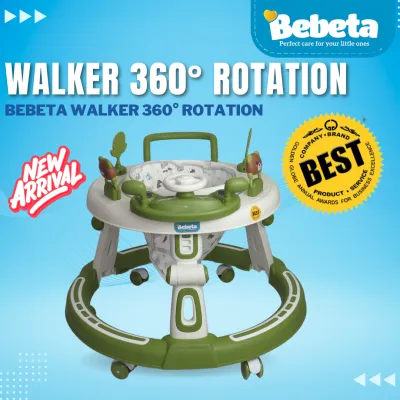
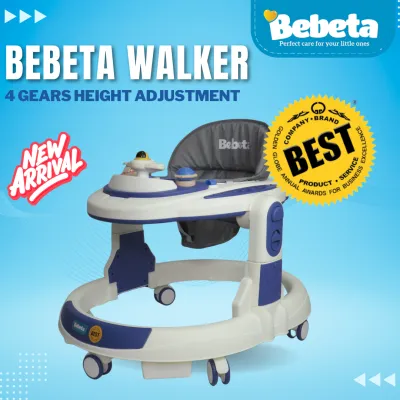
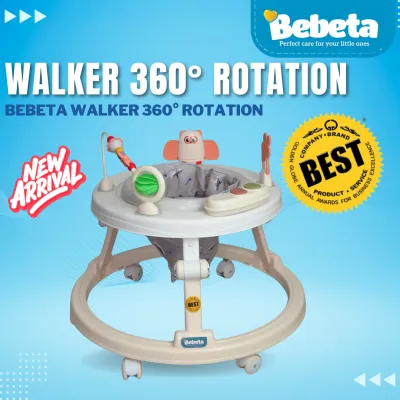
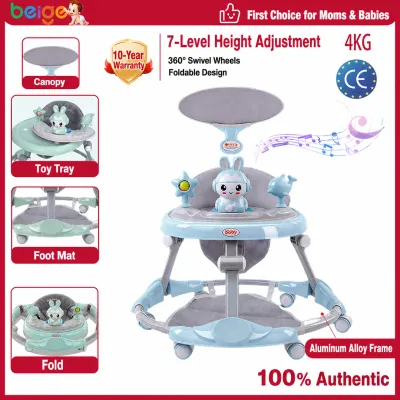
Prices are valid at publication and may change. Please refer to the product page for the latest price.
It is vital to distinguish between the physical readiness required for a supported sit-in walker and that required for a push-behind walker. A baby who can sit independently but cannot yet bear their full weight on their legs is a candidate for a sit-in model, which provides a supportive fabric seat to cradle their pelvis. Conversely, a push walker is designed for a baby who has already mastered pulling themselves up to a standing position using furniture and is beginning to cruise sideways. If you ever feel uncertain about your baby’s motor skill progression or physical readiness for mobile baby gear, consult your pediatrician for personalized guidance.
Matching Bebeta Walker Types to Developmental Stages
Bebeta offers a variety of baby activity gear designed to suit different stages of early childhood development, typically ranging in price from budget-friendly basic models around ₱1,200 to more feature-rich options closer to ₱3,500. Understanding how these products align with your baby’s current physical abilities will help you make a safe and practical purchase.

Sit-In Walkers for Supported Mobility (Typically 6-9 Months)
Traditional sit-in walkers are designed specifically for babies who can sit up reliably without assistance but are not yet capable of standing or walking on their own. These models feature a suspended fabric seat surrounded by a wide plastic frame on wheels, allowing babies to sit comfortably while their feet touch the floor. At this stage, the primary benefit of a sit-in walker is the upright perspective it offers, giving your baby a new way to interact with their environment while keeping them entertained with built-in toys.
While these walkers provide excellent sensory stimulation and allow babies to practice kicking and pushing off the floor, they do not teach a baby how to walk independently. Because the seat supports the baby’s weight, it does not build the core balance or ankle stability required for unassisted walking. Additionally, sit-in models can move surprisingly fast on smooth floors, which poses a risk of tipping or falling down stairs if the baby is left unsupervised for even a brief moment.
When browsing the Bebeta lineup, models like the Bebeta Standard Sit-In Baby Walker or the Bebeta 2-in-1 Walker and Rocker are popular choices for this developmental window. These models feature a wide, impact-resistant plastic base that provides lateral stability, helping to prevent the unit from tipping over during sudden movements. They also come equipped with interactive play trays featuring colorful buttons, rattles, and musical elements that encourage fine motor skill development while your baby is safely seated.
Push Walkers for First Steps (Typically 9-14 Months)
As your baby transitions from sitting to standing, their developmental needs shift from supported mobility to active balance training. Push walkers, also known as walk-behind toys, are designed for babies who can pull themselves up to a stand and are beginning to take tentative steps while holding onto furniture. Unlike sit-in models, push walkers require your baby to support their entire body weight, which actively builds the leg, hip, and core muscles necessary for independent walking.
Using a push walker helps your child develop a natural walking gait, as they must balance their torso while moving forward and coordinating their steps. It also fosters spatial awareness and confidence, as the toddler controls the speed and direction of their movement. To ensure safety, a high-quality push walker must feature adjustable wheel resistance to prevent the toy from rolling away too quickly on smooth flooring, along with a stable, weighted base that resists tipping backward when the child pulls themselves up using the handle.
For this active stage, the Bebeta Activity Push Walker serves as an excellent tool for emerging toddlers. This model features a sturdy handle positioned at an ergonomic height, along with a front-facing activity panel loaded with shapes, gears, and buttons to keep your child engaged when they take a break from walking. The wheels on these models are designed with adjustable tension screws, allowing parents to increase friction on smooth tiled floors to ensure the walker moves at a safe, controlled pace for a beginner.
Essential Features to Compare Across Bebeta Models
When evaluating different Bebeta models to find the perfect fit for your home and lifestyle, comparing specific design elements will ensure you select a product that is both safe and highly functional.
- Weight and Height Limits: Every baby walker has strict physical boundaries set by the manufacturer to ensure structural integrity and balance. You must check the product packaging or manual for the exact weight capacity (often capped around 12kg for sit-in models) and maximum height limits. Exceeding these limits can cause the frame to bend, the seat fabric to tear, or the center of gravity to shift, making the walker prone to tipping.
- Adjustability: For sit-in models, look for a frame that offers multiple height adjustment positions. When your baby is in the seat, their feet must rest flat on the floor with a slight bend in the knees; if only their tiptoes touch the ground, it can strain their calf muscles and encourage an unnatural walking gait. For push walkers, check if the handle height can be adjusted to match your toddler's standing height, ensuring they do not have to hunch forward while pushing.
- Wheel Type and Floor Compatibility: Consider the primary flooring material in your home, as ceramic tiles, polished concrete, and hardwood react differently to walker wheels. Hard plastic wheels can slide too quickly on smooth tiles, which are incredibly common in Filipino households, whereas rubberized wheels or wheels with silicone traction strips offer better grip and control. Ensure the wheels rotate smoothly and do not catch on low-pile rugs or floor transitions.
- Foldability and Storage: If you live in a space-conscious home or plan to travel with the walker, look for a model that folds flat. Many Bebeta sit-in models feature a quick-release folding mechanism that collapses the upper frame down toward the base, allowing you to slide the unit under a bed or store it neatly in a closet when not in use.
- Activity Tray Features: Examine the built-in toys on the walker's tray to ensure they offer age-appropriate sensory stimulation, such as spinning gears, mirrors, and music. Some Bebeta models feature removable toy trays, which reveal a clean, flat plastic surface underneath that can be used for snack times or for playing with other toys.
Critical Safety Rules for Walker Use
No matter which Bebeta model you choose, safety must remain your top priority. Baby walkers grant infants a high level of mobility and speed, allowing them to reach hazards that would normally be far out of their grasp.
Constant Supervision
A baby walker must never be used as a substitute for a playpen or a babysitter. You must maintain constant visual contact and remain within arm’s reach of your baby at all times while they are in or using the walker. Accidents can happen in a fraction of a second, and being in the same room ensures you can intervene immediately if your baby guides the walker toward a hazard.
Environmental Hazards
Before placing your baby in a walker, you must thoroughly baby-proof the entire floor area. Block off all access to stairways, steps, and raised thresholds using secure, hardware-mounted safety gates, as stair falls are the leading cause of walker-related injuries. Remove loose area rugs, electrical cords, and small objects from the floor that could catch the walker’s wheels and cause it to tip over. Additionally, ensure that hot liquids, tablecloths, household chemicals, and heavy objects on low tables are completely out of your baby’s elevated reach.
Time Limits
Limit your baby’s walker sessions to short intervals of no more than 15 to 20 minutes once or twice a day. Excessive time spent in a sit-in walker can restrict your baby’s opportunities for natural floor play, such as tummy time, rolling, and crawling, which are crucial for developing bilateral coordination and shoulder strength. Balancing walker play with plenty of unassisted floor time ensures healthy, well-rounded motor development.
Certifications and Recalls
Always verify that the specific Bebeta model you purchase complies with current safety standards. Look for official certification marks on the packaging and retain the product registration card so you can be notified immediately in the event of a manufacturer recall. Prior to assembly, inspect the product for any sharp edges, loose screws, or damaged components, and do not use the walker if any parts are compromised.
Pre-Purchase Checklist for Parents
Before finalizing your purchase of a Bebeta baby walker, take a moment to run through this practical checklist to ensure the model is a perfect fit for your baby and your home:
- Verify Baby's Measurements: Weigh and measure your baby, then compare these figures directly against the specific limits printed on the Bebeta packaging.
- Measure Your Home's Doorways: Use a tape measure to check the width of your doorways and hallways to ensure the walker's wide base can pass through comfortably without getting stuck.
- Assess Flooring Compatibility: Confirm that the wheel material is suitable for your home's flooring (e.g., non-slip wheels for smooth ceramic tiles).
- Check the Retailer's Return Policy: Ensure you can easily exchange or return the walker if your baby shows a strong aversion to it or if it does not fit your living space.
- Inspect Replacement Parts Availability: Check if replacement components, such as fabric seat inserts or spare wheels, are easily accessible through authorized Bebeta distributors.
Frequently Asked Questions (FAQ)
Do baby walkers delay walking?
Yes, excessive use of traditional sit-in baby walkers can potentially delay independent walking. Because sit-in walkers support a baby’s weight and keep them upright, they do not encourage the development of core balance, ankle stability, or the natural heel-to-toe walking motion. Additionally, babies in sit-in walkers often learn to propel themselves by pushing backward with their toes, which can strengthen the wrong muscle groups. To avoid delays, balance short walker sessions with plenty of free, unassisted floor play where your baby can crawl, pull up, and cruise naturally.
How do I clean the Bebeta walker seat and wheels?
To clean your Bebeta walker, first consult the manufacturer’s care label on the fabric seat and the product manual for specific instructions. If the fabric seat is removable and machine-washable according to its care label, wash it on a gentle cycle with mild baby detergent, then hang it to dry completely in a well-ventilated area to prevent mold growth, which is common in humid tropical climates. For the plastic frame and activity tray, wipe them down thoroughly with a damp cloth and mild, baby-safe soap, making sure not to submerge any electronic music compartments in water. Finally, inspect the wheel axles regularly and remove any trapped hair, dust, or fiber debris to ensure the wheels continue to roll smoothly and safely.
Community discussion
Share your experience or ask a question. Comments are reviewed before publication.