
Finding the right barbie toothbrush for kids involves much more than picking the brightest pink package on the shelf. While a beloved character can instantly transform a reluctant child into an enthusiastic brusher, the physical design of the toothbrush must align with your child’s specific developmental stage to ensure safe and effective oral care. Using a brush that is too large, too stiff, or difficult to hold can cause discomfort, damage delicate gums, and discourage good habits early on.
To select the best option, parents must evaluate the brush head size, bristle softness, and handle design against their child’s age group. Toddlers require extra-soft bristles and chunky handles designed for parental guidance, preschoolers need ergonomic grips for developing motor skills, and school-age children require multi-level bristles to clean emerging permanent teeth. Matching these physical features to your child’s dental milestones ensures their smile stays healthy while keeping their daily routine fun.
Why Your Child's Developmental Stage Dictates Their Toothbrush Needs
A child’s mouth undergoes rapid and dramatic changes from infancy through early childhood. During the first few years, the oral cavity is small, the gums are highly sensitive, and baby teeth are still erupting. As children grow into their preschool and school-age years, their jaws expand, primary teeth begin to fall out, and larger permanent teeth start to emerge. Each of these distinct phases requires a different physical tool to clean the teeth effectively without causing physical trauma to the delicate tissues inside the mouth.
Products mentioned in this guide
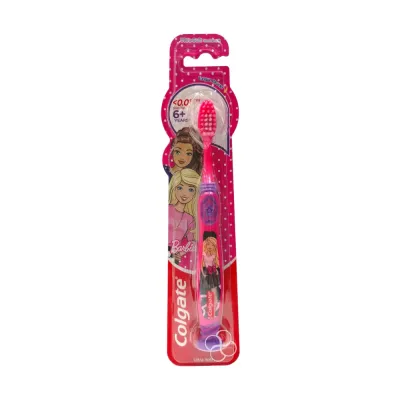
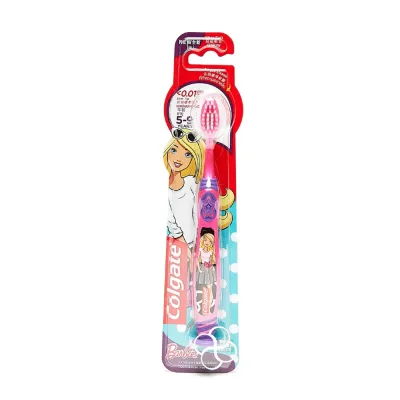
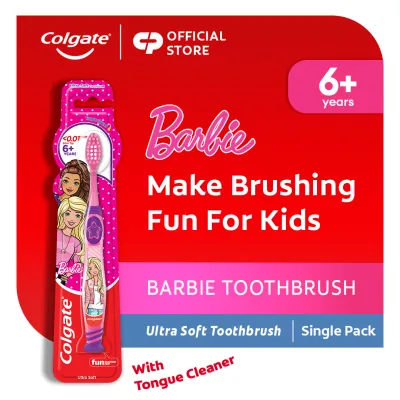
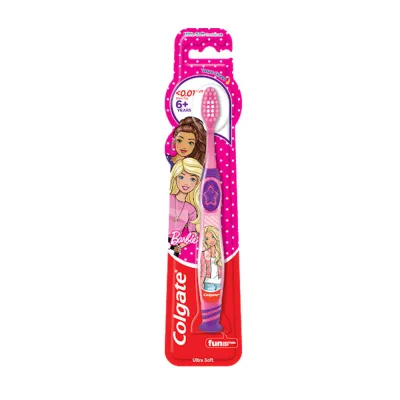
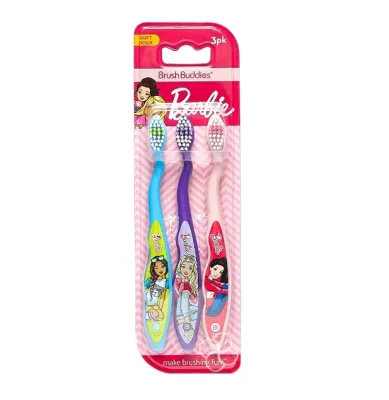
Prices are valid at publication and may change. Please refer to the product page for the latest price.
Using an age-inappropriate toothbrush carries real risks for a developing child. If a brush head is too large for a toddler’s mouth, it can easily trigger a gag reflex, causing physical discomfort and creating a negative association with oral hygiene. Furthermore, bristles that are too firm can scratch the enamel of newly erupted teeth or cause painful gum bleeding. Because children’s gums are far more delicate than those of adults, the texture and flexibility of the bristles must be carefully matched to their current stage of oral development. If your child experiences persistent gum bleeding, pain, or resistance during brushing, stop using the brush immediately and consult a pediatric dentist or qualified healthcare professional.
While a recognizable and beloved character like Barbie serves as an excellent motivator to build a consistent brushing habit, the physical specifications of the brush must always take priority over the aesthetic design. A beautiful handle graphic will not protect a child’s gums if the brush head is too bulky or the bristles are too stiff. Parents should view the Barbie theme as a helpful tool to encourage cooperation, but the ultimate purchasing decision must be guided by the physical dimensions and safety features of the brush.
What to Look for in a Barbie Toothbrush for Toddlers (Ages 0–3)
Introducing oral hygiene to toddlers requires a gentle, cautious approach that prioritizes safety and comfort above all else. At this stage, brushing is a collaborative effort heavily managed by the parent or caregiver.

Bristle Softness and Brush Head Size
For children under three years old, the brush head must be incredibly small and smoothly rounded to navigate a tiny oral cavity. Sharp corners or bulky plastic backings can easily bump against sensitive gums or the roof of the mouth, causing pain and resistance during brushing. The brush head should only cover one or two tiny teeth at a time to ensure precise, gentle cleaning.
Key Bristle and Head Requirements for Toddlers:
- Extra-Soft Bristles: Toddlers have highly sensitive, developing gums and thin tooth enamel. Only "extra-soft" bristles should be used to gently sweep away plaque without causing micro-scratches.
- Rounded Brush Head: A compact, oval-shaped head minimizes the risk of triggering the gag reflex and fits comfortably in the tight spaces at the back of the mouth.
- Manual Bristle Check: Before using any new brush, parents should press the bristles against the inside of their own wrist to physically verify that the tips feel soft and yielding.
Handle Design for Parental Assistance
Toddlers do not possess the fine motor skills or coordination required to clean their own teeth effectively. While they may want to hold the brush to mimic adults, the actual cleaning must be performed or thoroughly finished by a parent or caregiver.
Essential Handle Features for Caregiver Control:
- Chunky and Thick Grips: A wide, bulbous handle allows a toddler to practice holding the brush, but more importantly, it gives the parent enough surface area to grip and guide the brush securely.
- Non-Slip Rubberized Materials: Wet hands and slippery toothpaste can cause a plastic handle to slip. Look for handles wrapped in textured rubber to maintain a firm grip even when wet.
- Short Handle Length: A shorter handle prevents the brush from being pushed too far into the mouth if the child accidentally bumps into the parent's hand during brushing.
Selecting a Barbie Toothbrush for Kids in Preschool (Ages 3–5)
Preschoolers are in a transition phase where they are eager to assert their independence but still require active parental supervision to ensure their teeth are cleaned thoroughly.
Bristle Type and Gum Protection
As children reach preschool age, they have a full set of primary teeth, and their diet becomes more varied, requiring slightly more robust cleaning. However, their oral tissues remain delicate, meaning parents must continue to avoid medium or hard bristles entirely.
Preschool Bristle and Head Considerations:
- Soft Bristles: A step up from extra-soft, "soft" bristles provide the necessary tension to sweep away sticky plaque from the chewing surfaces of molars while remaining gentle on the gums.
- Compact but Growing Head Size: The brush head can be slightly larger than a toddler's brush to cover more surface area, but it must remain compact enough to easily reach the very back molars.
- Color-Changing Indicator Bristles: Some models feature colored bristles near the center that gradually fade with use, serving as a visual cue to parents that it is time to replace the toothbrush.
Ergonomic Handles for Small Hands
At this stage, children are developing their grip strength and hand-eye coordination. The toothbrush handle should be designed to help them transition from a fist grip to a more controlled finger grip.
Ergonomic and Motivational Handle Features:
- Contoured Midsections: Handles that taper in the middle with dedicated thumb rests help preschoolers position their hands correctly and maintain a steady hold.
- Engaging 3D Graphics: Brightly colored handles featuring 3D Barbie designs or textured patterns make the brush feel like a toy, which can reduce resistance during the brushing routine.
- Supervised Independence: Even with a highly ergonomic handle, parents should brush together with their preschooler, letting the child start the process before the parent finishes to ensure no spots are missed.
Best Barbie Toothbrush Features for School-Age Kids (Ages 6+)
School-age children are transitioning to independent brushing. This period is marked by “mixed dentition,” where baby teeth begin to fall out and permanent teeth start to emerge, creating an uneven landscape in the mouth.
Bristle Density and Permanent Teeth Coverage
Newly erupting permanent teeth have deep grooves and fissures that are highly susceptible to decay, while adjacent missing baby teeth leave sensitive gaps in the gumline. The toothbrush must be sophisticated enough to clean these uneven surfaces effectively.
Advanced Bristle Features for School-Age Children:
- Multi-Level or Angled Bristles: Bristles of varying heights can reach into the deep crevices of new molars while simultaneously cleaning the flat surfaces of existing teeth.
- Tapered Brush Neck: A slightly angled or tapered neck allows the child to maneuver the brush head around the expanding jawline to reach the back of the mouth easily.
- Continued Use of Soft Bristles: Even as children grow, soft bristles remain the gold standard. Hard bristles can wear down young enamel and lead to gum recession over time.
Handle Length and Grip Independence
Older children have developed the manual dexterity to brush on their own, but they still require a handle that supports proper brushing techniques, such as the circular modified Bass method.
Independent Handle Requirements:
- Standard-Length Handles: A longer, slimmer handle fits the hand of a school-age child comfortably, allowing for a full range of motion without awkward wrist strain.
- Strategic Rubber Grips: Non-slip pads placed specifically where the thumb and index finger rest help the child maintain control, preventing the brush from spinning in their hand.
- Mature Design Elements: Older kids often prefer sleek, stylized Barbie illustrations or modern color schemes over the chunky, toy-like designs intended for younger toddlers.
How to Verify Safety, Bristle Softness, and Age Labels on Packaging
Because product designs, packaging styles, and availability on online marketplaces change frequently, parents must know how to physically inspect and verify a toothbrush’s features before purchase.
Step-by-Step Verification Guide for Parents:
- Check the Explicit Age Label: Always look for the manufacturer's age recommendation (e.g., "Ages 2-5" or "6+") printed clearly on the front or back of the packaging. Do not rely on the size of the box or the character graphic alone.
- Locate the Bristle Softness Indicator: Ensure the package explicitly states "Soft" or "Extra Soft." If the bristle hardness is not clearly labeled, avoid purchasing the product.
- Verify Safety and Compliance Marks: Look for recognized regulatory clearance or international safety standards on the packaging to ensure the plastic and dyes used are non-toxic and lead-free.
- Inspect for Physical Defects: Before the first use, run your thumb over the plastic edges of the brush head and handle to check for sharp plastic seams, loose rubber parts, or potential choking hazards.
- Store Upright in a Ventilated Area: In hot and humid climates like the Philippines, wet toothbrushes can quickly become breeding grounds for mold and bacteria. Always store the brush upright in an open holder, away from closed cabinets, to allow it to air-dry completely between uses.
Frequently Asked Questions (FAQ)
How often should I replace my child's Barbie toothbrush?
Generally, pediatric dental guidelines recommend replacing your child’s toothbrush every three months. However, you should replace it much sooner if the bristles become frayed, splayed, or bent out of shape, as worn bristles lose their cleaning efficiency and can irritate the gums. Additionally, it is highly recommended to discard and replace the toothbrush immediately after your child recovers from a contagious illness, such as a cold, flu, or throat infection, to prevent reinfection.
Are electric Barbie toothbrushes better than manual ones for kids?
Both manual and electric toothbrushes are highly effective at cleaning teeth when used with the proper technique and duration. Electric Barbie toothbrushes can be incredibly helpful for school-age children who struggle with manual dexterity or tend to rush, as many models feature built-in two-minute timers and automatic cleaning motions. However, parents must strictly check the manufacturer’s age guidelines on electric models, as the vibrations and heavier handles may be too intense or unsafe for toddlers and young preschoolers.
Can my toddler use a regular soft-bristle adult toothbrush?
No, a toddler should never use an adult toothbrush, even if it is labeled as soft. Adult toothbrush heads are far too large for a toddler’s small mouth, making it impossible to clean hard-to-reach areas and significantly increasing the risk of triggering a painful gag reflex or bruising delicate oral tissues. Furthermore, adult handles are designed for mature hands and do not provide the thick, non-slip, chunky grip that parents need to safely guide and control the brush inside a toddler’s mouth.
Community discussion
Share your experience or ask a question. Comments are reviewed before publication.