
Finding the right baby walker with a handle in the Philippines requires balancing your child’s developmental readiness with the physical layout of your home. In many Filipino households, polished ceramic tiles, smooth marble, or shiny vinyl planks are popular choices to keep indoor spaces cool during hot, humid months. While these smooth surfaces are easy to clean, they present unique challenges for a baby learning to take their first steps, as wheels can slide too quickly. Selecting a high-quality push-handle walker involves verifying safety mechanisms, checking wheel traction, and ensuring the design supports natural posture rather than forcing premature movement.
Unlike traditional sit-in models, a push-handle walker—often called a walk-behind or push toy—encourages active muscle engagement and balance. Because there are no seat straps to suspend your child, they must bear their own weight and actively coordinate their steps. This guide will help you navigate the essential safety features, material considerations, and structural designs to look for when browsing local baby specialty stores and online marketplaces, ensuring you choose a safe and supportive companion for your baby’s milestone steps.
Why Consider a Baby Walker with a Push Handle?
Understanding the structural and developmental differences between traditional sit-in walkers and push-handle models is the first step in making an informed purchase. Traditional sit-in walkers feature a suspended fabric seat inside a wheeled frame, allowing babies to scoot around using their toes before they are physically ready to stand. Pediatricians and pediatric physical therapists globally raise concerns about sit-in models because they can alter natural hip alignment, encourage toe-walking, and allow babies to reach dangerous heights or move at high speeds before developing cognitive spatial awareness.
Products mentioned in this guide
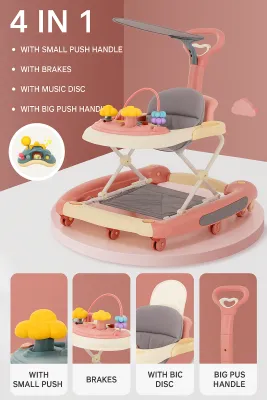
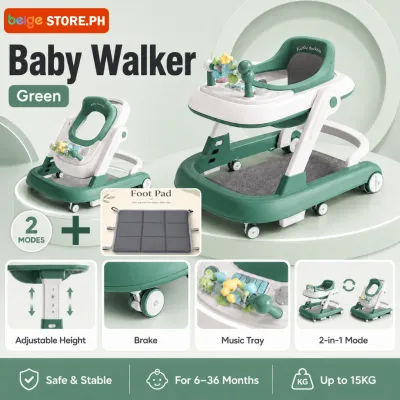
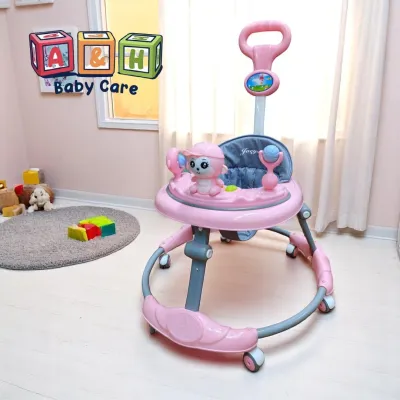
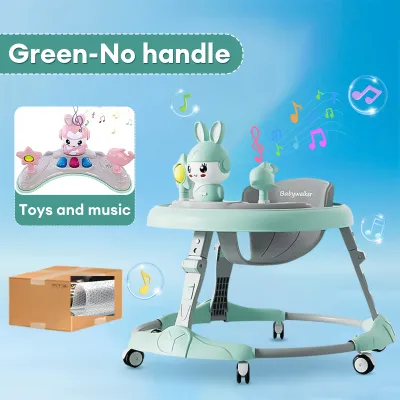
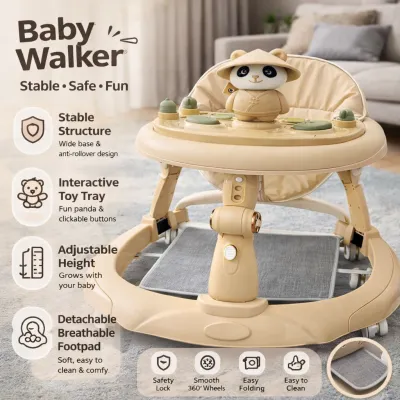
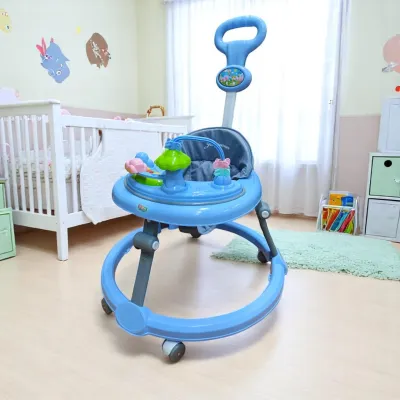
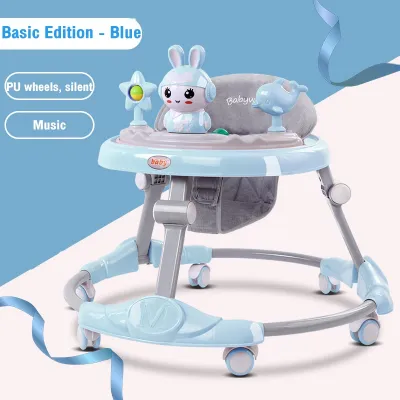
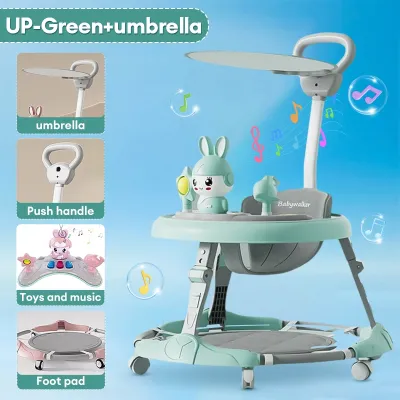
Prices are valid at publication and may change. Please refer to the product page for the latest price.
In contrast, a push-handle walker requires your baby to be an active participant in their own mobility. To use a push walker, your baby must stand on their own two feet, grip the handle, and push the toy forward. This action strengthens the core, calves, and thigh muscles while promoting bilateral coordination. Because the baby is positioned behind the toy rather than suspended inside it, they learn to fall safely on their bottom when they lose balance, which is a crucial part of learning how to navigate gravity and spatial limits.
Determining when your baby is ready for a push-handle walker depends entirely on physical milestones rather than a strict age on a calendar. Look for clear developmental signs of readiness, such as your baby pulling themselves up to stand using sturdy living room furniture, “cruising” sideways while holding onto the edge of a coffee table, or standing independently for a few seconds without support. If your baby cannot yet bear weight on their legs or maintain a upright posture when supported, introducing a push walker too early may lead to frustration or falls.
Every baby develops at their own unique pace, and milestones can vary significantly. Before introducing any new mobility equipment into your child’s daily routine, it is highly recommended to consult your pediatrician or a developmental specialist. A professional can assess your baby’s muscle tone, joint alignment, and overall motor progress to confirm that a push-handle walker is appropriate for their current stage of growth.
Key Safety and Developmental Features to Check
When evaluating different models on online marketplaces or in physical department stores, safety features must take priority over colorful aesthetics or interactive toys. The most critical safety mechanism to verify is the wheel braking and speed control system. Because smooth tiled floors offer very little natural friction, a lightweight walker can easily shoot forward, causing a baby to face-plant. Look for models that feature adjustable tension screws on the wheels or built-in rubber friction strips. These mechanisms allow you to tighten the wheels to provide resistance, ensuring the walker moves at a slow, controlled pace that matches your baby’s hesitant early steps.

Another vital structural element is the base width and the overall center of gravity. A safe push walker should have a wide, heavy base that sits low to the ground. This design prevents the walker from tipping backward or sideways when your baby pulls themselves up using the handle or leans their full body weight against it. Wooden models often provide a naturally heavier base, while plastic models sometimes feature a hollow compartment that parents can fill with water or sand to add stabilizing weight. Always check that the front wheels extend slightly forward of the main body to prevent forward tipping.
Material safety is particularly important in tropical climates like the Philippines, where high humidity can affect the durability of toys. If you prefer wooden walkers, ensure the wood is treated with non-toxic, water-based paints and sealants that resist moisture and prevent mold growth. For plastic models, verify that the material is entirely free from BPA, phthalates, and heavy metals. Look for clear manufacturer certifications and safety standard marks on the packaging, such as the EN 71 (European Standard for Toy Safety) or ASTM F963 (American Society for Testing and Materials), which indicate the product has undergone rigorous chemical and physical testing.
Carefully inspect the physical construction of the walker for potential hazards before making a purchase. Run your hands along the handle, joints, and outer edges to ensure there are no sharp plastic seams, rough wooden splinters, or exposed metal screws. Pay close attention to folding mechanisms or hinges; these areas should feature secure locking pins to prevent the walker from collapsing during use. Additionally, ensure there are no small gaps or pinch points where tiny fingers or toes could get caught as the walker moves.
Evaluating Design, Stability, and Adjustability
To ensure the walker remains useful and safe as your baby grows, you must evaluate its physical adjustability. A primary feature to look for is an adjustable handle height. If the handle is too low, your baby will be forced to hunch forward, which can negatively impact their developing spine and push their center of gravity too far forward. If the handle is too high, they will struggle to gain enough leverage to push the toy. Look for models that offer at least two or three height settings, allowing you to raise the handle as your baby grows taller, thereby maintaining an upright, ergonomic posture.
Always read and strictly apply the manufacturer’s specifications regarding weight capacity and recommended age ranges. Even if a walker looks sturdy, exceeding the maximum weight limit can compromise its structural integrity, leading to bent frames, cracked joints, or wheel failures. Keep in mind that these limits are calculated based on controlled safety testing, so using a walker outside its specified parameters increases the risk of tipping or sudden breakage.
Many modern push-handle walkers double as multi-functional activity centers, featuring built-in busy boards, shape sorters, musical buttons, or bead mazes. While these features add excellent play value and can keep a sitting baby entertained, you must evaluate whether they compromise the primary walking function. Ensure that any front-heavy activity panels do not make the walker prone to tipping forward when pushed. Some models feature detachable activity panels, which are highly practical because they allow your baby to play on the floor without the risk of the wheeled frame rolling over them.
Floor compatibility is another practical consideration that directly impacts safety and home maintenance. Examine the wheel materials and tread patterns closely. Hard, slick plastic wheels tend to slide without rotating on polished tiles or smooth wooden floors, offering zero traction and potentially scratching your flooring. Look for wheels wrapped in a thick layer of textured rubber or thermoplastic elastomer (TPE). These materials provide excellent grip on smooth indoor surfaces, muffle noise, and protect your floors from unsightly scuffs and scratches.
How to Build Your Shortlist: A Step-by-Step Checklist
With dozens of options available online and in local baby boutiques, building a curated shortlist helps you avoid impulse buys and focus on verified quality. Follow this step-by-step framework to filter your choices systematically:
- Step 1: Define the primary use case and environment. Assess where your baby will use the walker most frequently. If your home has transition thresholds between tiled and wooden rooms, or if you plan to use the walker on an outdoor concrete patio, you will need a model with larger, shock-absorbing rubber wheels. For strictly indoor use on uniform, flat surfaces, a compact model with adjustable wheel tension is ideal.
- Step 2: Filter candidates by mandatory safety features. Eliminate any models that do not offer speed control, wheel resistance, or a wide, tip-resistant base. Do not compromise on these features for the sake of a lower price point or a popular cartoon character design. Safety certifications should be clearly visible on the product listing or packaging.
- Step 3: Cross-reference the manufacturer's guidelines with your baby's metrics. Measure your baby's current height and weight, and compare them directly against the product specifications. Ensure your baby falls comfortably within the recommended ranges, leaving room for growth without exceeding the maximum limits.
- Step 4: Review user feedback for real-world performance. When shopping on local ecommerce platforms, filter reviews to look for comments specifically mentioning stability, wheel traction on tiles, and ease of assembly. Pay attention to feedback from parents who have used the product for several months, as this reveals how well the materials hold up to daily wear, tear, and tropical humidity.
Frequently Asked Questions (FAQ)
At what age can a baby start using a push-handle walker?
There is no single chronological age that dictates when a baby can safely start using a push-handle walker, as motor skill development varies widely. Generally, most babies begin showing interest in push toys between 9 and 12 months of age. However, readiness is determined by physical milestones rather than age. Your baby should be able to pull themselves up to a standing position independently and take tentative steps while holding onto furniture. Always check the manufacturer’s minimum age, height, and weight requirements printed on the product label, and consult your pediatrician to ensure your baby’s musculoskeletal system is ready for this type of activity.
Are push-handle walkers safe for use on stairs or uneven floors?
No, push-handle walkers are absolutely not safe for use on or near stairs, steps, raised thresholds, pools, or uneven outdoor surfaces. A wheeled toy can quickly gain momentum on a slope or drop-off, leading to severe falls and injuries. Before letting your baby use a push walker, you must secure all stairways with sturdy safety gates and block access to balconies or outdoor steps. Ensure the designated walking area is completely flat and cleared of potential tripping hazards, such as loose rugs, electrical cords, and stray toys. Most importantly, a push-handle walker must never be used without constant, active adult supervision; a caregiver must remain within arm’s reach at all times to intervene if the baby loses balance.
Community discussion
Share your experience or ask a question. Comments are reviewed before publication.