
Choosing the right baby guards is one of the most important steps in preparing your home for an active, crawling baby or toddler. To keep your child safe, you must match the specific type of barrier to the unique structural demands of each high-risk area. Using the wrong type of guard in a critical spot can create a false sense of security and lead to preventable accidents.
For staircases, only hardware-mounted gates should be used because they screw directly into the wall or banister to provide maximum structural security. Standard interior doorways and flat transitions are ideal for pressure-mounted guards, which can be installed quickly without drilling and easily moved when needed. For adult or toddler beds, specialized mesh bed rails are the appropriate choice to prevent rolling falls during sleep. Always verify the manufacturer’s specific age, weight, and developmental limits before purchasing or installing any guard.
Securing Stairs: Why Hardware-Mounted Gates Are Essential
Staircases represent one of the most significant fall hazards in any home, requiring the most secure barrier possible. At the top of a staircase, a pressure-mounted gate is a major safety risk. If a toddler leans, pushes, or shakes a pressure gate, the friction holding it to the wall can fail, causing both the gate and the child to fall down the steps.
Products mentioned in this guide
Prices are valid at publication and may change. Please refer to the product page for the latest price.
Hardware-mounted gates are physically screwed into wall studs, concrete walls, or wooden banisters. This permanent structural connection ensures the gate can withstand significant force without budging. For the top of the stairs, this is the only type of gate that safety standards recommend.
When evaluating hardware-mounted gates for stairs, look for specific design features that enhance daily safety. A gate at the top of the stairs must not have a bottom threshold bar, as this bar creates a permanent tripping hazard for adults carrying a child. Look for models with an auto-close mechanism and a secure, one-handed latch that allows you to open the gate easily while keeping your other hand free.
Installation requires careful planning and the right tools. In many homes with concrete or masonry walls, you will need a hammer drill and appropriate wall plugs to secure the mounting brackets. If you are mounting to a wooden banister and want to avoid drilling permanent holes into the wood, look for specialized banister adapter kits that clamp securely around the post.
Monitor your child’s growth and physical abilities closely after installation. Once your child reaches the manufacturer’s maximum height or weight limit, or shows the ability to climb over the gate, the barrier must be removed. At that stage, the gate itself becomes a climbing hazard rather than a safety barrier.
Blocking Doorways: When to Use Pressure-Mounted Guards
For flat, level surfaces like doorways leading to kitchens, bathrooms, or utility areas, pressure-mounted guards offer an excellent, non-invasive solution. These guards are held in place by expanding tension bolts that press against the door frame or walls, requiring no drilling or permanent modifications to your woodwork.

This makes pressure-mounted guards highly suitable for rental properties or for temporary zoning, such as blocking off a hot kitchen during meal preparation. However, because they rely entirely on friction and tension, they should never be used at the top of staircases or any other elevated drop-off.
When evaluating pressure-mounted guards, look for models with double-locking mechanisms that require two distinct actions to open, preventing clever toddlers from figuring out the latch. Walk-through doors are highly convenient, allowing you to pass through without stepping over the entire frame, which can lead to trips on hard tiled or wooden floors. Some models feature visual tension indicators that change color if the pressure drops, alerting you that the gate needs adjustment.
Daily use, temperature changes, and high humidity can cause walls and door frames to expand or contract slightly, which may loosen the tension over time. Establish a weekly routine to check the tightness of the tension bolts and ensure the gate remains firmly wedged in place. If the gate feels loose or shifts when pushed, tighten the tension screws immediately.
Preventing Bed Falls: Choosing the Right Bed Rails
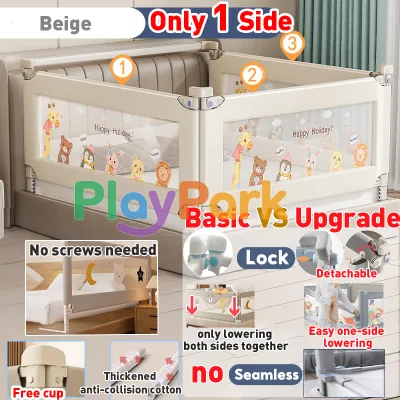
Transitioning from a crib to a toddler bed or an adult bed is a major milestone, but it introduces the risk of rolling out of bed during sleep. Mesh bed rails provide a soft, protective barrier to keep sleeping children secure on elevated mattresses.
It is important to distinguish modern, breathable mesh bed rails from traditional crib bumpers. Crib bumpers are soft pads placed inside a crib and are not recommended due to suffocation risks. Bed rails, conversely, are external barriers designed specifically for older toddlers who are transitioning to open beds.
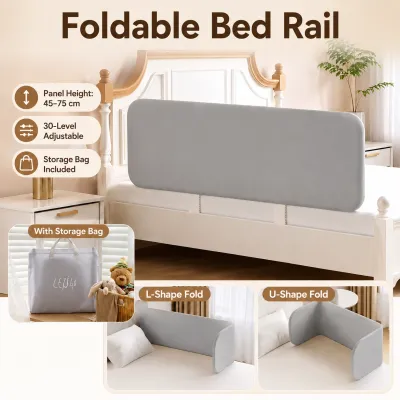
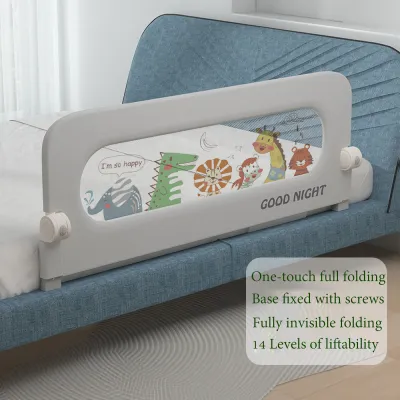
When selecting a bed rail, you can choose between fold-down mesh rails and fixed wooden rails. Fold-down models are highly practical, as they swing downward to allow easy bed-making and story-time access. Ensure the rail matches your specific mattress thickness and bed frame type, whether it is a standard box spring, a slatted frame, or a platform bed.
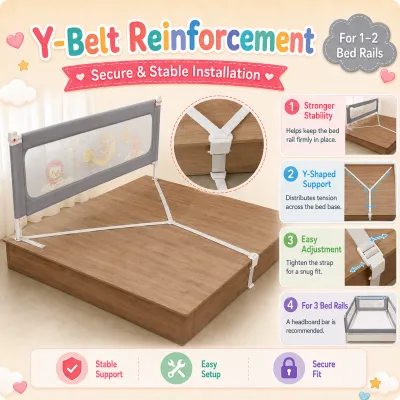
The most critical safety check for bed rails is the gap between the mattress and the rail. If the rail is not pulled tight against the mattress, a dangerous gap can form, creating an entrapment hazard where a child could slide down and become stuck. Always use the included anchoring straps to pull the rail flush against the mattress side.
Keep in mind that bed rails are designed solely to prevent accidental rolling during sleep, not to contain an active, awake child. Stop using the bed rail immediately once your child is old enough or mobile enough to climb over it, as this increases the height of a potential fall.
Installation Safety and Ongoing Maintenance Checks
Proper installation is just as important as choosing the right guard. Always read and follow the specific product’s instruction manual step-by-step, rather than relying on general online tutorials or guessing the setup.
Set a regular schedule to inspect all baby guards in your home. Check that latching mechanisms click shut smoothly, inspect screws for any loosening, and examine mesh fabric for tears or sagging. In humid tropical climates, check metal hinges and screws regularly for signs of rust or corrosion that could compromise structural integrity.
Be prepared to retire or replace guards when they show signs of wear. A bent metal frame, a cracked plastic latch, or a torn mesh panel means the guard is no longer safe. Additionally, always respect the physical limits of the product; if your child exceeds the labeled weight or height capacity, the guard must be removed.
If you encounter complex wall structures during installation, do not hesitate to seek help. For example, drilling into solid concrete walls or hollow blocks common in local construction requires specific masonry drill bits and heavy-duty wall plugs. If you do not have the tools or experience to achieve a rock-solid mount, consulting a professional handyman is a smart investment in your child’s safety.
Frequently Asked Questions (FAQ)
Can I use a pressure-mounted gate at the top of the stairs if I add a wall cup?
No, you should never use a pressure-mounted gate at the top of the stairs, even with wall cups or adhesive pads. Wall cups can improve the grip of a pressure gate on flat ground, but they do not turn it into a structurally anchored barrier. The risk of the gate slipping under sudden impact or pressure remains too high for an elevated drop-off. Only install gates that are explicitly labeled and certified by the manufacturer for top-of-stair use, which always require hardware mounting.
At what age or height should I stop using baby guards?
Most baby gates and guards are designed for children between 6 months and 24 months of age. However, physical milestones are far more important than age. You should check the specific height and weight limits printed on your product’s label or manual. As a general rule, stop using a gate or bed rail immediately if your child’s chin is level with the top of the barrier when standing, or if they demonstrate the ability to climb over or dislodge the guard.
Community discussion
Share your experience or ask a question. Comments are reviewed before publication.