
Finding the right baby bouncer is a balancing act between your child’s physical development and your daily routine. In the tropical climate of the Philippines, a bouncer also serves as a cool, elevated spot that keeps your little one comfortable and off the warm floor during humid afternoons. However, because babies grow and develop at an astonishing rate, a seat that is perfect for a sleepy newborn can quickly become unsafe or unengaging for an active infant. Choosing the right model requires looking closely at your baby’s current milestones rather than just their age in months.
Quick Guide: Matching Bouncer Types to Your Baby's Current Stage
For newborns up to three months, infants lack head and neck control. They require a bouncer that offers a deep, supportive recline and dedicated head inserts. Basic manual bouncers or models with gentle, battery-operated vibrating functions are ideal for these early weeks, providing a soothing environment that mimics the gentle motion of the womb.
Once babies reach three to six months and develop steady head control, their curiosity about the world grows. This is the perfect time to transition to rockers or bouncers with slightly more upright seating positions. These models allow your baby to observe their surroundings and interact with family members from a safe, comfortable angle.
Products mentioned in this guide
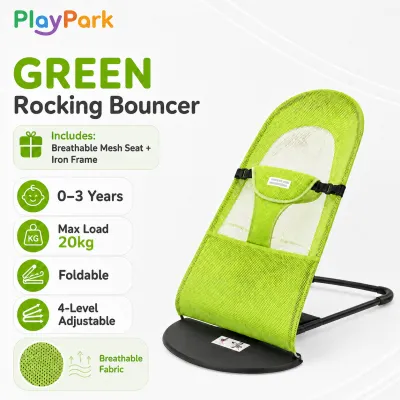
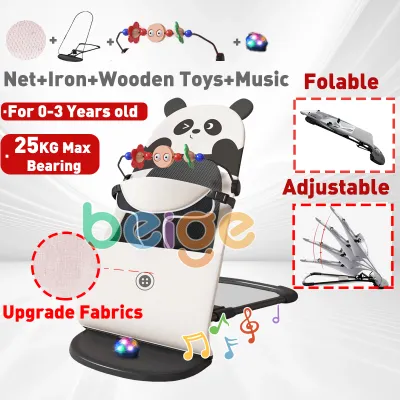
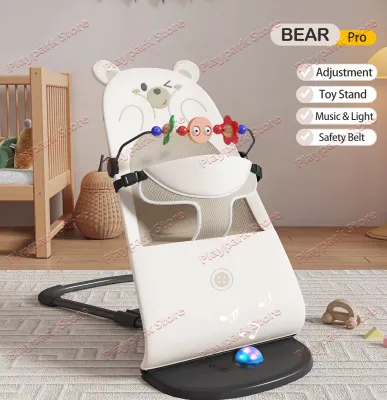
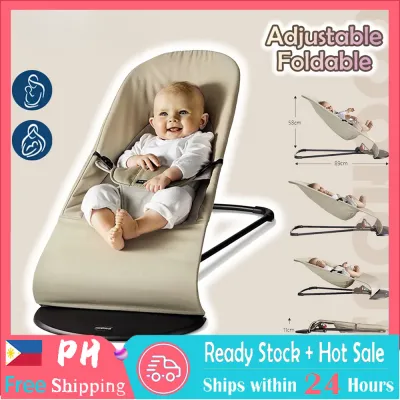
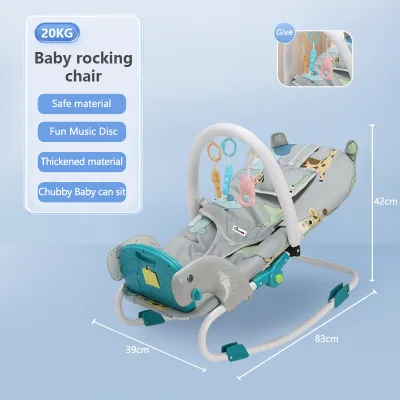
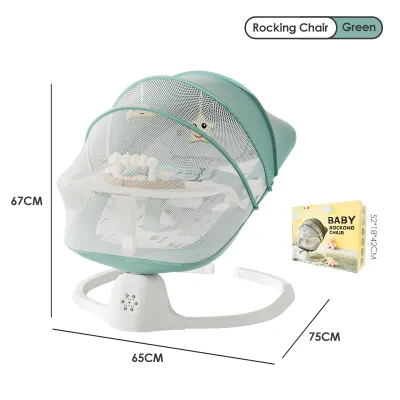
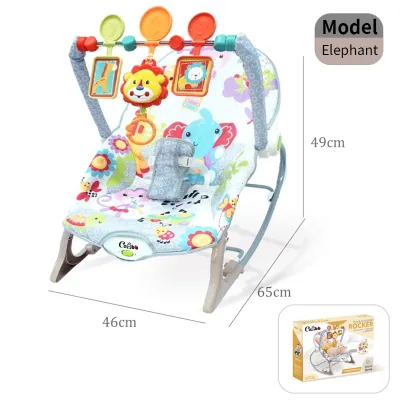
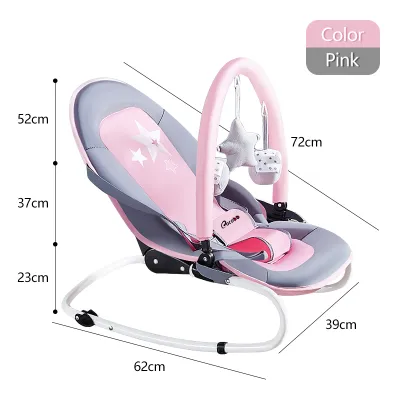
Prices are valid at publication and may change. Please refer to the product page for the latest price.
For active babies aged six months and older, activity bouncers with interactive toy bars become highly engaging. However, parents must remain vigilant during this stage. The window for using these active seats is often short, as babies quickly transition out of bouncers once they can sit up unassisted or attempt to roll over.
Comparing Basic, Vibrating, Rocker, and Activity Bouncers
Basic Bouncers
Basic bouncers rely entirely on manual movement, bouncing gently in response to your baby’s natural kicks or a soft nudge from your hand. These models are highly valued for their lightweight, minimalist designs, making them incredibly easy to fold flat and carry from room to room. In a warm household, a basic bouncer with a breathable mesh fabric cover is excellent for keeping your baby cool and sweat-free.

Vibrating Bouncers
Vibrating bouncers feature a small, battery-operated motor built into the frame that sends gentle, rhythmic vibrations through the seat fabric. This subtle motion is highly effective at calming fussy newborns and helping them settle down during awake time. Because they do not rely on the baby’s own movement to operate, they are particularly useful during the first few months when infants cannot yet bounce themselves.
Baby Rockers
Baby rockers differ from traditional bouncers by utilizing a curved frame that sways back and forth rather than springing up and down. Many rockers feature a wider, more robust frame and can be locked into a stationary position when needed. This versatility makes them a practical choice for older infants who enjoy a steady, soothing rocking motion while staying slightly more upright to watch their environment.
Activity Bouncers
Activity bouncers are designed to stimulate your baby’s developing senses and cognitive skills. They come equipped with overhead toy bars, hanging plush figures, and sometimes electronic modules that play soft music or display gentle lights. These features encourage hand-eye coordination as your baby learns to reach and swat at the toys, making them an excellent choice for daytime play and engagement.
Key Features to Look for at Each Developmental Milestone
Neck and Head Control
Before your baby can support their own head, structural support is your absolute priority. Look for bouncers that offer multiple recline positions, allowing the seat to lay nearly flat. A secure three-point or five-point harness is essential to keep your newborn from sliding or slumping. Additionally, check if the model includes a removable newborn insert or head contour pillow to prevent their head from tilting forward or sideways.
Reaching and Grasping
As your baby enters the active reaching phase, the design of the toy bar becomes highly relevant. Ensure that any overhead toys are positioned within your baby’s natural reach but do not obstruct your view of their face. Opt for detachable toy bars so you can easily remove them when it is time for quiet relaxation. Having a variety of textures, crinkly fabrics, and high-contrast colors on the toys will further support their sensory development.
Core Strength and Sitting
When your baby begins developing trunk control, they will naturally try to pull themselves forward into a sitting position. At this milestone, a bouncer with adjustable incline settings allows you to prop them up safely. However, this increase in core strength also means they are rapidly approaching the limit of what a standard bouncer can safely contain. You must constantly assess whether their physical strength is causing the bouncer to flex or tip beyond its intended range of motion.
Crucial Safety Rules and Signs It Is Time to Stop
Weight and Height Limits
Every baby bouncer comes with strict physical limits defined by the manufacturer. Never rely on age recommendations alone, as babies grow at highly individual rates. Locate the safety label on the frame or fabric of your bouncer to verify the maximum weight capacity, which often ranges between 9 to 13 kilograms depending on the model. Regularly weigh your baby and measure their length to ensure they remain well within these safety boundaries.
Sleep Safety and Supervision
A baby bouncer is strictly designed for supervised, awake activity. It is never safe to use a bouncer as a primary or secondary sleep environment. Because of the semi-reclined angle of the seat, a sleeping baby’s heavy head can easily fall forward onto their chest, potentially blocking their airway and causing positional asphyxiation. If your baby falls asleep while resting in their bouncer, immediately transfer them to a flat, firm sleep surface such as a crib or bassinet.
Placement and Mobility Hazards
Always place the baby bouncer on a flat, level, and solid floor. Never position the bouncer on elevated surfaces like kitchen counters, dining tables, beds, or sofas, as the baby’s natural bouncing motion can cause the seat to slide and fall. Keep the bouncer well away from stairs, open doorways, electrical cords, and water sources. In tropical homes, ensure the bouncer is placed in a well-ventilated area away from direct sunlight, hot appliances, or dangling cords from fans and window blinds. When planning your baby gear budget in ₱, investing in a versatile, floor-safe model is always the best approach.
Clear Transition Signals
Knowing when to retire the bouncer is just as important as choosing the right one. You must stop using the bouncer immediately if your baby shows signs of being able to sit up unassisted, attempts to roll over, or tries to climb out of the harness. These actions shift the baby’s center of gravity, making the bouncer highly susceptible to tipping over and causing serious injury.
Frequently Asked Questions (FAQ)
Can a newborn use a baby bouncer from day one?
Yes, many baby bouncers are suitable for newborns, but you must verify this by checking the manufacturer’s minimum weight and age guidelines on the product label. If you plan to use a bouncer for a newborn, ensure it features a deep recline, a supportive harness, and adequate head and neck support to keep their airway clear and their body stable.
How long should a baby stay in a bouncer at one time?
It is generally recommended to limit your baby’s continuous time in a bouncer to short sessions, typically no more than 20 to 30 minutes at a time. Prolonged periods in a semi-upright seat can restrict their natural movement and limit opportunities for essential floor play. Prioritize flat floor time, tummy time, and interactive play to support healthy muscle and motor skill development.
Is it safe to let my baby sleep in a bouncer?
No, it is not safe to let your baby sleep in a bouncer. The inclined position of a bouncer poses a serious risk of positional asphyxiation, where the baby’s chin drops to their chest and restricts their breathing. Always supervise your baby while they are in the bouncer, and move them to a flat, firm crib or bassinet as soon as they fall asleep.

Community discussion
Share your experience or ask a question. Comments are reviewed before publication.