
Protecting a baby’s delicate skin from the intense tropical sun of the Philippines is a top priority for parents, but finding the right product requires balancing sun safety with personal ethical values. In a climate characterized by high UV indices and year-round humidity, sunscreen is an essential tool for outdoor activities, family trips, and daily protection. For families committed to a plant-based lifestyle, the search for a vegan baby sunscreen introduces an extra layer of scrutiny. Navigating the local market involves understanding what makes a formulation truly vegan, identifying infant-safe ingredients, and knowing where to source authentic products.
To make an informed decision, parents must evaluate how different formulations perform under tropical conditions while verifying that no animal-derived ingredients or animal testing are involved in the product’s lifecycle. This guide provides a comprehensive framework to help you compare available options, read ingredient labels with confidence, and safely apply sunscreen to your little one.
What Makes a Sunscreen "Vegan" and Baby-Safe?
A sunscreen is classified as vegan when it contains absolutely no animal-derived ingredients, byproducts, or derivatives. In skincare, common animal-derived components often serve as emulsifiers, thickeners, or skin-conditioning agents. For instance, traditional sunscreens frequently utilize beeswax (cera alba) to create a water-resistant barrier, lanolin (extracted from sheep’s wool) for moisturization, or chitin (sourced from shellfish) for texture. A certified vegan baby sunscreen replaces these with plant-based alternatives, such as carnauba wax, candelilla wax, or vegetable-derived oils, ensuring the entire formulation remains entirely plant- and mineral-based.
Products mentioned in this guide
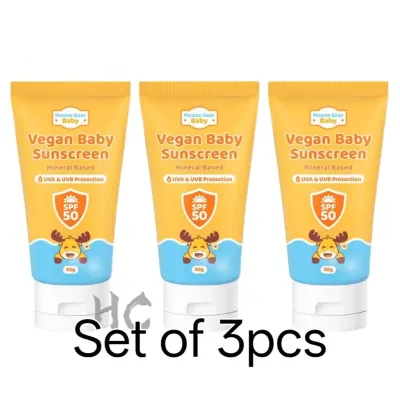
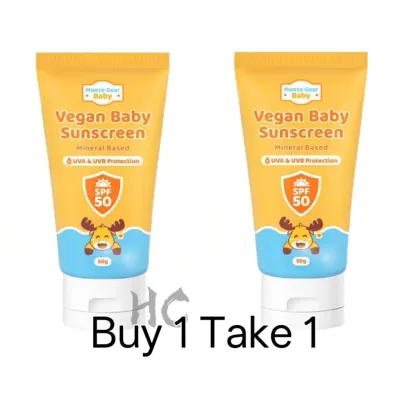
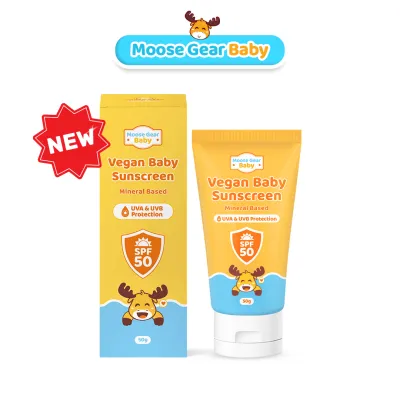
Prices are valid at publication and may change. Please refer to the product page for the latest price.
It is crucial to distinguish between “vegan” and “cruelty-free” labels, as these terms address different aspects of ethical manufacturing. A vegan product contains no animal ingredients, but it is not automatically cruelty-free unless the manufacturer guarantees that neither the final product nor its individual ingredients were tested on animals at any stage of development. Conversely, a cruelty-free sunscreen might still contain animal-derived ingredients like beeswax or milk proteins. For complete peace of mind, look for products that carry both designations, verifying that the formulation is both plant-based and ethically produced.
When it comes to infant safety, the mechanism of sun protection is just as important as the sourcing of the ingredients. Pediatricians and dermatologists generally recommend physical (or mineral) sunscreens over chemical alternatives for babies and young children. Physical sunscreens utilize active mineral ingredients, primarily zinc oxide and titanium dioxide, which sit on top of the skin’s surface to physically deflect and scatter harmful ultraviolet (UV) rays. Chemical sunscreens, on the other hand, contain active organic compounds (such as avobenzone, oxybenzone, or octinoxate) that absorb into the skin and convert UV rays into heat. Because infant skin is thinner, more permeable, and highly sensitive, absorbing these chemical filters can increase the risk of systemic absorption and localized skin irritation, making mineral-based vegan formulas the preferred choice.
Key Criteria for Evaluating Vegan Baby Sunscreens
When comparing vegan baby sunscreens in the local market, the first point of evaluation should be the level of sun protection indicated on the label. Look for the term “broad-spectrum,” which guarantees that the product protects against both UVA rays (which cause long-term skin damage and premature aging) and UVB rays (which cause sunburn). For infants and young children, pediatric guidelines generally recommend a minimum of SPF 30 for outdoor exposure. While higher SPF ratings offer slightly more protection, they also require a higher concentration of active ingredients, which can sometimes make the formulation thicker and more challenging to wash off.

The ingredient list requires a meticulous check to ensure the product is gentle enough for sensitive baby skin. The active ingredient section should ideally list non-nano zinc oxide, which provides excellent broad-spectrum protection without the risk of the particles penetrating the skin barrier. Avoid products containing synthetic fragrances, artificial colorants, parabens, phthalates, and formaldehyde releasers, as these are common triggers for contact dermatitis. Even natural essential oils, such as lavender, citrus, or eucalyptus, can cause allergic reactions on delicate infant skin when exposed to direct sunlight, so fragrance-free options are highly recommended.
The physical format of the sunscreen—whether it is a lotion, cream, stick, or spray—significantly impacts how easy it is to apply and how comfortable it feels on your baby. Lotions and creams are the most common formats; they allow for an even, visible application, ensuring you do not miss any spots, though they can feel heavy or greasy in the humid Philippine climate. Sunscreen sticks are highly convenient for quick touch-ups on the face, ears, and hands, especially when dealing with an active, squirmy baby, but they require multiple passes to achieve the labeled SPF protection. Aerosol or pump sprays should generally be avoided for babies due to the risk of inhalation and the difficulty of ensuring an even, adequately thick layer of protection on the skin.
How to Verify Vegan and Cruelty-Free Claims
With the rise of “greenwashing” in the personal care industry, parents must learn to look beyond attractive packaging and self-declared marketing claims. Legitimate vegan and cruelty-free products are typically certified by independent, third-party organizations that conduct rigorous audits of the brand’s supply chain. Look for recognized certification logos on the packaging, such as the Vegan Society’s trademark (a sunflower), the Certified Vegan logo (a “V” inside a circle), the Leaping Bunny logo (representing cruelty-free standards), or PETA’s Beauty Without Bunnies logo. These symbols indicate that the brand has met strict criteria and submitted documentation verifying their ingredient sourcing and testing practices.
Because packaging designs can sometimes feature unauthorized or lookalike logos, it is wise to cross-reference a brand’s claims with official online databases. Organizations like the Vegan Society, Leaping Bunny, and PETA maintain searchable registries on their official websites where consumers can verify if a specific brand or product is currently certified. If a brand claims to be vegan but does not appear in these databases, you can contact their customer service department directly to ask for their certification details or a full breakdown of their ingredient sourcing.
Reading the full ingredient list is an essential backup step, as some products may use ambiguous terms that mask animal-derived components. For example, glycerin and stearic acid can be derived from either animal fats or vegetable oils; unless the label explicitly states “vegetable glycerin” or “plant-derived stearic acid,” it is worth verifying with the manufacturer. Additionally, watch out for ingredients like squalene (which can be sourced from shark liver oil, though the plant-based alternative “squalane” is derived from olives or sugarcane) and various animal-derived proteins or amino acids. If an ingredient name is unfamiliar, a quick search on a reputable cosmetic ingredient database can help clarify its origin.
Where to Source Vegan Baby Sunscreens in the Philippines
Finding specialized vegan baby sunscreens in the Philippines requires knowing where to look, as these niche products are not always available in standard supermarkets. Specialty baby boutiques, organic lifestyle stores, and high-end health and beauty retailers in major metropolitan areas are excellent physical locations to start your search. These stores often curate selection-focused shelves dedicated to natural, organic, and hypoallergenic baby care, allowing you to read the physical labels and check expiration dates before making a purchase.
Online marketplaces and e-commerce platforms offer a wider selection of imported and local vegan baby sunscreens, but they require extra caution to ensure product authenticity. When shopping online, always prioritize official brand flagship stores or authorized distributors to avoid counterfeit products, which may contain harmful contaminants or incorrect SPF levels. Read through customer reviews carefully, looking for uploaded photos of the product packaging, batch codes, and expiration dates, and be wary of listings with unusually low prices or vague product descriptions.
When comparing different options online or in-store, it is helpful to calculate the cost-per-milliliter to determine the true value of each product, as packaging sizes can vary significantly. Keep in mind that imported niche brands may carry a premium price tag due to shipping fees, customs duties, and local distribution costs. It is also wise to monitor stock availability and purchase a backup tube before your current supply runs out, as imported vegan baby sunscreens can occasionally experience shipping delays or go out of stock during peak summer months in the Philippines.
Application and Safety Guidelines for Your Baby
Applying sunscreen correctly is just as important as choosing the right formulation to ensure your baby’s skin remains protected and healthy. According to standard pediatric guidelines, babies under the age of six months should not have sunscreen applied to their skin. Their skin is highly sensitive and has a high surface-area-to-body-weight ratio, which increases the risk of absorbing active ingredients. Instead, protect younger infants by keeping them in the shade, dressing them in lightweight, long-sleeved clothing, and using wide-brimmed hats or stroller canopy attachments to block direct sunlight.
For babies six months and older, always perform a patch test before applying a new vegan sunscreen to their entire body. Apply a small, pea-sized amount of the product to a discreet area of the baby’s skin, such as the inner forearm or behind the ear, and leave it on for 24 to 48 hours. Monitor the area closely for any signs of localized irritation, redness, swelling, or tiny bumps. If any reaction occurs, wash the area immediately with mild soap and water, discontinue use of the product, and consult your pediatrician for alternative recommendations.
When applying sunscreen for outdoor activities, apply a generous, even layer to all exposed skin areas at least 15 to 20 minutes before heading outside. In the humid climate of the Philippines, sweat and water can quickly wear away even water-resistant formulas, so it is essential to reapply the sunscreen every two hours, or immediately after swimming, towel-drying, or heavy sweating. At the end of the day, ensure you thoroughly wash the sunscreen off your baby’s skin using a gentle, baby-safe cleanser and warm water to prevent clogged pores and potential irritation. If you notice persistent skin redness, itching, or signs of an allergic reaction, stop using the product immediately and seek professional medical advice.
Frequently Asked Questions (FAQ)
Can I use regular vegan sunscreen on my baby?
It is generally not recommended to use regular adult vegan sunscreens on babies or young children. Adult formulations often contain chemical UV filters, synthetic fragrances, essential oils, or preservatives that are designed for mature skin but can easily irritate or sensitize a baby’s thin, delicate skin barrier. Baby-specific sunscreens are formulated with milder, non-irritating ingredients and rely almost exclusively on physical mineral blockers like zinc oxide, which do not absorb into the skin. Always look for products specifically labeled for babies or sensitive infant skin to ensure the highest level of safety.
Are mineral sunscreens always vegan?
While the active mineral ingredients in physical sunscreens—namely zinc oxide and titanium dioxide—are naturally occurring minerals and therefore inherently vegan, the overall formulation may still contain animal-derived inactive ingredients. Many mineral sunscreens utilize animal-derived emollients, thickeners, or stabilizers to improve texture and water resistance. Common non-vegan ingredients found in mineral sunscreens include beeswax (cera alba), lanolin, or animal-derived glycerin. To ensure a mineral sunscreen is completely vegan, you must check the full inactive ingredient list or look for official vegan certifications on the packaging.
Community discussion
Share your experience or ask a question. Comments are reviewed before publication.