
To answer the core question: Travel cribs that come with a built-in changing table—often referred to as playards, nursery centers, or portable playpens—are highly versatile, multi-functional systems designed to serve as a secure sleep space and a dedicated diaper-changing station in one portable unit. These integrated solutions are manufactured by several leading nursery brands, offering families a way to streamline their gear when traveling. By combining a bassinet, a full-sized crib, and a sturdy, secure changing station, these units eliminate the need to pack separate changing pads, search for clean surfaces in transit, or bend over low hotel beds during late-night diaper changes.
For parents in the Philippines navigating family road trips, staycations, or visits to relatives, managing baby gear can quickly become overwhelming. Packing a separate crib, a portable changing mat, and diapering organizers takes up precious trunk space and adds physical strain during transit. A travel crib with a built-in changing table solves this logistical headache by consolidating your baby’s sleep and care essentials into a single, cohesive package. This design ensures that wherever you set up camp—whether in a provincial home, a beach resort, or a metropolitan hotel room—you have a clean, elevated, and familiar space to handle diaper changes and sleep routines.
Having a dedicated, elevated changing surface on your travel crib also protects your physical well-being. Hotel beds and floor mats require constant bending, which can strain your back, especially during the frequent diaper changes required in a baby’s first year. An integrated changing table positions your baby at a comfortable waist height, allowing you to clean and dress them comfortably. Additionally, because these systems are designed to keep all diapering essentials within arm’s reach, they minimize the risk of leaving a baby unattended while searching for a fresh wipe or diaper.
Products mentioned in this guide
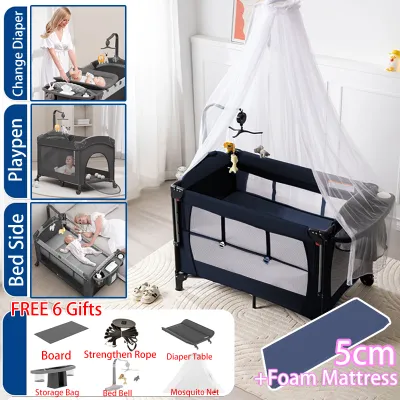
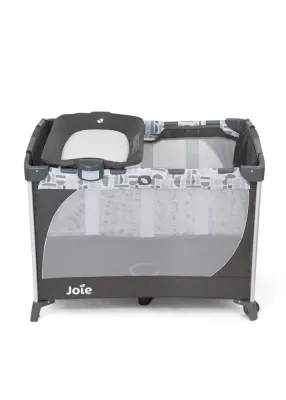
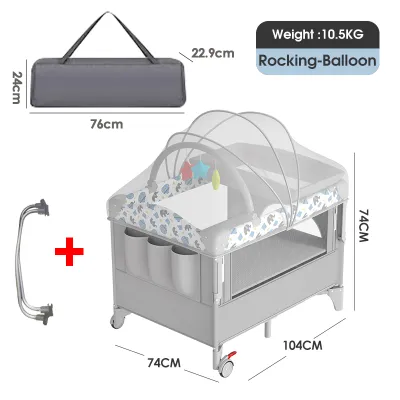
Prices are valid at publication and may change. Please refer to the product page for the latest price.
Why an Integrated Changing Station Simplifies Travel
Traveling with an infant requires meticulous planning, and every piece of luggage you can eliminate makes a significant difference in your overall stress levels. An integrated changing station simplifies travel by transforming your portable crib from a single-use sleeping cot into a fully functional, self-contained nursery center. When you arrive at your destination, you only need to unpack and set up one piece of furniture to establish a safe zone for both sleep and hygiene, saving valuable time and energy.
In unfamiliar environments, finding a sanitary and safe surface to change a diaper can be surprisingly difficult. Public restrooms in transit hubs, restaurants, or gas stations along the highway may lack changing tables entirely, or the existing facilities may not meet your hygiene standards. Laying a changing pad on a hotel bed or carpet is a common workaround, but it exposes the bedding to potential leaks and messes, creating unnecessary laundry stress during your trip. A built-in changing table provides a dedicated, elevated, and easily sanitizable surface that remains entirely under your control.
Nighttime diaper changes become significantly more manageable when the changing station is physically attached to the crib. When your baby wakes up wet in the middle of the night, you do not have to carry them across a dark, unfamiliar room or search for a flat surface in the dim light. Instead, you can lift them directly from the bassinet or crib area, place them onto the adjacent changing surface, complete the change, and return them to sleep with minimal disruption. This seamless transition helps keep the baby in a sleepy state, making it easier for both of you to return to sleep quickly.
Furthermore, these integrated systems are often equipped with attached storage organizers, such as side pockets, hanging cubbies, or parent organizers. These storage compartments allow you to keep diapers, wipes, diaper rash creams, change of clothes, and hand sanitizer neatly organized and instantly accessible. You will not need to rummage through a packed diaper bag in the dark or scatter baby supplies across various hotel surfaces, keeping your temporary living space tidy and functional.
Core Specifications to Evaluate for Travel and Comfort
Selecting the right travel crib with a built-in changing table requires a careful examination of technical specifications rather than relying solely on aesthetic appeal or brand popularity. Because these multi-functional units incorporate extra frames, fabrics, and locking mechanisms, they differ substantially from basic, lightweight travel cots. Understanding how these specifications impact your daily travel logistics and your baby’s safety is essential for making an informed investment.

Weight, Folded Dimensions, and Setup Mechanism
When evaluating portability, you must check the total weight of the entire package, including the crib frame, mattress, bassinet insert, and the changing table attachment. A standard, bare-bones travel crib typically weighs between 5 to 7 kilograms, but adding a changing table, storage organizer, and bassinet frame can push the total weight up to 10 to 14 kilograms. If you plan to carry the unit frequently through airports, up condominium stairs, or in and out of car trunks, this added weight is a critical trade-off to consider. Some premium models attempt to mitigate this by using lightweight aluminum alloy frames instead of heavy steel, which can reduce the weight slightly while maintaining structural strength, though these models often carry a higher price tag.
Folded dimensions are equally vital to verify before purchasing, as they dictate whether the travel crib will actually fit into your lifestyle. You should measure your vehicle’s trunk space or the storage areas in your home to ensure the folded unit can be accommodated alongside your other luggage and strollers. If you plan to travel by air within the Philippines or internationally, check the manufacturer’s folded dimensions against your airline’s checked baggage allowances, as bulkier multi-functional playards may require special handling or incur oversized baggage fees. Keep in mind that some changing tables fold flat separately, while others are designed to wrap around the collapsed crib frame, which can alter the overall shape and bulk of the carrying bag.
The setup and takedown mechanism of the crib frame and its attachments should be intuitive and manageable, ideally requiring minimal physical exertion. Look for systems featuring a central pull-up loop or push-button folding mechanisms on the top rails, which allow the frame to collapse or lock into place smoothly. Before your trip, practice assembling and dismantling the entire unit—including attaching and detaching the changing table—to ensure you can operate it confidently, even in a cramped hotel room or when managing a tired, fussy baby.
Changing Table Weight Limits and Locking Features
A common oversight is assuming the changing table shares the same weight capacity as the main crib or bassinet area. In reality, changing table attachments have much lower weight and developmental thresholds, which are strictly determined by the manufacturer to prevent tipping or structural failure. You must locate the manufacturer’s label or instruction manual to verify the exact maximum weight limit, which typically ranges from 7 to 11 kilograms, or is limited to the first few months of life.
Developmental milestones are often more critical than weight limits when determining when to stop using the changing table. Most manufacturers mandate that you discontinue using the changing station as soon as your baby begins to roll over, push up on their hands and knees, or reach a specific height, even if they are well under the weight limit. These physical milestones significantly increase the risk of the baby shifting their weight abruptly, which could compromise the stability of the attachment or lead to a fall.
The locking and attachment mechanisms of the changing table require close inspection to guarantee absolute stability during use. High-quality travel cribs utilize robust, click-in connectors, heavy-duty snaps, or reinforced metal brackets that lock the changing frame securely to the main crib’s top rails. Avoid models with flimsy plastic clips or loose-fitting attachments that wobble when horizontal pressure is applied. Before placing your baby on the changing surface, always perform a physical check by gently shaking the table to ensure all locking indicators are fully engaged and secure.
Mattress Firmness and Breathable Mesh for Humid Climates
Safe sleep standards dictate that a baby’s sleep surface must be flat, clean, and exceptionally firm to minimize the risk of suffocation and Sudden Infant Death Syndrome (SIDS). Travel crib mattresses are intentionally thin, dense, and firm, which can sometimes lead parents to mistakenly believe they are uncomfortable. You must resist the temptation to add aftermarket mattresses, mattress toppers, pillows, or folded blankets to the sleep area, as these soft materials can create dangerous gaps or conform to your baby’s face, blocking their airway. The mattress provided by the manufacturer is specifically engineered to fit the exact dimensions of the crib, ensuring there are no gaps along the edges where a baby’s head could become wedged.
For families living in or traveling around the Philippines, the tropical climate and high humidity levels present unique challenges for baby comfort and skin health. When babies sleep in warm, humid environments, they are highly susceptible to heat rash (miliaria) and overheating. To mitigate this risk, prioritize travel cribs that feature full mesh paneling on all four sides to maximize cross-ventilation and airflow. This breathable mesh fabric helps regulate the temperature inside the sleep space, keeping your baby cool and dry throughout the night.
The breathability of the changing pad’s fabric is also worth evaluating, as synthetic, non-breathable plastic covers can trap heat and sweat against your baby’s sensitive skin during a change. Opt for changing tables that feature wipeable, water-resistant fabrics that do not feel excessively hot or sticky to the touch. If the changing surface is made of a standard waterproof vinyl, consider placing a thin, breathable, and tightly fitted cotton changing pad cover over it, ensuring it is secured properly and does not interfere with any safety straps.
Common Built-In Designs and Their Trade-Offs
Manufacturers design integrated changing tables in a few distinct configurations, each offering a different balance of convenience, portability, and storage efficiency. Understanding these structural designs allows you to select a model that aligns with your specific travel style, whether you prioritize a quick setup, a compact fold, or a fully loaded nursery station.
Side-Mounted Flip-Down Stations
Side-mounted flip-down changing tables are permanently or semi-permanently attached to the exterior frame of the travel crib. When you need to change a diaper, you lift the table up and lock it into a horizontal position across the end or side of the crib. Once the diaper change is complete, you disengage the locking hinges and swing the table downward, allowing it to hang flat against the outside of the crib frame, completely out of the baby’s sleep area.
The primary benefit of this design is its unmatched convenience and speed of transition. Because the changing table remains attached to the frame, you do not have to find a separate storage location for it when your baby is sleeping, nor do you have to lift a heavy accessory on and off the crib rails repeatedly. Additionally, these models frequently feature integrated side organizers and storage pockets that remain upright and accessible regardless of whether the changing table is flipped up or down, keeping your diapering supplies perfectly organized. This means you can quickly transition from a sleep setup to a changing setup in seconds, which is incredibly helpful during hectic travel days or when managing multiple children.
However, side-mounted systems carry notable trade-offs in terms of physical bulk and weight. The external hinges, support bars, and folding mechanisms add significant weight to the overall travel crib package, making it less ideal for air travel or public transport. Furthermore, when the changing table is flipped down, it increases the overall footprint of the crib, which can make it difficult to navigate in tight spaces, such as narrow hotel rooms or small bedrooms in provincial homes. Some models may also require two hands and a bit of physical coordination to safely engage and disengage the locking hinges.
Top-Spanning Removable Pads
Top-spanning removable changing pads are designed to rest directly across the top rails of the travel crib, spanning the width of the sleep area. These changing tables are separate accessories that clip or snap onto the top frame when needed. When it is time for your baby to sleep, play, or rest, you must completely detach the changing pad from the rails and store it elsewhere to ensure the sleep environment remains safe and unobstructed.
This design is generally lighter and more compact than side-mounted alternatives, as it does not require complex, heavy hinges or permanent external framing. When folded, the removable changing pad often lays flat or folds in half, fitting neatly into the main travel bag alongside the collapsed crib frame. This makes top-spanning models highly popular for parents who prioritize a smaller folded footprint and easier carrying, particularly for flights or road trips where trunk space is at an absolute premium.
The major drawback of top-spanning removable pads is the constant physical effort required to attach and detach the unit. Every time your baby transitions from sleeping to changing, you must lift the pad, align it with the top rails, and securely snap or strap it into place, which can become tedious during frequent diaper changes. You must also designate a clean, safe, and accessible spot in your travel room to store the detached changing pad when the baby is in the crib, which can be challenging in small hotel rooms or crowded guest bedrooms.
Critical Safety Boundaries and Daily Maintenance
Using a travel crib with an integrated changing table requires strict adherence to safety protocols and regular maintenance to protect your baby from injury and health hazards. Because travel gear is frequently packed, unpacked, and exposed to varying environmental conditions, maintaining structural integrity and hygiene is paramount. Caregivers must establish non-negotiable safety habits to ensure a secure environment for both sleep and care.
Active Supervision Active supervision is the single most critical safety rule when using any changing table, regardless of its design, safety straps, or protective side barriers. You must never leave your baby unattended on the changing table for even a single second, nor should you turn your back or walk away to retrieve forgotten items. Babies can wiggle, roll, or slide unexpectedly, and a fall from an elevated changing surface can result in severe injury. Always keep at least one hand securely on your baby at all times during a diaper change, and prepare all necessary supplies—such as diapers, wipes, and creams—before placing your baby on the table.
Stopping Conditions You must closely monitor your baby’s physical development and weight to know exactly when to stop using the changing table attachment. Every manufacturer specifies precise weight limits and developmental milestones—such as when the baby begins to roll over, sit up, or push up on their hands and knees—after which the changing table is no longer safe to use. Continuing to use the changing station past these limits risks structural failure, tipping, or the baby falling over the side. If your baby reaches any of these milestones or the maximum weight limit, immediately discontinue using the changing table and transition to changing them on a safe, flat surface on the floor.
Hygiene and Mold Prevention Maintaining cleanliness and preventing mold growth is a vital aspect of caring for your travel crib, especially in the tropical, high-humidity climate of the Philippines. After each diaper change, thoroughly wipe down the changing pad with a mild, baby-safe disinfectant or soap and water, ensuring you clean any crevices where moisture or liquid can pool. If the changing pad fabric is removable and machine-washable, wash it regularly according to the manufacturer’s care instructions, using a gentle, hypoallergenic detergent.
Before collapsing and packing the travel crib into its carrying bag, you must ensure that every component—including the changing pad, mattress, mesh sides, and fabric lining—is completely dry. Packing away damp or moist gear traps humidity inside the carrying bag, creating an ideal breeding ground for mold, mildew, and unpleasant odors. If you are packing up in a humid coastal area or after a rainy day, set up the crib in an air-conditioned room or under a ceiling fan at home to allow it to air-dry completely before storing it long-term.
Frequently Asked Questions (FAQ)
Is it safe to leave the changing table attached while the baby sleeps?
Whether it is safe to leave the changing table attached while your baby sleeps depends entirely on the specific design of your travel crib and the manufacturer’s explicit instructions. For side-mounted flip-down changing tables, many manufacturers design them to hang safely on the exterior of the crib frame, completely out of the baby’s reach and sleep area, allowing them to remain attached during sleep. However, top-spanning removable changing pads must always be completely detached and removed from the crib rails before placing your baby in the sleep area. Leaving a top-spanning pad attached while your baby sleeps creates a severe risk of suffocation, entrapment, or injury if the baby wakes up, moves around, or attempts to pull themselves up on the attachment. Always consult your product’s instruction manual and follow its specific safety guidelines.
How do I prevent mold on the changing pad in tropical climates?
Preventing mold and mildew on your travel crib and changing pad in tropical, humid climates like the Philippines requires diligent moisture control and proper storage habits. Never pack the travel crib or changing pad into its storage bag while it is damp from cleaning, sweat, or environmental humidity. Always allow all fabric, mesh, and vinyl components to air-dry completely in a well-ventilated area, preferably under a fan or in an air-conditioned room, before folding and packing them away. If you have been traveling in coastal, rainy, or highly humid regions, make it a habit to unpack the crib once you return home and let it air out for a day. Store the packed travel crib in a cool, dry, and elevated location in your home, avoiding damp closets, laundry rooms, or areas prone to moisture buildup.
Community discussion
Share your experience or ask a question. Comments are reviewed before publication.