
Selecting a travel cot requires balancing structural safety, portability, and sleep comfort. Unlike a permanent wooden crib, a travel cot must fold down into a compact package, withstand frequent transport, and assemble quickly in unfamiliar environments. The ideal choice provides a secure, well-ventilated sleep space without compromising on frame stability or mattress firmness.
For families navigating tropical climates, such as warm and humid nights, ventilation becomes a primary comfort and safety factor. A well-designed travel cot ensures continuous airflow while keeping your little one safe from insects and dust. By focusing on key structural specifications rather than aesthetic appeal, you can find a reliable model that fits your travel style and budget.
Check Safety Standards and Structural Stability
Before purchasing any travel cot, verifying its structural integrity and safety compliance is the most critical step. Look for visible safety certification labels or compliance marks printed directly on the frame or product packaging. These marks indicate that the cot has undergone rigorous testing for stability, material safety, and mechanical strength.
Products mentioned in this guide




Prices are valid at publication and may change. Please refer to the product page for the latest price.
The locking mechanism of the top rails and base is the foundation of the cot’s safety. When assembling the cot, the rails must snap securely into place and remain rigid even when downward pressure is applied. A high-quality travel cot features a dual-action locking system that prevents the frame from collapsing accidentally if a child bumps or climbs against the sides.
Examine the frame closely for potential physical hazards. Run your hands along the joints, hinges, and corners to check for sharp edges, exposed metal parts, or pinch points that could trap tiny fingers. Well-designed models cover these mechanical joints with durable, rounded plastic caps or thick fabric sleeves.
The mesh fabric on the sides of the cot serves multiple purposes. It must be a fine-weave mesh that is tight enough to prevent buttons or small fingers from getting caught, yet open enough to allow optimal airflow. In warm, humid conditions, excellent ventilation is essential to prevent heat retention and ensure your baby remains cool and comfortable throughout the night.
Compare Size, Weight, and Portability
A travel cot is only useful if it is easy to transport to your destinations. Start by comparing the folded dimensions and overall weight of different models against your typical travel habits. If you frequently travel by car, measure your vehicle’s trunk space to ensure the folded cot leaves room for other luggage. For air travel, check if the weight fits within standard baggage allowances without incurring heavy fees.

Pay close attention to the manufacturer’s stated weight and height limits. Some lightweight travel cots are designed specifically for infants and have lower weight thresholds, while larger, more robust playards can accommodate toddlers up to a certain height. Choosing a model with a higher weight limit ensures a longer usable lifespan for your investment.
The quality of the included travel bag is often overlooked but highly consequential. Look for a carrying bag made from heavy-duty, tear-resistant fabric with reinforced stitching and robust zippers. Comfortable, adjustable carrying straps or backpack-style harnesses make a significant difference when you are navigating busy airports or hotel lobbies with a baby in tow.
Finally, consider the fully assembled footprint of the cot. While a spacious sleeping area is comfortable for a growing toddler, the cot must fit easily into standard hotel rooms, guest bedrooms, or smaller spaces. Measure the floor space of your intended setup areas to ensure there is enough clearance to walk around the cot safely.
Inspect the Mattress Base and Sleep Surface
A safe sleep environment requires a firm, flat, and secure mattress base. Unlike adult beds, infant sleep surfaces must be remarkably firm to prevent the risk of suffocation. When testing a travel cot, press down on the provided base pad; it should resist deep compression and quickly return to its flat shape.
The fit of the mattress pad within the cot is another critical safety checkpoint. There should be no gaps between the edges of the mattress pad and the mesh walls of the cot. A loose-fitting pad creates a dangerous space where a rolling baby could become trapped. Ensure the pad secures firmly to the bottom of the cot, usually via velcro straps or snaps that anchor it to the frame.
Consider the materials used in the mattress pad construction. Look for water-resistant or waterproof fabrics that can be easily wiped clean in case of diaper leaks or spills. Removable, machine-washable mattress covers made from breathable cotton or hypoallergenic synthetic fibers add a layer of convenience for busy parents.
It is vital to follow the manufacturer’s guidelines regarding aftermarket mattresses. Many parents worry that the thin, firm pad provided with a travel cot is uncomfortable and attempt to add thick, soft mattresses or folded blankets underneath. Doing so is highly discouraged by safety experts, as adding unapproved bedding introduces severe entrapment and suffocation hazards.
Evaluate Add-Ons Like Changing Tables and Bassinets
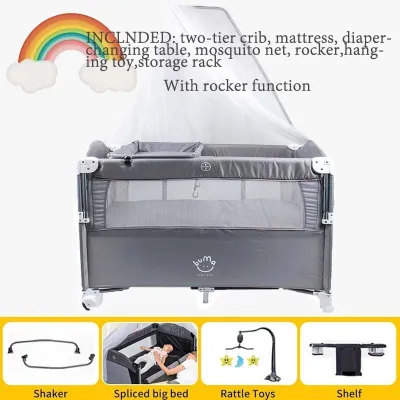
Many modern travel cots are sold as multi-functional nursery centers, featuring bundled accessories like clip-on changing tables, elevated bassinet inserts, and toy bars. While these add-ons offer excellent convenience, they also increase the overall price, weight, and complexity of the product. Evaluate whether these features align with your actual travel needs.
A clip-on changing table is highly convenient for mid-trip diaper changes, saving you from bending over a low bed or floor. When evaluating this accessory, check its specific weight limit and the security of its attachment clips. It must lock firmly onto the cot’s top rails without wobbling, and it should be easy to detach and store when your baby is sleeping.
An elevated bassinet insert is ideal for newborns, as it raises the sleeping surface and spares your back from deep bending. However, these inserts have strict age and weight limits. Most manufacturers advise discontinuing the bassinet as soon as your baby can roll over, push up on their hands and knees, or reaches a specific weight limit. Ensure you know these thresholds to transition your baby to the lower cot floor safely.
Other attachments, such as toy arches, integrated nightlights, or gentle vibration units, can help soothe a restless baby in an unfamiliar room. Check that these attachments are securely fastened and do not pose any strangulation or choking hazards.
Before paying a premium for a fully loaded model, calculate the added bulk. If you are traveling light, a simple, streamlined travel cot without accessories may be far more practical. Calculate whether the added weight and setup complexity of these accessories justify a price premium of several thousand pesos (₱) for your specific travel habits.
Review the Folding Mechanism and Setup Process
Setting up a travel cot should not feel like solving a complex puzzle, especially when you are dealing with a tired, fussy baby after a long journey. Before committing to a purchase, research the setup and folding process. Some models feature a central pull-up strap that collapses the frame in a single motion, while others require a specific sequence of locking the side rails before pushing down the center floor.
A reliable travel cot must include secondary safety locks. These locks ensure that even if a primary latch is released, the frame cannot fold inward while your child is inside. Verify how these safety mechanisms operate and ensure they are out of reach of curious little hands.
Consider the physical effort required to snap the joints into place. Some frames require significant hand strength to lock, which can be frustrating or difficult for a single caregiver. Reading user reviews or testing a display model in a local baby boutique can give you a realistic sense of how smooth the mechanism is.
Lastly, check if the design allows for easy cleaning. A travel cot that can be partially disassembled—allowing you to remove the fabric cover from the metal frame—makes deep cleaning and sanitizing after outdoor trips much simpler.
Frequently Asked Questions (FAQ)
Can I use a travel cot as a permanent everyday crib?
Travel cots are designed primarily for temporary use during trips, holidays, or short stays at a grandparent’s house. While they are built to be sturdy, they generally lack the long-term structural durability and robust mattress support of a standard wooden or metal nursery crib. The thin, firm mattress pads in travel cots are optimized for portability rather than continuous, year-round sleep. For everyday use, a dedicated standard crib provides superior ergonomic support and longevity.
Do I need to buy a separate thicker mattress for better comfort?
No, you should never add a separate, thicker aftermarket mattress to a travel cot unless it is specifically manufactured and approved by the cot’s brand for that exact model. Standard travel cot walls are made of flexible mesh; adding a thick mattress raises the sleep surface, reducing the effective height of the safety barrier and increasing the risk of your baby climbing or falling out. Additionally, gaps can form between a non-standard mattress and the flexible sides, creating a dangerous entrapment hazard. Stick to the firm mattress pad provided by the manufacturer to ensure a safe sleep environment.
Community discussion
Share your experience or ask a question. Comments are reviewed before publication.