
A fruit pacifier for baby, often called a fresh food feeder, is a popular tool for introducing solids and soothing sore gums during teething. However, because it combines food consumption with a chewing device, safety must be your absolute priority. Choosing the wrong model or using it incorrectly can expose your little one to choking hazards, toxic chemicals, or harmful mold. Evaluating these products requires a close inspection of physical designs, material labels, and structural integrity.
Quick Safety Checklist Before You Buy
Evaluating fruit pacifiers in-store or online can feel overwhelming with so many options available. To protect your baby, keep these three safety pillars in mind during your search:
- Choking Prevention: Ensure the shield is significantly wider than your baby's mouth and that the feeding holes only allow pureed food to pass through.
- Material Verification: Look for explicit labels indicating food-grade silicone or high-quality mesh that is BPA-free.
- Structural Security: Verify that the locking mechanism is robust and requires adult dexterity to open, preventing accidental disassembly.
Remember that a fruit pacifier is designed strictly as a feeding and teething aid. It is not a sleep soother and must only be used under active, continuous adult supervision.
Products mentioned in this guide
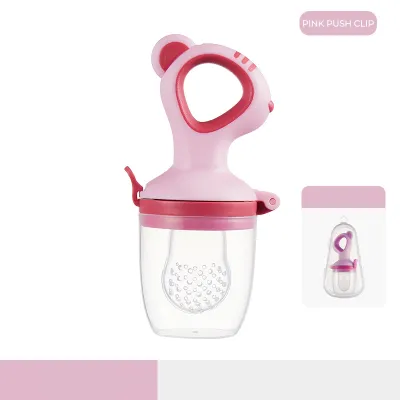
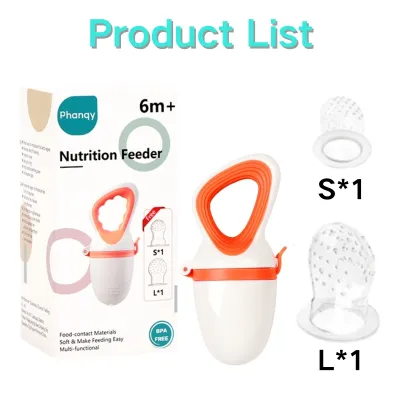
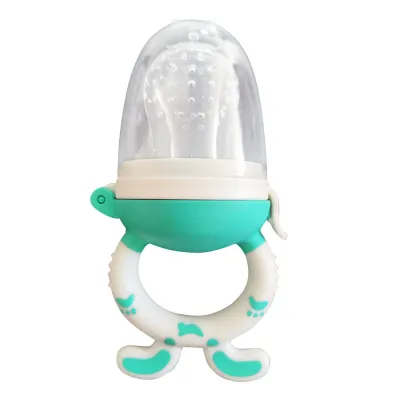
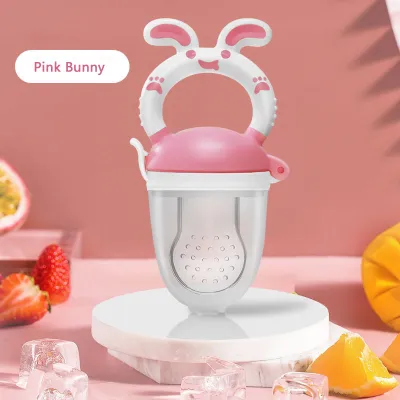
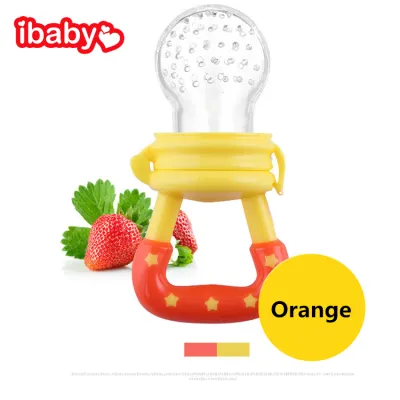


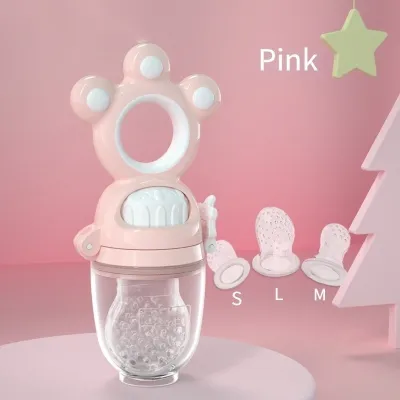
Prices are valid at publication and may change. Please refer to the product page for the latest price.
How to Evaluate Choking and Swallowing Risks
The primary hazard associated with any oral baby product is choking. When choosing a fruit pacifier for baby, you must carefully inspect the physical dimensions and component design to ensure it cannot block the airway.

Shield and Guard Dimensions The plastic or silicone shield acts as a physical barrier to prevent the entire device from entering the baby’s mouth. Before buying, visually assess or measure the shield. It must be significantly wider than your baby’s fully open mouth. If the shield is too small, there is a risk the baby could suck the entire unit into their oral cavity, causing a severe airway obstruction.
Mesh vs. Silicone Holes Inspect the size and distribution of the holes in the nipple. For silicone feeders, the perforations should be tiny, allowing only pureed food, juice, or thoroughly mashed pulp to pass through when the baby bites down. Avoid designs with large slits or holes that could let solid chunks pass. For mesh bags, the weave must be tight, uniform, and free of loose threads. A loose weave can let small seeds or hard fibers escape into the baby’s throat.
Pre-Use Physical Inspection Before every single feeding session, perform a manual stress test. Firmly grasp the plastic base with one hand and pull the silicone or mesh nibbler with the other. Twist it, stretch it, and inspect it under bright light. Look for micro-tears, thinning material, or stretched-out holes. Babies with emerging teeth can easily puncture silicone, and even a tiny tear can quickly expand under biting pressure, causing a piece of the nipple to tear off and become a severe swallowing hazard. If you detect any structural compromise, discard the component immediately.
Material Safety and Mold Prevention in Humid Climates
In the tropical climate of the Philippines, high humidity levels accelerate the degradation of low-quality plastics and encourage rapid microbial growth. Selecting the right materials and design is crucial to keeping your baby’s feeder hygienic.
Label Verification Do not rely on generic claims like “safe plastic” or “non-toxic.” Look for explicit manufacturer labels indicating “100% Food-Grade Silicone” and “BPA-Free.” Check the product packaging for recognized safety standards, which you should verify against official manufacturer documentation before purchase.
Odor and Texture Checks Be cautious of unbranded or unusually cheap fruit pacifiers, often sold on online marketplaces for under ₱100. If the product has a strong, sweet, or chemical plastic smell right out of the packaging, avoid it. High-quality food-grade silicone is virtually odorless. Additionally, feel the material: it should be soft, pliable, and smooth. Avoid materials that feel unusually rigid, sticky, or brittle, as these are prone to cracking and harbor bacteria more easily.
Hygiene and Cleaning Design High humidity means that any trapped moisture or food residue will turn into mold within hours. Inspect how the feeder is constructed. It must be fully disassemblable. Look for models where the silicone or mesh pouch can be completely detached from the plastic collar. Avoid designs with deep, unreachable crevices, hollow handles, or permanent joints where fruit juices can pool. Opt for components that are dishwasher-safe or can withstand boiling water sterilization, and always consult the manufacturer’s care instructions to verify the maximum safe temperature for sterilization. After washing, components must be allowed to air-dry completely in a well-ventilated area before reassembly. Storing a damp feeder in a closed cupboard in high-humidity areas like Manila or Cebu is a recipe for rapid black mold colonization.
Inspecting Locks and Structural Durability
A safe fruit pacifier must withstand active chewing, biting, and throwing without breaking apart into small, swallowable pieces.
Locking Mechanisms Test the snap closure, twist-lock, or sliding ring yourself. It should require a level of hand strength and coordination that a baby or toddler does not possess. If the latch can be easily popped open by dropping the feeder or if your baby can pry it open with their fingers, it is unsafe. A failed lock allows the baby to access large chunks of food inside the chamber or, worse, detach the silicone nipple entirely.
Handle and Hinge Strength The handle is what your baby will grip, drop, and throw. Inspect the plastic handle and the hinge mechanism connecting the cap to the base. The plastic must be thick and robust, with no sharp seams or flashing from the manufacturing process. It should not flex or bend under moderate hand pressure. Brittle plastic hinges can snap when dropped onto hard tiled floors, creating sharp edges or small plastic shards that are dangerous if swallowed. When evaluating the hinge, open and close it repeatedly. It should operate smoothly without grinding, and the metal or plastic pin holding the hinge together must be securely capped so it cannot slide out. A loose hinge pin is a tiny, extremely dangerous choking hazard.
One-Piece vs. Multi-Part Designs While some modularity is necessary for thorough cleaning, minimalist designs with fewer moving parts are generally safer. Every screw, hinge, and decorative clip is a potential point of failure. Look for streamlined designs where the locking mechanism is integrated directly into the main handle or body, reducing the number of small, detachable components that could become loose choking hazards.
Matching Age, Size, and Safe Usage Boundaries
Safety heavily depends on matching the product to your baby’s developmental stage and enforcing strict usage rules.
Age and Sizing Guidelines Fruit pacifiers are typically introduced around 6 months of age, coinciding with the transition to solid foods. However, readiness depends on your baby’s unique developmental milestones, such as head control and the ability to sit upright. Always verify the recommended age and weight ranges on the product packaging. Nibbles come in small, medium, and large sizes. Start with the smallest size to match your infant’s mouth capacity and prevent gagging, upgrading to larger sizes only as recommended by the manufacturer and your pediatrician.
The Supervision Rule Never leave your baby unattended with a fruit pacifier. This device should never be used in a crib, during car travel, or while the baby is walking or crawling. If a baby falls with a hard plastic handle in their mouth, it can cause severe oral trauma. Ensure your baby is seated securely in a high chair under active adult supervision during use.
Food Preparation Boundaries The feeder is designed for soft, yielding foods. Safe options include ripe bananas, steamed sweet potatoes, avocados, or soft local fruits like ripe mangoes and papayas. Never place hard, raw, or round foods—such as raw carrots, celery, or whole grapes—inside the feeder. While the mesh or silicone acts as a barrier, hard foods can still cause choking if the baby manages to bite through the material or if the lock fails. Always wash, peel, and core the fruit, removing any seeds before placing it in the feeder.
Frequently Asked Questions (FAQ)
Can a fruit pacifier be used as a regular sleep soother?
No, a fruit pacifier must never be used as a sleep soother or left in a crib. Regular pacifiers are designed with flat, lightweight shields and highly flexible nipples intended for non-nutritive sucking. Fruit pacifiers, by contrast, feature heavy plastic handles, rigid locking rings, and food reservoirs. If a baby falls asleep with a fruit pacifier, they run a high risk of choking on pooled saliva and food juices, or aspirating food particles. Additionally, rolling over onto the hard plastic components can cause facial injuries or block their airway.
How do I know when it is time to throw the pacifier away?
You must replace the feeding nipple immediately if you observe any signs of wear, regardless of how long you have owned it. Inspect the silicone or mesh for discoloration, persistent stickiness, cloudy film, or a tacky texture, which indicate material degradation. Look closely for tiny punctures, tears, or stretched-out holes. If the locking mechanism becomes loose, or if the plastic handle develops cracks or stress marks (whitening of the plastic), discard the entire unit. For hygienic reasons, even with perfect care, many manufacturers recommend replacing the silicone or mesh inserts every one to two months of regular use.
Is a silicone feeder safer than a mesh one?
Neither material is universally safer; instead, each has distinct maintenance requirements that affect safety. Silicone is highly durable, easier to clean, dishwasher-safe, and less likely to harbor bacteria, making it excellent for humid climates. However, because silicone is smooth, babies with sharp emerging teeth can puncture it, requiring frequent inspections for tears. Mesh is softer and gentler on sore gums, but the woven fabric is highly prone to trapping food fibers, making it difficult to clean thoroughly. In tropical climates, residual food in mesh can quickly lead to mold growth if not scrubbed and dried completely. Whichever you choose, safety is ultimately determined by your diligent cleaning, pre-use inspection, and constant supervision.
Community discussion
Share your experience or ask a question. Comments are reviewed before publication.