
Choosing the right oral care tools for your child can feel like a balancing act between clinical safety and daily motivation. If your child is excited about a Barbie toothbrush, leveraging that enthusiasm is an excellent way to build a consistent, lifelong brushing habit. However, a popular character design should never overshadow the underlying physical specifications of the brush. To ensure your child’s toothbrush is both safe and effective, you must prioritize developmental age matching, bristle softness, head size, and material safety. By focusing on these essential criteria, you can transform a fun character theme into a highly effective tool for protecting your child’s developing smile.
Match the Brush to Your Child's Developmental Stage
A child’s oral cavity changes rapidly during their first decade of life. A toothbrush that is perfect for a school-aged child can cause physical discomfort or inadequate cleaning if given to a toddler. Before you look for a Barbie toothbrush, you must identify your child’s current developmental stage and match it to the correct brush specifications.
For infants and young toddlers who are just cutting their first primary teeth, oral care is primarily about gentle gum stimulation and removing early plaque. During this initial stage, which typically spans from six months to two years, oral care tools are small and highly flexible. Standard manual toothbrushes with long handles are generally unsuitable here, as toddlers lack the coordination to use them safely without a parent’s direct physical guidance.
Products mentioned in this guide
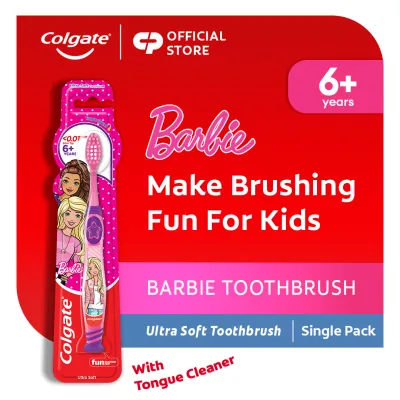
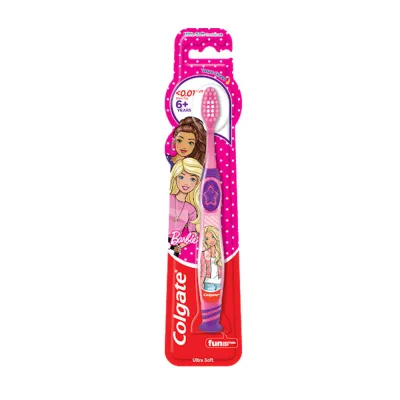
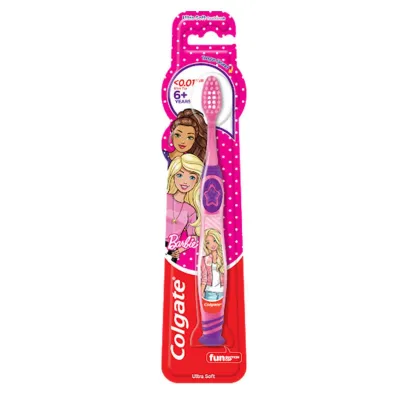
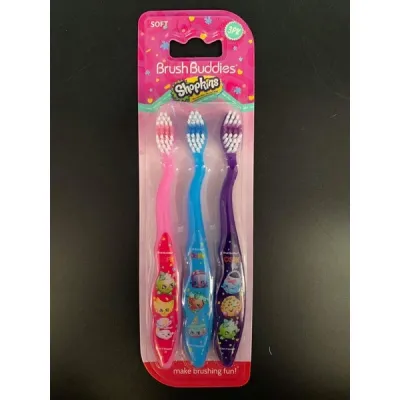
Prices are valid at publication and may change. Please refer to the product page for the latest price.
As your child transitions into early childhood—typically between the ages of three and five—they begin to develop the fine motor skills necessary to mimic brushing motions. This is the stage where character-themed manual brushes become highly effective motivational tools. At this point, the child still requires significant parental assistance, but the brush itself must feature a small, rounded head that can comfortably fit into the tight spaces at the back of their mouth.
By the time children reach school age, usually around six years and older, their mouths are preparing for a mix of primary and permanent teeth. Their larger jaw size and improved manual dexterity allow them to handle a slightly larger brush head and a longer handle. Because oral development varies widely from child to child, you should never infer suitability solely from a product’s name or character branding. Always verify the manufacturer’s explicit age recommendation printed on the packaging to ensure the brush matches your child’s current oral anatomy and coordination level.
Key Features to Check When Buying a Barbie Toothbrush
Once you have determined the correct developmental category, you can evaluate the physical attributes of the specific Barbie toothbrush you plan to purchase. Not all character toothbrushes are manufactured to the same rigorous standards, making it vital to inspect the brush head, bristles, and handle construction closely.

Brush Head Size and Bristle Softness
The brush head is the active cleaning component of the toothbrush, and its design directly impacts both safety and efficiency. A child’s mouth has limited space, especially along the outer surfaces of the rear molars. A brush head that is too large will fail to reach these critical areas, leaving plaque behind and increasing the risk of early childhood cavities. Look for a compact, tapered, or oval-shaped brush head that can navigate these tight corners without bumping against the delicate inner lining of the cheeks.
Bristle texture is another non-negotiable factor. Children’s tooth enamel is significantly thinner and softer than adult enamel, making it highly vulnerable to abrasive wear. Additionally, their gum tissues are delicate and easily irritated. To protect these structures, the bristles must be explicitly labeled as “soft” or “extra-soft” on the packaging. Stiff or medium bristles can cause micro-scratches on the enamel and lead to painful gum recession over time.
To verify the softness of the bristles before introducing the brush to your child, you can perform a quick manual check. Run the dry bristles gently across your own inner wrist or the sensitive skin of your hand. If the bristles feel scratchy, stiff, or stiffly resistant, they are likely too harsh for your child’s mouth. Furthermore, ensure that any decorative Barbie elements, such as molded plastic figures or raised plastic designs, are confined strictly to the handle. The brush head itself must remain smooth and rounded, free of hard plastic edges that could accidentally scrape your child’s gums.
Handle Grip and Material Safety
The design of the toothbrush handle determines how easily your child can control the brushing motion. Children do not possess the finger strength or dexterity of adults; they typically use a full-palm grasp rather than a precise finger pinch. Therefore, a thin, flat handle is difficult for them to maneuver and can easily slip out of their hands, leading to accidental throat poking or gum injury.
When evaluating a Barbie toothbrush, look for a chunky, contoured handle with a textured, rubberized grip. These ergonomic features allow small hands to maintain a secure hold, even when the brush is wet with water and toothpaste. A secure grip builds your child’s confidence as they practice brushing independently, while also giving you better control when you step in to finish the job.
Material safety is paramount, as toothbrushes spend several minutes inside your child’s mouth every day. You must verify that the plastic and rubber materials used in the handle are entirely non-toxic. Look for clear labels indicating that the product is “BPA-free,” “phthalate-free,” and free from harmful heavy metals.
Be particularly cautious when browsing online marketplaces or unverified retail outlets. Cheap, unbranded, or counterfeit character toothbrushes often bypass standard safety evaluations. These substandard products may use low-grade plastics that degrade quickly, or unregulated paints on the decorative Barbie designs that can flake off and be accidentally swallowed. To mitigate these risks, purchase only from reputable brands and authorized retailers who can guarantee compliance with international safety standards.
How to Inspect and Prepare the Toothbrush for First Use
Your responsibility as a caregiver does not end once you purchase the toothbrush. Proper preparation and initial inspection are vital to ensuring the product is safe before it ever enters your child’s mouth.
When you first unbox or unwrap the Barbie toothbrush, take a moment to carefully inspect the packaging. Ensure the blister pack or plastic seal is completely intact, with no signs of tearing, crushing, or tampering. If the packaging is damaged, there is a risk that the brush has been exposed to environmental contaminants or physical damage during transit.
Next, perform a physical check of the toothbrush itself. Gently tug on the bristle tufts to ensure they are securely anchored in the brush head. Loose bristles can easily detach during brushing, presenting a serious choking hazard or causing irritation if swallowed. Inspect the plastic handle for any sharp manufacturing seams, rough edges, or loose decorative parts that could pinch or scratch your child’s hands or lips.
Before the very first use, wash the toothbrush thoroughly under clean, running water. This simple step removes any microscopic manufacturing dust, packaging residues, or static-attracted debris that may have settled on the bristles. Avoid using boiling water or placing the toothbrush in a microwave sterilizer, as extreme heat can warp the plastic handle, weaken the adhesive holding the bristles, and ruin the decorative character designs.
During the first few brushing sessions with the new toothbrush, maintain close, active supervision. Children are often tempted to treat character-themed brushes as toys, which can lead to unsafe habits. Watch closely to ensure your child does not chew on the hard plastic handle or bite down hard on the brush head. If you notice your child continuously biting the bristles or if their gums begin to bleed, stop use immediately and consult a qualified pediatric dentist to assess their oral health or verify if a different brush style is required.
Daily Maintenance and When to Replace the Brush
Maintaining proper hygiene between uses is just as important as selecting the right toothbrush. Without correct care, a toothbrush can quickly become a breeding ground for harmful bacteria, mold, and viruses.
After every brushing session, rinse the toothbrush thoroughly under warm, running tap water. Ensure that all visible toothpaste residue and food particles are completely washed away from the base of the bristles. Shake off any excess water vigorously.
Store the toothbrush in an expression upright position in an open cup or holder, allowing it to air dry completely. It is critical to keep the brush head exposed to the air; never store a wet toothbrush in a closed travel case, drawer, or plastic cap for daily use. In the warm, highly humid climate of the Philippines, trapped moisture creates an ideal environment for rapid mold and bacterial growth on both the bristles and the rubberized handle grips. Ensure the storage area is well-ventilated and kept at a safe distance from the toilet to prevent airborne contamination.
Knowing when to discard a toothbrush is vital for maintaining effective plaque removal and oral hygiene. Over time, bristles naturally lose their elasticity, bend outward, and become frayed or splayed. Frayed bristles lose their ability to clean effectively and can actually scratch the gums rather than clean them.
As a general rule, plan to replace your child’s Barbie toothbrush every three to four months. However, you should replace it immediately if you observe any of the following signs:
- Frayed or splayed bristles: The tufts no longer stand straight and point in multiple directions.
- Visible wear or discoloration: Dark spots or buildup on the brush head or handle that cannot be washed away.
- Post-illness recovery: Always replace the toothbrush immediately after your child recovers from a contagious illness, such as a cold, flu, or strep throat, to prevent reinfection.
Frequently Asked Questions (FAQ)
Is it safe to let a toddler chew on a character toothbrush handle?
No, it is not safe to let a toddler chew on a hard plastic character toothbrush handle. While the colorful Barbie designs are highly appealing to teething toddlers, these handles are made of rigid plastics and rubber that are not designed to withstand constant biting pressure. Chewing can cause the plastic to crack, create sharp edges that injure the gums, or cause small decorative pieces to break off, posing a severe choking hazard. If your child has a strong urge to bite or chew during oral care, temporarily halt brushing and offer them a dedicated silicone teething toy or a soft, chewable silicone toothbrush designed specifically for teething relief.
Do electric character toothbrushes clean better than manual ones?
Both manual and electric character toothbrushes can clean teeth effectively, provided they are used with the correct technique for the dentist-recommended two minutes. However, electric character toothbrushes often offer distinct advantages for children who struggle with manual dexterity or lack the patience to brush thoroughly. Many electric models feature built-in two-minute timers, musical cues, or vibrating brush heads that make the process more engaging. When considering an electric Barbie toothbrush, always verify the manufacturer’s age guidelines, as the vibrating motion and heavier handle may not be suitable for very young toddlers. Additionally, ensure that replacement brush heads are readily available and match your child’s developmental stage.

Community discussion
Share your experience or ask a question. Comments are reviewed before publication.