
Choosing the right baby head support for strollers and car seats requires balancing physical comfort with strict safety standards. As a parent, your primary goal is to keep your infant’s head stable and aligned without compromising the protective features of their seat. To make an informed choice, you must evaluate your baby’s developmental stage, verify that the accessory does not interfere with safety harnesses, and select breathable materials suited for warm, humid climates.
Many parents turn to head supports to prevent their newborn’s head from slumping during travel. However, because car seats and strollers are engineered with precise safety mechanisms, adding aftermarket accessories requires careful scrutiny. By understanding what to look for in terms of fit, material, and installation, you can ensure your baby remains both secure and comfortable on every journey.
Assessing If and When Your Baby Needs Head Support
Newborns lack the neck muscle strength to support their own heads, a milestone that typically begins to develop around three to four months of age. During these early months, awake infants may benefit from gentle lateral support to keep their heads centered and prevent airway obstruction. Understanding your baby’s physical development helps you determine when an accessory is truly helpful and when it is unnecessary.
Products mentioned in this guide
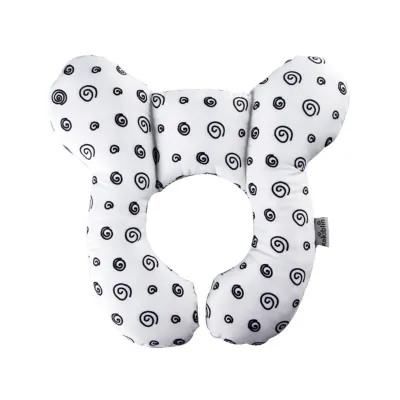
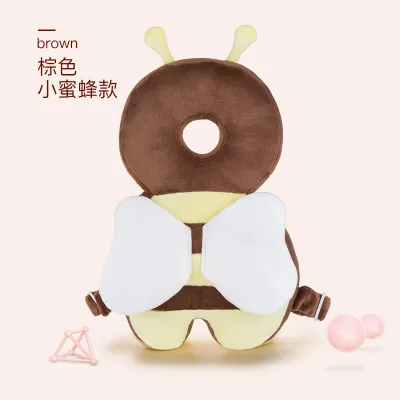

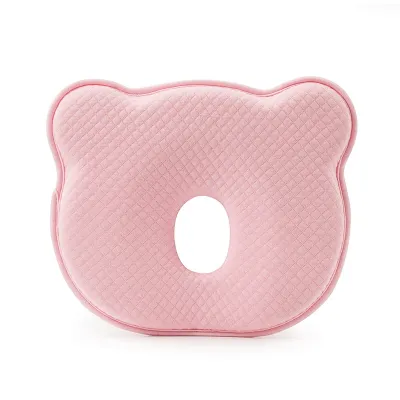
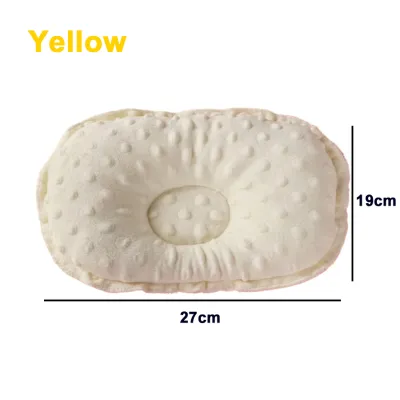
Prices are valid at publication and may change. Please refer to the product page for the latest price.
Many car seats and strollers come equipped with built-in infant inserts designed and tested specifically by the manufacturer for that exact model. These integrated supports are always the safest first option because they are certified to work with the seat’s restraint system. Aftermarket add-ons, which are sold separately by third-party brands, must be evaluated with extreme caution as they have not been crash-tested with your specific seat model.
It is critical to recognize when head support is unnecessary or potentially hazardous. Head supports should never be used to facilitate unsupervised sleep, especially in car seats outside of a vehicle. When a baby sleeps in a semi-reclined position without active supervision, their heavy head can fall forward, chin-to-chest, potentially restricting their airway. Always monitor your baby closely while they are using any support accessory, and transition them to a flat, firm sleep surface for routine naps.
Critical Safety Checks and Harness Compatibility
The most vital safety check for any head support is its relationship with the seat’s 5-point harness. The support must not alter, redirect, or add slack to the harness straps, chest clip, or crotch buckle. Any accessory that requires you to thread the harness straps through slots in the support padding can interfere with how the harness tightens in an accident, potentially putting your baby at risk.

Using an aftermarket head support in a car seat often voids the manufacturer’s warranty. Car seat manufacturers design their products to perform under specific crash conditions, and adding untested padding can change how forces are distributed. Before purchasing any third-party support, check your car seat’s manual to see if aftermarket accessories are explicitly prohibited.
Inspect the design of the head support for loose parts, long ribbons, decorative buttons, or small plastic adjusters that could detach and pose a choking hazard. The padding itself should be firm enough to support the head but not so plush or thick that it creates a suffocation risk if the baby’s face turns into the side cushions.
Always read the manufacturer’s label on the head support to verify its intended age limits, weight ranges, and safety testing claims. Look for clear instructions stating whether the product is intended solely for strollers or if it has been certified for use in specific car seat models. If the label lacks clear safety warnings or usage guidelines, it is best to avoid the product entirely.
Selecting the Right Material for Comfort and Climate
In tropical climates like the Philippines, high humidity and heat can quickly cause a baby to overheat while nestled in a stroller or car seat. Choosing the right fabric is essential to prevent heat rash, excessive sweating, and general discomfort during outdoor trips.
Breathable 3D mesh fabrics are highly recommended for warm weather because they promote continuous airflow and help dissipate body heat. Organic cotton is another excellent choice, offering a soft, hypoallergenic surface that is gentle on sensitive newborn skin while naturally absorbing moisture. Avoid heavy plush, fleece, or synthetic velvet materials, as these trap heat and can cause your baby to sweat profusely within minutes.
Because babies frequently drool, spit up, or spill milk, the head support must be easy to clean. Look for hypoallergenic materials that can withstand frequent machine washing without losing their shape or structural integrity. Removable, washable covers make maintenance simple and help maintain a hygienic environment for your infant.
Examine the thickness and density of the padding before making a purchase. The support should provide lateral stability on the sides of the head without being so thick behind the head that it pushes the baby’s neck forward. A flat or minimally padded back section ensures the baby’s head rests in a natural, neutral alignment against the seat back.
Evaluating Fit, Adjustability, and Seat Compatibility
To ensure a proper fit, compare your baby’s head and shoulder width with the inner dimensions of the support. The side bolsters should gently cradle the head without squeezing it or pressing against the cheeks so tightly that they restrict movement or breathing. There should always be a clear space between the baby’s chin and chest.
Babies grow rapidly, meaning a support that fits perfectly at one month may become too tight by month three. Look for head supports with adjustable features, such as removable inner rings, adjustable Velcro straps, or snap buttons that allow you to expand the width and height as your baby develops. This adaptability ensures the product remains useful and safe over a longer period.
Consider the shape of the seat where the support will be used. Deep, contoured bucket car seats require a different support profile than flatter, more open stroller seats. A head support designed for a flat stroller seat may slide around or bunch up when placed inside a snug car seat, compromising both comfort and safety. Always verify that the support’s backing matches the contour of your specific gear.
Steps for Safe Installation and Daily Use
When installing the head support, place it flat against the back of the seat, ensuring it does not bunch up behind the baby’s shoulders or lower back. If the support features attachment straps, secure them tightly around the seat frame or through designated slots according to the manufacturer’s instructions. Never place extra blankets or towels underneath the support to prop it up, as this introduces dangerous instability.
After securing your baby in the harness with the head support in place, perform the harness pinch test to verify a snug fit. Try to pinch the harness webbing vertically at the baby’s collarbone; if you can pinch any excess fabric between your fingers, the harness is too loose. Adjust the straps until they are snug and flat against the baby’s body, ensuring the head support has not created hidden slack.
Knowing when to stop using a head support is just as important as knowing how to install it. Remove the support immediately once your baby demonstrates consistent neck control, typically around four to six months, or when their shoulders grow wide enough to touch the side bolsters. Additionally, if your baby falls asleep while traveling, monitor them closely and transition them to a flat crib or bassinet as soon as you reach your destination.
Frequently Asked Questions (FAQ)
Can I use a stroller head support in a car seat?
No, you should not use a stroller-specific head support in a car seat unless the manufacturer explicitly states it is certified for both. Stroller accessories are designed for low-speed, manual movement and are rarely crash-tested. Using them in a vehicle can interfere with the car seat’s harness system and compromise your baby’s safety during a collision. Always use the original insert that came with your car seat or an accessory approved by the car seat manufacturer.
What should I do if my baby's head still falls forward?
If your baby’s head continues to slump forward, first check the recline angle of the car seat or stroller. Most car seats have a built-in level indicator to ensure the seat is reclined sufficiently for a newborn’s heavy head to rest backward naturally. Next, verify that the harness straps are snug and positioned at or slightly below the baby’s shoulders. If the slumping persists despite proper adjustment, or if you have concerns about your baby’s muscle tone, consult your pediatrician for professional guidance.
Community discussion
Share your experience or ask a question. Comments are reviewed before publication.