
Quick Guide: Core Features to Look For
Selecting the right furniture for your nursery involves balancing comfort, convenience, and safety. A rocking high chair serves a unique dual purpose in a household, operating as a secure, upright feeding station during meal times and transitioning into a gentle, soothing rocker to help calm your baby before or after eating. Because this piece of furniture combines movement with feeding, your purchasing decision requires careful evaluation of specific mechanical and structural features.
When evaluating different models, your top three priorities must always be safety restraints, structural stability, and age or weight appropriateness. The rocking motion introduces dynamic forces that standard high chairs do not experience, making a wide, stable base and a secure harness system absolutely essential. Furthermore, the rocking feature must have a reliable, heavy-duty locking mechanism that completely disables any movement, ensuring the chair remains perfectly stationary during meals to prevent choking hazards and spills. By focusing on these core elements, you can find a chair that safely supports both your baby’s developmental needs and your daily routine.
Safety and Stability: Non-Negotiable Checks
Because a rocking high chair is designed to move, verifying its safety and stability is the most critical step in your buying journey. The combination of a child’s active movements and a physical rocking motion means the chair must be engineered to resist tipping, sliding, or structural failure under daily use.
Products mentioned in this guide
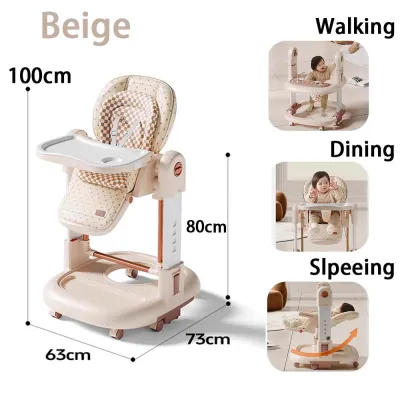
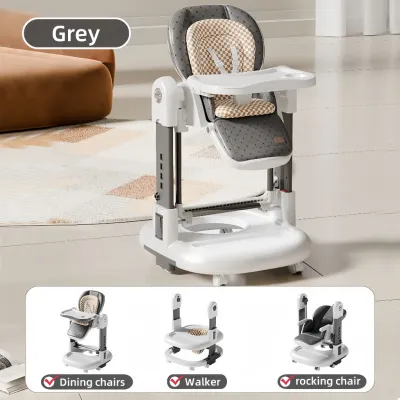
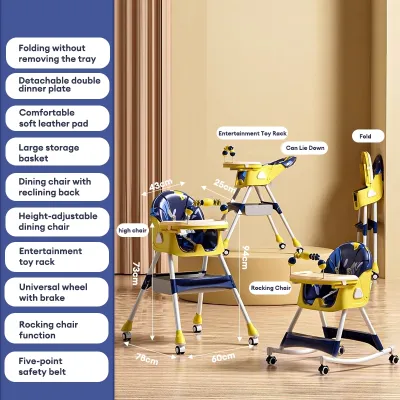
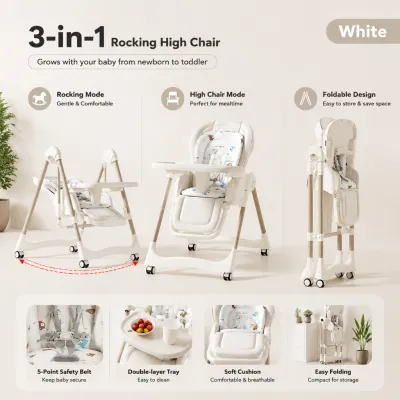
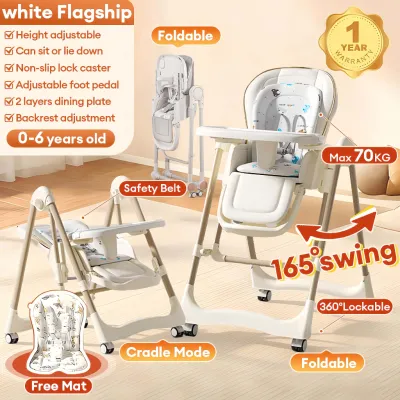
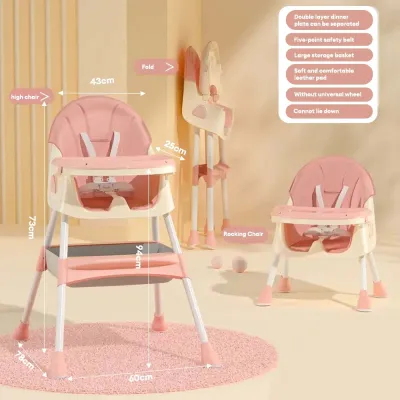
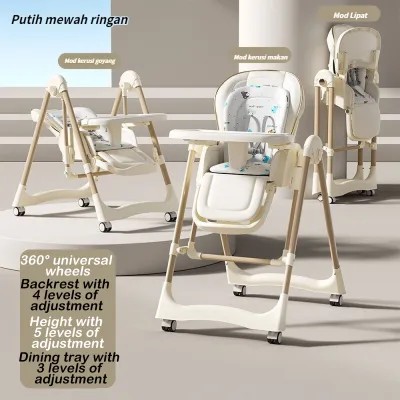
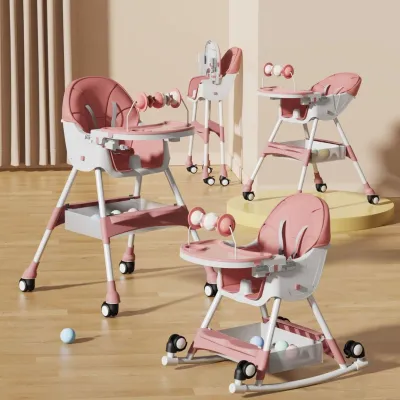
Prices are valid at publication and may change. Please refer to the product page for the latest price.

Base and Footprint
To prevent tipping when your baby leans, reaches, or pushes against a dining table, you must assess the width and weight distribution of the chair’s base. A safe rocking high chair requires a wide, flared footprint that keeps the center of gravity low and centered, even when the chair is in motion. When inspecting a model, look for a frame that extends significantly wider than the seating area itself.
In the Philippines, residential flooring often consists of smooth ceramic tiles, polished concrete, or glossy laminate wood. On these surfaces, a rocking chair can easily slide or shift during use. Ensure the bottom of the rocker rails or the base frame is equipped with durable, non-slip rubberized grips or pads. These grips prevent the chair from migrating across the floor while rocking and protect your home’s flooring from scratches.
Harness Systems
Active babies can quickly wiggle out of poorly designed restraints, making a high-quality harness system non-negotiable. You should prioritize a 5-point harness over a 3-point harness. A 5-point system secures your baby at the shoulders, hips, and crotch, preventing them from climbing upward or sliding downward.
The crotch strap is the most vital component of the harness. Without a secure strap running between your baby’s legs, they can experience “submarining”—sliding underneath the tray, which can lead to dangerous entrapment or suffocation. Ensure the harness straps are made of thick, durable webbing that is easy for you to adjust and buckle, yet complex enough to prevent curious toddlers from releasing themselves.
Locking Mechanisms
Feeding a baby requires complete stillness to ensure safe swallowing. Therefore, the rocking function must feature a secure, easy-to-engage mechanical lock that renders the chair completely stationary. This lock should physically block the rocking path, preventing any swaying or tilting while your baby is eating.
Avoid chairs with flimsy plastic tabs or friction-based locks that can wear down over time. Look for positive-locking mechanisms, such as metal pins or heavy-duty spring-loaded latches, that emit a clear, audible click when engaged. The locking control should be placed in a position that is easily accessible to you but completely out of your child’s reach, ensuring they cannot accidentally unlock the rocking feature during a meal.
Certifications and Labels
Never assume a product is safe simply because it is available on a retail shelf or online marketplace. Before purchasing, look for recognized international safety standard labels on the product packaging, user manual, or manufacturer description. Common certifications include:
- ASTM F404: The standard safety specification for high chairs, verifying structural integrity and stability.
- EN 14988: The European safety standard regulating materials, construction, and restraint systems for children's high chairs.
- JPMA Certified: A seal from the Juvenile Products Manufacturers Association indicating independent safety testing.
Because certification claims can sometimes be copied or misrepresented on third-party listings, always cross-check these standards on the manufacturer’s official website or verify the registration numbers when available.
Warning on Supervision
No high chair, regardless of its safety ratings or advanced features, can replace active adult supervision. Never leave your baby unattended in a rocking high chair, even for a brief moment to retrieve a bib or wipe. Babies can move suddenly, and unexpected mechanical failures can occur.
Establish a routine of inspecting the chair before every use. You must immediately discontinue using the chair if you observe any of the following conditions:
- Visible wear, cracks, or rust on the rocking hinges or joints.
- A locking mechanism that slips, fails to click, or feels loose.
- Frayed, torn, or non-functioning harness straps and buckles.
- Missing screws, bolts, or structural hardware.
- Cracks in the plastic frame or splinters in wooden components.
Age, Weight, and Developmental Fit
Using a rocking high chair at the wrong stage of your baby’s development can compromise their physical safety and comfort. You must align the chair’s specifications with your baby’s physical milestones rather than relying solely on age estimates.
Starting Milestones
Before your baby sits in any high chair, they must be developmentally ready. The primary milestone to look for is the ability to sit up unassisted with good, steady head and neck control. This physical strength typically develops around six months of age.
Placing a baby who lacks independent sitting balance into an upright high chair can cause them to slump forward or to the side. Slumping compresses the airway, making breathing difficult and significantly increasing the risk of choking during feeding. Always check the manufacturer’s documentation for the minimum weight and age limits, and consult your pediatrician if you are unsure of your baby’s physical readiness.
Weight and Height Limits
Every rocking high chair is engineered to support a specific weight and height range. These boundaries are calculated to ensure the chair does not tip or suffer structural failure under stress. You must locate these limits in the product manual or on the manufacturer’s label before purchasing.
Once your child reaches either the maximum weight or the maximum height capacity specified by the manufacturer, you must stop using the chair immediately. Even if your child physically fits within the seat, exceeding the engineered limits changes the chair’s center of gravity, making the rocking motion highly unstable and increasing the risk of a structural collapse.
Posture and Footrests
Proper seating posture is essential for safe swallowing and comfortable digestion. When seated, your baby should be supported in an upright position that encourages a 90-90-90 posture: a 90-degree bend at the hips, a 90-degree bend at the knees, and a 90-degree angle at the ankles.
An adjustable footrest is a critical feature to achieve this posture. Dangling feet pull on the lower back, causing the baby to slump and lose core stability, which diverts their energy away from focusing on eating and swallowing safely. Look for a rocking high chair with a footrest that can be adjusted in height and angle as your baby grows, providing a stable platform that supports their feet throughout their developmental stages.
Space, Cleaning, and Daily Routine
Integrating a rocking high chair into your home requires a practical look at your living space, your cleaning habits, and the local climate. A chair that is difficult to clean or too bulky for your dining area will quickly become a source of frustration.
Footprint and Clearance
Because they incorporate a rocking mechanism, these chairs generally occupy more space than standard, stationary high chairs. Before buying, measure your dining room or kitchen layout carefully to ensure you have adequate space. You must account for the additional clearance required behind and in front of the chair when the rocking motion is active.
The chair should be positioned far enough away from walls, cabinets, dining tables, and electrical outlets so that it cannot strike them while rocking. A collision during use can startle your baby, damage your home, or cause the chair to tip over.
Material and Wipeability
Feeding a baby is an inherently messy process, and in the tropical, high-humidity climate of the Philippines, cleaning ease is directly tied to hygiene. Spilled milk, purees, and crumbs that find their way into fabric seams can quickly harbor mold, mildew, and bacteria if exposed to humid air.
To maintain a hygienic feeding environment, prioritize materials that are easy to sanitize. Look for the following material features:
- Wipeable Seat Covers: High-quality polyurethane (PU) leather or water-resistant synthetic fabrics can be wiped clean with a damp cloth and mild soap. Avoid heavy, absorbent cotton fabrics that require frequent machine washing and take a long time to dry in humid weather.
- Removable Tray Inserts: Trays with removable, BPA-free plastic liners allow you to pop the top layer off and wash it in the sink or dishwasher, keeping the main tray clean.
- Minimal Crevices: Choose a seat design with smooth contours and sealed seams. Deep crevices and fabric folds easily trap food particles that are difficult to extract and can attract pests.
Storage and Portability
If you live in a compact home or condominium, storage is a key consideration. Look for a rocking high chair that offers a compact fold, allowing you to tuck it away in a closet or corner when not in use. Ensure the folding mechanism is secure and cannot be triggered accidentally while the baby is nearby.
If you plan to move the chair between different rooms—such as from the kitchen during dinner to the living room for a soothing rock afterward—wheels can make transport much easier. However, these wheels must have robust, independent locks on every wheel. You must always engage these locks fully before placing your baby in the chair, and never attempt to roll or move the chair while your baby is seated inside.
Types of Rocking High Chairs to Consider
Rocking high chairs generally fall into two primary design categories. Understanding the strengths and limitations of each type will help you choose the model that best matches your home’s aesthetic and your family’s daily needs.
Traditional Wooden Rockers
Traditional wooden rocking high chairs offer a classic, timeless look that coordinates well with wooden dining sets and heritage home decor. These chairs are typically constructed from solid hardwoods, providing a heavy, robust frame that naturally resists tipping.
- Pros: Highly durable, sturdy construction, timeless aesthetic, and smooth wooden trays that are easy to wipe clean.
- Cons: Significantly heavier and more difficult to move, lack height and recline adjustments, and the hard wooden seats require separate padding for comfort.
If you choose a traditional wooden model, you must check the product label to ensure the wood is finished with a smooth, splinter-free sealant. Additionally, verify that the manufacturer uses certified non-toxic, lead-free paints or varnishes to protect your baby’s health, especially during the teething phase when they may chew on the tray or frame.
Modern Multi-Mode Convertible Chairs
Modern convertible rocking high chairs are designed with versatility and longevity in mind. These multi-functional systems can be reconfigured into several different modes as your child grows, transitioning from a reclining infant seat to a stationary high chair, a gentle rocking chair, and eventually a low toddler chair.
- Pros: Extended product lifespan, highly adjustable seating positions, padded comfort, and lightweight frames that often fold for storage.
- Cons: Larger overall footprint, more complex locking mechanisms, and numerous joints and crevices that require diligent cleaning.
When evaluating a convertible model, physically test the transition switches and latches to ensure they are easy to operate but lock securely into place. You must also verify the weight limits for each specific mode; the maximum weight capacity for the rocking configuration is often lower than the limit for the stationary high chair mode.
Smart Shopping: What to Verify Before Checkout
Before finalizing your purchase on an online marketplace or at a physical baby boutique, complete a thorough verification process to protect your investment and ensure your peace of mind.
Reading Reviews Critically
When reading customer reviews on ecommerce platforms, look past general praise about the chair’s appearance or fast delivery. Instead, search the reviews specifically for terms like “locking mechanism,” “harness fit,” “sturdiness,” and “cleaning.” Pay close attention to feedback from parents who have used the chair for several months, noting any mentions of loose hinges, difficult-to-clean fabric, or a lock that is hard to engage.
Verifying Specifications
Product descriptions on retail sites can sometimes contain copy-paste errors or incomplete information. To ensure accuracy, cross-check the listed weight capacities, footprint dimensions, and age recommendations against the manufacturer’s official user manual. If the manual is not available online, reach out to the seller or manufacturer directly to confirm these critical safety specifications before buying.
Return and Warranty Policies
In the Philippines, rocking high chairs represent a notable financial investment, with budget-friendly options starting around ₱3,000, mid-range models priced between ₱3,000 and ₱8,000, and premium, multi-mode convertible systems exceeding ₱12,000. Because these chairs rely on moving parts, hinges, and locking pins, there is a higher risk of mechanical wear or manufacturing defects compared to standard stationary chairs.
Always verify the seller’s return policy and check if the product comes with a local warranty in the Philippines. A local warranty ensures you can easily obtain replacement parts, such as a new harness buckle, a replacement tray, or new locking joints, without having to pay expensive international shipping fees or deal with unresponsive cross-border customer service.
Frequently Asked Questions (FAQ)
Can a newborn use a rocking high chair?
No, standard rocking high chairs are not safe for newborns. Newborn babies lack the neck strength, head control, and trunk stability required to sit upright safely. Placing an infant in an upright high chair can cause their head to slump forward, which can restrict their airway and lead to positional asphyxiation.
While some advanced multi-mode convertible chairs feature a fully reclining infant cradle or bouncer mode, you must verify this specific capability in the manufacturer’s instruction manual before use. If your chair does support a reclining infant configuration, it must only be used for supervised lounging, soothing, or sleeping under direct adult supervision, and never for feeding solid foods or formula.
Is a rocking high chair safe for feeding?
A rocking high chair is only safe for feeding when the rocking mechanism is completely locked in a stationary position. Allowing the chair to rock, sway, or tilt while your baby is eating poses a severe choking hazard. Sudden movements can cause food or liquids to slide down the baby’s throat unexpectedly, bypassing the normal swallowing reflex.
To ensure mealtime safety, always engage the mechanical lock fully and verify that the chair is completely immobile before offering any food or drink. The rocking feature should be reserved exclusively for supervised soothing, relaxing, or playing before or after meals, always under the direct supervision of an adult caregiver.
Community discussion
Share your experience or ask a question. Comments are reviewed before publication.