
Finding the right furniture for a compact nursery requires balancing comfort, safety, and utility. When space is limited, a racking bed for baby that features integrated shelving, drawers, or racks offers a highly efficient way to keep daily essentials organized without cluttering the room. The ideal setup optimizes the vertical and horizontal footprint of the room, ensuring that diapers, clothing, and bedding remain within arm’s reach while maintaining a safe, comfortable sleeping environment for your little one.
To make an informed decision, you must look beyond aesthetics. Key features to prioritize include precise physical dimensions that match your room layout, ventilated storage components that resist moisture buildup, and convertible designs that grow alongside your child. Above all, the entire assembly must meet rigorous safety and structural standards to protect your baby as they develop and become more active.
Measuring Your Space for a Racking Bed for Baby and Storage Clearance
Before browsing online marketplaces or visiting local showrooms in the Philippines, you must establish the exact physical limits of your nursery. A compact room can quickly feel cramped if you only measure the static footprint of the bed frame. You need to map out the entire space, accounting for how the room functions when you are actively caring for your child.
Products mentioned in this guide
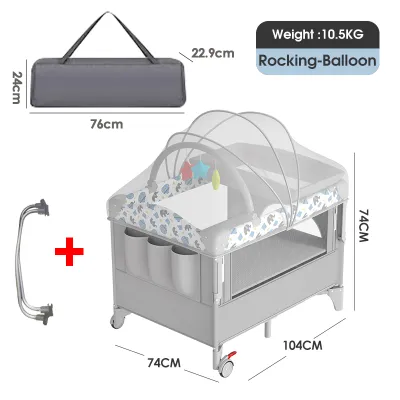
Prices are valid at publication and may change. Please refer to the product page for the latest price.
Begin by measuring the length and width of the floor space where the bed will stand, but do not stop there. Sketch a simple floor plan that includes the swing arcs of your nursery door, built-in wardrobe doors, and any nearby windows. You must ensure that when the bed is in place, you still have a clear walkway of at least 60 to 75 centimeters to move comfortably around the room, especially during late-night feedings.
Next, calculate the operational footprint of the storage features. If the bed features under-bed drawers, measure the distance those drawers require when fully extended. For side-attached racking shelves, ensure there is enough clearance for you to stand directly in front of them to retrieve items without bumping into walls or other furniture. If the layout forces you to squeeze into tight angles to reach a diaper stack, the storage setup loses its practical value.
Additionally, verify the transit path into your home. Measure the width of your front door, hallways, stairwells, and the nursery doorway itself. Even if the bed arrives flat-packed, you must be certain that the individual boxes or fully assembled components can navigate these tight corners without damaging your walls or the furniture itself.
Finally, plan for proper air circulation around the bed. In tropical climates, placing furniture completely flush against concrete walls can trap heat and moisture, creating an environment ripe for mold. Leaving a gap of 5 to 10 centimeters between the bed frame and the wall promotes healthy airflow and ensures that side-access storage racks remain easy to reach and clean.
Evaluating Storage Rack Designs for Tight Layouts
Different storage configurations suit different room shapes. Choosing the right design depends on whether your nursery is long and narrow, square, or awkwardly shaped, as well as how you prefer to organize your daily baby care routine.

Under-Bed Drawers vs. Side Shelving Units
Under-bed drawers are excellent for maximizing vertical space because they utilize an area that would otherwise collect dust. They keep blankets, extra sheets, and seasonal clothes tucked away neatly out of sight. However, these drawers require ample floor clearance to slide open smoothly. They can also become increasingly difficult to access as your baby grows; once you lower the mattress base to its lowest safety setting to prevent your child from climbing out, the mattress support frame may sit directly above the drawer line, limiting vertical storage clearance inside the drawer.
Side-attached racking shelves, conversely, keep immediate essentials like diapers, wipes, and swaddles at waist height, eliminating the need to bend down constantly. This setup is highly ergonomic during the first few months of frequent changes. The trade-off is that side shelves increase the overall length of the furniture piece, making it less suitable for narrow rooms where wall space is at a premium. If your nursery is square, a side-racking bed can serve as a functional anchor along a single wall; if the room is long and narrow, an under-bed drawer system is usually the more space-efficient choice.
Moisture Control and Ventilation for Stored Items
In the humid climate of the Philippines, moisture control is a critical consideration for any nursery furniture. Closed, unventilated wooden compartments can trap humid air, leading to musty odors, mildew, and mold growth on your baby’s clothing and bedding. This poses a direct risk to your baby’s sensitive respiratory system.
When evaluating storage racks, prioritize designs with slatted panels, open wire racking, or breathable fabric bins rather than solid, airtight wooden boxes. These ventilated structures allow air to circulate freely around stored textiles, keeping them fresh. Additionally, look for moisture-resistant finishes, such as water-based polyurethane sealants, which protect the wood from humidity while remaining safe for your baby.
To prevent dampness from seeping upward, avoid storing fabric items in direct contact with the floor. Opt for beds where the lower drawer or rack is raised at least a few centimeters off the ground. Regularly rotating your stored items and letting the drawers air out during dry, sunny days will also help maintain a hygienic storage environment.
Verifying Safety Standards for Beds With Integrated Storage
While storage features add convenience, they must never compromise the structural safety of the bed. Because your baby will spend unsupervised hours sleeping and playing in this space, verifying safety certifications and structural integrity is your most important task.
Start by checking the physical specifications of the bed rails and slats. To prevent accidental entrapment, the distance between individual slats must not exceed 6 centimeters (approximately 2.3 inches). When you place the mattress inside the frame, there should be no gaps wider than two fingers between the mattress edge and the inner frame. A loose mattress creates a dangerous gap where a baby’s limbs or head could become trapped.
Structural stability is another vital factor, especially for beds featuring tall, side-attached shelving units. These attachments can make the entire unit top-heavy, increasing the risk of tipping if an older baby pulls themselves up on the shelves. Always check if the manufacturer includes or recommends an anti-tip anchoring kit to secure the unit firmly to the wall. Shake the assembled display model or check user reviews to ensure the bed does not wobble or sway when pressure is applied.
Weight limits are equally critical. Always consult the manufacturer’s documentation to verify the maximum load capacity for both the sleeping platform and the integrated storage racks. Overloading pull-out drawers or side shelves can cause structural warping, drawer derailment, or complete joint failure. Keep heavy items like bulk packs of wet wipes or heavy toys out of elevated racks; store them on lower levels to keep the center of gravity low.
Lastly, closely examine the materials and finishes used on the entire unit. Babies frequently chew on crib rails when teething. Ensure the manufacturer explicitly certifies that all paints, varnishes, and laminates are non-toxic, lead-free, and free of phthalates. Look for recognized safety standard labels on the product packaging or official documentation before making your purchase.
Space-Saving and Convertible Features to Consider
To get the most value out of your investment, look for multi-functional designs that can adapt as your child transitions from infancy to toddlerhood.
- Convertible Storage Components: Some premium models feature side racking units that can be completely detached from the main bed frame. As your child grows, the crib can convert into a toddler bed, while the storage rack transitions into a standalone bookshelf or nightstand for their playroom.
- Lockable Caster Wheels: Mobility is incredibly useful in a tight room, allowing you to roll the bed away from the wall to clean underneath, retrieve dropped pacifiers, or access electrical outlets. However, safety is paramount: always verify that the caster wheels feature heavy-duty, reliable locking brakes. The wheels must remain locked at all times when the baby is inside the bed to prevent accidental rolling.
- Integrated Changing Tables: Selecting a bed that combines a side storage rack with a secure, flat changing surface on top eliminates the need for a separate changing table. This saves valuable floor space in a small nursery. If you choose this option, ensure the changing area has raised safety barriers on all sides and a secure strap. Always supervise your baby during changes, and stop using the changing platform once your child reaches the manufacturer’s specified weight limit or begins trying to sit up or roll over independently.
Common Measurement and Placement Mistakes in Small Nurseries
Even with the best intentions, it is easy to overlook minor details that can make your nursery layout impractical or unsafe. Recognizing these common pitfalls beforehand will save you time and frustration.
One frequent mistake is measuring only the static footprint of the bed and forgetting the operational clearance. Parents often purchase a bed with beautiful under-bed drawers, only to realize after assembly that the adjacent wardrobe or bedroom door blocks the drawers from opening more than halfway. This renders a major feature of the furniture virtually useless.
Another critical error is placing the bed too close to windows, curtains, or air conditioning units. Active older babies can use storage shelves as steps to climb out of the crib. If the bed is positioned near a window, this creates a severe fall hazard. Furthermore, hanging curtain cords or window blind pull-strings present immediate strangulation risks. Keep the bed away from direct air conditioning drafts to prevent your baby from getting cold, and ensure it is positioned far from any dangling cords or wall decorations.
Additionally, do not ignore the thickness of your chosen mattress. If you buy a mattress that is thicker than the manufacturer’s recommended specifications, it will reduce the effective height of the safety side rails. This makes it much easier for an active toddler to climb or fall over the edge. It can also raise the sleeping surface to a height that makes it difficult for you to reach over the side to access lower storage compartments.
To prevent these issues, use low-tack painter’s tape or masking tape on your nursery floor to outline the exact dimensions of the bed, including the fully extended drawers and shelves. Walk around this tape outline to experience the flow of the room before committing to a purchase.
Frequently Asked Questions (FAQ)
Is it safe to attach an aftermarket storage rack to a standard baby crib?
No, it is not safe to make DIY modifications or attach unapproved aftermarket racks to a standard crib. Drilling holes, adding straps, or hanging heavy organizers can compromise the crib’s structural integrity, create dangerous entrapment hazards, and void the manufacturer’s safety warranty. To ensure your child’s safety, only use storage accessories that have been specifically designed, tested, and certified by the original manufacturer for your exact bed model.
How can I keep stored baby clothes from getting musty in humid weather?
To prevent mustiness in humid conditions, place safe, enclosed moisture-absorbing packets—such as activated charcoal bags or silica gel—inside the storage compartments, ensuring they are kept completely out of your baby’s reach. Never store clothes that are still slightly damp from the wash. Ensure the storage areas are regularly opened, aired out, and that the textiles are rotated frequently to maintain freshness.
Community discussion
Share your experience or ask a question. Comments are reviewed before publication.