
Choosing between HiPP Organic 6 to 12 months (Stage 2) and mainstream alternatives like Nido, NAN, and Enfagrow is a decision that depends entirely on your baby’s specific developmental needs, your family’s budget, and your access to reliable supply chains in the Philippines. There is no single “best” formula that fits every infant. While some parents prioritize certified organic sourcing to minimize exposure to synthetic substances, others require the widespread availability, specialized formulations, and cost-effectiveness of mainstream brands. To make the safest choice, you must learn how to read nutrition labels, understand the differences in ingredient sourcing, and work closely with your pediatrician to monitor your baby’s growth.
Understanding the Contenders: Organic vs. Mainstream Formulas
Organic infant formulas, such as HiPP Organic Stage 2, are produced under strict agricultural standards. This means the dairy ingredients come from farms where cows graze on grass and are raised without synthetic pesticides, chemical fertilizers, or prophylactic antibiotics. When purchasing HiPP Organic, parents in the Philippines must carefully inspect the packaging to verify official organic certification logos, such as the European Union Organic Bio-Siegel. These certifications serve as third-party verification that the product meets rigorous environmental and animal welfare standards from farm to factory.
Mainstream formulas focus heavily on targeted nutritional science and proprietary ingredient blends. Brands like NAN (often featuring specialized whey proteins or probiotics) and Enfagrow (frequently highlighting specific lipid blends like DHA and MFGM) design their products to support specific developmental milestones. It is crucial to note that Nido is widely known in the Philippines for its toddler milk variants, which are formulated for children aged one year and older. If you are considering Nido, you must verify the packaging carefully to ensure the specific product is explicitly labeled as appropriate for the 6 to 12 months age range, as feeding a toddler formula to an infant can lead to severe nutritional deficiencies or digestive strain.
Products mentioned in this guide
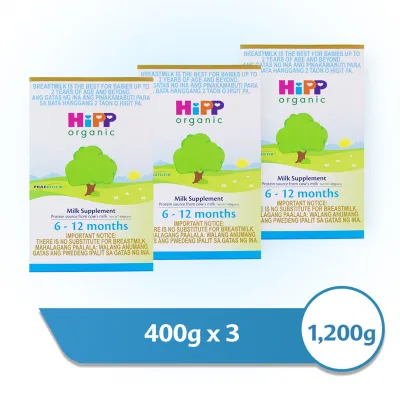
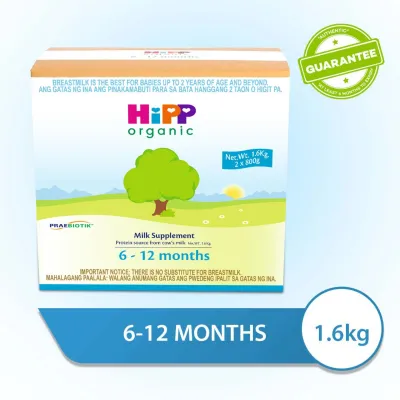
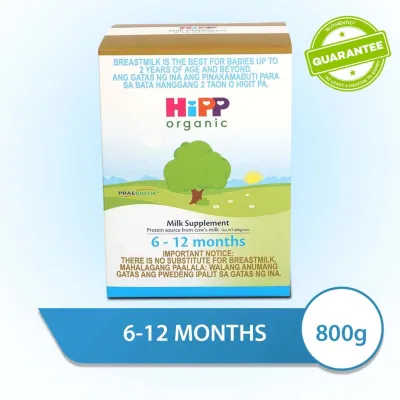
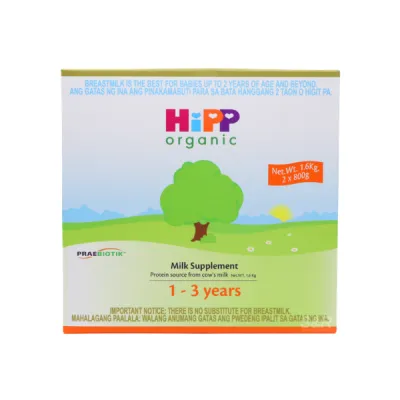
Prices are valid at publication and may change. Please refer to the product page for the latest price.
Marketing terms like “premium,” “natural,” or “gold” do not guarantee suitability or safety. Every baby’s digestive system is unique, and what works for one infant may cause discomfort in another. Parents must look past promotional claims and cross-reference the complete ingredient list and nutritional breakdown with their pediatrician’s specific recommendations for their child’s weight, growth rate, and digestive tolerance.
Key Nutritional and Sourcing Dimensions to Verify
When comparing HiPP Organic 6 to 12 months with mainstream alternatives, the nutrition facts panel is your most reliable tool. Examine the protein-to-whey ratio, total fat content, and carbohydrate sources per 100 milliliters of prepared formula. Different brands use different scoop sizes and dilution ratios, meaning a single scoop of one brand does not deliver the same caloric density as another. Always calculate the nutritional intake based on the manufacturer’s exact preparation instructions rather than assuming all formulas are mixed the same way.

The type of carbohydrate used in formula is a key differentiator. Many organic formulas, including HiPP, rely primarily on lactose, which is the natural sugar found in breast milk. In contrast, some mainstream formulas may incorporate maltodextrin, corn syrup solids, or sucrose to provide quick energy or alter the taste. While these carbohydrates are approved for infant consumption, some parents prefer to avoid added sugars. Check the ingredient list on each specific tin to identify the primary carbohydrate source and ensure it aligns with your pediatrician’s guidance.
The transition from 6 to 12 months is a critical period for iron accumulation, as a baby’s natural iron stores begin to deplete. Compare the iron levels on the labels of HiPP Organic, NAN, and Enfagrow. Additionally, look for docosahexaenoic acid (DHA) and arachidonic acid (ARA) levels, which are essential fatty acids associated with brain and visual development. Because formulations can vary by region and batch, do not rely on online summaries; read the physical label of the tin you hold in your hand to verify these exact values.
Many formulas feature prominent claims regarding “easy digestion,” “colic relief,” or “immune system support.” It is vital to understand that these are manufacturer marketing statements rather than guaranteed medical outcomes. Ingredients like prebiotics (such as galacto-oligosaccharides) or probiotics (live beneficial bacteria) may support gut health, but their efficacy can vary widely depending on the individual infant. If your baby suffers from persistent colic, reflux, or gas, consult your pediatrician for a clinical assessment rather than self-prescribing a specialized formula based on label claims.
Practical Considerations for Families in the Philippines
Raising a baby in the Philippines requires careful budget planning, and formula feeding can represent a significant recurring expense. To find the true cost of each option, do not simply compare the retail price of the tins. Instead, look at the net weight (such as 400g, 800g, or 900g) and the weight of a single scoop as indicated in the preparation instructions. Calculate how many servings a single tin yields, and divide the retail price in ₱ by that number of servings. This gives you the actual cost per feed, which often reveals that imported organic options carry a substantial price premium over locally manufactured or widely distributed mainstream brands.
In the Philippines, supply chain consistency is a major factor. Mainstream brands like NAN, Enfagrow, and Nido are staples in local supermarkets, neighborhood pharmacies, and major department stores across the country. HiPP Organic, as an imported specialty product, may experience sudden stockouts due to shipping delays, customs clearances, or high demand. Relying on a formula that is difficult to source can cause significant stress if you run out unexpectedly.
The tropical climate of the Philippines—characterized by high humidity and ambient temperatures—demands strict storage practices. Once opened, formula powder absorbs moisture rapidly. Ensure the tin is stored in a cool, dry place (never in the refrigerator) and sealed tightly, and verify the manufacturer’s instructions regarding how many weeks the powder remains safe for consumption after opening.
Each manufacturer mandates specific water temperatures and mixing protocols to ensure safety and preserve nutritional integrity. For instance, some formulas require water that has been boiled and cooled to exactly 40 or 50 degrees Celsius to avoid destroying heat-sensitive probiotics, while others may have different temperature thresholds to ensure proper solubility of the powder. Always follow the exact scooping and leveling instructions provided on the packaging, as over-concentrating or under-concentrating the formula can lead to dehydration or malnutrition.
Decision Framework: How to Choose the Right Formula
Choose HiPP Organic if you place a premium on certified organic agricultural practices, wish to minimize your baby’s exposure to synthetic pesticides and fertilizers, and prefer a lactose-based carbohydrate profile. To choose this path comfortably, you should have a flexible household budget that accommodates a higher cost per serving, and you must have reliable, consistent access to authorized local distributors or reputable specialty stores that guarantee a steady supply of authentic product.
Choose Nido, NAN, or Enfagrow if you prioritize convenience, budget-friendliness, and widespread local availability. If you need to be able to purchase formula at any local supermarket or pharmacy, or if you require specialized nutrient blends (such as partially hydrolyzed proteins for mild digestive sensitivity), these established brands offer practical and reliable solutions. Always ensure the specific variant you select is explicitly formulated for the 6 to 12 months stage.
Verify first if your baby has a diagnosed medical condition, a family history of severe allergies, lactose intolerance, or persistent digestive distress. Specialized formulas—such as hypoallergenic, lactose-free, or soy-based options—require strict medical supervision. Your pediatrician must guide the final choice, as feeding an inappropriate formula to a sensitive baby can exacerbate health issues.
Regardless of the brand you choose, monitor your baby closely after introducing any formula. If your infant exhibits signs of intolerance—such as persistent fussiness, excessive spitting up, skin rashes, hives, vomiting, or unusual changes in stool (such as blood or mucus)—stop using the formula immediately and consult a qualified healthcare professional. Caregiver supervision during feeding is essential to ensure safety and prevent choking.
Frequently Asked Questions (FAQ)
Can I mix HiPP Organic with mainstream brands like NAN or Enfagrow?
It is strongly advised not to mix different formula brands, or even different stages of the same brand, within the same bottle. Each formula is scientifically calibrated with a specific balance of proteins, fats, carbohydrates, and micronutrients designed to be dissolved in a precise volume of water. Mixing them can alter the concentration of nutrients, potentially overloading your baby’s immature kidneys or causing severe digestive upset, constipation, or diarrhea. If you need to switch from one brand to another, implement a gradual transition over several days by replacing one full feeding session at a time with the new formula, monitoring your baby closely for any adverse reactions. If your baby shows signs of distress during the transition, stop the process and consult your pediatrician.
How do I verify if an imported HiPP Organic formula is authentic and safe?
To protect your baby from counterfeit or compromised products, always perform thorough physical checks on the packaging before opening. Inspect the safety seal to ensure it is completely intact, check that the tin or box has no dents, punctures, or signs of moisture damage, and verify that the expiration date and batch number are clearly printed and have not been altered. In the Philippines, avoid purchasing imported formulas from unverified online sellers or unauthorized third-party merchants on online marketplaces. Instead, source your formula exclusively from official brand stores, authorized local distributors, or reputable supermarkets and pharmacies that maintain strict quality control and proper temperature-controlled storage conditions.
Community discussion
Share your experience or ask a question. Comments are reviewed before publication.